Before you read on: this sits outside what Splash Pro Pools does. We hand it to a vetted local resurfacing and replastering pro, reachable on (858) 400-6757.
An acid wash is for plaster and pebble, not vinyl or fiberglass. Most San Diego pools need it at most once every 5 to 7 years, if at all. It is a one-day drain and wash, then 1 to 2 days to refill. Overdoing it thins plaster. Call (858) 400-6757.
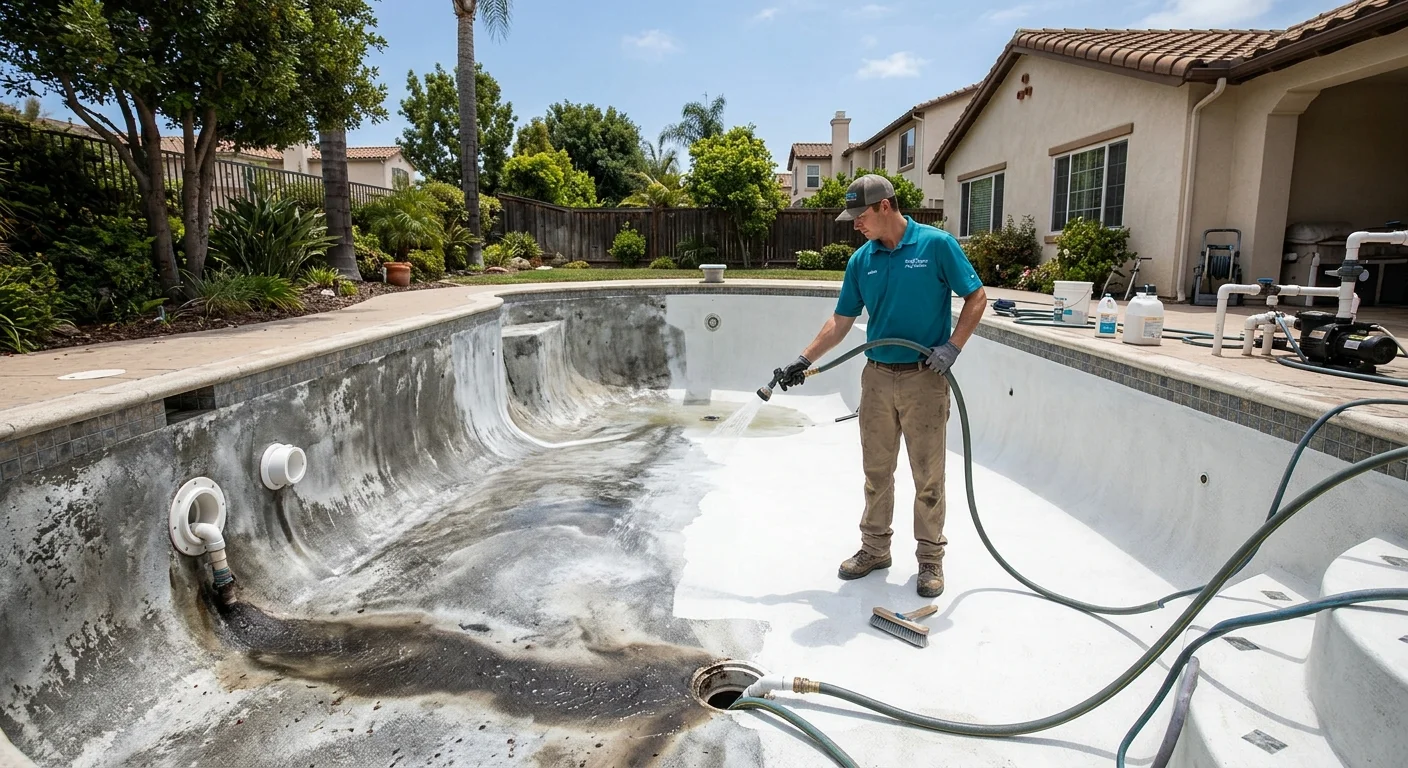
An acid wash can breathe new life into your pool’s appearance by stripping away the thin, discolored layer of plaster, revealing the fresher material beneath. It’s a powerful treatment, and understanding its purpose, process, and when it’s appropriate is key to making the right decision for your backyard oasis.
What an acid wash actually does to pool plaster
Think of an acid wash as a deep chemical peel for your pool’s interior. During a pool acid wash in San Diego, a diluted solution of muriatic acid strips away a very thin layer of plaster (or pebble tec). This process effectively removes surface stains, mineral deposits, and other discolorations that have built up over time. It doesn’t actually remove material from the pool structure itself, but rather the outermost, degraded layer of the finish.
San Diego’s climate and water conditions often contribute to these issues. Our hard water, rich in calcium and other minerals, frequently leaves behind unsightly scale and deposits, particularly around the waterline. Combine that with the occasional algae breakout, especially if weekly pool cleaning has been inconsistent, leading to a green pool situation, and you get stubborn stains embedded in the plaster. The acid reacts with these mineral deposits and the stained plaster, dissolving them and allowing them to be rinsed away. The goal is to expose the fresh, clean layer of plaster underneath, making your pool look brighter and newer without the expense and extensive work of a full replastering. If your stains haven’t soaked into the plaster yet, our guide to removing pool stains by type covers the chemistry that clears most metal and organic discoloration before a wash is ever needed.
Signs your San Diego pool needs an acid wash, not a resurface
Deciding between an acid wash and a full pool resurfacing or replastering is a common dilemma for San Diego pool owners. An acid wash is a targeted solution for specific aesthetic problems, while resurfacing addresses more fundamental structural or material degradation.
Here are the key indicators that an acid wash might be all your San Diego pool needs:
- Persistent Stains: The most common reason for an acid wash. If you have brown, green, or rust-colored stains that don’t budge with regular brushing or spot treatments, it’s likely mineral or heavy algae growth embedded in the plaster. San Diego’s hard water is notorious for calcium buildup, leaving chalky white deposits, especially on the waterline. Algae, particularly if your pool has ever gone neglected and turned green, can also leave deep, dark stains that an acid wash can effectively lift.
- Dull or Dingy Plaster: Over time, even without obvious stains, plaster can lose its bright, clean appearance and start looking generally dull or dingy. This is often due to microscopic mineral etching and accumulated grime that has become too deeply set for normal cleaning. An acid wash removes this top layer, revealing the pristine plaster beneath.
- Minor Mineral Buildup: Beyond stains, hard water in San Diego can cause a thin layer of mineral scale across the entire pool surface. If this layer is thin and hasn’t led to significant roughness or peeling, an acid wash can dissolve it, restoring smoothness and brightness.
- No Structural Damage: This is crucial. An acid wash is purely cosmetic. If your plaster is exhibiting signs of structural failure, like widespread etching, deep pitting, large cracks, or delamination (peeling away from the shell), an acid wash won’t solve these problems. These issues typically require a full pool replastering to truly fix the underlying integrity.
If your plaster is generally in good shape but just looks “dirty” or “old,” an acid wash is often the perfect, less invasive first step. It saves you money and gets your pool back up and running much faster than a full replastering project.
How the drain-and-acid-wash process works step by step
Performing a drain and acid wash in San Diego is a multi-step process that requires careful planning and execution. Because of the hazardous chemicals involved and the potential for damage if not done correctly, it’s always best left to experienced professionals like Splash Pro Pools.
Here’s how the process typically gets handled:
Step 1: Drain the pool
The first critical step is completely draining your pool. Powerful pumps empty all the water, usually directed to a sanitary sewer in accordance with local San Diego regulations. This can take several hours, depending on the size of your pool. During this time, pool equipment like pumps and filters also gets disconnected, to protect it from the acid and ensure safety.
Step 2: Prepare the surface
Once the pool is empty, the walls and floor get thoroughly cleaned, removing any loose debris, dirt, or large patches of algae. This pre-cleaning helps the acid work more effectively on the embedded stains and mineral deposits, ensuring an even application and better results. Pool fittings, lights, and other fixtures get protected too.
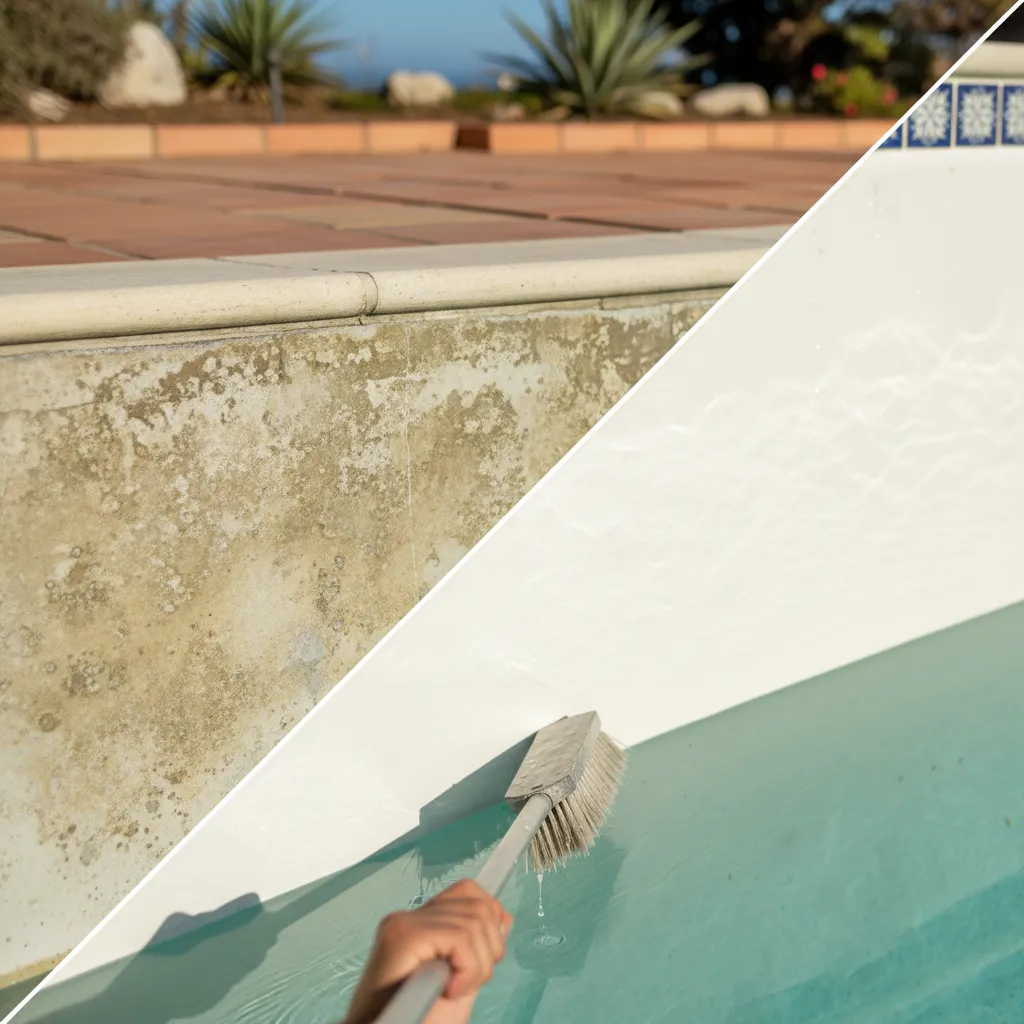
Step 3: Apply the acid wash solution
This is the most crucial part. Trained technicians, wearing full protective gear, carefully mix a diluted muriatic acid solution and apply it section by section to the plaster surface using specialized equipment. The acid immediately begins to react with the calcium deposits and stains. It’s a quick process for each section, as the acid shouldn’t sit on the plaster for too long. The reaction gets monitored closely, with brushing as needed to ensure even coverage and optimal cleaning.
Step 4: Neutralize and rinse
After the acid has done its work on a section, it immediately gets neutralized with an alkaline solution. This stops the acid from eating too deeply into the plaster. Then the area is thoroughly rinsed, collecting all the acidic runoff at the deep end of the pool. This runoff is then neutralized again before being safely pumped out of your yard, ensuring no harm to your landscaping or the local environment.
Step 5: Refill the pool and balance chemistry
Once the entire pool has been acid-washed, neutralized, and rinsed, it’s time to begin refilling it with fresh water. This typically takes 1-2 days. Once the pool is full, pool technicians will return to balance the water chemistry, ensuring it’s safe and ready for swimming. This final step is vital to prevent immediate re-staining and protect your newly cleaned plaster.
Acid wash vs. resurfacing: cost and lifespan trade-offs
When your San Diego pool plaster needs attention, the choice between an acid wash and a full resurfacing often comes down to balancing cost with the desired lifespan and extent of the fix. Both have their place, but they address different levels of wear and tear.
Acid wash: the quick refresh
An acid wash is significantly more affordable than a full resurface. It’s a faster process, usually completed in a day or two once the pool is drained, with the pool ready for swimming again within a few days after refilling. The primary benefit is its ability to remove surface-level stains, algae discoloration, and minor mineral buildup, making your pool look dramatically cleaner and brighter. It essentially gives your existing plaster a “reset” button.
However, an acid wash doesn’t add new material to your pool. It removes a microscopic layer of the existing plaster. This means it’s a cosmetic solution. It won’t repair cracks, pitting, or extensive etching. An acid wash can only be performed a limited number of times over the lifespan of your plaster, typically every 5-7 years at most, before the plaster becomes too thin. Each wash removes a bit more material, eventually weakening the surface.
Resurfacing: the long-term solution
Pool resurfacing, also known as replastering, is a much more extensive and costly project. It involves removing all the old, damaged plaster down to the gunite shell, making any necessary repairs to the shell, and then applying an entirely new layer of plaster, pebble tec, or quartz finish. This process can take a week or more for the application and then another month for the new plaster to cure properly, during which time the pool needs specific care.
The major advantages of resurfacing are its longevity and comprehensive repair. A new plaster finish can last 10-20 years, depending on the material and maintenance. It addresses structural issues, gives you the opportunity to change the color or texture of your pool’s interior, and essentially makes your pool look and feel brand new. The trade-off is the higher upfront cost and the longer downtime for your pool.
Ultimately, if your pool’s plaster is structurally sound but just stained and dingy, an acid wash is often the smart, economical choice. If you’re dealing with extensive damage, deep etching, or simply want to completely renew your pool’s interior for another decade or two, then resurfacing is the way to go. We can help you assess your pool’s specific needs during a free, in-person consultation.
How equipment and the surrounding deck get protected
Safety and protection are paramount during any acid wash pool in San Diego project. Muriatic acid is a corrosive chemical, and its improper handling can lead to damage to your property and potential injury. A systematic approach ensures that both your valuable pool equipment and your beautiful surrounding deck are thoroughly protected throughout the process.
Before any acid solution is mixed or applied, pool technicians carefully disconnect and secure all pool equipment. This includes your pump, filter, heater, and any automated cleaning systems. These components are either removed from the area or covered with heavy-duty plastic sheeting and sealed to prevent any corrosive fumes or splashes from reaching them. Exposed plumbing lines get protected too.
For the surrounding deck and landscaping, several proactive measures come standard:
- Temporary Barriers: Depending on the deck material and proximity to the pool, temporary plastic barriers or berms may go in to prevent acid runoff from reaching sensitive areas.
- Neutralization: As mentioned, all acid runoff is promptly collected and neutralized before it’s pumped out of your yard. This ensures that the water being discharged is no longer acidic and won’t harm plants, grass, or other landscaping features.
- Thorough Rinsing: Throughout the application and neutralization process, any overspray or accidental drips on the deck are immediately rinsed with water and often neutralized with a baking soda solution to prevent etching or discoloration of your decking material.
- Eye on the Details: Experienced techs pay close attention to details like decorative tiles, coping, and expansion joints around the pool. These areas are vulnerable to acid splashes, so extra care goes into shielding them or rinsing them continuously during the wash.
A comprehensive approach ensures that while your pool plaster gets a deep clean, the rest of your pool area remains pristine and undamaged. You can trust the pros connected through Splash Pro Pools to handle this powerful cleaning process with the utmost care and professionalism.
How long the pool stays down and what to expect after
Once you decide on a pool acid wash service in San Diego, you’ll naturally want to know how long your pool will be out of commission and what to expect when it’s back in action. The good news is that an acid wash is much quicker than a full resurfacing, minimizing your pool’s downtime.
Downtime for the acid wash
The entire process, from draining to refilling, typically takes about 2-3 days.
- Draining: Draining a typical San Diego residential pool usually takes 6-12 hours, depending on its size and pump efficiency.
- Acid Washing: The actual acid washing and rinsing process is usually completed in a single day.
- Refilling: Refilling your pool with fresh water can take another 1-2 days, again depending on your water pressure and pool volume.
So, you can generally expect your pool to be ready for swimming within 3-4 days after the draining process starts.
What to expect after the acid wash
- Brighter, Cleaner Plaster: The most immediate and noticeable change will be the dramatic improvement in your pool’s appearance. The plaster will look significantly brighter, cleaner, and much closer to its original color. Those stubborn stains and mineral deposits should be gone.
- Smooth Surface: The acid wash will remove any thin layers of calcium or rough mineral buildup, leaving the plaster surface feeling smoother to the touch.
- Water Chemistry Reset: Since your pool is refilled with fresh water, its chemistry will be starting from scratch. Pool technicians will re-balance the pH, alkalinity, calcium hardness, and sanitizer levels to ensure the water is perfectly safe and healthy for swimming. This is a critical step to protect your newly cleaned plaster from immediate issues.
- Continued Maintenance is Key: While an acid wash provides a fresh start, it’s not a permanent cure for issues like hard water or algae. Regular, professional weekly pool service and diligent water chemistry management are essential to prevent future staining and keep your pool looking its best for years to come. This includes consistent brushing and proper filtration.
An acid wash is a powerful tool to restore your San Diego pool’s beauty when stains and dullness take over. With Splash Pro Pools, you get connected to a professional, safe, and efficient service that brings your pool back to life quickly.
When to call us
Deciding whether your pool needs an acid wash or a more extensive resurfacing can be tricky, and it’s always best to get a professional opinion. If you’re seeing persistent stains, a dull finish, or mineral deposits that regular cleaning can’t tackle, it’s time to have an expert assess your pool’s condition. We can determine if an acid wash is the right, cost-effective solution for your specific situation. Call us at (858) 400-6757 for a free, in-person assessment.
Frequently asked questions
How often should a pool be acid washed in San Diego?
Most San Diego pools don't need acid washing more than once every 5-7 years, if at all. It's a corrective measure for specific stains and mineral buildup, not a routine part of weekly pool care. Overdoing it can damage plaster.
How long does an acid wash take and when can I use my pool again?
The active acid washing process typically takes a single day once the pool is drained. Refilling takes another 1-2 days depending on your water pressure. You can usually resume using your pool within 2-3 days after the acid wash is complete and the water chemistry has been balanced.
Is an acid wash safe for all pool types?
Acid washing is primarily for plaster and pebble-tec pools. It's not suitable for vinyl liner pools, fiberglass pools, or painted concrete pools, as the acid can severely damage these surfaces. Always consult a professional to determine if an acid wash is appropriate for your specific pool finish.
What kind of stains can an acid wash remove?
Acid washing is highly effective against mineral stains (like calcium and rust), algae stains (especially after a green pool event), and general discoloration from years of use. It may not remove deep-set chemical stains, structural cracks, or severe pitting.
Can I acid wash my pool myself?
Due to the hazardous nature of muriatic acid and the specific techniques required to perform an acid wash safely and effectively, it's strongly recommended to hire a licensed and experienced professional. Improper application can cause serious injury or permanent damage to your pool.
Need this done in San Diego County?
For repair and renovation work like this, we hand you to our trusted partner, Del Rancho Pools.