Cracked plaster, dated tile, or failing equipment can put “pool remodel Poway” at the top of your search list. HomeGuide’s June 10, 2024 guide places average remodels between $5,000 and $30,000, but the right scope depends on the shell, surface, plumbing, and equipment. Start with the defects, then choose the finish.
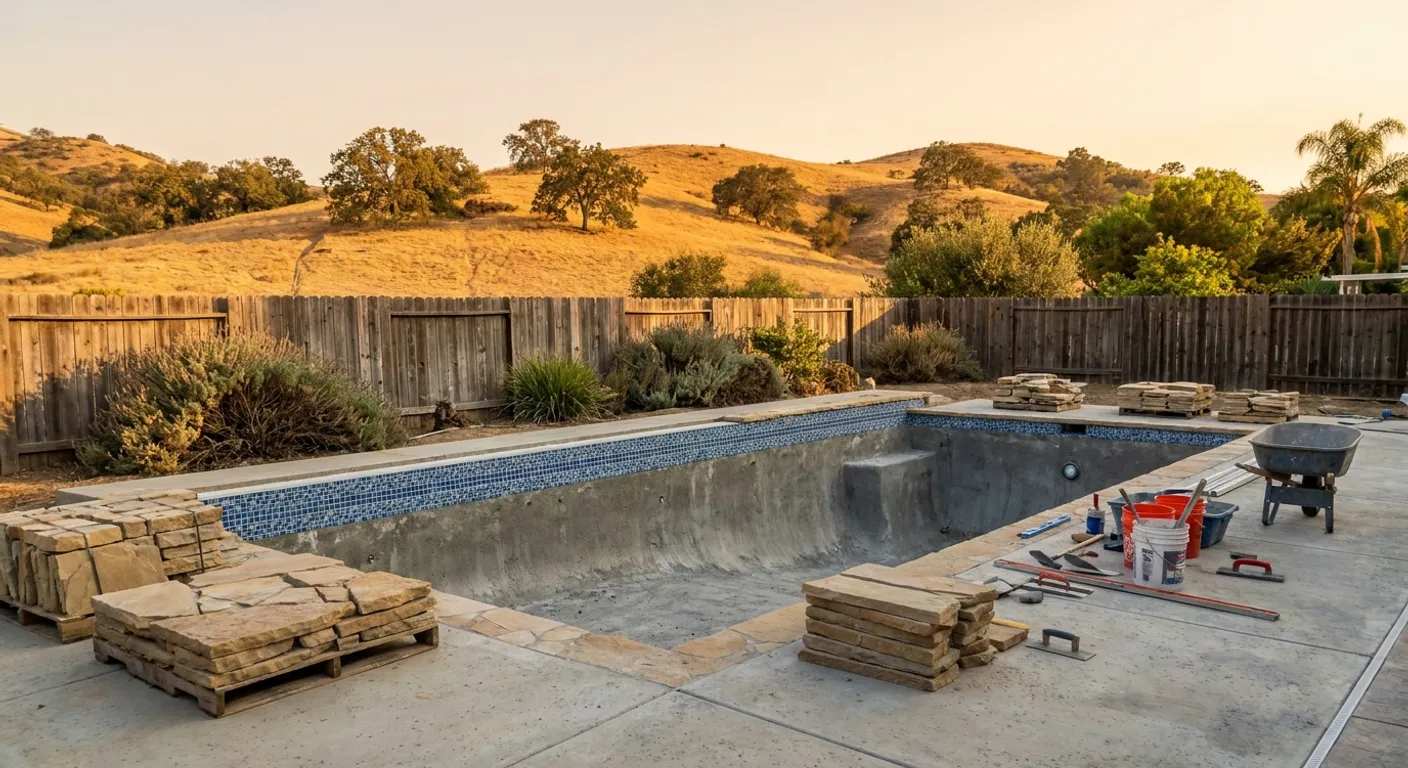
What a pool remodel in Poway runs, from refresh to full rebuild
Remodel cost follows the amount of material, preparation, repair, and equipment involved. HomeGuide’s June 10, 2024 pool remodel guide lists a $5,000–$30,000 average range, with a national average of $17,500. Its range for inground pool remodels is broader at $6,000–$50,000.
Those figures are market references, not Splash Pro Pools pricing. Poway bids can move within or beyond a published range because contractors price the pool they can see. A sound shell needing a finish update presents a different job from a pool with hollow plaster, damaged tile, leaking plumbing, or failing equipment.
The same HomeGuide guide puts resurfacing at $2,000–$15,000. Pool painting runs $1,400–$2,500, while adding a heater runs $1,600–$5,200. Each figure covers a different scope. Painting isn’t the same process as removing a worn finish, preparing the shell, and applying a new surface.
Access also shapes labor and equipment planning. A clear route from the street to the pool is simpler than a narrow side yard, stepped grade, or hillside approach. Larger Poway lots may offer room near the pool, yet a long path from the driveway can still affect material handling.
Ask for a written scope that separates demolition, surface preparation, finish, tile, plumbing, equipment, startup, and cleanup. That breakdown reveals why two totals differ. It also prevents a low opening figure from hiding necessary work in later additions.
Matching the scope to what your Poway pool actually needs
The right remodel fixes the cause, not only the visible symptom. Faded color and dated tile may support a finish-focused update. Cracks, recurring water loss, loose coping, damaged plumbing, or unreliable circulation point toward investigation before finish selections begin.
A contractor should distinguish surface wear from movement or damage below it. New plaster can improve the pool’s appearance, but it doesn’t repair a leaking pipe or failing fitting. If water loss is part of the story, begin with pool repair assessment before approving decorative work.
Here’s how common scopes differ:
| Scope | Best fit | What changes and why |
|---|---|---|
| Surface refresh | The shell is sound, but the finish looks worn or stained. | The existing surface is prepared so a new finish can bond correctly. |
| Tile and coping update | The waterline or pool edge is damaged or dated. | Edge materials are removed and reset without automatically rebuilding every pool system. |
| Equipment upgrade | Circulation, heating, lighting, or controls need attention. | Selected components change while serviceable equipment can remain. |
| Larger remodel | Surface, plumbing, structure, and equipment problems overlap. | The contractor coordinates connected work so one repair doesn’t disturb another later. |
A pool resurfacing and replastering consultation makes sense when roughness, worn finish, or exposed patches dominate the project. A broader repair review fits better when cracks or unexplained water loss appear beside surface damage.
Decide which changes are required, which are preventive, and which are aesthetic. Keep those groups separate in every bid. That gives tile color, finish texture, and equipment choices their proper place without letting cosmetic upgrades distract from the pool’s actual defects.
Resurfacing, tile, and equipment: the big three line items
Resurfacing usually defines the center of a remodel because it changes the pool’s entire interior. The old finish must be evaluated and prepared before the new material goes on. Preparation matters because a finish relies on a stable, properly prepared base.
Finish choices affect color, texture, and how the water looks in Poway’s bright inland sun. Samples viewed dry on a deck won’t look identical underwater. Ask the contractor to explain how each finish is installed, cleaned, and started after filling. The written bid should name the proposed material rather than using a vague phrase such as “standard finish.”
Tile forms the transition at the waterline. Replacing it during resurfacing can make sense because the pool is already empty and the adjoining finish is being disturbed. Yet sound tile doesn’t automatically need removal. Keeping it may preserve more of the budget for failed parts or a better interior finish.
Equipment deserves the same disciplined review. A remodel doesn’t require replacing every pump, filter, heater, light, or control. Include equipment that’s failing, poorly matched to the intended pool use, or central to a planned upgrade. Leave serviceable parts out unless the contractor identifies a clear reason to change them.
HomeGuide’s June 10, 2024 guide lists heater additions at $1,600–$5,200. That range shows why equipment needs its own bid line rather than disappearing inside a single remodel total. Model choice, plumbing changes, electrical work, and site access can change the work involved.
After the remodel, steady chemistry protects the new surface and supports clear water. Poway homeowners who want ongoing help can review pool cleaning in Poway once the contractor’s startup process is complete.
Why remodel work is licensed-contractor territory
A pool remodel requires a licensed contractor because it falls outside California’s narrow exemption for minor work. Business and Professions Code §7048 limits that exemption to an aggregate contract price below $1,000 and adds several conditions. The work must be casual, minor, or inconsequential, require no permit, employ no helpers, and remain separate from a larger divided project.
Remodeling and resurfacing scopes run well beyond that threshold based on HomeGuide’s June 10, 2024 market ranges. California’s swimming pool contractor classification is C-53. Under 16 CCR §832.53, that classification covers swimming pool, spa, and hot tub construction, including related trades and solar heating installation.
Splash Pro Pools doesn’t hold a contractor license or perform the remodel. We connect homeowners with licensed, independent local pool professionals. You contract with and pay the selected professional directly.
Check the contractor before signing. The CSLB license checker lets you search the license number and review the record attached to it. The business name on the proposal should match the license record.
The bid should also identify who handles each part of the scope. Surface preparation, structural repairs, plumbing, electrical work, equipment installation, and finish startup may require different skills. One written scope gives you a clear record of who is responsible for each part.
California law defines the narrow exemption in Business and Professions Code §7048. A large project shouldn’t be split into smaller agreements to create the appearance of exempt work. Treat an unclear license number or mismatched business identity as a reason to pause before paying.
Poway specifics worth settling before the quote
Poway’s water service deserves a place in the remodel plan because resurfacing normally involves an empty shell and a refill. The City of Poway is one of the San Diego County Water Authority’s member agencies. The Authority’s member-agency list confirms Poway’s place in the regional system, while the city sets its own customer rates and local water rules.
Confirm the current water rate and any draining requirements directly with the City of Poway before scheduling. San Diego County doesn’t use one countywide customer rate or one set of local discharge instructions. The agency serving the property controls those details.
Refill volume affects water use, so give the contractor accurate pool dimensions. A broad guess can distort refill planning. Steps, benches, a spa spillway, and an irregular shape all change the volume compared with a plain rectangle.
Access needs an equally concrete review. On a larger Poway lot, the pool may sit far behind the house. A hillside property may add steps, gates, retaining walls, or grade changes between the driveway and the water. Walk that route with the bidder. Note gate widths, protected landscaping, deck edges, and any area where removed material must pass.
Older Poway pools can also carry layers from previous updates. Newer tile may sit above an older finish, while equipment replacement may have changed plumbing at the pad without changing lines near the shell. The contractor should identify visible transitions and state what can’t be evaluated until demolition begins.
Settle finish, tile, equipment, access, water handling, permits, and responsibility before comparing totals. Then compare the same scope across bids. A contractor can confirm which parts require permits or inspections and who will coordinate them with the City of Poway.
When to call us
Call when worn plaster, damaged tile, recurring repairs, or aging equipment have turned a simple refresh into licensed-contractor work. Splash Pro Pools will match you with a licensed, independent local professional who can evaluate the pool and prepare a project-specific scope. Call us at (760) 642-1256 and we’ll connect you with a licensed local pool pro.
Frequently asked questions
How much does a pool remodel in Poway cost?
HomeGuide's June 10, 2024 guide places average pool remodels between $5,000 and $30,000. The final bid depends on the pool's condition, finish, equipment, access, and repair needs.
Does a Poway pool remodel require a licensed contractor?
Yes. Pool remodel and resurfacing projects exceed California's narrow exemption for minor work under Business and Professions Code section 7048. The pool contractor classification is C-53 under 16 CCR section 832.53.
Should equipment be replaced during resurfacing?
Only equipment that is failing, poorly matched, or part of the planned upgrade belongs in the remodel scope. Separating required repairs from optional upgrades makes competing bids easier to compare.
Does Splash Pro Pools perform pool remodels?
No. Splash Pro Pools is a referral service that connects homeowners with licensed, independent local pool professionals. The homeowner contracts with and pays the selected professional directly.
Need professional help in San Diego County?
Splash Pro Pools connects San Diego homeowners with pool pros for the work in this post.