Fiberglass pool repair San Diego homeowners need usually starts with one decision: is the damage only in the gelcoat, or does it reach the shell? Small scratches and isolated surface cracks can often be repaired locally. Recurring cracks, blisters, flexing, or unexplained water loss need a deeper diagnosis before anyone applies a patch.
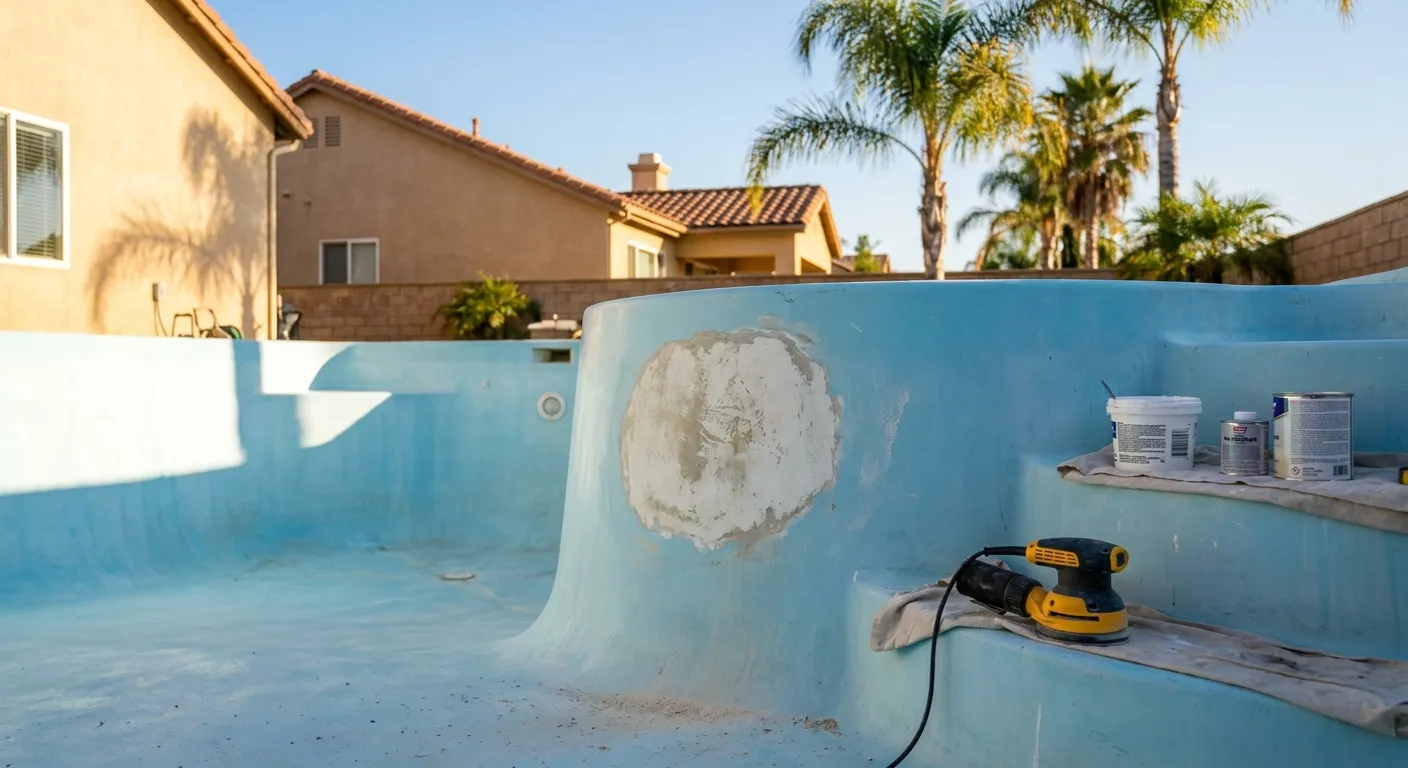
How do you know your fiberglass pool needs repair?
A fiberglass pool needs attention when its finish, water level, or shell shape begins changing. The visible mark is only the starting point. Gelcoat is the smooth outer finish, while the fiberglass laminate beneath it gives the shell strength.
Several symptoms point toward different repair paths:
- Fine spiderweb cracks may stay within the gelcoat, but a spreading or recurring pattern can indicate movement beneath the finish.
- Raised blisters form beneath the surface, so opening one doesn’t explain why moisture reached that area.
- Widespread chalking or fading suggests the outer finish has aged beyond one isolated blemish.
- Continuing water loss can come from the shell, a fitting, or connected plumbing, so the source must be located before repair.
Location matters. A scratch from a cleaning tool near the steps is different from a crack crossing a fitting. A line that reappears after an earlier patch also deserves more scrutiny than a stable surface chip.
Start by photographing the damaged area when it’s clean and visible. Include a wider photo showing its location in the pool. Note water loss, staining, roughness, and any change in shape. Don’t grind open the finish just to inspect it. That can turn a small diagnostic job into a larger surface repair.
If the water level keeps dropping, arrange pool leak detection and repair before choosing a cosmetic fix. Finding the actual escape point keeps a new gelcoat patch from hiding an unresolved leak.
What does fiberglass pool repair cost in San Diego?
Published market figures place a localized gelcoat repair far below full resurfacing. HomeGuide’s July 22, 2025 Pool Repair Cost guide lists gelcoat application for dings, scratches, and cracks at $300 to $400. The same guide puts full fiberglass resurfacing at $7,000 to $15,000.
Leak work creates a separate cost path. HomeGuide’s July 22, 2025 guide lists professional leak detection at $100 to $1,000 and leak repair at $500 to $1,500. It lists pool repair labor at $45 to $70 per hour. These are national market ranges, not prices set by Splash Pro Pools or a local contractor.
The final scope depends on what the pro finds. A small surface defect can require cleaning, preparation, color matching, filling, sanding, and polishing. A structural crack may require access to sound laminate before the finish can be rebuilt. Widespread fading or blistering expands the working area across the shell.
Water handling can also affect the job. Some repairs need the damaged area dry, while others may require lowering the pool. Access around a tight hillside yard can change how materials and equipment reach the shell.
A useful quote separates diagnosis, surface preparation, structural work, finish work, and water handling. That makes it easier to compare two proposals covering the same repair. Our pool repair referral service can connect you with a licensed independent local pro who can inspect the damage and price the actual scope.
Why San Diego is hard on fiberglass gelcoat
San Diego pools face different exposure patterns near the coast and inland. A Point Loma or Encinitas pool may spend mornings under the marine layer, then receive direct afternoon sun. In El Cajon, Poway, or Escondido, exposed coping and gelcoat can become much hotter during clear inland afternoons.
Sunlight and heat affect the exposed finish over time. The band above the waterline often sees different conditions than the submerged shell. That contrast can make fading, chalking, and earlier repairs more visible. It doesn’t prove structural damage, but it helps a pro map the affected area.
Water chemistry can also complicate the surface picture. The CDC’s healthy swimming guidance recommends pool pH between 7.0 and 7.8. It says pH below 7.0 can corrode pipes and equipment, while chlorine kills germs more slowly above 7.8. Deposits near the waterline can hide the underlying finish, so cleaning and diagnosis should come before refinishing decisions.
Draining adds a local wrinkle. Inside City of San Diego limits, San Diego Municipal Code §43.0304 and §43.035(e)(3) prohibit pool water and filter backwash from entering the storm drain system. Other cities and water districts set their own rules.
The San Diego County Water Authority has 22 retail member agencies, so the county doesn’t use one universal water rate or discharge process. Before lowering the water, confirm the current route with the property’s city and water agency. That matters in a county stretching from coastal Carlsbad to inland La Mesa.
Should you patch, resurface, or something else?
Patch isolated gelcoat damage, resurface widespread finish failure, and investigate leaks before repairing either. The right choice follows the depth and spread of the problem, not the size of the first visible mark.
| Repair path | Best fit | What changes |
|---|---|---|
| Localized gelcoat repair | The defect is isolated and the underlying shell remains sound. | The pro prepares and blends a limited area rather than renewing the full surface. |
| Full resurfacing | Fading, chalking, blistering, or finish damage covers large sections. | The working area expands across the shell to create a consistent new finish. |
| Leak investigation | The pool loses water without a confirmed source. | Testing separates shell damage from problems at fittings or plumbing. |
| Structural laminate repair | A crack reaches the fiberglass or the shell moves around it. | Damaged material is opened to sound laminate before strength and finish are rebuilt. |
Color matching is one reason a small patch can remain visible. Years of sun and water exposure change the surrounding gelcoat. A fresh repair may be sound without disappearing completely. Ask the contractor how the repaired area should look beside the existing finish.
Cracks near returns, lights, steps, and other penetrations deserve careful diagnosis. Those areas combine the shell with another component. Covering the surface without checking the joint can leave the original movement or leak untouched.
Full resurfacing makes more sense when repeated spot repairs would leave a patchwork finish. Our pool resurfacing and replastering page explains how we connect homeowners with independent local specialists. For another North County perspective, the Carlsbad pool resurfacing cost guide covers the decisions surrounding a larger surface project.
A contractor should define whether the proposal covers gelcoat only, damaged laminate, fittings, or the entire shell. Those aren’t interchangeable scopes. Compare the repair method and affected area before comparing the bottom line.
Can you repair a fiberglass pool yourself?
DIY work should stop at cleaning, documenting, and monitoring damage unless the defect is truly cosmetic. A fiberglass repair depends on surface preparation, compatible materials, moisture control, curing conditions, and careful sanding. Missing one layer can leave a weak bond or a finish that fails around the patch.
A store-bought kit doesn’t diagnose shell movement. It also can’t show whether water is escaping through nearby plumbing. Grinding too deeply may expose sound laminate, while filling a wet or contaminated area can prevent proper bonding. Follow the product maker’s handling directions for any resin, filler, or solvent.
California law also limits where casual repair work ends and licensed contracting begins. California Business and Professions Code §7048 exempts work below an aggregate contract price of $1,000 only when it is casual, minor, or inconsequential, requires no building permit, isn’t part of a divided larger job, isn’t advertised as contracting, and uses no employees.
Structural fiberglass repairs and resurfacing generally pass that threshold under the published market ranges. California’s pool contractor classification is C-53 under 16 CCR §832.53. Check the contractor’s status through the official CSLB license lookup before authorizing structural or resurfacing work.
A clear handoff helps the pro diagnose the shell:
- Wide and close photos show both the defect and its position within the pool.
- A marked waterline can reveal continuing loss while the appointment is arranged.
- Records from earlier patches identify areas where the finish has already failed once.
Don’t drain the pool as an exploratory step. Fiberglass shells depend on site conditions, water handling must follow local rules, and the damaged area may not require a full drain. Let the licensed contractor choose the access and repair method after inspecting the shell.
When to call us
Recurring cracks, widespread blisters, shell movement, and unexplained water loss need a licensed pool contractor’s diagnosis. Splash Pro Pools refers homeowners to independent local professionals and doesn’t perform the physical repair. Call us at (760) 642-1256 and we’ll connect you with a licensed local pool pro.
Frequently asked questions
Can small cracks in a fiberglass pool be repaired?
Small, isolated gelcoat defects can often receive a localized repair. Recurring cracks, shell movement, or exposed fiberglass need professional diagnosis.
What does fiberglass pool repair cost?
HomeGuide's July 22, 2025 guide lists gelcoat application at $300 to $400 and full fiberglass resurfacing at $7,000 to $15,000.
Should a fiberglass pool leak be patched immediately?
The leak source should be identified first. Water can escape through the shell, a fitting, or connected plumbing, and each source requires a different repair.
Does fiberglass pool repair require a licensed contractor in California?
California's licensing exemption is limited and conditional. Structural repairs and resurfacing past the legal threshold require a licensed contractor.
Need professional help in San Diego County?
Splash Pro Pools connects San Diego homeowners with pool pros for the work in this post.