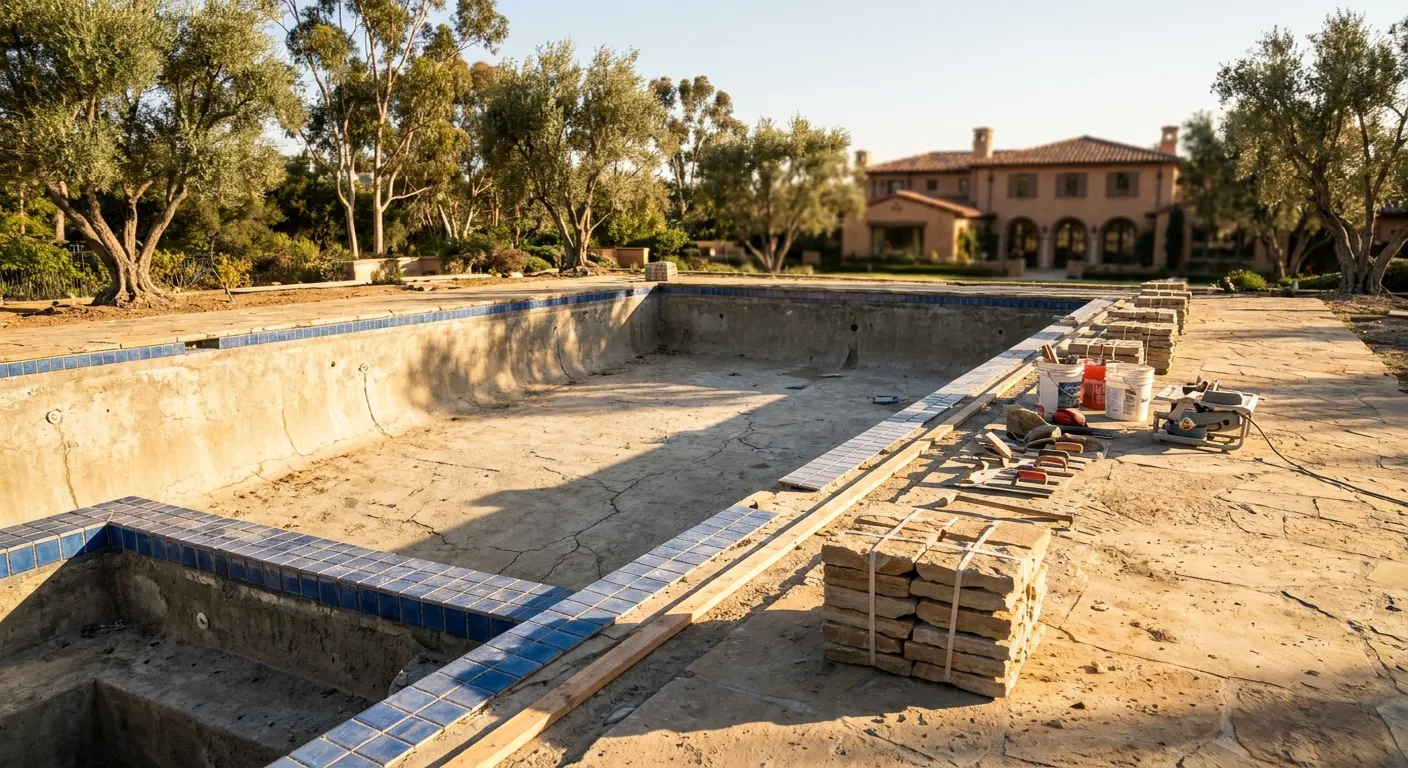
A pool remodel Rancho Santa Fe homeowners undertake often reaches beyond simple resurfacing. Large custom pools, mature landscaping, long driveways, and connected water features can push the project toward the top of published national ranges or beyond them. Define the full scope before choosing plaster, tile, or coping.
Pool remodel costs in Rancho Santa Fe: published ranges and estate scale
National remodel ranges provide a starting point, not a Rancho Santa Fe bid. HomeGuide’s June 10, 2024 guide places an average pool remodel at $5,000-$30,000. It lists inground remodels at $6,000-$50,000 and resurfacing at $2,000-$15,000.
Those figures cover a wide range of pool sizes and project scopes. A custom estate pool can sit near the upper end or move beyond it. More surface area requires more preparation and finish material. Deep ends, raised spas, vanishing edges, steps, benches, and water features add detailed work. Stone coping and surrounding decks create more transitions that must meet cleanly.
Access also changes the job. A long driveway may separate the work area from the street. Mature trees, walls, gates, and privacy landscaping can narrow the path for workers and materials. Protecting those surroundings takes planning and labor, even when the pool shell itself remains sound.
The best comparison starts with a written scope. Separate necessary shell and equipment work from finish choices. Then separate the pool from nearby deck, drainage, lighting, spa, and landscape work. That keeps a beautiful tile upgrade from hiding a circulation problem underneath it.
If the shell only needs a new interior finish, start with the options used for pool resurfacing and replastering. A larger remodel needs one plan covering every system that will be disturbed.
Older custom pools change the job
Older custom pools often contain several generations of repairs and upgrades. The visible plaster may be the newest layer, while plumbing, valves, equipment, tile, and decking come from different periods. That mixed history makes early investigation valuable.
Surface wear tells only part of the story. Stains, rough patches, exposed aggregate, and loose material affect the finish. Cracks, persistent water loss, movement near coping, or failing equipment can broaden the scope. A cosmetic plan won’t solve a leak or a damaged structural area.
Water movement deserves equal attention. A remodeled pool may gain a raised spa, new steps, water features, or different equipment. Each change affects how water travels through the system. A larger pump alone doesn’t correct poorly placed returns, restricted plumbing, or a weak suction path. The design and the hydraulics need to agree.
The surrounding property can hold clues too. Settled deck sections may create uneven joints along the coping. Tree roots can crowd buried lines. Previous additions may have placed landscape irrigation, lighting, or masonry close to pool plumbing. These conditions don’t automatically require replacement, but they should be mapped before demolition begins.
A licensed pro can separate finish wear from conditions needing pool repair. That distinction protects the remodel budget. It also prevents new plaster or tile from covering a problem that should have been addressed first.
Where the money actually goes in a large remodel
Preparation, access, finish area, and system coordination usually drive a large remodel. The decorative material matters, but it’s only one part of the total scope.
| Workstream | What changes | Why it affects the project |
|---|---|---|
| Interior finish | The existing surface is removed or prepared before a new finish is applied. | Larger shells and detailed shapes require more material and hands-on preparation. |
| Tile and coping | Old edges are removed, corrected, and rebuilt around the waterline. | Curves, raised walls, spas, and stone transitions add detailed fitting. |
| Plumbing and equipment | Lines, valves, pumps, filters, and controls may be revised together. | New features need compatible water flow and controls. |
| Deck and drainage | Sections near the pool may be opened, reset, or replaced. | Pool edges must meet surrounding surfaces without trapping runoff. |
| Site access | Materials and debris travel between the pool and the street. | Gates, long driveways, walls, and landscaping can limit movement. |
Sequence matters. Plumbing changes happen before new surfaces close the work area. Coping and tile transitions need to align with the deck. Equipment choices should match the finished pool rather than the old configuration. A design that treats each trade as an isolated purchase can produce expensive rework.
Finish selection still deserves attention. Plaster, quartz, pebble, tile, and stone create different textures and visual effects. The pool’s shape, shade, depth, and surrounding materials influence how a sample looks underwater. Our guide to La Jolla pool resurfacing explains how coastal custom pools also require decisions that connect the finish with the wider property.
The useful proposal is the one that defines preparation, materials, exclusions, equipment changes, and site protection. A single total without that detail is difficult to compare.
The license question comes before the design question
A Rancho Santa Fe pool remodel requires a licensed contractor. California Business and Professions Code §7048 provides only a narrow licensing exemption for work under an aggregate contract price of less than $1,000. The work must also be minor, require no permit, employ no helpers, and meet the section’s other conditions. Published remodel and resurfacing ranges place this work well beyond that exemption.
California’s pool classification is C-53. Under 16 CCR §832.53, that classification covers constructing pools, spas, and hot tubs, including the related trades and skills needed for that construction.
Verify the contractor before discussing deposits or approving demolition. The Contractors State License Board license check lets you search the license number and review its current status. The business name on the proposal should match the license record.
The scope should also identify who controls each part of the project. A remodel may involve the shell, plumbing, electrical components, gas equipment, masonry, decking, and landscaping. The lead contractor should explain how those pieces are assigned and coordinated.
Splash Pro Pools is a referral service. We connect homeowners with licensed, independent local pool professionals. The homeowner contracts with and pays the selected professional directly. Any workmanship terms come from that professional, so they should appear clearly in the signed agreement.
Water, drainage, and timing on a Rancho Santa Fe property
A drain and refill plan belongs in the remodel scope before the pool is emptied. Rancho Santa Fe is in unincorporated San Diego County, so City of San Diego pool-discharge rules shouldn’t be applied automatically. The property’s water provider and applicable local authorities set the current requirements.
San Diego County doesn’t have one countywide retail water utility. The San Diego County Water Authority lists 22 member agencies, and properties across the region receive water through different providers. Check the property’s water bill, identify the provider, and confirm current rates and discharge rules directly.
Drainage needs a physical route, not a vague note in the proposal. The plan should account for the driveway, slopes, planting beds, walls, and neighboring property. Mature landscaping may need protection from runoff and construction traffic. Salt water, backwash, and chemically treated water may be handled differently under local rules, so the contractor should confirm the approved path before pumping begins.
Refilling is only one part of returning the pool to service. Fresh water needs testing and chemical adjustment. The CDC recommends pool pH between 7.0 and 7.8. It also recommends at least 1 ppm free chlorine in pools, or at least 2 ppm when cyanuric acid or stabilized chlorine is used.
Coordinate water, access, and startup before selecting a demolition date. That sequence reduces the chance of a finished shell sitting empty while a discharge or refill question gets resolved.
When to call us
A large remodel needs a licensed pool pro when the work reaches the shell, plumbing, equipment, coping, or connected features. We’ll match you with an independent local professional who can assess the property and define the project scope. Call us at (760) 642-1256 and we’ll connect you with a licensed local pool pro.
Frequently asked questions
What does a pool remodel in Rancho Santa Fe cost?
HomeGuide's June 10, 2024 guide places average pool remodels at $5,000-$30,000 nationally and inground remodels at $6,000-$50,000. Large custom estate pools can reach or exceed the upper end because their size, access, finishes, and connected features add labor and materials.
Does a California pool remodel require a licensed contractor?
Yes. Pool remodels and resurfacing exceed California's narrow exemption for minor work under $1,000. The relevant pool contractor classification is C-53.
Who sets water and drainage rules in Rancho Santa Fe?
The property's water provider and local authorities set the applicable rules. Check the water bill to identify the provider, then confirm current refill and discharge requirements before draining.
Can resurfacing be separated from a larger remodel?
Resurfacing can be a focused project when the surrounding tile, coping, plumbing, equipment, and deck don't need coordinated changes. A condition assessment helps define the right scope.
Need professional help in San Diego County?
Splash Pro Pools connects San Diego homeowners with pool pros for the work in this post.