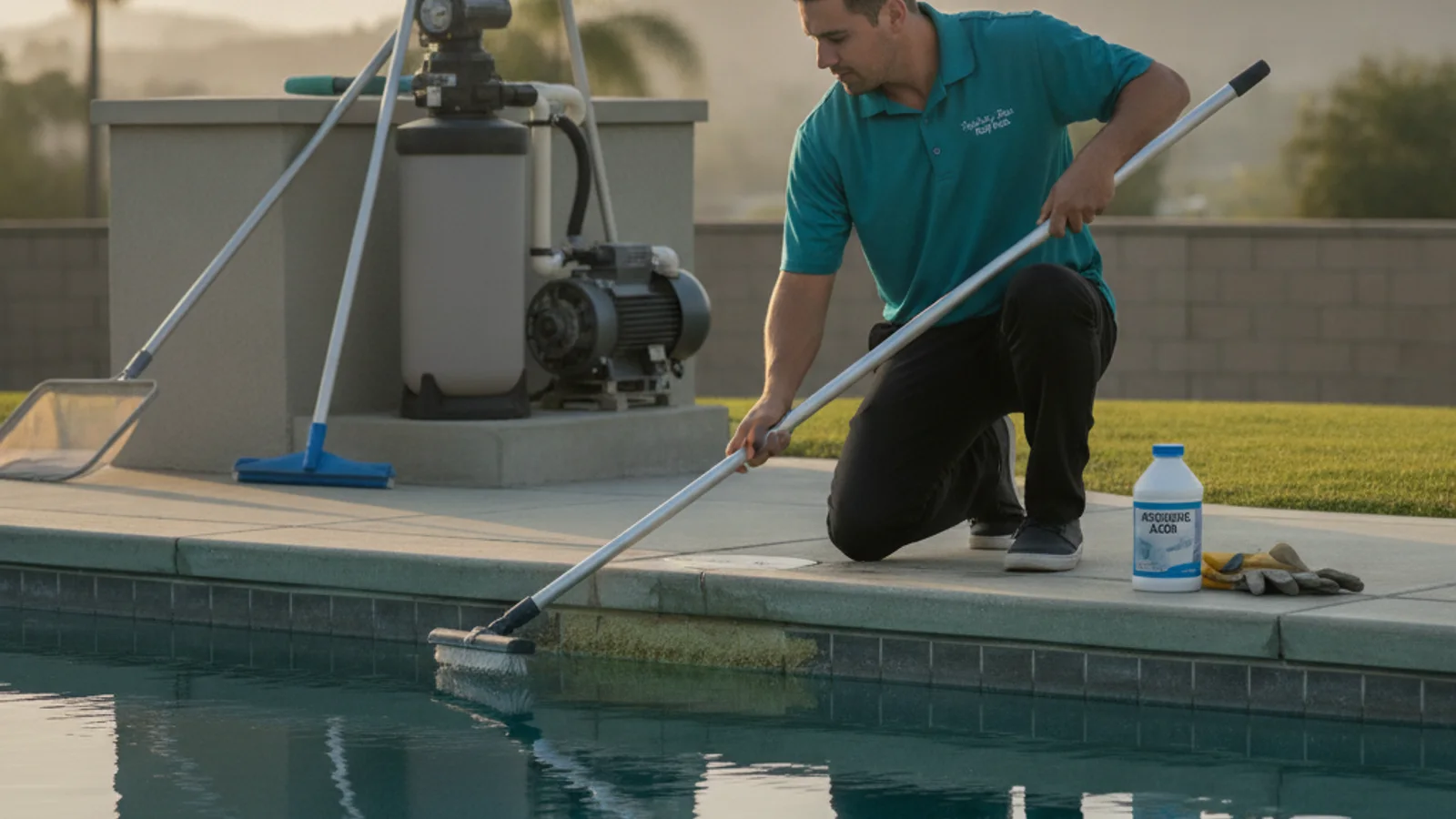
Match the stain color to the cause before you treat it. A green or brown stain that fades when you press a chlorine tablet against it is organic, from leaves or algae, and a strong shock plus brushing clears it. A blue-green, gray, or rust-orange stain that ignores chlorine is a metal stain, and chlorine makes it worse. Those need ascorbic acid, which is plain vitamin C, plus a sequestrant to keep the metal from settling back out. Get the diagnosis right and most San Diego pool stains come out without draining a drop.
Treating the wrong type is the mistake we see most often. People pour more chlorine on a rust stain, watch it darken, and assume the pool is ruined. It isn’t. Here’s how to tell what you’re looking at and how to remove each kind.
What kind of pool stain do you have?
Stain color tells you the cause, and the cause tells you the treatment. There are two families: organic and metal.
Organic stains are green, brown, or reddish-brown. They come from leaves, berries, acorns, algae, and other plant matter that sits on the plaster and breaks down. These are the easy ones. Chlorine destroys them.
Metal stains are blue-green, gray, black, or rust-orange. They come from iron, copper, or manganese dissolved in the water, usually from tap water, corroding equipment, or a stray metal object. Chlorine oxidizes these metals and drives them deeper, so it’s exactly the wrong tool.
The fastest way to tell them apart is the chlorine test. Hold a chlorine tablet against the stain for about 30 seconds, then pull it away. If the spot underneath is lighter, the stain is organic. If nothing changes, crush a vitamin C tablet, hold it on the stain, and watch. If the stain lifts under the vitamin C, you’ve got a metal stain. This one test saves people from treating a copper stain with the chemical that locks it in.
How do you remove organic pool stains?
Organic stains respond to oxidation, so chlorine is the answer. Start by balancing the water, then raise the free chlorine well above normal with a strong shock dose. Brush the stained area firmly right after dosing so the chlorine reaches fresh stain instead of a sealed-over surface. Most light organic stains fade within a few hours.
For a stubborn brown stain that’s been baking on the floor all summer, run the filter continuously, brush twice a day, and hold the chlorine high for two to three days. Keep the pump running so the treated water moves and the lifted organic material gets caught by the filter. Our green pool cleaning guide walks through the same shock-and-brush rhythm for a pool that’s gone fully green, which is just an organic stain problem at full scale.
If the stains keep landing in the same spots, the cause is usually a tree or shrub dropping debris faster than the skimmer can clear it. Steady weekly pool service and a mesh cover during heavy drop season stop the cycle.
How do you remove metal pool stains?
Metal stains come out with ascorbic acid, the same vitamin C sold for colds. Lower the free chlorine first, because chlorine fights the treatment. Then broadcast ascorbic acid powder over the water, or sprinkle it directly on a concentrated stain. The stain often starts lifting within minutes.
The catch is that ascorbic acid pulls the metal off the wall and back into the water, where it will stain again unless you trap it. So the moment the stain clears, add a metal sequestrant, sometimes called a stain and scale control product. The sequestrant binds the dissolved metal so the filter can carry it out instead of letting it redeposit. Run the filter continuously and clean it after, since it’s now holding the metal you just removed.
Skip this step and the stain comes right back, which is why so many homeowners think metal stains are permanent. They aren’t. They just need the metal held in solution long enough to leave the pool.
How do you remove rust stains from a pool?
Rust stains are a metal stain with a source, so you treat the stain and then kill the source. The orange-brown spot usually sits under a metal object that fell in, a piece of rebar bleeding through thin plaster, or a corroding fitting. Treat the stain the same way as any metal stain: drop the chlorine, apply ascorbic acid directly to the rust spot, then sequester the metal once it lifts.
Then find the source. A bobby pin, a toy, or a screw on the pool floor is an easy fix once you spot the rust ring around it. A rust stain that keeps returning in the same place with nothing sitting on it usually means rebar or a tie wire is corroding under worn plaster. That’s a structural signal, not a chemistry one. When the plaster has thinned enough to expose steel, no amount of vitamin C is a lasting fix, and it’s time to talk about pool resurfacing.
Why do San Diego pools stain more than most?
San Diego stacks the deck for staining. The tap water is hard, in the rough range of 250 to 400 parts per million, and it carries dissolved minerals and metals straight into your pool every time you top off. Our hard water guide covers why that same water leaves the white calcium line on your tile, and the dissolved metals riding along with it are what feed the gray and rust stains on the plaster.
The yards add the rest. Inland and East County pools sit under oaks, sycamores, and eucalyptus that drop tannin-heavy debris, and tannins are strong organic stainers. Coastal pools get less leaf drop but more wind-blown grit and salt air, which corrodes metal fittings and feeds metal staining over time. Between the water and the landscape, most San Diego pools see both stain families at some point.
This is also why a stain is rarely a one-time event here. If the water keeps delivering metals and the yard keeps dropping debris, the only real defense is steady chemistry and a sequestrant running year round.
When does a pool stain mean it’s time for an acid wash or resurface?
Surface stains lift with chemistry. Stains that have soaked into the plaster don’t, and that’s the line that decides your next move.
If you’ve run a correct treatment and the stain barely moved, the discoloration is in the plaster, not on it. On a finish that’s still thick, a drain-and-acid-wash strips the top layer and the embedded staining with it. Our pool acid wash guide explains when a wash is the right call and when it just buys time. An acid wash removes a thin layer of plaster, so a finish that’s already worn can only take so many before the surface gets too thin.
When the plaster is thin, etched, or staining faster than you can treat it, resurfacing is the fix that lasts. At Splash Pro Pools we connect you with vetted resurfacing and stain-treatment pros across all of San Diego County, so the first step is an honest look at whether your stain is a chemistry job, a wash, or a resurface. Getting that call right keeps you from paying to drain a pool that only needed a vitamin C treatment.
How do you prevent pool stains in San Diego?
Prevention is cheaper than every treatment above, and it comes down to three habits. First, keep the water balanced, since balanced water holds metals in solution and resists scale that traps stains. Second, run a metal sequestrant on a regular schedule, especially right after you add a lot of fresh tap water. Third, brush the whole pool weekly so debris and early stains never get a chance to set.
Skimming leaves before they sink and emptying the skimmer basket stops most organic stains before they form. For metal, the single best move is treating fill water that’s heavy in minerals, since most of the metal in your pool arrived through the garden hose. Consistent weekly pool service handles all three habits without you thinking about it, which is why pools on a steady schedule almost never reach the stained stage in the first place.
When to call us
If you’ve matched the color, run the right treatment, and the stain won’t budge, it’s no longer a chemistry problem and guessing gets expensive. The same goes for a rust stain that keeps coming back in one spot, which often means steel showing through the plaster. We’ll connect you with a local San Diego pro who can tell you whether you’re looking at a treatment, an acid wash, or a resurface before you spend a dollar on the wrong one. Call (858) 400-6757 for a straight answer on your pool’s stains.
Frequently asked questions
How do I know if my pool stain is organic or metal?
Do the chlorine test. Hold a chlorine tablet against the stain for 30 seconds. If it fades, the stain is organic and chlorine will clear it. If nothing happens, hold a crushed vitamin C tablet against it instead. If that lifts the stain, it's a metal stain that needs ascorbic acid, not more chlorine.
Will more chlorine remove a metal stain from my pool?
No. Adding chlorine to a metal stain usually makes it worse by oxidizing the metal and setting it deeper into the plaster. Metal and rust stains need ascorbic acid (vitamin C) and a sequestrant to hold the metal in solution. Save the chlorine for organic stains.
Can pool stains be removed without draining the pool?
Most can. Organic stains lift with a shock and a brush, and metal stains usually clear with an ascorbic acid treatment while the pool stays full. Draining is a last resort, reserved for stains soaked deep into old plaster or for a full acid wash, and in San Diego draining carries real risk of cracking the shell.
Why does my San Diego pool keep staining?
San Diego tap water is hard and carries dissolved metals, and many yards drop heavy plant debris into the water. Hard water and metals leave mineral and rust stains, while leaves, berries, and algae leave organic ones. Without a sequestrant and steady brushing, both keep coming back.
How much does professional pool stain removal cost in San Diego?
A targeted stain treatment usually runs less than a full acid wash because the pool stays full. If stains have etched into worn plaster, an acid wash or resurfacing is the real fix. A local pro can tell you which one you need before you spend money on the wrong treatment.
Does a saltwater pool stain more than a chlorine pool?
Salt itself doesn't stain, but salt systems can raise pH and accelerate scale and metal staining if the water isn't balanced. The same rules apply: balance the chemistry, run a sequestrant, and brush often. Stain prevention is about water balance, not the sanitizer type.
Need professional help in San Diego County?
Splash Pro Pools connects San Diego homeowners with pool pros for the work in this post.