Heads up before you read: Splash Pro Pools keeps pools clean; resurfacing and replastering is a different trade. Call (858) 400-6757 and we’ll match you with a local pro who handles it.
Resurfacing is the category. Replastering is one option inside it, using plaster as the new finish. White plaster here lasts about 7 to 10 years. Pebble or quartz typically lasts 15 to 25. Do not plaster over failing plaster. Call (858) 400-6757.
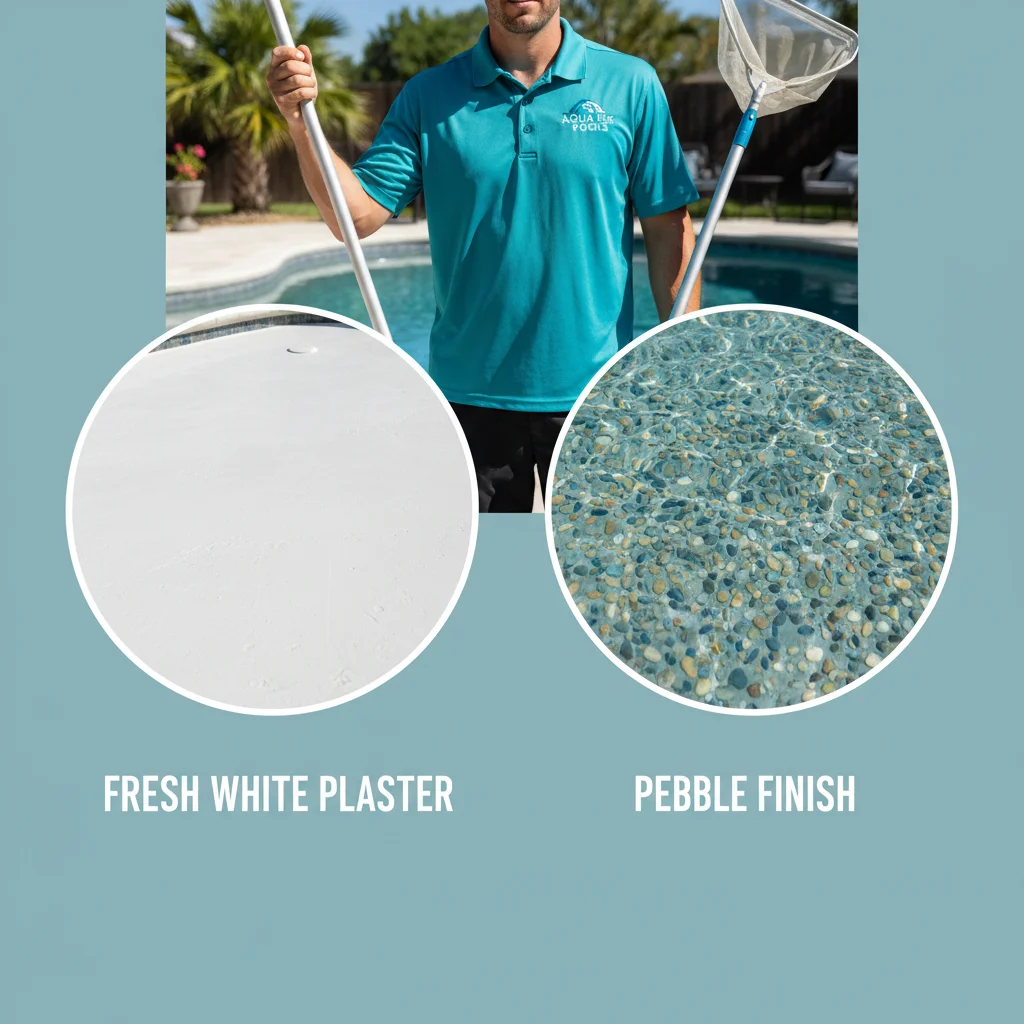
The terms people mix up and what they really mean
Many people use “replastering” and “resurfacing” interchangeably, but they aren’t the same thing. Getting the terminology right helps you understand exactly what you’re buying.
Here’s the simplest way to think about it:
- Pool Resurfacing is the overall process. It’s the umbrella term for giving your pool a new interior finish. This involves draining the pool, prepping the old surface, and applying a brand new waterproof layer. That new layer could be plaster, but it could also be an aggregate finish like pebble or quartz.
- Pool Replastering is a specific type of resurfacing. It means you are choosing plaster as your new surface material.
An easy analogy is “vehicles” versus “cars.” All cars are vehicles, but not all vehicles are cars. In the same way, all replastering jobs are a form of resurfacing, but not all resurfacing jobs are replastering. When a contractor gives you a quote for a full pool resurfacing project, they are talking about the entire process, and “replastering” is just one of the material choices you can make for the final finish. Knowing this difference empowers you to ask better questions and compare quotes accurately.
When a new plaster finish is enough
So if replastering is just one option, when is it the right one? Choosing to replaster with traditional plaster is an excellent and cost-effective solution in many cases.
A fresh coat of plaster is likely the best choice if:
- Budget is your top priority. Standard white plaster is the most affordable pool surface material on the market. It provides a clean, classic look without the higher price tag of aggregate finishes.
- You love the classic look. The smooth, bright white or light blue finish of plaster is timeless. If that’s the aesthetic you want, there’s no need to pay more for a different style.
- Your pool’s surface is just old. If the main issue is simply that your 10-year-old plaster is rough, stained, or thinning, a straightforward replaster is the direct solution. It addresses cosmetic wear and tear effectively.
Signs that a replaster is needed include a surface that feels like sandpaper (often called “pool rash”), widespread staining that an acid wash can’t fix, or small bare patches where the underlying concrete is starting to show. For many San Diego pools, a simple replaster is all that’s needed to bring it back to life for another decade.
However, if you’re looking for a longer-lasting solution or a different aesthetic, you’ll want to consider other resurfacing options.
Cost difference between resurfacing options in San Diego
The final material you choose is the single biggest factor in the total cost of a pool resurfacing project. The prep work, draining, chipping, and cleaning, is largely the same regardless of the finish, so the price difference comes down to materials and the specialized labor required to apply them.
Here’s a general cost hierarchy for a standard residential pool in San Diego County:
- Plaster: This is your baseline and most budget-friendly option. It’s a simple mixture of white cement, marble dust, and water. While affordable, it has the shortest lifespan. For an in-depth look at the numbers, our guide to pool replastering costs in San Diego breaks it all down.
- Quartz (Aggregate): This is a mid-range option. It’s a plaster mix with small quartz crystals added in. This makes the surface harder, more stain-resistant, and longer-lasting than plain plaster. It typically costs 15-30% more than a standard replaster.
- Pebble (Aggregate): This is the premium choice. It consists of small, smooth river pebbles embedded in a specially formulated cement. It’s incredibly durable and offers a more natural, textured look. Pebble finishes are the most expensive, often costing 40-75% more than plaster, but they also last two to three times as long.
Other factors like the size of your pool, the condition of the existing surface (if it requires extensive repairs), and job site access will also influence the final price. Always get a detailed quote that specifies the prep work and the exact material being used.
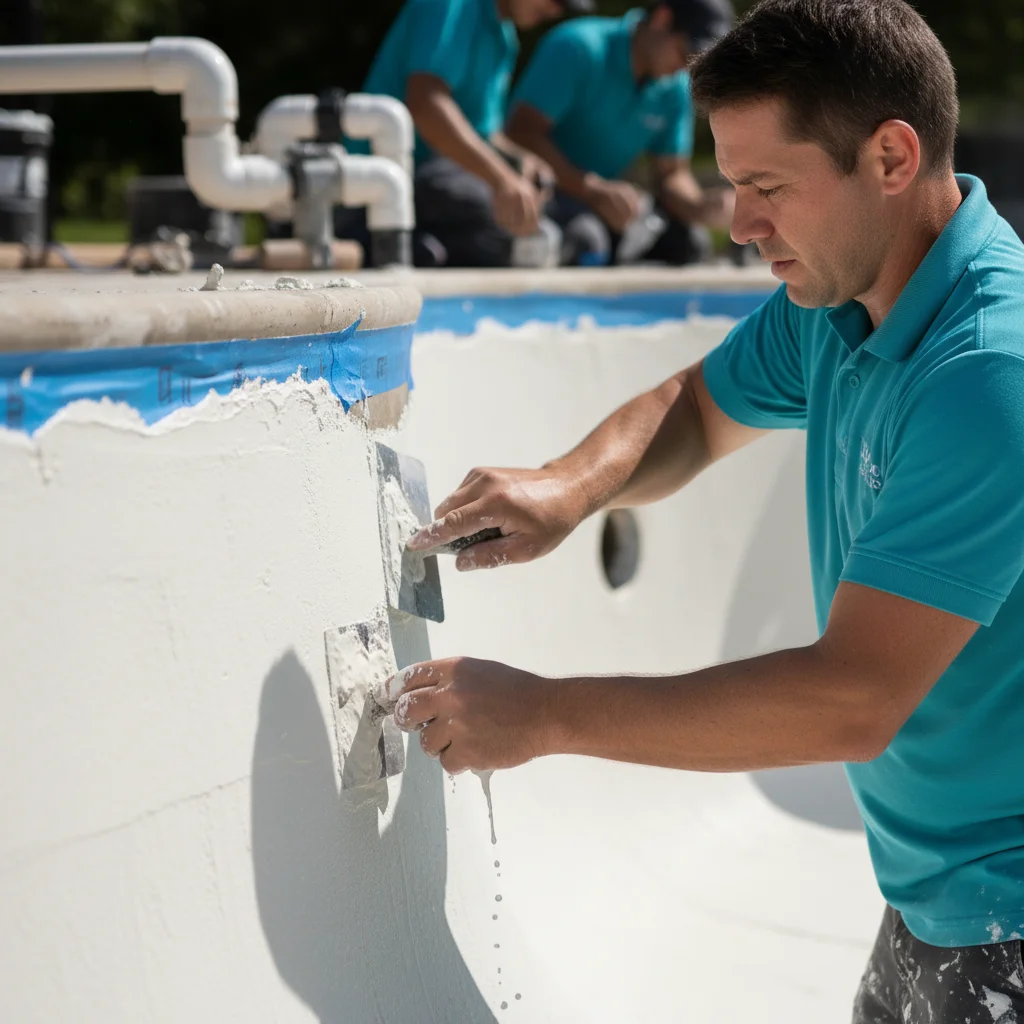
How long each one lasts in our water
San Diego presents a unique challenge for pool surfaces. Our combination of intense, year-round sun and notoriously hard water can be tough on any finish. The minerals in our water supply, as noted by the San Diego County Water Authority, can lead to calcium scaling if water chemistry isn’t perfectly maintained. This makes material durability a crucial factor in your decision.
Here’s how the common surfaces hold up in our local environment:
- Standard Plaster: You can expect a plaster surface to last 7 to 10 years in San Diego. Plaster is relatively soft and porous, making it more susceptible to chemical etching, staining, and mineral buildup. Consistent, professional weekly maintenance is key to maximizing its lifespan.
- Quartz Finish: A quartz surface typically lasts 10 to 15 years. The quartz aggregate makes the surface harder and less porous than plaster alone. This provides better resistance to the staining and etching that can be caused by our hard water. It’s a great middle-ground for homeowners who want more durability without the full cost of a pebble finish.
- Pebble Finish: This is the undisputed champion of longevity, lasting 15 to 25 years or even longer. The pebbles themselves are non-porous and chemically inert. They won’t stain or react to pool chemicals. This makes the surface incredibly resilient and low-maintenance over its life, which is a huge advantage in Southern California.
While a pebble surface is a bigger investment upfront, its extended lifespan often makes it the most cost-effective choice over the long term, as you’ll avoid the cost and hassle of another resurfacing project for a very long time.
How to know which one your pool actually needs
Deciding between a simple replaster and a premium aggregate finish comes down to evaluating your pool’s condition, your budget, and your long-term goals.
First, look for the clear signs that your current surface is failing:
- Rough Texture: Is the surface abrasive to the touch? If it feels like sandpaper and scrapes skin, the plaster is eroded.
- Widespread Stains: Are there large, stubborn stains from minerals, algae, or leaves that chemicals and brushing won’t remove? This indicates the surface has become porous and is holding onto contaminants.
- Bare Patches (Delamination): Can you see dark gray or brownish spots? That’s likely the underlying gunite or concrete shell showing through where the plaster has worn away completely. This is a critical sign that resurfacing is needed immediately to protect the pool’s structure.
- Significant Cracks: While tiny hairline “craze” cracks can be normal, larger cracks that you can fit a fingernail into need professional assessment. They may need to be repaired before any new surface can be applied.
Once you’ve confirmed you need a new surface, ask yourself these questions:
- What’s my budget? If keeping initial costs low is the most important factor, plaster is the clear winner.
- How long do I plan to be in this home? If you’re staying for 15+ years, investing in a durable pebble finish makes financial sense. If you might move in 5-7 years, a fresh plaster coat is a perfectly reasonable choice.
- What’s my tolerance for maintenance? Aggregate surfaces are more forgiving of minor chemical fluctuations and are more stain-resistant, which can mean less stress over time.
- What look do I want? Do you prefer the classic, smooth swimming pool look (plaster) or a more modern, lagoon-style aesthetic (pebble)?
The best way to get a definitive answer is to have a licensed professional inspect your pool. A qualified pool contractor can identify underlying issues, explain your preparation options, and give you an accurate quote for each type of finish. Be sure to verify any contractor’s license with the California Contractors State License Board before signing a contract.
When to call us
Pool resurfacing is a complex, multi-day job that requires specialized equipment, expertise in material science, and a deep understanding of how to properly prepare the pool shell. This is not a DIY project. An improper application can lead to a new surface that fails in just a few years. For a durable, beautiful finish that lasts, you need a team of experienced professionals.
If your pool is showing its age, we can help you decide on the perfect new surface for your backyard and your budget. Call us at (858) 400-6757 and we’ll connect you with a vetted local pool pro.
Frequently asked questions
Is resurfacing the same as replastering a pool?
Not exactly. Replastering is a specific type of resurfacing. Resurfacing is the broad term for applying any new interior finish, which could be plaster, pebble, quartz, or tile. Think of resurfacing as the category and replastering as one option within it.
Can I just plaster over my old pool plaster?
Generally, no. For a new finish to bond correctly and last, the old, deteriorating layer must be properly prepped. This usually involves either chipping it out or applying a special bond coat after an aggressive wash. Plastering over failing plaster is a recipe for premature failure.
How often do you need to resurface a pool in San Diego?
It depends on the material. A standard white plaster finish lasts about 7-10 years. An aggregate finish like pebble or quartz is more durable against our hard water and sun, typically lasting 15-25 years.
What is the most durable pool surface?
Aggregate finishes, like pebble and polished quartz, are the most durable options available today. They are highly resistant to staining and chemical imbalances, giving them a significantly longer lifespan than traditional plaster.
Need this done in San Diego County?
For repair and renovation work like this, we hand you to our trusted partner, Del Rancho Pools.