A note on scope: this is resurfacing and replastering work, which sits outside what Splash Pro Pools does. Call (858) 400-6757 and we’ll match you with a vetted local pro who covers it.
Escondido plaster often lasts 7 to 10 years. Quartz or pebble typically lasts 15 to 25. After a resurface you wait through a 28-day cure before normal swimming. Call (858) 400-6757.
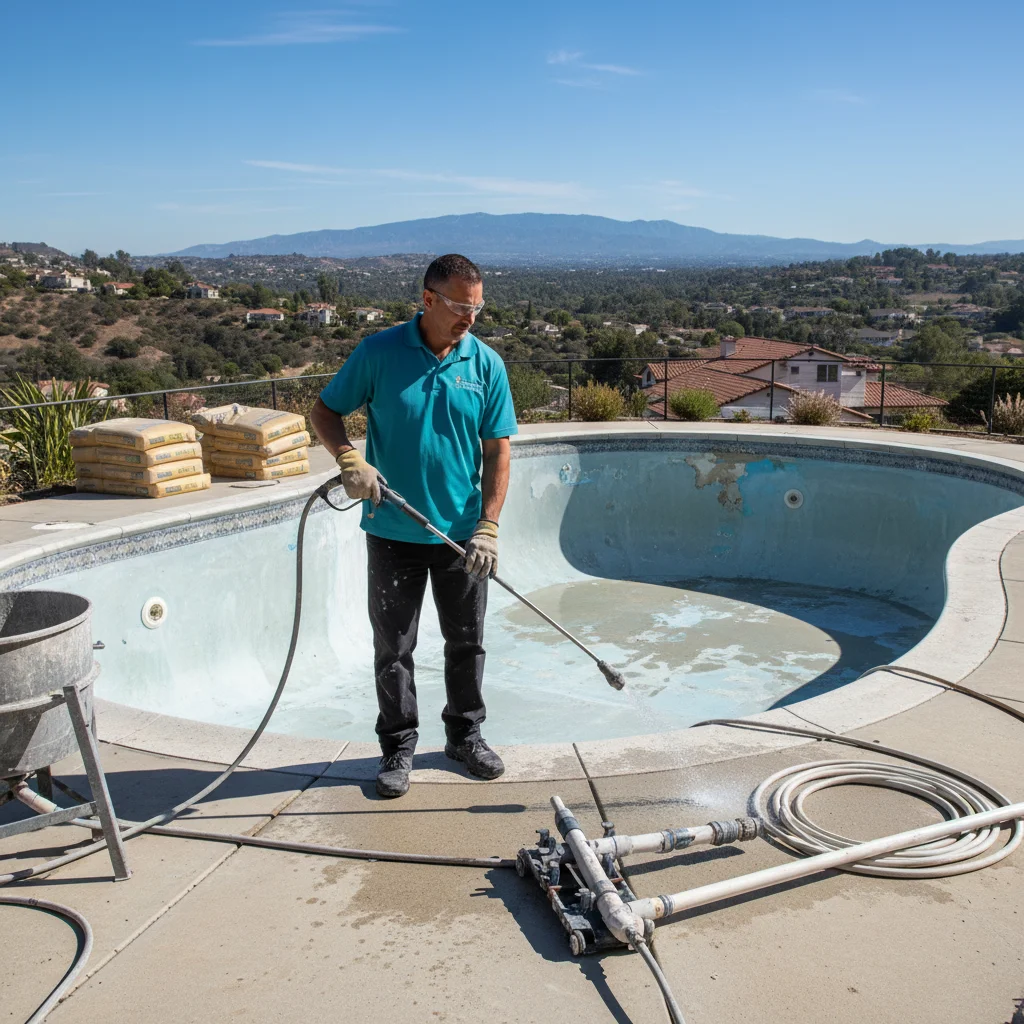
Why Escondido pools wear out faster than coastal ones
Living in Escondido means enjoying warmer, sunnier days than our coastal neighbors. Unfortunately, that same beautiful climate is tough on your pool’s interior finish. The “inland twist” is a combination of factors that accelerates wear and tear, often shortening the lifespan of a standard plaster pool surface by several years.
First is the intense, direct sun. The increased UV radiation breaks down the components in plaster more quickly, leading to premature fading and degradation. Second, the higher average air temperatures heat the water, which can speed up chemical reactions and make maintaining perfect water balance more challenging.
The most significant factor, however, is the daily temperature swing. Escondido can see a 30-degree difference between a hot afternoon and a cool night. This causes the pool’s shell and plaster surface to expand and contract constantly. Over thousands of cycles, this thermal stress can create microscopic cracks and weaken the plaster’s bond to the gunite shell.
Finally, Escondido’s water chemistry plays a role. Like much of inland San Diego County, our water is hard, with higher levels of calcium and other dissolved minerals. This can lead to scaling and calcium buildup, which is not only unsightly but can also damage the plaster. Hard water in San Diego pools often contributes to a rougher, older-looking surface much sooner than in areas with softer water.
How to tell it’s plaster vs surface staining
One of the most common questions we get is, “Is this just a stain, or is my pool’s surface failing?” It’s a critical distinction, as one might be fixed with a chemical treatment, while the other requires a full resurfacing job.
Surface stains are typically caused by organic material or minerals.
- Organic Stains: From leaves, algae, or dirt. These often have a greenish or brownish tint and can sometimes be removed with a good brushing and a chlorine shock.
- Mineral Stains: From copper (blue-green streaks), iron (rusty brown), or manganese (dark spots). These come from the source water or corroding equipment and are more difficult to remove.
Failing plaster, on the other hand, is a structural issue with the surface itself. Look for these telltale signs:
- Roughness & Etching: The surface feels like sandpaper to the touch. This is plaster slowly dissolving due to improper water chemistry over time.
- Chalking: If you wipe your hand on the pool wall and it comes away with a white, powdery residue, the plaster is oxidizing and breaking down.
- Spalling or Flaking: You see small chips or flakes of plaster on the pool floor. This indicates the surface is losing its integrity.
- Delamination: This is the most serious issue. It’s where the plaster has separated from the gunite shell underneath, creating a hollow spot. You can often find these by tapping on the wall with a tool and listening for a hollow sound instead of a solid thud.
A simple test is to try to scratch a discolored area with a screwdriver or even a fingernail. If the spot is just a stain, nothing will happen. If it’s failing plaster, you’ll likely scrape off a fine, powdery material. When you see these physical signs of degradation, no amount of stain remover will help; the surface itself is compromised.
What resurfacing actually costs in Escondido in 2026
When it’s clear that a new surface is needed, the next question is always about cost. A full pool resurfacing and replastering project is a significant investment, but it completely transforms your pool. Here in Escondido, as of 2026, pricing depends heavily on the pool’s size and the material you choose.
For an average-sized residential pool (around 15’ x 30’, or 500 square feet of interior surface area), here are the typical price ranges:
- Standard White Plaster: $6,000-$8,500. This is the classic, most affordable option. It gives you that traditional light blue water color but has the shortest lifespan.
- Quartz Aggregate Finish: $8,000-$12,000. This is a popular upgrade. It’s a plaster mix fortified with crushed quartz crystals, making it much harder, more stain-resistant, and longer-lasting than standard plaster. It also comes in a variety of colors.
- Pebble Aggregate Finish: $10,000-$16,000+. This is the premium, most durable option available. A mixture of cement and small, smooth river pebbles, it’s incredibly tough and resistant to chemical and UV damage. It offers a more natural, textured look and the longest lifespan by far.
Several factors will adjust these prices up or down:
- Pool Size & Shape: Larger pools or complex designs with swim-outs and steps require more material and labor.
- Existing Condition: If the old plaster is delaminating badly, it will require more extensive demolition and prep work, adding to the cost.
- Upgrades: This is the perfect time to replace old waterline tile, add decorative mosaics, or upgrade lights and fittings.
- Backyard Access: Tight access for equipment and material trucks can sometimes increase labor costs.
For a broader overview of costs across the county, our guide on the cost of pool replastering in San Diego provides additional context.
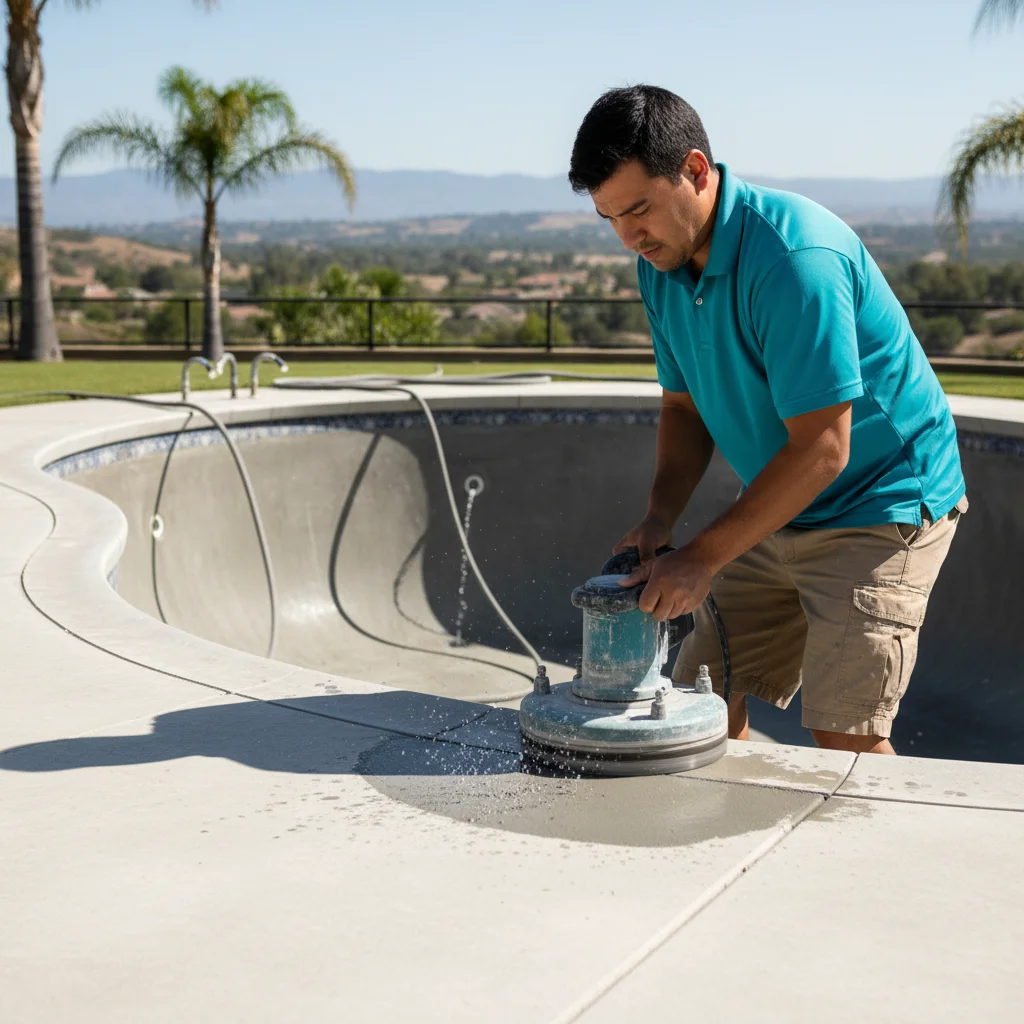
Plaster vs Pebble Tec vs quartz: what holds up inland
Choosing the right material is the most important decision you’ll make in this process, especially given Escondido’s demanding climate. While budget is always a factor, understanding how each material performs here will help you make a smart long-term investment.
Standard Plaster
This is a simple mixture of white cement, marble dust, and water.
- Pros: Lowest upfront cost, classic smooth feel, bright appearance.
- Cons: Most porous and susceptible to staining. It’s the softest material, making it vulnerable to etching from improper water chemistry. Its lifespan in Escondido is often the shortest, around 7-10 years. It requires diligent weekly pool service to last.
Quartz Aggregate (e.g., QuartzScapes)
This is a plaster base with quartz crystals mixed in.
- Pros: Significantly more durable and stain-resistant than plaster. The quartz is a non-porous, chemically inert material that stands up to UV rays and harsh chemicals. It offers a great balance of durability, aesthetics, and cost. Expected lifespan is 10-15+ years.
- Cons: Higher cost than plaster. The finish has a slightly sandy texture, which most people like but is not as glass-smooth as new plaster.
Pebble Aggregate (e.g., PebbleTec)
This finish uses a cement base with small, polished river pebbles as the primary component.
- Pros: The undisputed king of durability. It is virtually impervious to staining and chemical damage. It handles Escondido’s sun and temperature swings without issue. It also hides small debris well and offers a very natural, lagoon-like look. Lifespan is often 20-25 years or more.
- Cons: Highest initial cost. The texture is noticeably bumpy, which some people dislike for sensitive feet (though mini-pebble and polished options offer a smoother feel).
Recommended for Escondido: For most homeowners, a quartz finish offers the best blend of performance and value for our inland climate. It’s a major step up in durability from plaster without the top-tier cost of pebble. If your budget allows, a pebble finish is a fantastic “one and done” investment that will likely outlast your time in the home. You can learn more about these choices in our detailed guide to pool resurfacing options.
What a good crew does on day one through day five
Resurfacing your pool is a disruptive process, but a professional crew follows a clear, efficient timeline. Knowing what to expect can make the project feel much smoother. Here’s a typical five-day schedule.
Day 1: Drain & Demolition The process begins by draining your pool completely. This gets handled according to local regulations from the San Diego County Water Authority. Once empty, the loud part starts. The crew uses pneumatic chisels or high-pressure water jets to strip away the old, failing plaster. This step is messy and crucial for creating a clean, rough surface for the new material to bond to.
Day 2: Inspection & Preparation With the old surface gone, the crew inspects the underlying gunite shell for any cracks or structural issues. Any “rebound” (loose aggregate) gets repaired and cracks addressed. The crew then preps the pool by washing the shell and masking off all tiles, lights, returns, and skimmers with tape and plastic to protect them.
Day 3: Application Day This is when the transformation happens. A large truck with the mixed material arrives. The crew works quickly and in tight coordination to pump the material into the pool and hand-trowel it onto the walls and floor. It’s a physically demanding process that requires years of experience to achieve a uniform, beautiful finish.
Day 4: Exposing & Filling Depending on the finish, the crew may return the next morning to do a light acid wash. This step removes the thin layer of surface cement to expose the quartz or pebble aggregate underneath, bringing out the final color and texture. After that, two hoses are placed in the deep end, and the fill begins. It is critical that the water is not turned off until the pool is completely full to prevent a permanent “bathtub ring” on the new surface.
Day 5: Chemical Startup As soon as the water level is correct, a technician will be on hand to begin the chemical startup. This is the most important part of ensuring the longevity of your new surface. Specific startup chemicals get added to balance the water and begin the 28-day curing process. You’ll also get a clear schedule for brushing the pool daily for the first week to ensure the plaster cures evenly and without streaks.
When to call us
If your pool’s surface is rough, stained, and showing its age, it’s time to consider your options. Pool resurfacing is a complex, labor-intensive job that requires specialized equipment and expertise, it is not a DIY project. A poor application can fail in just a few years, wasting your entire investment.
When you’re ready to restore your pool’s beauty and protect its value, you need a licensed and insured professional. Always verify a contractor’s C-53 Swimming Pool Contractor license on the Contractors State License Board (CSLB) website before signing a contract. We are ready to help you choose the right surface for your Escondido home and budget.
Call us at (858) 400-6757 and we’ll connect you with a vetted local pool pro.
Frequently asked questions
How often do you need to resurface a pool in Escondido?
Due to the intense sun, heat, and harder water in Escondido, pool surfaces wear out faster. A standard plaster finish might last 7-10 years, while more durable quartz or pebble surfaces can last 15-25 years or more with proper care.
What's the best pool surface for Escondido's hot climate?
For the Escondido climate, aggregate finishes like quartz and pebble are superior to standard plaster. They are harder, more resistant to UV degradation and chemical fluctuations, and handle the daily temperature swings better, significantly extending the life of your pool's surface.
Can I swim in my pool right after it's resurfaced?
No. After the resurfacing and refilling, the pool enters a critical 28-day curing period. While the pool looks ready, the surface is still hardening and requires specific water chemistry management and daily brushing. A clear schedule gets provided, but swimming is typically off-limits for the first week and limited for several weeks after.
Need this done in San Diego County?
For repair and renovation work like this, we hand you to our trusted partner, Del Rancho Pools.