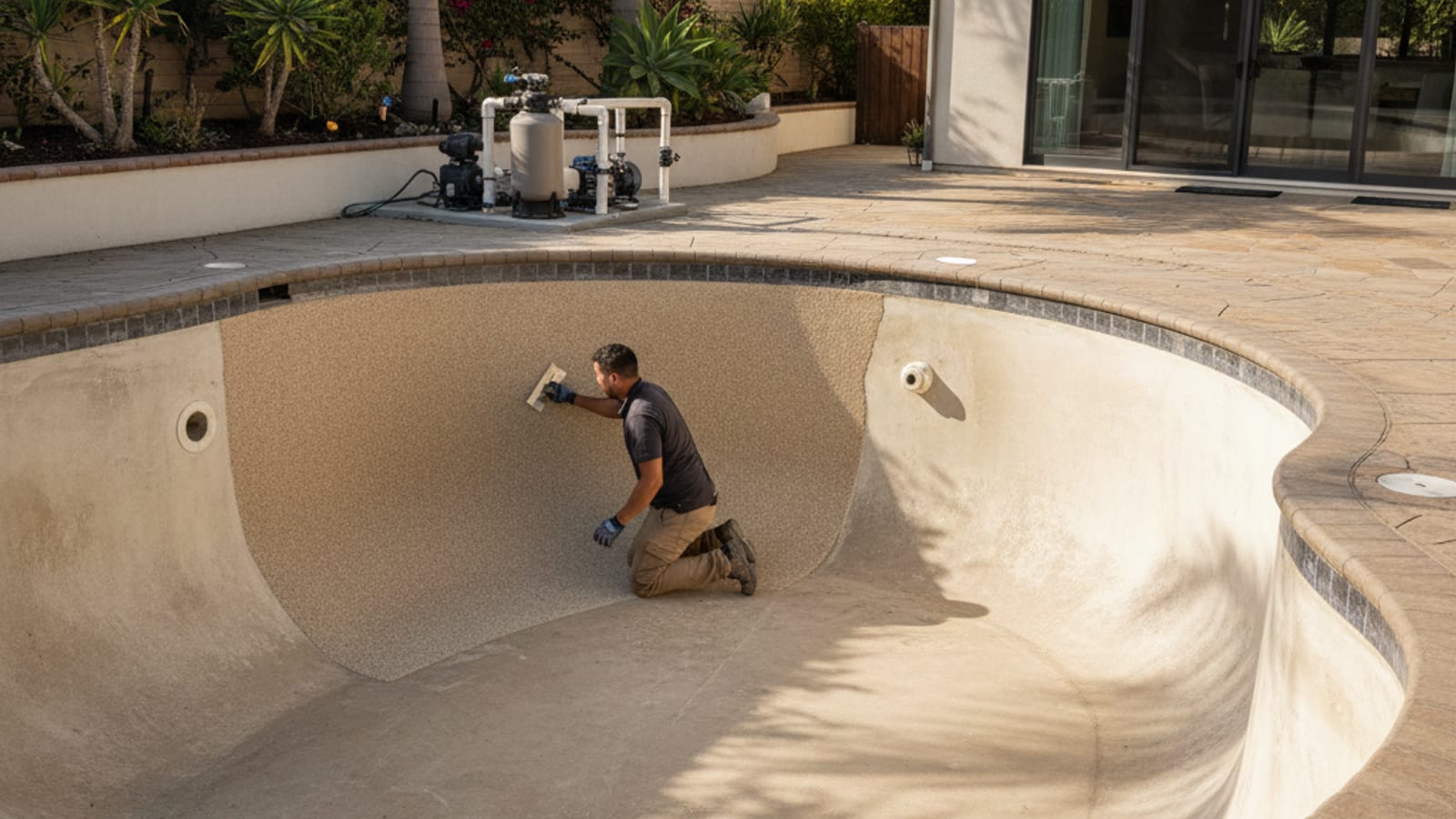
One thing to flag: Splash Pro Pools does not take this work on. It goes to a vetted local resurfacing and replastering pro, reachable at (858) 400-6757.
TL;DR
- Standard plaster replastering in San Diego: $6,500 to $9,500 for a typical 15,000-gallon pool (lasts 8 to 12 years).
- Quartz finish: $8,500 to $12,500 (12 to 18 years). Pebble finish: $10,500 to $16,000 (15 to 25 years). Glass tile: $18,000 to $35,000+.
- Pool size is the main cost driver, measured by surface area, not gallons. A 40-foot pool has roughly double the surface area of a 20-foot pool.
- Signs you need replastering now: rough surface, visible pitting or craters, heavy staining, calcium nodules, or plaster lifting.
- San Diego’s hard water shortens plaster life by 1 to 3 years versus national averages, pebble or quartz is the better long-term investment here.
- Best time to book: February or March for spring work. Contractors fill April through June slots 6 to 10 weeks out.
Pool replastering is one of the largest single expenses in pool ownership, and one where San Diego homeowners often get surprised by both the cost range and the decision complexity. Standard plaster and glass tile aren’t even in the same ballpark, and the right finish choice affects your maintenance costs and replacement schedule for the next 10 to 25 years.
This guide breaks down what replastering actually costs in San Diego in 2026, why finish type matters so much in this market, and how to tell when you actually need it versus when you can wait.
How much does it cost to replaster a pool in California?
Replastering a pool in California costs $6,500 to $9,500 for standard white plaster on a typical 15,000-gallon pool, $8,500 to $12,500 for quartz, and $10,500 to $16,000 for pebble. California labor rates sit above the national average, and hard municipal water across most of the state shortens plaster life by one to three years, which is why quartz and pebble usually pay for themselves here.
Pool replastering in San Diego lands at the upper half of those statewide ranges. Coastal Southern California carries higher contractor labor rates than the Central Valley or the Inland Empire, and San Diego County water runs 10 to 20 grains per gallon depending on which district serves you. The figures throughout this guide are San Diego County numbers, not statewide averages.
Pool replastering cost by finish type (San Diego, 2026)
The finish type is the single largest cost variable in any replastering job. Here are current market rates for a typical 15,000-gallon residential pool (roughly 20 × 40 feet, 6-foot depth):
Standard white plaster
San Diego cost: $6,500 to $9,500 installed Lifespan: 8 to 12 years (7 to 10 in San Diego’s hard-water conditions) Surface: Smooth, classic white Stain resistance: Low, particularly vulnerable to copper, iron, and organic staining Hard water performance: Weakest of the four finish types, calcium scaling accelerates surface deterioration
Standard plaster is white Portland cement mixed with marble aggregate. It’s the original pool finish and still the most common by volume. In softer-water markets, it’s a practical, cost-effective choice. In San Diego, its weakness to calcium scaling from our 200 to 400 ppm source water means shorter lifespans and more frequent maintenance costs.
If budget is the primary constraint, standard plaster is viable. If you’re planning to stay in the home 15+ years, the math usually favors upgrading.
Quartz finish
San Diego cost: $8,500 to $12,500 installed Lifespan: 12 to 18 years Surface: Smooth to slightly textured depending on brand; richer color options Stain resistance: Moderate to good, significantly better than plain plaster Hard water performance: Good, quartz aggregate adds durability against scaling
Quartz finishes blend white cement with ground quartz crystal, producing a harder surface than standard plaster. Brand names include Diamond Brite, PlasterScapes, and Pebble Sheen’s quartz-aggregate variants. Color options are substantially broader than white plaster, blues, greens, grays, and multicolor blends.
For most San Diego homeowners choosing between plaster and pebble, quartz is the logical middle ground: meaningfully more durable than plaster, smoother underfoot than pebble, and $2,000 to $4,000 less expensive than pebble to install.
Pebble finish
San Diego cost: $10,500 to $16,000 installed Lifespan: 15 to 25 years Surface: Textured, small pebbles visible and tactile underfoot Stain resistance: Excellent, texture hides minor imperfections and small stains Hard water performance: Best of the three major finish types, the pebble texture is more forgiving of calcium buildup than smooth surfaces
Pebble finishes embed small river pebbles (or similar aggregate) into the cement matrix, creating a surface that is genuinely more durable than plaster or quartz. Major brands: PebbleTec (the original, still the most common), Pebble Sheen (finer aggregate, smoother feel), and Pebble Fina (finest texture, closest to quartz in feel while retaining pebble durability).
Pebble is the clear long-term winner for San Diego pools. The higher upfront cost is offset by:
- 50 to 100 percent longer lifespan than standard plaster
- Better performance in hard water
- Less frequent acid washing and surface maintenance
- Higher-end aesthetic that adds to property value
The primary downside is texture: rough underfoot, which bothers some swimmers (especially small children). This is a legitimate preference factor, not just a cost consideration.
Glass tile
San Diego cost: $18,000 to $35,000+ for full surface; $2,500 to $6,000 for waterline tile only Lifespan: 25+ years for quality glass tile properly installed Surface: Smooth, highly reflective, premium aesthetic Stain resistance: Excellent, non-porous surface Hard water performance: Good when installed correctly; grout joints can accumulate scale
Glass tile is a specialty finish used in luxury pool builds and high-end renovations. Full glass tile surfaces are rare outside of resort and high-end custom pools, the material and labor costs are substantial. More commonly, glass tile is used as an accent at the waterline while the rest of the pool uses pebble or quartz.
If you’re considering glass tile, get multiple contractor bids and ask specifically about installer experience, glass tile installation requires different techniques than plaster-based finishes and is unforgiving of errors.
How pool size affects replastering cost
Replastering is priced by surface area, not by gallons. A larger pool has more square footage of walls, floor, and curves, which drives both materials and labor cost.
| Pool size | Surface area (approx.) | Plaster | Quartz | Pebble |
|---|---|---|---|---|
| Small (under 10,000 gal) | 550 to 700 sq ft | $5,000 to $7,500 | $7,000 to $10,000 | $9,000 to $13,000 |
| Medium (10,000 to 20,000 gal) | 800 to 1,100 sq ft | $6,500 to $9,500 | $8,500 to $12,500 | $10,500 to $16,000 |
| Large (20,000+ gal) | 1,200 to 1,600 sq ft | $9,000 to $13,000 | $12,000 to $17,000 | $15,000 to $22,000 |
| Pool + spa combo | Add $1,500 to $3,500 |
Note on spa combos: A pool/spa combination always adds cost, the spa has curved surfaces and harder-to-work geometry that increases labor time.
Note on irregular shapes: Freeform or kidney-shaped pools with significant curves and features (raised walls, baja shelves, beach entries) add 15 to 25 percent to surface area estimates compared to a simple rectangle.
What else affects the final cost?
Finish material is the starting point, but several variables move the final number:
Chip-out requirement. If the old plaster is severely deteriorated, it must be chipped out to the gunite shell before new finish goes on. This adds $1,500 to $3,000 to the job. If the old surface is mostly intact and well-bonded, it can be prepped with acid wash and bonding agent, saving that cost. The contractor will assess this during the drain-and-inspect phase.
Tile replacement. If waterline tile is scaled, chipped, or outdated, most homeowners replace it during replastering (since the pool is already drained). New 6-inch waterline tile runs $2,500 to $4,500. Premium glass mosaic tile waterlines run $4,000 to $8,000.
Coping replacement. Coping (the edge material that borders the pool at deck level) is also replaceable during replastering. Existing concrete coping: often in good condition and left. Brick, flagstone, or natural stone coping replacement: $2,500 to $8,000 depending on material and linear footage.
Structural repairs. Draining a pool sometimes reveals cracks, bond coat failure, or reinforcement issues that weren’t visible before. Minor surface repairs are typically absorbed into the quoted price. Significant structural issues, through-cracks or rebar corrosion, are charged separately and can range from $500 to several thousand dollars.
San Diego labor rates. San Diego contractor labor rates run 15 to 25 percent above national averages. This applies to replastering as it does to most skilled trades work. Get at least three bids, wide variation exists between licensed C-53 (swimming pool) contractors.
Location access. Pools in Rancho Santa Fe, Del Mar, and hillside properties with limited equipment access may have higher labor costs. Properties in El Cajon or Santee on the east side typically don’t have access premiums.
How to tell when your pool actually needs replastering
Not every pool that looks rough needs the full job. Here’s the honest breakdown:
Replastering required:
- Surface feels rough or chalky underfoot in multiple areas
- Visible pitting or small craters in the plaster surface
- Heavy staining that doesn’t come off with acid washing
- Calcium nodules (small white bumps) forming on the plaster
- Plaster is bubbling, lifting, or separating from the shell
- Pool is 15+ years old with any of the above
Might be able to wait:
- Mild surface discoloration, often addressable with a professional acid wash ($400 to $800)
- Waterline calcium scale only, tile cleaning addresses this without replastering the entire pool
- Scattered small stains, can sometimes be treated chemically without full replastering
- Pool is under 10 years old with smooth surface and only cosmetic issues
Get a professional assessment:
- Pool is 10 to 14 years old and you’re seeing some roughness but no pitting
- Surface looks discolored but you’re unsure if it’s staining vs. structural
- Considering replastering before selling the home
In San Diego, it’s worth getting a professional assessment before committing, some pools that look tired clean up well with acid washing; others that look mild have significant substrate issues that need the full job.
San Diego timing: when to book and what to expect
Best time to schedule: Replastering works best from April through October in San Diego. The mild temperatures and low rain probability help the finish cure properly. Avoid December through March if possible, rain delays are common and cooler temperatures can affect cure chemistry.
When to book: Spring is peak season. Contractors fill April and May slots 6 to 10 weeks in advance. To replaster in April or May 2026, you should have been calling in February or March. For summer work, book by April.
Timeline once you book:
- Week 1 to 2: Site visit, bid, signed contract
- Week 3 to 8: Scheduling window (varies by contractor backlog)
- Day 1: Drain (4 to 8 hours)
- Day 2 to 4: Chip-out or prep, tile and coping if included
- Day 8 to 9: New finish applied
- Day 10 to 12: Cure time and refill
- Days 14 to 42: 28-day cure window, pool is swimmable but chemistry requires daily management
Replastering vs. resurfacing: are they the same thing?
The terms are often used interchangeably by contractors and homeowners. Technically:
- Replastering refers specifically to applying a new plaster-based finish (standard plaster, quartz, or pebble)
- Resurfacing is the broader category that includes replastering plus glass tile work and other specialty finishes
In practice, when a San Diego contractor says “resurfacing,” they mean the same process as replastering, drain, chip-out or prep, new finish, refill. The distinction matters when specifying materials (you want to be clear whether you’re getting plaster, quartz, or pebble) but not for the underlying process.
For more context on what the full resurfacing process involves and how it compares to our general cost guide, see our pool resurfacing cost breakdown.
Internal links for San Diego location context
Pool service and replastering across San Diego County: La Jolla, Encinitas, Carlsbad, Chula Vista, Poway, Escondido, Santee, El Cajon, Vista, and San Marcos.
Ready to get a replastering quote? Call (858) 400-6757 or see our pool resurfacing and replastering service page for details on what we include, our finish options, and how the 28-day cure process works.
Trying to understand the full cost of pool ownership beyond replastering? Our pool maintenance cost breakdown covers weekly service, equipment, chemistry, and seasonal extras. San Diego’s hard water is the main reason plaster fails early here, our hard water pool guide explains the chemistry and what to do about it.
Frequently asked questions
How much does pool replastering cost in San Diego?
Pool replastering in San Diego typically costs $6,500 to $9,500 for standard white plaster on a 15,000-gallon pool. Quartz finishes run $8,500 to $12,500, pebble finishes $10,500 to $16,000, and premium glass tile $18,000 to $35,000+. San Diego labor rates are above the national average, and hard water conditions mean most pools benefit from pebble or quartz over basic plaster.
How long does replastering a pool take in San Diego?
The replastering process takes 7 to 14 days from drain to swim-ready. Draining takes 4 to 8 hours; prep and chip-out takes 2 to 4 days; new finish is applied in one day; refill takes 24 to 48 hours; startup chemistry runs for 28 days with the pool usable but requiring careful chemical management. Full scheduling from booking to swim is typically 6 to 12 weeks in peak season (April through June) due to contractor backlogs.
How do I know if my pool needs replastering?
Clear signs it's time: the surface feels rough or chalky underfoot, you can see visible pitting or small craters in the plaster, there is staining that doesn't clean off with acid washing, calcium nodules (small white bumps) are forming on the surface, or plaster is bubbling or lifting off the shell. Most plaster finishes need replastering at 10 to 15 years in San Diego's hard-water environment, somewhat sooner than national averages due to calcium scaling.
What pool finish lasts the longest in San Diego?
Pebble finishes (PebbleTec, Pebble Sheen, Pebble Fina, or similar) last 15 to 25 years in San Diego, the longest of any common finish type. They are also the most resistant to calcium scaling from San Diego's hard water. Quartz finishes last 12 to 18 years and are smoother underfoot than pebble. Standard plaster lasts 8 to 12 years under ideal conditions, but often closer to 7 to 10 in San Diego's hard-water environment.
Need this done in San Diego County?
For repair and renovation work like this, we hand you to our trusted partner, Del Rancho Pools.