Weekly pool service in Escondido typically runs $160 to $220 a month in 2026, depending on size, equipment, and whether chemicals are included. Inland heat in the mid-to-upper 90s burns chlorine faster than the coast, and County Water Authority blends often sit around 300 to 400 ppm TDS. Splash matches the route. Cleaning is (760) 642-1256. Repair is (858) 400-6757.
Why Escondido pools chew through chlorine faster
Coastal San Diego moderates at 70°F most of the year. Escondido doesn’t get that buffer. Summer days in the mid-to-upper 90s are routine, and triple-digit stretches happen. That heat does specific things to pool water.
Chlorine volatilizes faster at high temperatures. Free chlorine that would last four days at a 72°F pool might be gone in two at 95°F. UV radiation compounds this, the longer and more intense the sun exposure, the faster chlorine breaks down into chloramines and off-gases entirely.
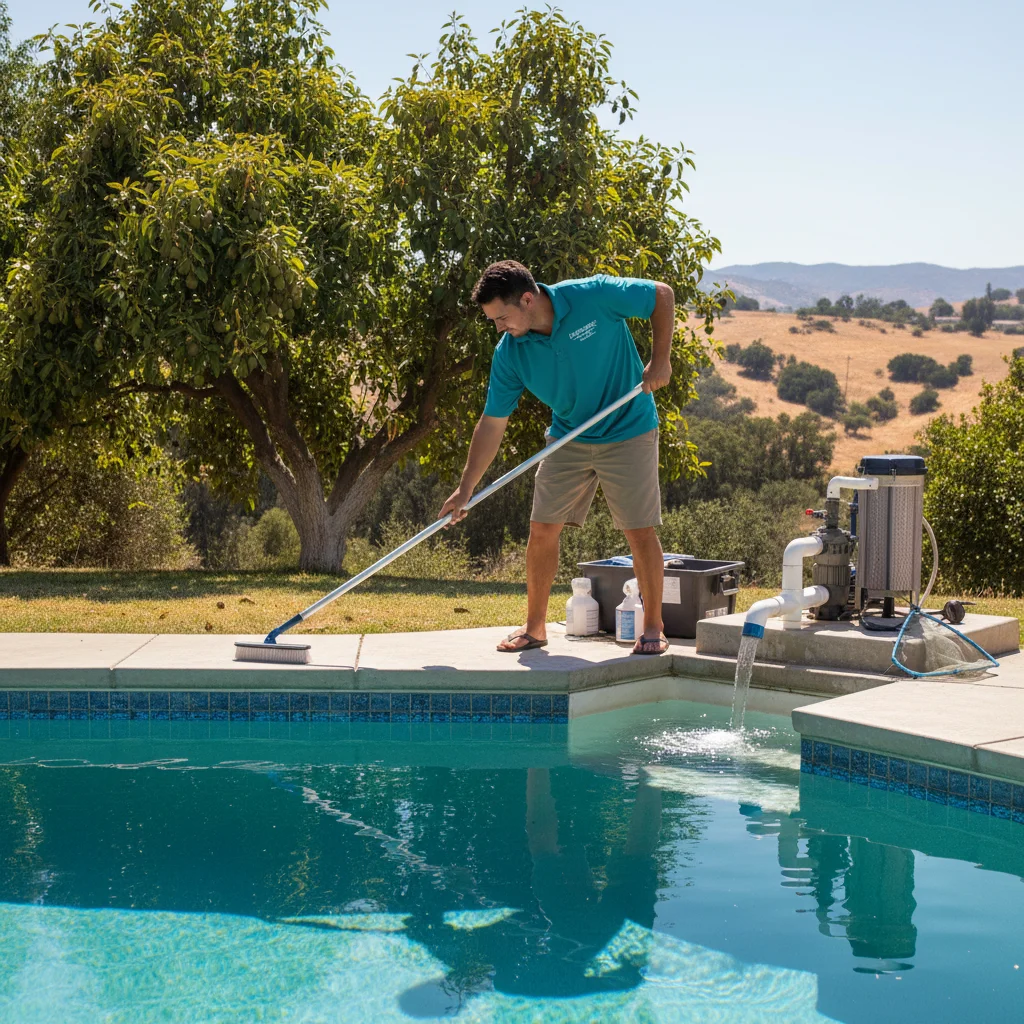
Organic load is heavier inland, too. Escondido’s residential neighborhoods are full of avocado groves, citrus trees, and mature landscaping that drops leaves, pollen, and debris into pools constantly. Every bit of organic matter consumes chlorine as the water tries to oxidize it.
The result: pools in Escondido can need two to three times the chlorine input of a pool at the same size sitting in La Jolla or Encinitas. Homeowners who try to manage this themselves often underdose because they’re calibrating against what a bag or two of shock did last summer, then wonder why the water looks tired by Wednesday.
Weekly professional testing matters here more than in most San Diego cities. A technician who tests free chlorine, combined chlorine, pH, and stabilizer every seven days catches the drift before it turns into a problem. The weekly pool cleaning route in Escondido is built around this faster burn cycle.
What a weekly visit includes in inland North County
A weekly visit to an Escondido pool isn’t just skimming and dumping a tab in the floater. The inland heat and water chemistry demand a more thorough checklist.
Every visit includes:
Water testing and chemical adjustment. Free and combined chlorine, pH, total alkalinity, and calcium hardness get tested on every visit. In Escondido, pH drift gets watched especially closely, hard water tends to push pH up, which suppresses chlorine effectiveness even when the numbers look fine on the surface.
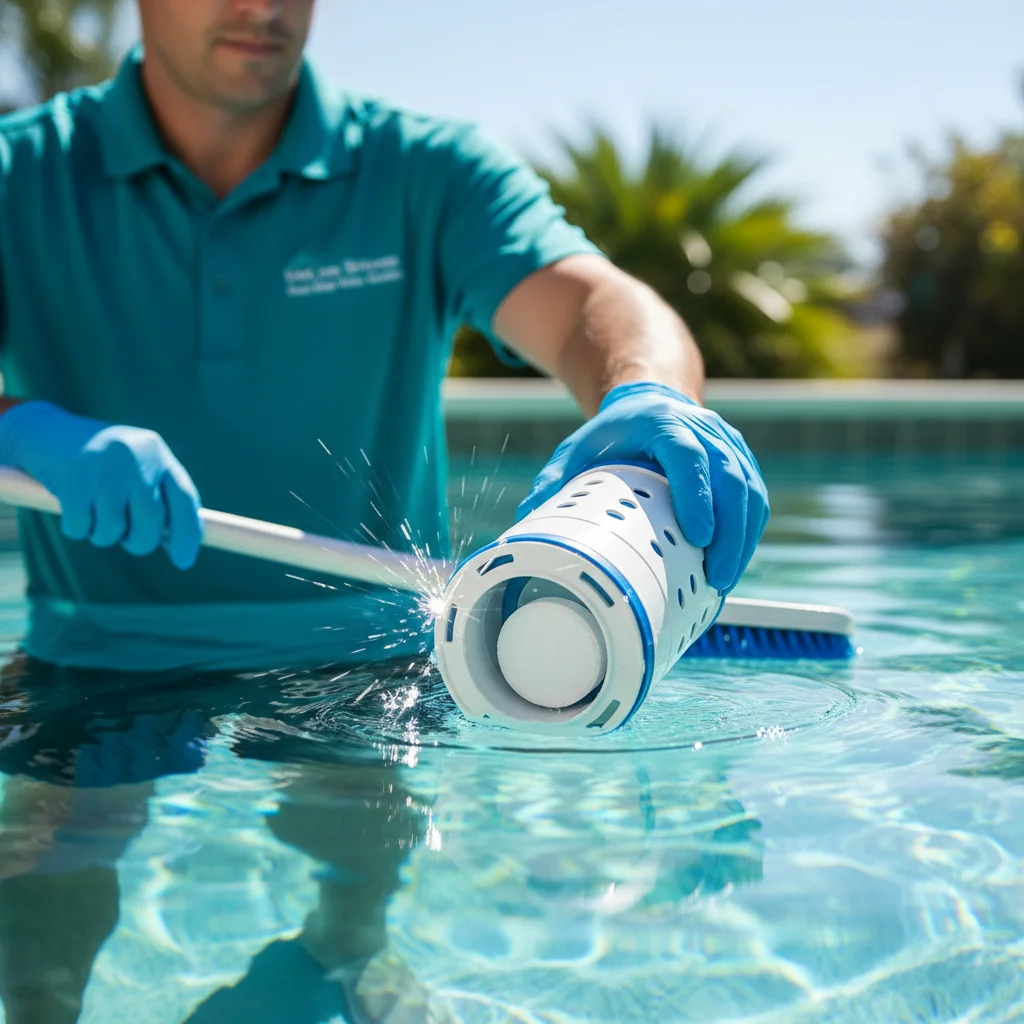
Brushing walls, steps, and tile. Calcium scale starts at the waterline and works its way down. Brushing weekly slows that accumulation significantly. Pools that skip this step for a few months end up needing pool tile and calcium cleaning that costs several hundred dollars.
Skimming and basket clearing. Debris from trees and wind loads up quickly in inland properties. Full baskets restrict flow and stress the pump.
Filter inspection. Pressure readings get checked, noting when a filter is trending toward a cleaning. Escondido pools often run their filters harder due to debris load, so this gets tracked proactively rather than waiting for flow problems.
Equipment check. The pump, heater, and any automation equipment get checked while the tech is on-site. Catching a failing seal or a heater ignition issue during a routine visit costs far less than an emergency call after the equipment fails mid-July.
This is the standard scope for weekly pool cleaning on the inland North County route. Some pools need more, notably those with waterfalls, attached spas, or high bather loads, and those get scoped individually.
The hard-water and CYA combo that wrecks Escondido pools
This is the chemistry problem that trips up more Escondido pool owners than any other.
Water delivered to Escondido comes from blended sources through the San Diego County Water Authority, including Colorado River water that carries significant dissolved minerals. Calcium hardness in the 300-400 ppm range is common out of the tap. That’s before any evaporation concentrates it further, which Escondido’s heat does aggressively.
High calcium hardness by itself is manageable. The problem is when it combines with elevated cyanuric acid, CYA, also called stabilizer or conditioner.
CYA is added to outdoor pools to protect chlorine from UV degradation. In Escondido, that’s a legitimate need. But CYA accumulates in pool water over time and doesn’t leave except through dilution. Pools that haven’t been partially drained in a few years often test at 100 ppm or higher. At those levels, CYA chemically locks the chlorine, making it far less effective at sanitizing even when the numbers look fine on a basic test strip.
The hard-water side of this equation makes the problem worse. High calcium combined with elevated pH creates carbonate scaling on plaster, tile grout, and heat exchangers. Scaling inside a heater can crack the copper tubes, a repair that runs $400-$800 or more.
We wrote a longer breakdown of this chemistry on our hard water and pool chemistry guide, and there’s a dedicated deep-dive on CYA management if you want the full picture. The short version: if your Escondido pool has never had a partial drain and refill, it probably needs one.
Pricing for Escondido weekly service in 2026
Escondido isn’t the cheapest market in San Diego County, and it shouldn’t be. The inland chemistry demands more product and more attention than a comparable pool on the coast.
For most residential pools in Escondido, weekly service runs $160 to $220 per month. That range reflects:
- Pool size. A 12,000-gallon pool is easier to balance than a 25,000-gallon pool with a beach entry and attached spa.
- Chemical inclusion. Most Escondido weekly plans include standard chemicals, chlorine, pH adjustment, alkalinity products. Specialty treatments like phosphate remover, clarifier, or scale inhibitor are itemized separately.
- Equipment complexity. Pools with automation systems, variable-speed pumps, or salt generators take more time to check properly.
Pools that have CYA buildup or active scaling issues may need a one-time remediation visit before weekly service begins. That’s typically $150-$300 depending on what’s needed, and it’s worth doing, ongoing service on a chemically compromised pool costs more in product and effort than fixing the baseline first.
For context on how Escondido pricing compares to other parts of the county, our weekly pool service cost guide walks through the full breakdown.
Most weekly pool routes in San Diego run month to month rather than on a long-term contract. Monthly billing, cancel with 30 days’ notice.
How to switch from your current service without a green pool
Switching pool services mid-year feels riskier than it is, but it does require a clean handoff.
The biggest mistake homeowners make is letting service lapse between providers. They cancel the old service on a Friday, the new one doesn’t start until the following week, and a week of unmanaged water in August heat can start the slide toward a green pool faster than most people expect.
Here’s how to do it right:
Get your current chemistry in writing. Ask your existing service for the last test readings, chlorine, pH, alkalinity, CYA, calcium hardness. A good service should have this on file. If they don’t, that’s its own data point.
Schedule the new service to start before the old one ends. A one-visit overlap costs you maybe $40-$50. A green pool recovery after a lapsed service costs $200-$400 and takes multiple visits.
Do a baseline test on day one. Every new pool gets tested on the first visit regardless of what’s reported about prior chemistry. Escondido pools often have CYA or calcium levels the previous service wasn’t tracking. Finding that on visit one means it can be addressed before it affects your water quality.
Communicate your concerns. If you know your pool has had algae issues, a leak, or a history of cloudy water, let the tech know before the visit starts. That context helps them look for the right things early.
Switching isn’t complicated. It just requires a little coordination. Most Escondido handoffs that overlap one visit stay clear within one to two weeks.
When to call us
If your Escondido pool is losing clarity mid-week, showing calcium scale at the tile line, or your water test strips are giving you confusing readings, that’s the right time to bring in a professional pool service technician. Inland heat doesn’t give you much margin between “slightly off” and “full algae bloom.”
Call us at (760) 642-1256 and we’ll connect you with a vetted local pool pro.
Frequently asked questions
Why does my Escondido pool lose chlorine so fast in summer?
Escondido sits inland where summer temperatures regularly reach the mid-to-upper 90s. Heat accelerates chlorine off-gassing, and UV destroys free chlorine quickly without adequate stabilizer. High bather load and organic debris from landscaping like avocado and citrus trees add to the demand. Weekly testing and dosing keeps up with the burn rate.
Is the water in Escondido hard enough to damage my pool?
Yes. Water delivered to Escondido typically comes from the San Diego County Water Authority and blended Colorado River sources, which run between 300 and 400 ppm of total dissolved solids. That calcium load builds on tile, plaster, and equipment over time. Routine brushing and periodic descaling protect your surfaces.
What does weekly pool service in Escondido cost in 2026?
Most residential pools in Escondido run between $160 and $220 per month for weekly service, depending on pool size, equipment type, and whether chemicals are included. Pools with persistent hard-water scaling or high CYA may need additional treatments that cost extra.
Can I switch pool services without my pool turning green?
Yes, if you time it right. The outgoing service should leave documented chemistry readings. A baseline test happens on the first visit, with adjustments made before any imbalance can develop. Switching mid-summer takes a few extra days of attention, but a green pool isn't inevitable.
Do matched pros serve Hidden Trails and Harmony Grove?
Splash matches weekly cleaning throughout Escondido and nearby inland North County, including Hidden Trails, Harmony Grove, and Seven Oaks. Call (760) 642-1256 to confirm the address is on a local cleaning route.
Need professional help in San Diego County?
Splash Pro Pools connects San Diego homeowners with pool pros for the work in this post.