One thing to flag: Splash Pro Pools does not take this work on. It goes to a vetted local pool repair pro, reachable at (858) 400-6757.
Minor pool repairs in San Diego usually run $150 to $400. Pump work is $250 to $800-plus, or $1,000 to $2,500 to replace the pump. Heater repair is often $300 to $700; a new heater is $3,000 to $7,000. Splash does not do the repair. Call (858) 400-6757.
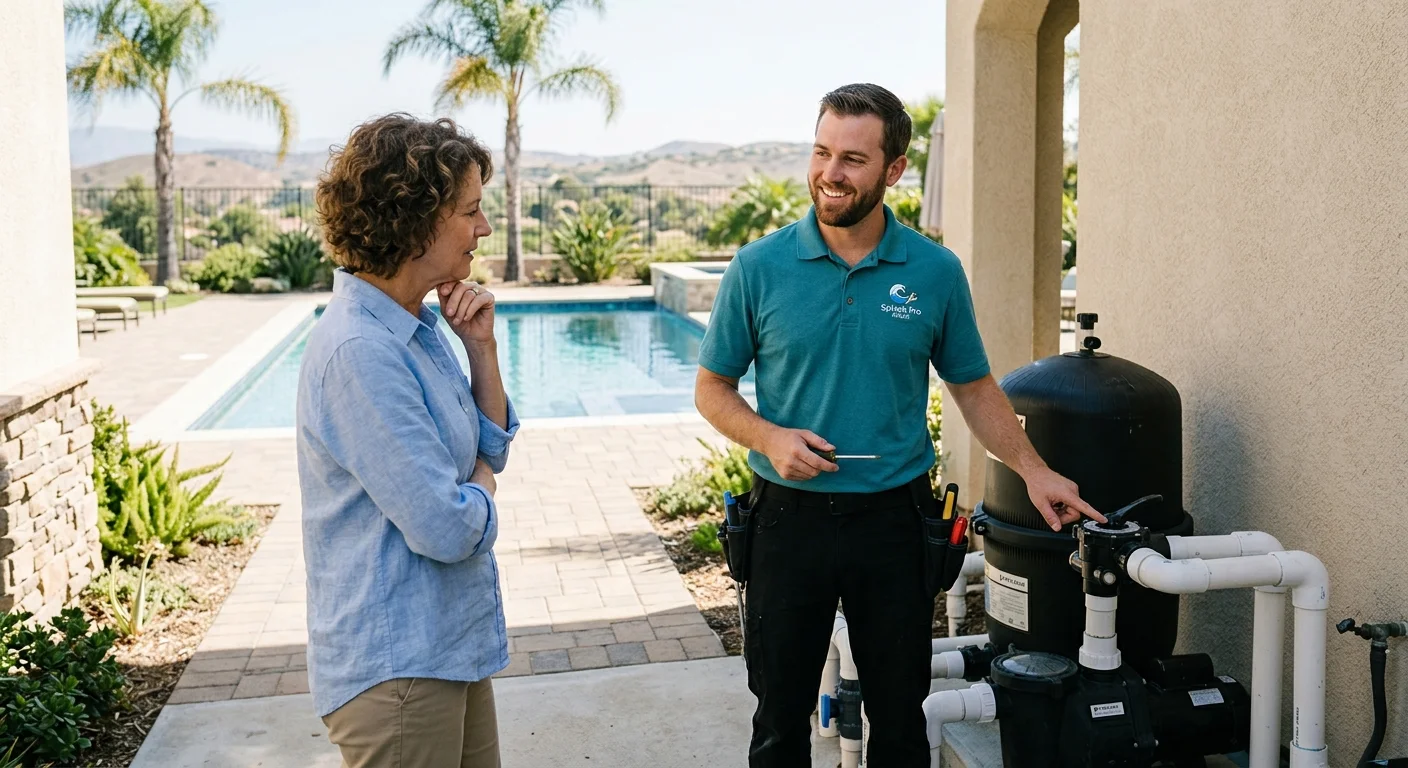
Pool repair expenses in San Diego vary widely based on the specific issue, the type of equipment, and the complexity of the job. While we can’t give you an exact price without an inspection, we can provide clear price ranges for common repairs you might encounter. This guide breaks down what to expect and what factors influence your final bill.
Average costs for common pool repairs
The cost of repairing your pool in San Diego can range from a quick fix costing a couple of hundred dollars to major overhauls running into thousands. Here’s a general overview of average costs for some of the most frequent pool repair needs in our sunny region for 2026:
- Minor Leaks: For simple fixes like a faulty O-ring, loose plumbing, or a small crack in the skimmer, you might expect to pay between $200 - $600. This often includes the service call and parts. For more complex pool leak detection and repair involving structural issues or underground pipes, costs can escalate to $1,000 - $3,000+.
- Filter Issues: Repairing a pool filter, whether it’s replacing a torn D.E. grid, a broken cartridge, or a cracked sand filter lateral, usually falls between $250 - $700. A full filter clean and recharge, if part of a repair, is often on the lower end.
- Pump Problems: Common pool pump repair issues include replacing a capacitor, motor bearings, or a worn-out seal. These repairs typically cost $250 - $850. If the motor needs a full rebuild or replacement, it can be $800 - $1,500+.
- Heater Malfunctions: Fixing a pool heater can vary greatly. Simple repairs like replacing a sensor, pressure switch, or igniter might cost $300 - $750. More extensive repairs involving heat exchangers or circuit boards can be $800 - $2,000.
- Automatic Cleaner Repairs: If your robotic or pressure-side cleaner isn’t working, common fixes like replacing hoses, brushes, or internal gears usually cost $150 - $450.
- Light Repairs: Replacing a burnt-out bulb in an underwater light or fixing a faulty transformer generally costs $200 - $600. For LED conversions or more complex electrical issues, it can be higher.
Remember, these are average ranges. The specific make and model of your equipment, availability of parts, and the complexity of accessing the damaged component will all play a role in the final price.
What factors change the price of a pool repair job?
Many elements can influence the total cost of your pool repair in San Diego. Understanding these factors will give you a clearer picture of why estimates can vary.
- Type of Equipment and Age: Newer, more specialized equipment (like variable-speed pumps or smart heaters) often have higher part costs compared to older, simpler models. Older equipment might also be harder to find parts for, sometimes requiring custom solutions or a full replacement, which increases the price.
- Severity of the Damage: A small, easily accessible crack in a PVC pipe will be much cheaper to fix than a hidden leak under your deck that requires extensive excavation. Similarly, a minor electrical issue with a pump is less costly than a completely burnt-out motor.
- Parts and Labor Costs: In San Diego, labor rates for skilled pool technicians are competitive. The cost of specific replacement parts can fluctuate, especially for specialized or imported components. Some repairs are quick and simple, while others demand hours of diagnostic work and intricate installation.
- Accessibility: If the damaged component is difficult to reach, buried underground, behind dense landscaping, or in a tight equipment pad, it will add to the labor time and therefore the cost. Sometimes, temporary disassembly of other equipment is necessary to access the problem area.
- Emergency Service vs. Scheduled Repair: If your pool emergency can’t wait, emergency pool services typically come with a higher call-out fee or an increased hourly rate, especially outside of standard business hours. Planning a repair helps avoid these additional charges.
- Warranty Status: If your equipment is still under warranty, the cost of parts might be covered, significantly reducing your out-of-pocket expenses. Always check your warranty paperwork before authorizing repairs.
- Your Pool Service Provider: Different companies have different pricing structures, experience levels, and overheads. While it’s tempting to go with the cheapest option, an experienced San Diego pool repair provider, the kind Splash Pro Pools connects you with, often means higher quality work and greater peace of mind in the long run. You can always check any contractor’s license with the CSLB (https://www.cslb.ca.gov/onlineservices/checklicenseII/checklicense.aspx).
Cost breakdown: pump repair vs. filter repair vs. heater repair
Let’s dive deeper into the cost differences for three of the most common and critical pool equipment repairs.
Pool pump repair costs (San Diego, 2026)
Your pool pump is the heart of your circulation system. When it fails, your pool quickly becomes dirty and unhealthy. Pool pump repair in San Diego can range widely:
- Minor Repairs ($250 - $500): This includes replacing simple parts like the pump lid, basket, or O-rings, clearing clogs in the impeller, or replacing a faulty capacitor (which often causes humming but no motor start).
- Medium Repairs ($500 - $850): These repairs might involve replacing the shaft seal (which prevents leaks), a worn-out impeller, or new motor bearings. These jobs require disassembling parts of the pump.
- Major Repairs/Motor Replacement ($800 - $1,500+): If the pump motor itself is burned out or severely damaged, you’re looking at a more substantial expense. Sometimes a motor can be rebuilt, but often, especially for older pumps, replacing the entire motor is more practical. The cost depends heavily on whether you have a single-speed, two-speed, or variable-speed pump. Variable-speed pumps, while more energy-efficient, often have higher motor replacement costs.
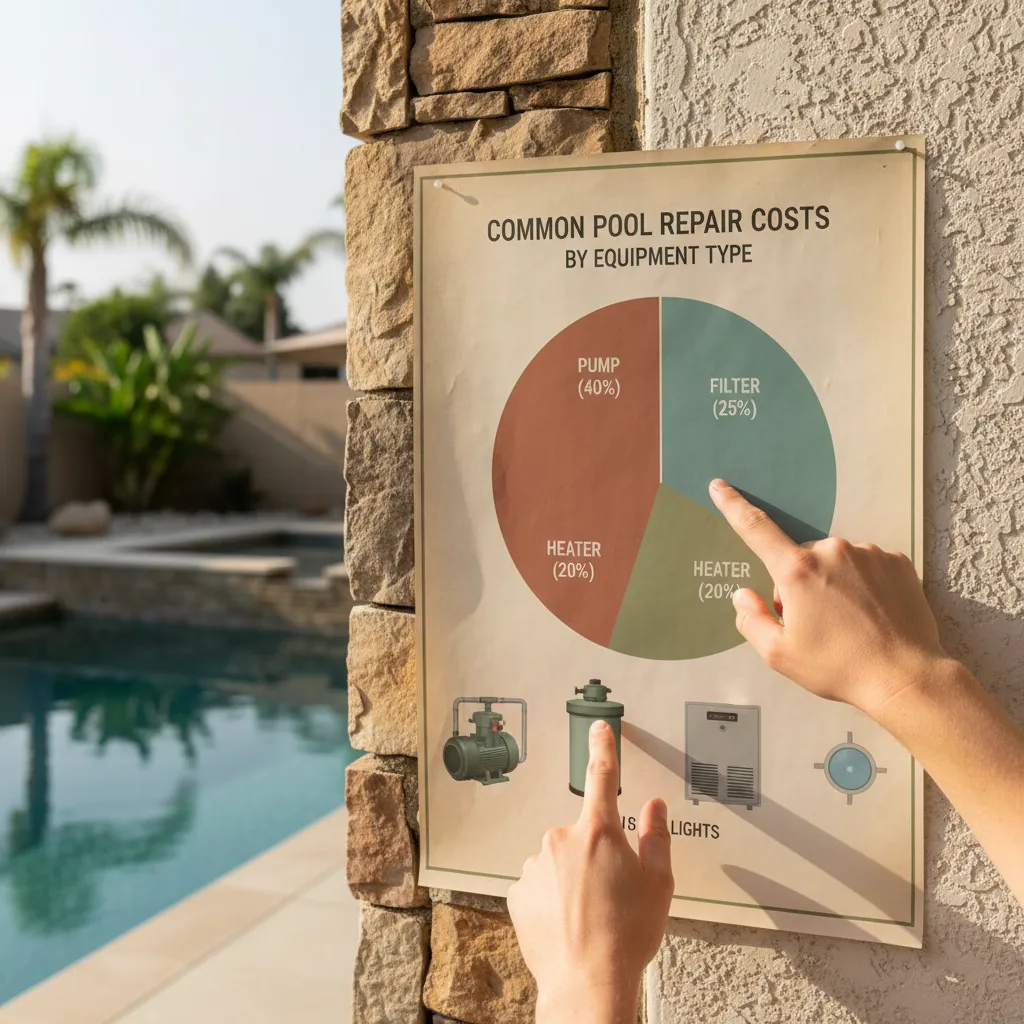
Pool filter repair costs (San Diego, 2026)
The filter keeps your water sparkling clean. Repair costs depend on the type of filter you have (sand, cartridge, or D.E.).
- Cartridge Filters ($200 - $600): Replacing damaged cartridges or a cracked manifold falls into this range. Sometimes, the housing itself might crack, requiring a more extensive repair.
- Sand Filters ($250 - $700): Common issues include replacing the multi-port valve (which diverts water for backwashing), broken laterals inside the tank, or a leaky O-ring. If the sand itself needs replacement due to channeling or age, that’s an additional cost, usually around $300-$500 including labor.
- D.E. Filters ($300 - $800): These filters often require replacing torn D.E. grids or a faulty manifold. The cost is higher due to the specialized nature of the grids. Pool filter cleaning is part of routine maintenance but can sometimes be part of a repair diagnosis.
Pool heater repair costs (San Diego, 2026)
A broken pool heater can ruin your swimming season. Heater repairs are notoriously varied in cost due to the complexity of the internal components.
- Minor Electrical/Sensor Issues ($300 - $600): This includes replacing temperature sensors, pressure switches, igniters, or minor wiring issues. These are often quick fixes once diagnosed.
- Gas Flow/Pilot Issues ($400 - $800): Problems with gas valves, pilot assemblies, or flame sensors fall into this category. Gas work always requires a qualified technician for safety reasons.
- Major Component Failures ($800 - $2,000+): Replacing a heat exchanger (a common failure point in older heaters), circuit boards, or the blower motor can be very expensive. These parts themselves are costly, and the labor involved is significant.
When considering heater repair, always weigh the cost against the age and overall condition of the unit.
When is it cheaper to replace equipment than to repair it?
This is a critical question for San Diego pool owners. While a quick repair might seem appealing, sometimes replacing the equipment outright makes more financial sense in the long run. Here’s how to decide:
- The “50% Rule”: A good rule of thumb is that if the repair cost is more than 50% of the cost of a new replacement unit, it’s often better to replace. This is especially true for equipment that’s already past its prime.
- Age of the Equipment:
- Pumps: A well-maintained pump can last 8-10 years. If your pump is nearing or exceeding this age and needs a major repair (like a new motor), replacing it with a new, energy-efficient variable-speed pump often pays for itself through energy savings and offers a new warranty. Many San Diego homeowners take advantage of variable-speed pump rebates.
- Filters: Sand filters can last 10-15 years, D.E. filters 5-10 years, and cartridge filters 3-7 years (with cartridge replacement every 1-3 years). If your filter tank is cracked, severely corroded, or requires frequent, costly repairs, replacement is usually the better option.
- Heaters: Gas heaters typically last 5-10 years, electric heat pumps 10-20 years. If your heater is older than 7 years and needs an expensive repair like a new heat exchanger or control board, consider replacing it. Newer models are more efficient and come with better warranties.
- Frequency of Repairs: If you’re constantly spending money on various repairs for the same piece of equipment, it’s a clear sign that it’s nearing the end of its lifespan. These cumulative costs can quickly exceed the price of a new unit.
- Energy Efficiency: Older pool equipment, especially pumps and heaters, can be significant energy hogs. Modern variable-speed pumps can reduce energy consumption by up to 90%, and new heaters are much more efficient. The long-term savings on your utility bills might justify the upfront cost of a replacement. The California Energy Commission (https://www.energy.ca.gov/) offers resources on energy-efficient pool equipment.
- Warranty: New equipment comes with a fresh warranty, protecting you from unexpected repair costs for several years. Repaired components might only have a short warranty, if any.
- Safety Concerns: For gas heaters or electrical components, repeated failures can pose safety risks. Sometimes, upgrading to a new unit with modern safety features is simply the smartest choice.
A pool repair pro can help you analyze your specific situation, provide repair estimates, and offer recommendations for replacement, helping you weigh the pros and cons.
How to get an accurate repair estimate
Getting a precise pool repair estimate in San Diego is essential for budgeting and avoiding surprises. Here’s how to ensure you receive a clear and accurate quote:
- Describe the Problem Clearly: Before calling, note down all symptoms: what’s making noise, what’s leaking, what’s not working, and when it started. This helps the technician prepare for the visit.
- Schedule an On-Site Inspection: It’s virtually impossible to give an accurate repair cost over the phone. A reputable pool service company will insist on an on-site inspection. This allows the technician to properly diagnose the issue, identify all necessary parts, and assess the complexity of the job.
- Ask for a Detailed Written Estimate: A good estimate should break down the costs, distinguishing between parts, labor, and any service call fees. It should clearly outline what specific repairs will be performed. Don’t accept vague quotes.
- Confirm What’s Included: Ask if the estimate includes all materials, taxes, and potential disposal fees for old equipment. Understand if there are separate trip charges or diagnostic fees that may or may not be waived if you proceed with the repair.
- Inquire About Warranties: Ask about the warranty on both the parts used and the labor performed. A strong warranty gives you peace of mind.
- Don’t Rush the Decision: If you’re unsure or the repair is significant, take time to consider the estimate. For major repairs, getting a second opinion isn’t uncommon, though most reputable companies will charge a diagnostic fee for their time.
- Choose a Licensed and Insured Professional: Always verify that the company you hire is licensed by the Contractors State License Board (CSLB) and carries appropriate insurance. This protects you from liability and ensures they meet professional standards. Splash Pro Pools connects you with reliable pool service providers across San Diego County.
When to call us
Don’t let a minor pool issue turn into a major problem. If you notice leaks, strange noises from your pump, inefficient heating, or any other signs of equipment malfunction, it’s time to call a pool repair professional. Delaying repairs can lead to more extensive damage and higher costs down the line. Call us at (858) 400-6757 and we’ll connect you with a vetted local pool pro.
Frequently asked questions
What's the average cost for minor pool repairs in San Diego?
Minor pool repairs in San Diego, like replacing a gasket or a small fitting, usually cost between $150 and $400. This often includes the service call fee and labor for a quick fix.
How much does it cost to repair a pool pump in San Diego?
Pool pump repair costs in San Diego can range from $250 for a simple capacitor replacement to $800+ for a motor rebuild. Replacing the entire pump can cost $1,000 to $2,500, depending on the pump type.
Is it cheaper to repair or replace a pool heater in San Diego?
For older pool heaters (over 7-10 years) with major component failures, replacement is often more cost-effective. Minor repairs might range from $300-$700, while a new heater installation can be $3,000-$7,000. Consider the heater's age and overall condition.
How can I get an accurate pool repair estimate in San Diego?
The best way to get an accurate estimate is to schedule a professional on-site inspection. A qualified technician can diagnose the specific issue, identify necessary parts, and provide a detailed quote tailored to your pool's needs and current market prices.
Do San Diego pool repair costs include parts and labor?
Most professional pool repair estimates in San Diego will include both parts and labor. Be sure to clarify what the estimate covers. Reputable providers offer transparent pricing that breaks down these costs.
Need this done in San Diego County?
For repair and renovation work like this, we hand you to our trusted partner, Del Rancho Pools.