A note on scope: this is equipment installation and upgrades work, which sits outside what Splash Pro Pools does. Call (858) 400-6757 and we’ll match you with a vetted local pro who covers it.
The SDG&E pool pump rebate amount for a qualifying variable speed pump is typically $100 to $400, depending on the program tier and model. Most licensed installs land in the $200 to $400 range. It is a post-purchase rebate, not a store coupon: you pay, the installer files, SDG&E mails a check. Amounts change, so confirm the current offer before you buy. Call (858) 400-6757 to route the install.
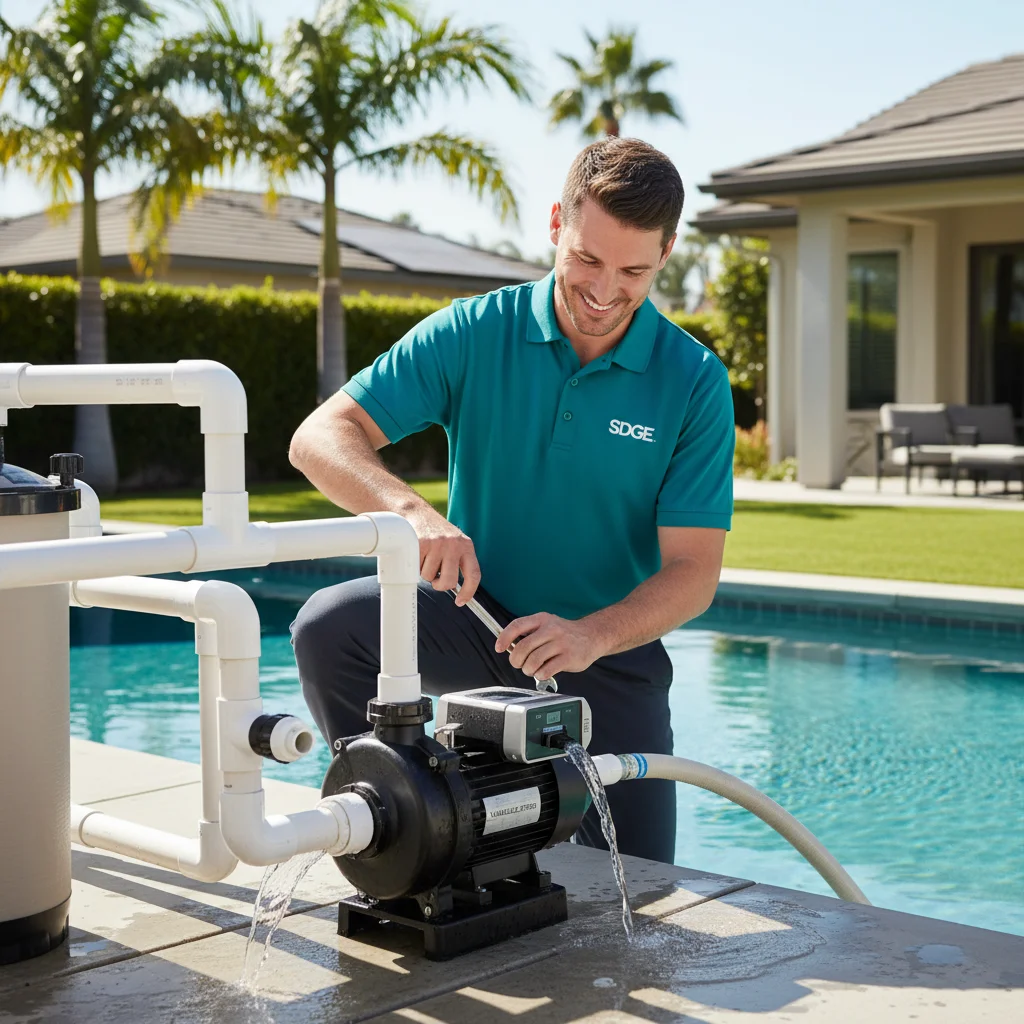
SDG&E pool pump rebate amount: what to expect in 2026
First, let’s get one thing straight: the SDG&E rebate isn’t a coupon you use at the store. It’s a “post-purchase” rebate. This means you (or your pool service company) pay the full price for the pump and installation upfront. Then, the installer submits the required paperwork on your behalf, and SDG&E mails you a check a few weeks later.
The program is designed to incentivize homeowners to reduce energy consumption across the grid. Your old single-speed pump is like a light switch that’s always on full blast, using the same massive amount of energy whether it’s just circulating water or running a cleaner. A variable-speed pump (VSP) is more like a dimmer switch. It can run at very low speeds for basic filtration, saving a tremendous amount of electricity, and only ramp up when needed.
For 2026, the process is straightforward but requires attention to detail.
- Select a qualifying pump: Not every VSP is on the approved list.
- Professional Installation: The pump must be installed by a licensed contractor. A DIY install won’t qualify.
- Submit Paperwork: This includes a completed rebate application, a copy of your paid invoice, and sometimes a photo of the installed unit.
The installer handles the paperwork submission for you. The goal is to make the process as simple as possible: making sure you get a qualifying pump from a major brand like Pentair or Jandy, providing the detailed invoice SDG&E needs, and submitting everything correctly so your check arrives without any hiccups.
Which pumps qualify and which don’t
The list of qualifying pumps is specific and updated regularly by SDG&E. The main requirement is that the pump must be ENERGY STAR certified. These are pumps that have been independently tested and proven to meet strict energy efficiency guidelines set by the U.S. Environmental Protection Agency. You can often find a “Qualified Products List” on the SDG&E website that names the exact makes and models.
Here’s a general breakdown:
Qualifying Pumps:
- Most Variable-Speed Pumps (VSPs): Nearly all modern VSPs from reputable manufacturers like Pentair, Jandy, and Hayward are on the list. These are the “smart” pumps that allow for precise control over the motor’s speed (RPMs).
- ENERGY STAR Certified: This is the non-negotiable standard. The certification logo is usually prominent on the product’s box and marketing materials.
Non-Qualifying Pumps:
- Single-Speed Pumps: These are the old-school, energy-guzzling pumps. They are no longer legal for new installations or replacements in California anyway.
- Two-Speed Pumps: While more efficient than single-speed models, most two-speed pumps do not meet the criteria for the rebate program.
- Pumps without Certification: If a pump isn’t on the official SDG&E list or lacks ENERGY STAR certification, it won’t qualify, no matter how efficient it claims to be.
When a pro handles a new pool equipment installation or upgrade, only pumps eligible for the rebate get recommended and installed. They’ll show you the options, explain the differences between models, and help you choose the right size and type for your specific pool’s needs, ensuring you get both the best performance and the maximum available rebate. The goal is long-term savings and reliability, which starts with choosing the right equipment.
What the paperwork actually looks like
The thought of paperwork can be enough to make some homeowners give up on a rebate. But it’s less intimidating when you know what to expect, especially when your pool pro handles it for you. The application packet is designed to prove three things to SDG&E: who you are, what you bought, and that it was installed correctly.
The core components of a successful rebate submission are:
- The Application Form: This is a one or two-page document from SDG&E. It asks for your name, address, SDG&E account number, and information about your home and pool. It also requires details about the old pump being replaced and the new pump being installed.
- The Purchase Invoice: This is the most critical piece of evidence. The invoice from your pool company must be dated and show that you’ve paid in full. Crucially, it must clearly list the manufacturer and exact model number of the new variable-speed pump. A generic line item like “New Pool Pump” will get your application rejected.
- Proof of Licensed Installation: The invoice must include the contractor’s name and their California State License Board (CSLB) number. SDG&E verifies this to ensure the work was done by a qualified professional. You can always check a contractor’s license status yourself on the CSLB’s official website.
This is part of the standard service on any VSP installation. The installer fills out the application, attaches the detailed invoice and the pump’s model number, and submits the entire package to the correct SDG&E portal or address. You don’t have to do anything except cash the check when it arrives 6-8 weeks later. Pros in our network have submitted hundreds of these and know exactly what the reviewers are looking for, preventing delays and rejections.
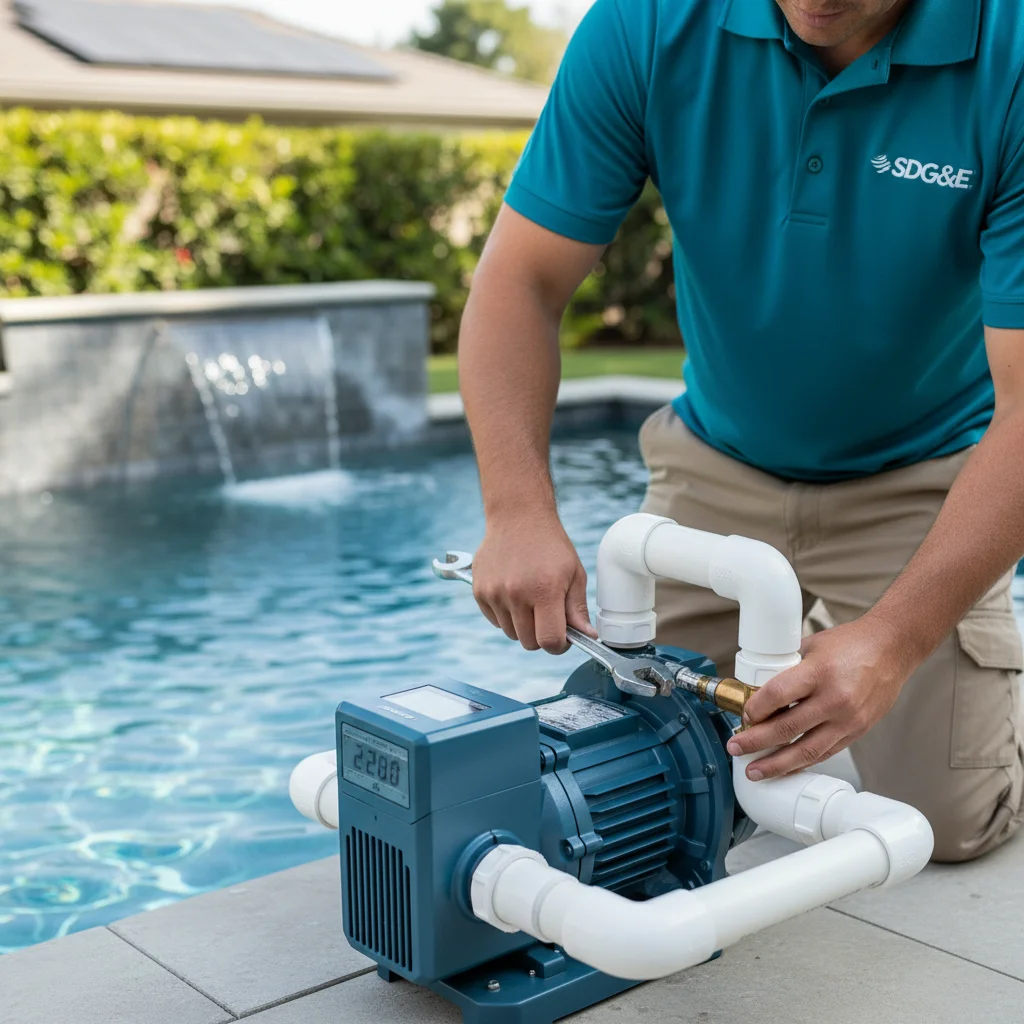
Rebate plus Title 20: the real out-of-pocket math
So, what does this all cost? The rebate is great, but it’s only one part of the equation. Understanding the full picture helps you see the true value.
Let’s start with California’s Title 20 appliance efficiency regulations. For years, these rules have mandated that any new or replacement filtration pump over a certain horsepower must be a variable-speed model. This means that if your old single-speed pump dies, you don’t have a choice, you legally must upgrade to a VSP. The rebate, therefore, isn’t meant to convince you to choose a VSP over a cheaper option; it’s to soften the blow of a legally required upgrade.
Here’s some sample math for a typical San Diego pool owner in 2026:
- New VSP (e.g., Pentair IntelliFlo3): $1,800
- Professional Installation & Plumbing: $550
- Total Upfront Cost: $2,350
- SDG&E Rebate: -$400
- Your Final Out-of-Pocket Cost: $1,950
Now, let’s look at the savings. A VSP can use up to 90% less electricity than a single-speed pump.
- Old Pump Energy Cost: ~$90 - $120 per month
- New VSP Energy Cost: ~$15 - $25 per month
- Monthly Savings: ~$75 - $95
Using these numbers, your payback period on the $1,950 investment is roughly 21-26 months. After that, the $75+ you save every month is pure profit. Over the 7-10 year lifespan of the pump, you could save over $7,000. When you factor this in, the upgrade pays for itself multiple times over. The rebate simply accelerates your return on investment. If you’re curious about other ways to manage pool expenses, our guide to pool maintenance costs in San Diego can provide more context.
When upgrading is worth it even without the rebate
While the rebate is a powerful incentive, many San Diego pool owners find that upgrading to a VSP makes sense even if no rebate were offered. The energy savings are so substantial that they stand on their own. However, there are several other compelling benefits that improve your quality of life and the health of your pool.
For a deeper look at how much a variable speed pump can reduce your SDG&E bill year-round, our variable speed pool pump guide for San Diego homeowners covers the savings math in detail.
First is the noise. Or rather, the lack of it. Old single-speed pumps are notoriously loud, making it unpleasant to relax in your backyard while it’s running. A VSP running at its typical low speed for filtration is whisper-quiet. You often have to stand right next to it to even know it’s on. If your equipment pad is near a patio or bedroom window, this is a game-changing improvement. If you’re constantly annoyed by a high-pitched whine, our pool pump noise troubleshooting guide might help, but a VSP is the ultimate solution.
Second is filtration quality. Because a VSP can run for longer periods at a very low speed, it constantly keeps your water moving. This slow, steady circulation improves filtration, prevents dead spots where algae can form, and distributes chemicals more evenly. The result is clearer, cleaner water with less effort and potentially lower chemical costs. A pool that runs 24/7 at a low RPM is often healthier than one that runs for 8 hours at full blast.
Finally, a VSP can extend the life of your other equipment. The high-powered startup and constant high-pressure operation of a single-speed pump put significant strain on your filter, heater, and plumbing. The soft start and lower average operating pressure of a VSP reduce this wear and tear, potentially saving you from a premature pool repair call down the road.
When to call us
Figuring out the best pump for your pool, navigating the current rebate program, and ensuring a safe, code-compliant installation is what the pros in our network do. If your pump is old, loud, or failing, or if you’re simply ready to start saving hundreds of dollars a year on your SDG&E bill, it’s time to talk to a professional.
Call us at (858) 400-6757 and we’ll connect you with a vetted local pool pro.
Frequently asked questions
How much is the SDG&E rebate for a variable speed pool pump?
The SDG&E pool pump rebate amount is typically $100 to $400 for a qualifying variable speed pump, with most installations landing in the $200 to $400 range. The exact figure depends on the pump model, program tier, and current SDG&E rebate funding. Amounts can change year to year, so the current offer gets confirmed before every installation.
How much is the SDG&E pool pump rebate in 2026?
The exact amount can change annually, but it's typically been between $200 and $400 for qualifying variable speed pumps. As part of the installation process, pros always verify the current rebate amount for you.
Do I have to use a licensed contractor to get the rebate?
Yes, SDG&E requires that the installation be performed by a licensed contractor to qualify for the rebate. This ensures the pump is installed correctly and safely.
How long does it take to get the SDG&E rebate check?
After your contractor submits the application with all required documentation, it typically takes 6-8 weeks to receive the rebate check from SDG&E.
Can I get a rebate for replacing a broken single-speed pump?
Yes. The rebate is for installing a new, qualifying variable-speed pump. It doesn't matter if the pump you are replacing was working or broken.
Need this done in San Diego County?
For repair and renovation work like this, we hand you to our trusted partner, Del Rancho Pools.