One thing to flag: Splash Pro Pools does not take this work on. It goes to a vetted local pool repair pro, reachable at (858) 400-6757.
A pump seal can be a few hundred dollars. A major leak job or a new heater often runs $700 to over $2,000. Splash does not do the repair. Call (858) 400-6757.
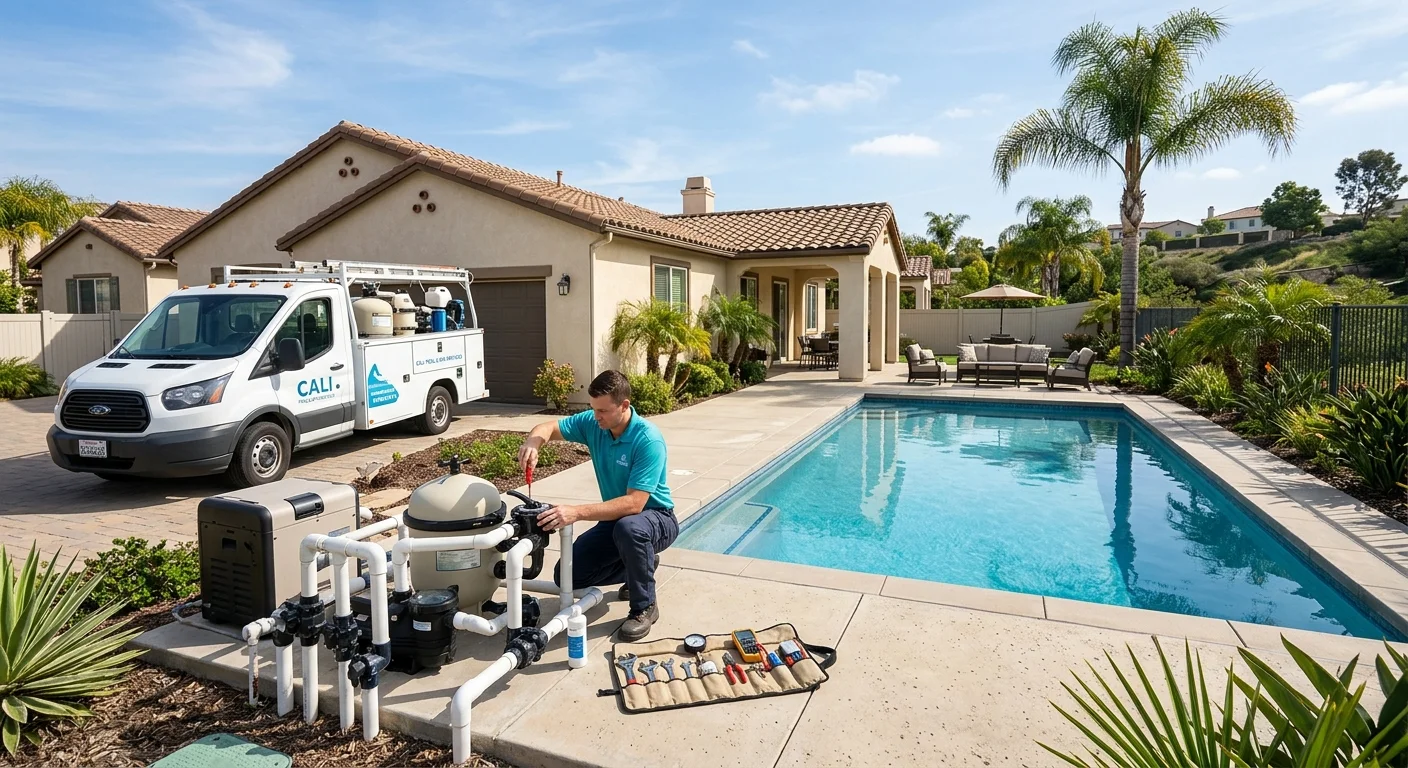
The most common pool repairs seen in San Diego County
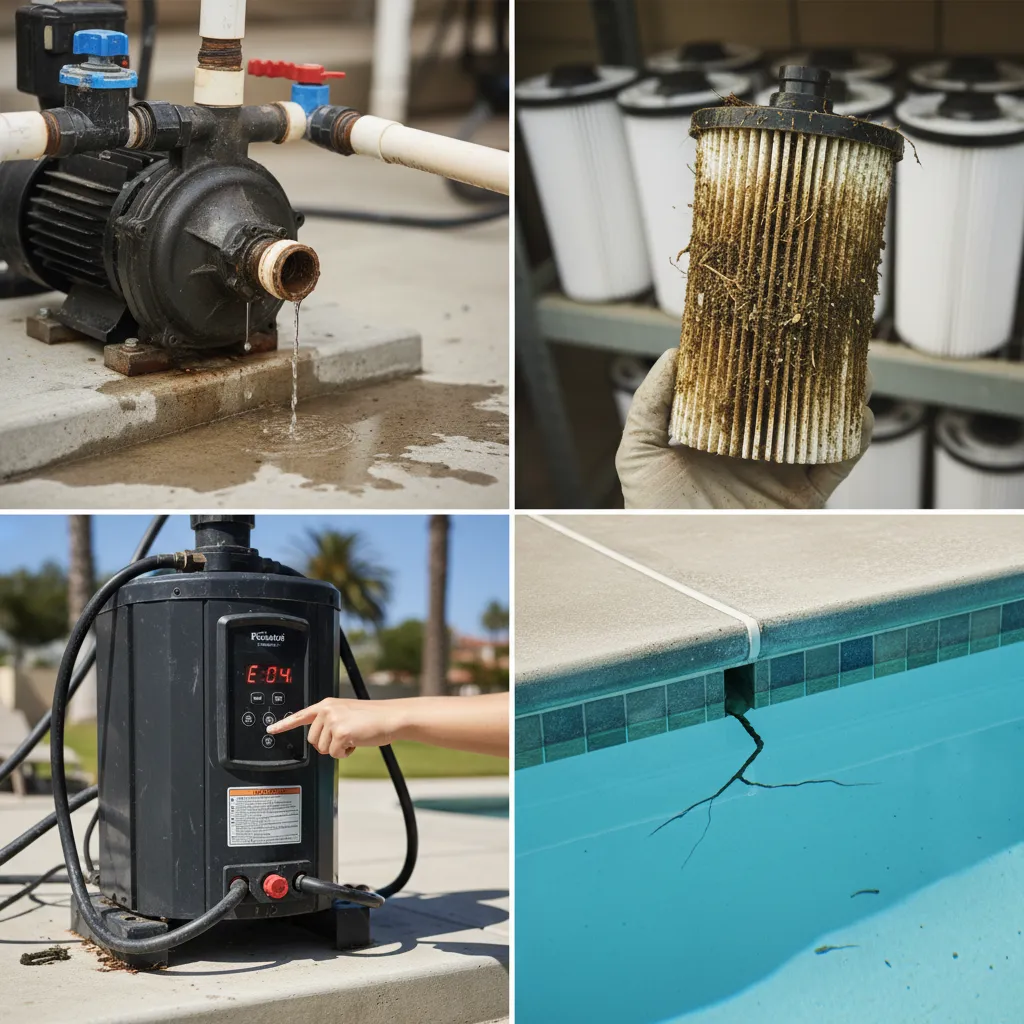
San Diego County’s sunny climate means pools get heavy use year-round, which naturally leads to wear and tear on equipment. Pros see a consistent set of issues across the region, whether it’s a pool repair job in Oceanside or El Cajon. One of the most frequent culprits is the pool pump. Motors can burn out, seals can degrade, or impellers can become clogged or damaged, leading to reduced circulation or complete shutdown. These issues often stem from constant operation, especially with older, less efficient single-speed pumps.
Filters are another common source of trouble. Cartridge filters eventually wear out or become clogged beyond simple cleaning. Sand filters can channel water, and DE filters can have grids break or coating issues. When your filter isn’t working correctly, you’ll see cloudy water or reduced flow, impacting your pool’s cleanliness and water quality. Heaters also experience their share of problems, from failing igniters and sensors to corrosion within the unit. With San Diegans enjoying warm water even in cooler months, a malfunctioning heater is a repair priority.
Then there are leaks. Pool leaks are notoriously tricky to diagnose and can waste thousands of gallons of water. They can occur in the plumbing lines, around skimmers or returns, or even in the pool shell itself. San Diego’s geology can sometimes contribute to minor ground shifts, which can exacerbate existing cracks or create new ones. Pros respond to many calls for pool leak detection across the county, understanding the urgency of addressing water loss, especially in our drought-conscious region. While service reaches all of San Diego County, including specific areas like Carlsbad, the core issues often remain consistent. Addressing these problems promptly is key to maintaining a healthy and enjoyable pool.
Diagnosing the problem: pump, filter, heater, or leak?
Pinpointing the exact source of your pool problem is the first step toward a solution. Often, symptoms can overlap, making professional diagnosis invaluable. However, you can perform some initial checks yourself.
If your pool isn’t circulating water effectively, listen to your pump. Strange noises like grinding, squealing, or humming without water movement often point to a pump issue, such as a failing motor bearing or a clogged impeller. Check the pump basket for debris and ensure the water level is high enough. If the pump is leaking, especially from the motor side, it could be a bad shaft seal. For more detailed troubleshooting, our pool pump repair guide offers valuable insights.
Cloudy water or unusually low water pressure from your jets can signal a filter problem. Check your filter pressure gauge; a reading significantly higher than normal indicates a clogged filter that needs cleaning or replacement. If you have a DE or sand filter, backwashing might be necessary. For cartridge filters, remove and inspect the cartridges for tears or excessive buildup.
Heater issues are usually clear: your pool isn’t getting warm, or the heater displays an error code. Check the power supply and gas valve first. Look for warning lights or unusual smells. If the heater ignites but quickly shuts off, it could be a sensor or igniter problem.
Finally, a persistent drop in water level beyond normal evaporation often indicates a leak. Perform a simple bucket test: fill a bucket with pool water and place it on a step in your pool. Mark the water levels inside and outside the bucket. If the pool water level drops significantly more than the bucket’s internal level over 24 hours, you likely have a leak. Inspect visible areas around equipment, skimmers, and the pool surface for wet spots or cracks. Remember, accurate diagnosis can prevent costly misrepairs.
Average costs for common pool repairs in 2026
Understanding typical repair costs helps you budget and make informed decisions. Keep in mind that prices can fluctuate based on equipment brand, parts availability, and the complexity of the repair. These are average ranges for San Diego County in 2026:
- Pool Pump Motor Replacement: Replacing just the motor (if the wet end is still good) typically ranges from $300 to $800. If the entire pump needs replacing, especially an upgrade to a variable-speed model, costs can be $800 to $1,800 or more, including installation.
- Filter Cartridge Replacement: For a set of new cartridges, expect to pay $150 to $400, depending on the size and number of cartridges. Professional cleaning of existing cartridges might be $80-$150.
- Heater Repair: Minor heater repairs, such as replacing an igniter, sensor, or pressure switch, usually cost between $200 and $600. More significant issues, like a heat exchanger replacement, can push costs to $800 to $2,000+, often making a new heater a more sensible investment.
- Leak Detection & Minor Repair: Professional leak detection services typically cost $300 to $700 for the detection itself. The cost of repair then varies widely. A simple patch might be $100-$300, while repairing a cracked pipe or structural leak could range from $500 to several thousand dollars, depending on access and complexity.
- Skimmer or Return Line Repair: If these components crack, expect costs from $400 to $1,000, which involves specialized patching and often some concrete work.
These figures are estimates. Factors like emergency service calls or permits required for certain electrical or gas line work can also add to the final price. Always get a detailed estimate from a reputable pool repair San Diego company before proceeding.
How to choose a reliable pool repair company
When your pool needs fixing, finding a trustworthy and skilled professional is crucial. Don’t just pick the first name you find online. Here are key factors to consider when selecting a [pool equipment repair San Diego](pool equipment repair san diego) company:
- Licensing and Insurance: This is non-negotiable. Always verify that the company holds an active California contractor’s license (specifically a C-53 Swimming Pool Contractor license or a C-61/D35 Pool and Spa Maintenance license if they’re only doing maintenance/minor repair). You can check a company’s license status on the California Contractors State License Board (CSLB) website: cslb.ca.gov/onlineservices/checklicenseII/checklicense.aspx. Ensure they carry liability insurance to protect you in case of accidents or damage.
- Experience and Specialization: Look for companies with a proven track record in pool repair, especially with the specific issue you’re facing. Some companies excel at general maintenance, while others have specialized expertise in complex leak detection or advanced equipment troubleshooting. An experienced team understands the nuances of San Diego’s pool infrastructure and climate.
- Local Reputation and References: Check online reviews on platforms like Google, Yelp, and Angi. Pay attention to comments about responsiveness, professionalism, and the longevity of their repairs. Ask for local references and don’t hesitate to call them. A strong local presence often means better accountability and quicker service.
- Transparent Pricing and Warranties: A reputable company will provide a clear, written estimate before starting any work. Avoid those who offer vague quotes or demand full payment upfront. Inquire about warranties on both parts and labor. This demonstrates their confidence in their work and provides you with peace of mind.
- Communication and Responsiveness: Good communication is essential. Do they answer your calls promptly? Are they clear about their diagnostic process and repair recommendations? You want a company that keeps you informed every step of the way, minimizing disruption to your pool enjoyment.
Choosing wisely ensures your pool repair is done correctly, safely, and efficiently.
When a repair is smart and when it’s time to upgrade
Deciding between repairing existing pool equipment and opting for an upgrade is a common dilemma for San Diego homeowners. It comes down to a few key factors: the age of your equipment, the severity and frequency of the problem, and the potential for long-term savings.
Repair is often the smart choice when:
- The equipment is relatively new: If your pump, filter, or heater is less than 5-7 years old, a repair is usually more cost-effective than a full replacement, especially for minor component failures like a faulty sensor or a worn-out seal.
- It’s a one-off issue: If your equipment has been reliable and suddenly experiences an isolated problem, a targeted repair can extend its life significantly without breaking the bank.
- Budget is a primary concern: While you should always consider the long-term, if immediate funds are tight, a repair can be a practical solution to get your pool running again.
It’s time to upgrade or replace when:
- Frequent breakdowns: If you’re constantly calling for repairs on the same piece of equipment, the cumulative cost will eventually outweigh the price of a new unit. These repeated issues signal the end of its lifespan.
- Significant energy savings are possible: Older, single-speed pool pumps, for instance, are notoriously inefficient. Upgrading to a modern variable-speed pump can reduce energy consumption by up to 90%. This not only saves you money on your utility bills but also qualifies for local rebates in San Diego County and aligns with initiatives like those from the California Energy Commission and EPA WaterSense. The ROI on these upgrades can be very attractive.
- Parts are hard to find: For very old equipment, replacement parts may become obsolete or extremely expensive, making repair impractical.
- The repair cost approaches replacement cost: If a repair quote is more than 50-70% of the cost of new equipment, it’s often wiser to invest in a brand new unit with a full warranty and modern features.
- You want improved performance or features: New pool equipment installation & upgrades often come with quieter operation, smart controls, and better filtration, enhancing your overall pool experience.
A professional assessment from a vetted local pool pro can help you weigh the pros and cons of repairing versus upgrading, ensuring you make the best decision for your pool and your budget.
When to call us
While some minor pool issues can be DIY projects, complex pool repairs involving electrical components, gas lines, or structural integrity require a licensed and experienced professional. Don’t risk further damage or compromise safety. If you’re facing a stubborn leak, a non-functional pump, a cold heater, or any problem beyond your comfort level, it’s time for expert help. Call us at (858) 400-6757 and we’ll connect you with a vetted local pool pro.
Frequently asked questions
What are the most common pool repairs in San Diego?
In San Diego, pros frequently see issues with pool pumps (motors, seals), filters (clogs, leaks), heaters (igniters, sensors), and various types of leaks in plumbing or the pool shell due to wear and tear or ground movement.
How much does a typical pool repair cost in San Diego?
Repair costs vary widely by problem. Minor issues like a pump seal can be a few hundred dollars, while a major leak detection and repair or a new heater can range from $700 to over $2,000. It's always best to get a specific estimate.
When should I repair my pool versus replacing equipment?
Repairing is often smart for newer equipment with minor, isolated issues. Replacement is usually better for older equipment with frequent breakdowns, significant wear, or when newer models offer substantial energy savings and extended warranties.
What should I look for in a San Diego pool repair company?
Choose a licensed, insured company with a strong local reputation. Look for transparent pricing, clear communication, and technicians experienced with the specific challenges of San Diego's climate and pool types. Always check their CSLB license.
Can I repair a pool leak myself?
Simple surface cracks might be temporarily patched by a DIY enthusiast. However, most pool leaks are complex, involving plumbing, skimmers, or structural issues, and require professional leak detection and specialized repair techniques to ensure a lasting fix.
Need this done in San Diego County?
For repair and renovation work like this, we hand you to our trusted partner, Del Rancho Pools.