How to raise cyanuric acid in a San Diego pool is a stabilizer dose, then a new chlorine floor. The CDC says that once cyanuric acid, dichlor, or trichlor is in the water, free chlorine should sit at least 2 ppm. A matched local pool pro adds conditioner or a stabilized chlorine, waits for it to dissolve, and tests. Hot tubs do not get this product.
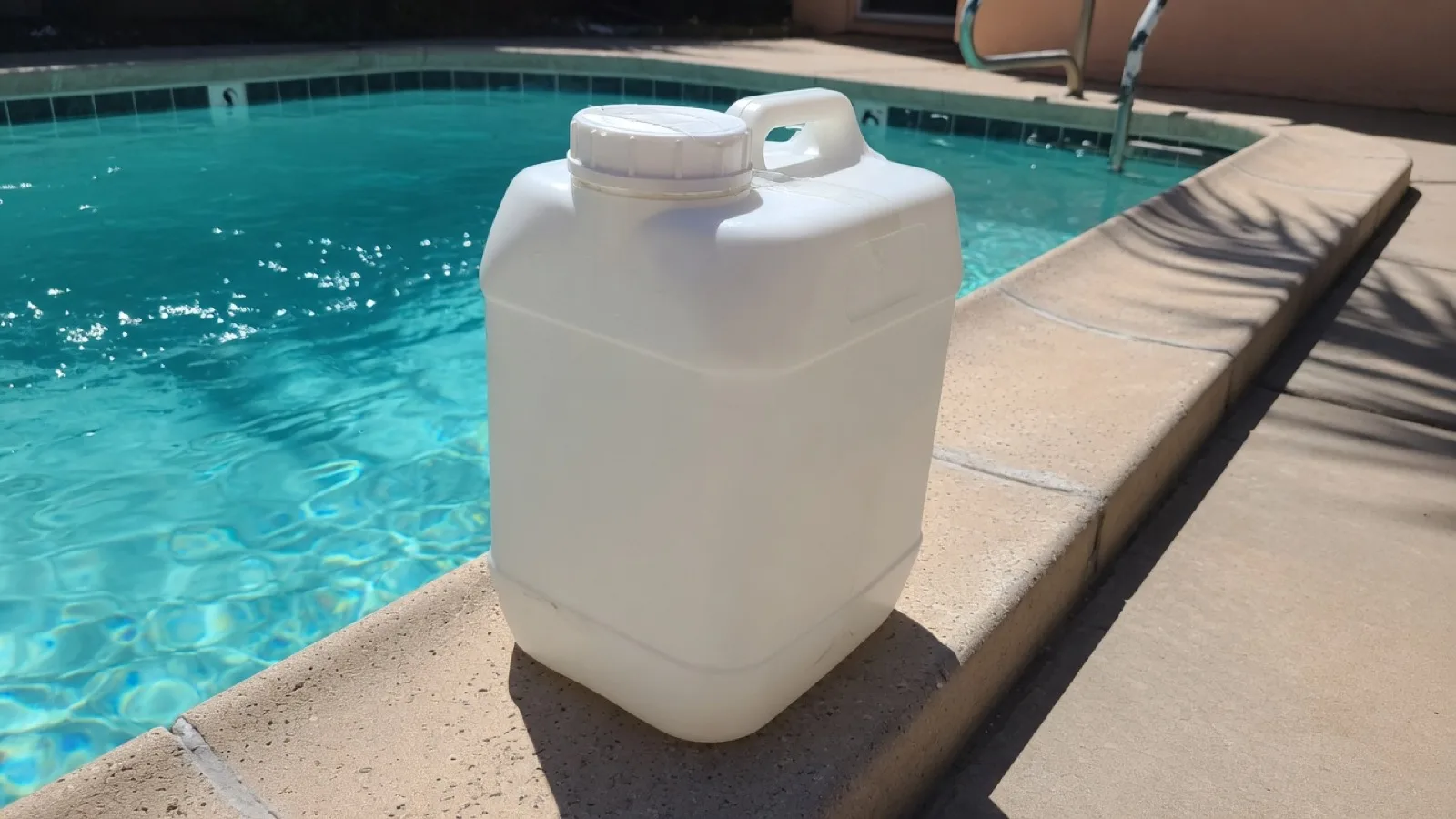
What stabilizer is for
The CDC home-pool page (May 10, 2024) names cyanuric acid as a chlorine stabilizer, and names dichlor and trichlor as chlorine products that contain it. Sunlight is on the CDC’s list of things that reduce chlorine. San Diego inland sun spends an unstabilized residual fast. Stabilizer is the shade for that residual.
The tradeoff is also on the CDC page: disinfection times lengthen when cyanuric acid is present. That is why the free-chlorine floor steps up from 1 ppm to 2 ppm when CYA is in play. More stabilizer is not a substitute for that 2 ppm.
The CDC’s 2 ppm rule, and the hot-tub ban
Pools with cyanuric acid or dichlor/trichlor: pH 7.0 to 7.8, free chlorine at least 2 ppm. Pools without it: at least 1 ppm. Hot tubs: at least 3 ppm, and do not use cyanuric acid or those stabilized products. Test at least twice a day, DPD preferred.
A Carlsbad salt pool that already runs a cell still often carries leftover trichlor CYA from years of pucks. Raising CYA further is not the default. Test first. The high-side problem is cyanuric acid too high. This page is the empty-kit case: a new plaster start, a fresh fill, or a pool that has been on unstabilized liquid chlorine only and cannot keep a residual through a July afternoon.
The CDC’s named instruction is the 2 ppm free-chlorine step and the hot-tub ban. A matched pro tests the actual sample before adding more stabilizer.
Dichlor, trichlor, and conditioner
Three ways CYA goes up:
- Conditioner (cyanuric acid) sold as stabilizer.
- Dichlor, a chlorine that also adds CYA.
- Trichlor, the puck that does the same.
A matched pro picks from the label on the bottle they are holding, not from a universal scoop count. CYA dissolves slowly. It belongs in a place where it can circulate, not as a pile in the skimmer that the pump then chews. Follow the product SDS. The EPA’s pool-chemical alert treats chlorinated isocyanurates as oxidizers that must stay dry and unmixed with other pool chemicals. Do not wet a small pile of stabilizer in a bucket of leftover acid.
Liquid chlorine (sodium hypochlorite) does not add CYA. That is why a yard that is already high on stabilizer switches to liquid to hold the CDC floor without feeding the CYA. The shock procedure is how to shock a pool. The three chlorine readings are free chlorine vs total chlorine.
Why a spa is a different instruction
The CDC’s no-CYA line for hot tubs is the whole difference. A shared spa-spillover on a La Jolla pool still has a spa well that sits hotter and jet-heavy. Stabilizer that is right for the pool volume is not an instruction to trichlor the spa. If the spa water is old, HomeGuide’s 3 to 4 month drain cadence on when to drain a hot tub is the reset.
A weekly pool cleaning visit is how most owners get a CYA reading they did not have to run, then a dose that matches this fill, not last summer’s puck habit.
When to call us
Call when the kit shows little or no stabilizer, when afternoon chlorine vanishes, or when a spa and a pool are being treated with the same trichlor puck. A matched local pool pro will test, add stabilizer only to the pool that needs it, and hold the CDC’s 2 ppm floor.
Frequently asked questions
What does cyanuric acid do in a pool?
The CDC describes cyanuric acid as a chlorine stabilizer. Dichlor and trichlor are chlorine products that contain it. With stabilizer in the water, the CDC wants free chlorine at least 2 ppm instead of 1 ppm, because chlorine lasts longer in the sun but works more slowly against germs.
Can I use stabilizer in a hot tub?
The CDC recommends not using cyanuric acid or chlorine products with cyanuric acid in hot tubs. A spa still needs at least 3 ppm chlorine. If a dichlor or trichlor habit has loaded a spa with CYA, the water change is the reset, not more conditioner.
How do you add cyanuric acid?
A matched pro uses the product label for the conditioner, dichlor, or trichlor on that pad. This page does not publish ounces per 10,000 gallons. CYA dissolves slowly. Dumping powder in the skimmer and walking away is how you find a white pile in the pump basket.
What if cyanuric acid is already too high?
Raising it is the wrong move. The high-side page covers that problem. Dilution or reverse osmosis is how CYA comes down, not a reducer bottle.
Does San Diego sun mean I need more stabilizer?
Sunlight is one of the things the CDC lists as reducing chlorine. Stabilizer is how a lot of San Diego chlorine pools keep a residual through the afternoon. It is not a reason to skip the 2 ppm free-chlorine floor, and it is not a reason to treat a spa like a pool.
Need professional help in San Diego County?
Splash Pro Pools connects San Diego homeowners with pool pros for the work in this post.