Free chlorine vs total chlorine is a three-number problem. Taylor Technologies (May 15, 2025) defines free chlorine as the sanitizer still ready to work, combined chlorine as the leftover after it has already reacted, and total chlorine as the sum. The CDC sets the free-chlorine floor. A matched local pool pro reads both so a San Diego yard does not shock by smell.
The three chlorine numbers
Taylor’s article (May 15, 2025) is the named source for the split:
- Free chlorine (FC) is the available sanitizer. Taylor recommends a minimum of 1 ppm, and 2 ppm or more whenever cyanuric acid is added.
- Combined chlorine (chloramines) forms after chlorine reacts with sweat, sunscreen, and other organics. It can irritate eyes and create the familiar pool smell.
- Total chlorine is free plus combined. When free and total are equal, combined is near zero.
Taylor’s combined-chlorine target is ideally less than 0.4 ppm. If total exceeds free by more than 0.4 ppm, plan a shock. Cloudy water, green walls, and a musty odor show up when free chlorine drops below the recommended threshold.
CDC minimums for pools and hot tubs
The CDC home-pool page (May 10, 2024) wants at least 1 ppm free chlorine in pools, at least 2 ppm with cyanuric acid or dichlor/trichlor, and at least 3 ppm in hot tubs with no cyanuric acid. pH 7.0 to 7.8. Test at least twice a day, DPD over strips.
At 1 ppm free chlorine, pH 7.5, 77°F, and no cyanuric acid, the CDC’s kill times are: E. coli under 1 minute, Hepatitis A about 16 minutes, Giardia about 45 minutes, Cryptosporidium about 15,300 minutes (10.6 days). Times lengthen when cyanuric acid is present.
A La Jolla salt pool with stabilizer in the water is on the CDC’s 2 ppm floor, not the 1 ppm floor. A backyard spa is on 3 ppm and should not be using the trichlor puck that feeds CYA. The testing habit is on pool water testing. The raise for missing stabilizer is on how to raise cyanuric acid. Getting back to the CDC floor, without an algae shock, is how to increase free chlorine.
How a DPD test tells them apart
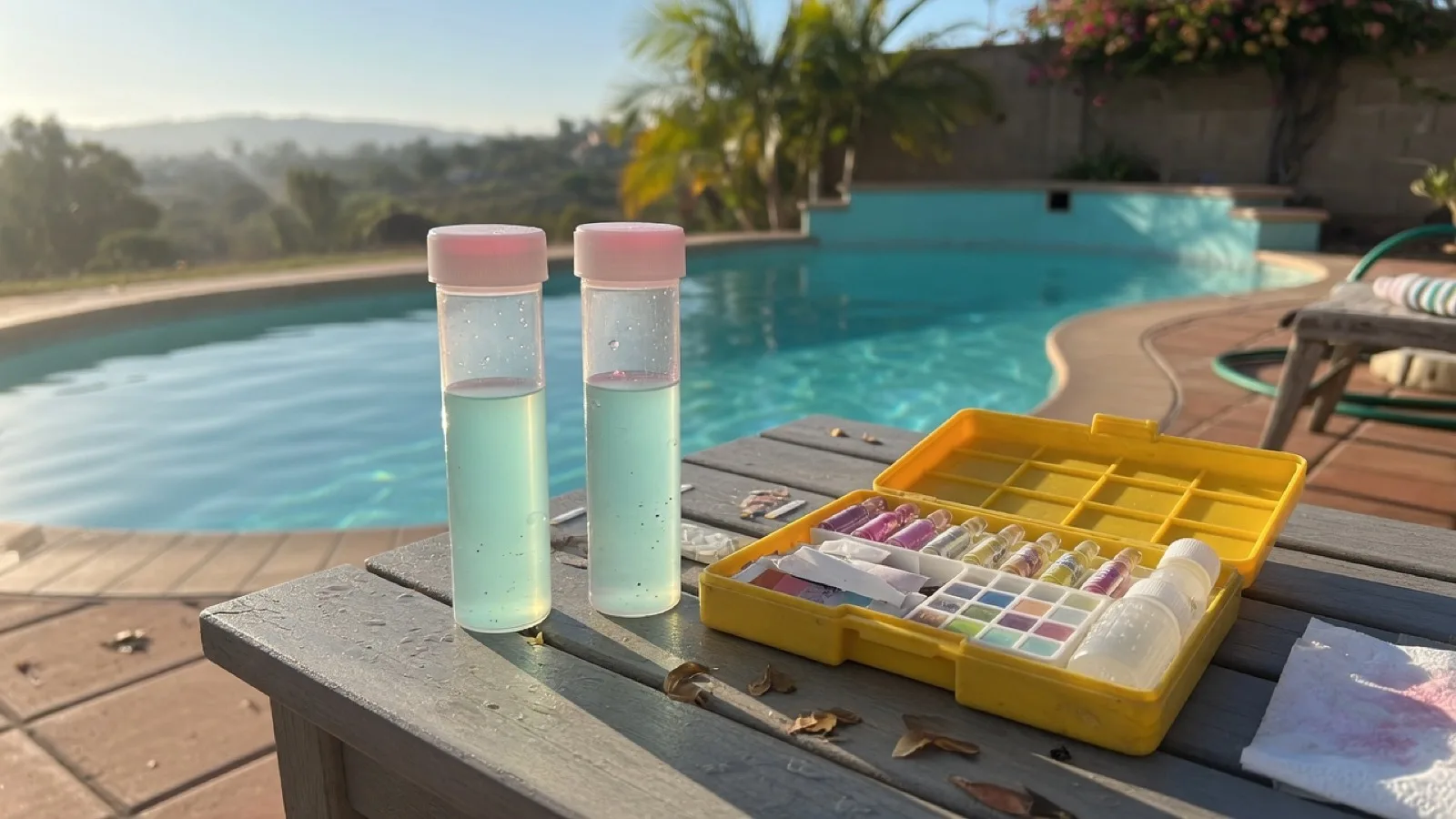
Sample elbow-deep, away from return jets, per Taylor. A DPD kit that reads free and total on the same sample lets you subtract. Strips can show both, and the CDC still rates DPD as more accurate. If the sample is over 10 ppm, DPD can bleach out and fake a zero, which is how a post-shock kit lies.
San Diego sun spends free chlorine all afternoon. Combined chlorine hangs around as the smell after a Saturday party. Inland heat plus a packed guest list is how FC falls and CC rises on the same day. A weekly pool cleaning stop is how most yards catch that split without owning the reagents.
When the numbers say shock, not more tablets
More trichlor when combined chlorine is already up adds stabilizer and does not break chloramines. Taylor’s flag is the 0.4 ppm gap. The procedure for the shock itself is how to shock a pool. If the pool is eating chlorine for a list of reasons, that diagnostic is high chlorine demand.
When to call us
Call when free and total disagree by more than Taylor’s 0.4 ppm, when the water smells like a locker room while the strip looks fine, or when a shock last week still has not closed the gap. A matched local pool pro will run DPD and treat the three numbers as three numbers.
Frequently asked questions
What is the difference between free chlorine and total chlorine?
Taylor Technologies (May 15, 2025) defines free chlorine as the available sanitizer, combined chlorine as the leftover after chlorine reacts with sweat and organics, and total chlorine as free plus combined. When free and total are equal, combined chlorine is near zero.
What chlorine level does the CDC want?
At least 1 ppm free chlorine in pools, at least 2 ppm if cyanuric acid or dichlor/trichlor is in the water, and at least 3 ppm in hot tubs with no cyanuric acid. Test at least twice a day with a DPD kit.
What combined chlorine number is too high?
Taylor says combined chlorine should ideally be less than 0.4 ppm. If total chlorine exceeds free chlorine by more than 0.4 ppm, it is time to plan a shock treatment.
Why does the pool smell like chlorine when the kit is low?
Taylor ties the familiar pool smell to combined chlorine, the chloramines left after sanitizer has already worked. The smell is a cue to add a supplementary dose, as a shock, to break those chloramines down.
Is this the same as shocking the pool?
This page is the three readings. Shocking is the correction when combined chlorine is up or the water has gone green. The procedure lives on the how-to-shock page.
Need professional help in San Diego County?
Splash Pro Pools connects San Diego homeowners with pool pros for the work in this post.