How to store pool chemicals in San Diego is a dry-shelf problem. EPA 550-F-01-003 (March 2001), “Safe Storage and Handling of Swimming Pool Chemicals,” says a small splash of water or an incompatible mix can raise temperature and release toxic gas. A matched local pool pro treats that alert as handling guidance, not a building code.
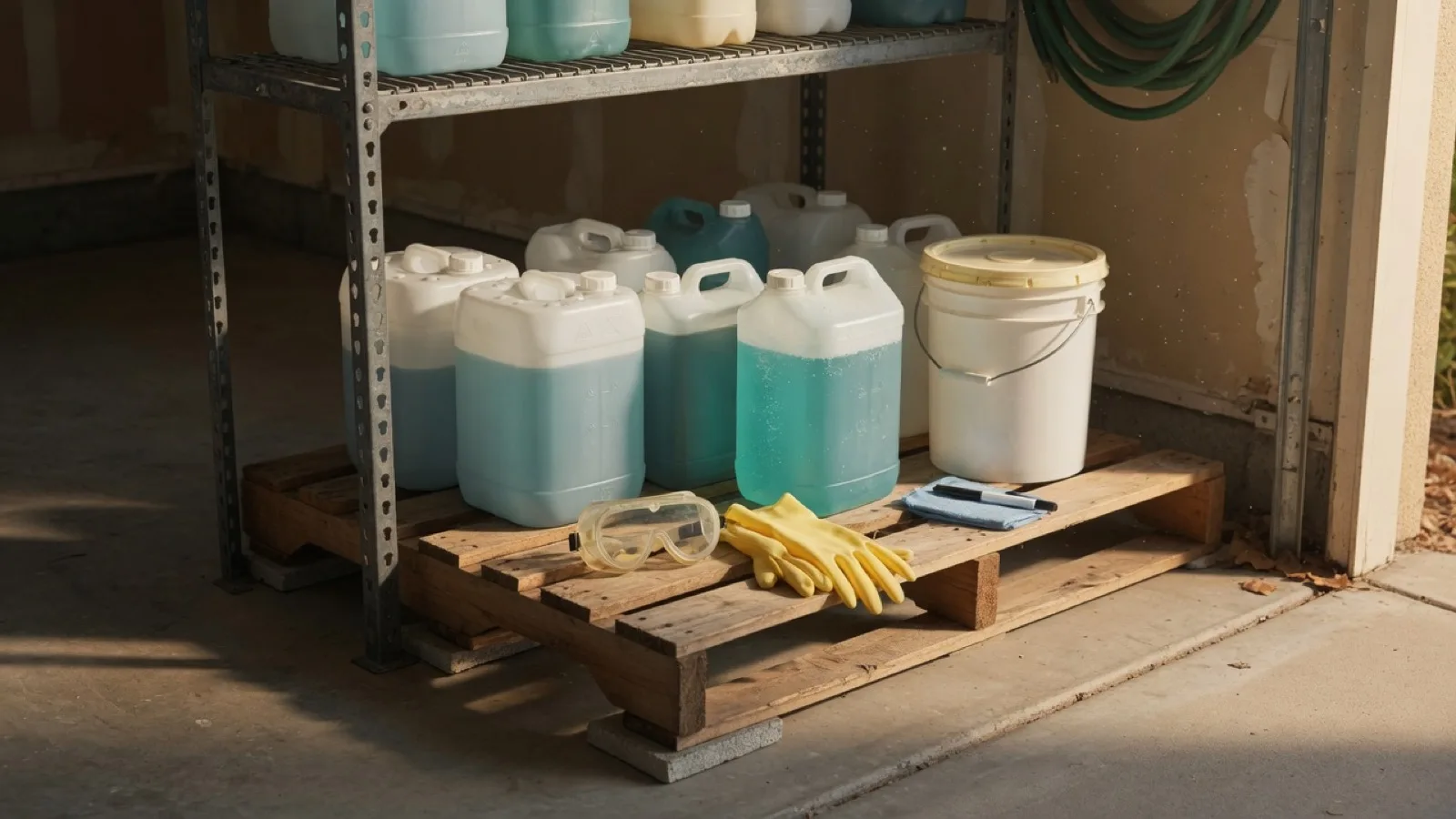
Keep it dry, sealed, and off the floor
The EPA wants containers closed. Store them away from doors and windows. Keep roof, pipe, hose, and sprinkler leaks off the product. Put the containers on shelves or pallets, not on the concrete where a wet season sits. San Diego’s marine layer on the coast and a hose-bib drip inland are both wetting hazards. The alert is about a small quantity of water, not a flood.
Separate incompatible substances. Do not store liquids above other incompatible substances. Do not mix old chemical with fresh even of the same type. Dedicated tools. Keep combustibles and flammables away. The most common pool chemicals are inherently incompatible. Mixing can ignite nearby combustibles and release chlorine gas.
The EPA’s named list in that alert includes chlorinated isocyanurates, lithium hypochlorite, sodium bicarbonate, potassium monopersulfate, hydrogen peroxide, sodium hypochlorite, calcium hypochlorite, and muriatic acid. Liquid chlorine next to muriatic on a low shelf is the picture that alert is trying to stop.
Handling is part of storage
EPA lists chemical goggles and liquid-impervious gloves and boots as a minimum. Frequent or extended handling adds a face shield and a liquid-impervious apron or coveralls. The acid jug walkthrough, without a DIY mix ratio, is on muriatic acid for pools.
This EPA document is guidance, not a City of San Diego ordinance. Discharge of leftover mixed water is a separate rule. Inside City limits, San Diego Municipal Code §43.0304 and §43.035(e)(3) still keep pool water and filter backwash out of the storm drain.
Where San Diego pads actually stash product
A Mira Mesa garage with a water heater drip is a wetting site. An Encinitas side yard with a salt breeze and a sun-cooked deck box is a heat and moisture site. An El Cajon shed that also holds gasoline is a combustibles site. None of those are a verdict on one address. They are why the EPA talks about leaks, floors, and nearby flammables instead of a pretty cabinet.
A weekly pool cleaning stop is how most yards keep half-used jugs from stacking into an incompatible pile.
When to call us
Call when chemicals are stored under a hose, when liquid sits above a dry oxidizer, or when a mix already fumed and nobody wants to guess the next step. A matched local pool pro will handle the water. Storage follows the EPA alert and the label on the container in your hand.
Frequently asked questions
How should I store pool chemicals?
EPA 550-F-01-003 (March 2001) says close the containers, store them away from doors and windows, keep them off the floor on shelves or pallets, and keep roof, pipe, hose, and sprinkler leaks off them. Separate incompatible substances. Do not store liquids above other incompatible substances.
Why can't I store chlorine next to acid?
The EPA alert says the most common pool chemicals are inherently incompatible. Mixing can ignite nearby combustibles and release chlorine gas. Named chemicals in that alert include sodium hypochlorite, calcium hypochlorite, chlorinated isocyanurates, and muriatic acid.
Is a wet deck box safe storage?
The EPA says pool chemicals may become a hazard when wetted by a small quantity of water. A limited volume of water added to the chemical can raise temperature and release toxic gas. A leaking hose bib over a deck box is the wetting hazard in plain sight.
What PPE does the EPA list?
Chemical goggles and liquid-impervious gloves and boots as a minimum. For frequent or extended handling it adds a face shield and a liquid-impervious apron or coveralls. Read the label on the jug in your hand.
Can I pour leftover chemical back into a new jug?
The EPA says do not mix old chemical with fresh even of the same type, and to use dedicated tools. Old product in a new container is how incompatible residues meet.
Need professional help in San Diego County?
Splash Pro Pools connects San Diego homeowners with pool pros for the work in this post.