Light green usually clears in 1 to 3 days. Pea-soup green takes 3 to 5. Dark green 5 to 7. Black can take a week or more, and sometimes a partial drain. Shock, brush, and run the filter around the clock. If CYA is already high, shock alone stalls. North County recovery is (760) 642-1256. Everywhere else call (858) 400-6757.
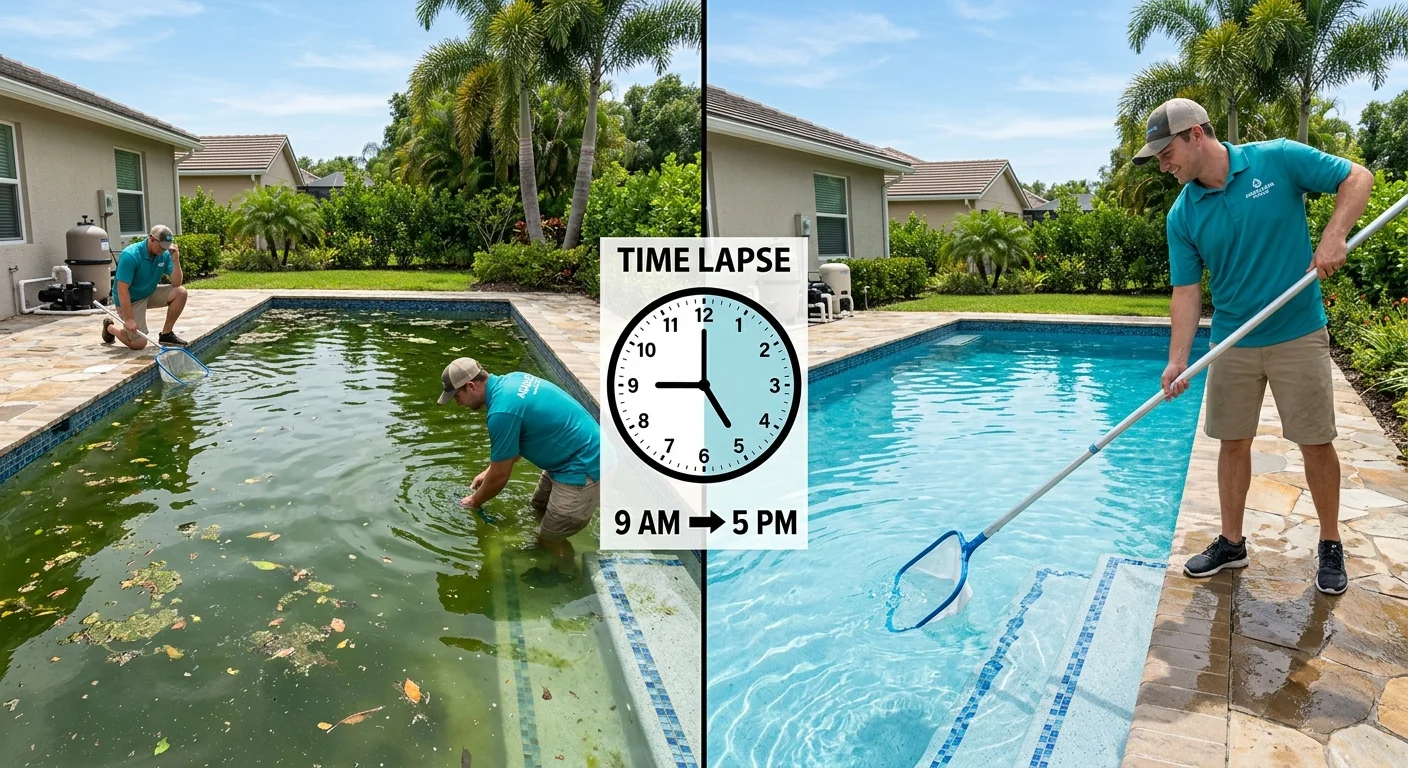
Pros in our network have handled countless green pool recovery projects across San Diego County, from light green tints to deep, impenetrable black. They know the process, the variables, and exactly what it takes to get your pool swim-ready again. Here’s the real timeline you can expect.
What determines the timeline: from light green to black
The color of your green pool isn’t just an aesthetic problem; it’s a direct indicator of the algae’s severity and, consequently, how long it will take to clear. The more algae, the longer and more intensive the treatment will be.
Light Green (Hint of Green): 1-3 Days If your pool has just a slight greenish tint, often after a few days of neglect or a minor chemical imbalance, you’re in luck. This is the easiest to fix. It typically means the algae hasn’t fully bloomed yet. You’ll primarily need a good shock treatment, proper filtration, and perhaps a touch of algaecide. With prompt action, you could be seeing clear water again in a couple of days.
Medium Green (Pea Soup Green): 3-5 Days This is the classic “green pool” scenario. The water is visibly cloudy and green, making it hard to see the bottom. At this stage, algae is thriving, and it’s producing spores that will continue to multiply if not addressed aggressively. Expect to perform multiple rounds of shocking, extensive brushing, and continuous filtration. You’ll likely see results within 3-5 days, but patience and consistent effort are key.
Dark Green (Forest Green): 5-7 Days When your pool water resembles a forest pond, it means there’s a significant algae bloom. Visibility into the pool is minimal. This level of green requires a much more potent approach. You’ll need higher doses of shock, possibly specialized clarifiers, and more frequent backwashing or filter cleaning. The sheer volume of dead algae needs to be filtered out, which takes time and puts a strain on your equipment.
Black Green (Slime Pool): 7+ Days, often longer This is the most severe stage, often indicating a pool that has been neglected for weeks or months. The water is completely opaque, and the bottom may be covered in a thick layer of algae and debris. In some extreme cases, you might even find mosquito larvae. A black-green pool often requires flocculant treatments to drop the algae to the bottom, followed by extensive vacuuming to waste, alongside massive shock doses. Sometimes, a partial or full drain and refill is the most efficient, albeit more costly, solution. This level of recovery is definitely a job for a professional pool service, as it requires specialized equipment and significant chemical expertise to handle safely and effectively. Trying to DIY a black pool can lead to damaged equipment or prolonged recovery times. You can learn more about the different types of algae and treatments in our article, Pool algae types and treatment guide.
Understanding the severity helps set realistic expectations for the clearing process. The quicker you act, the less severe the problem becomes, and the faster your pool will return to normal. Ignoring it only makes it worse and more expensive to fix.
The 24-hour shock: what to expect on day one
The first 24 hours of a green pool recovery are critical. This is when the heavy lifting of killing the algae begins, primarily through a process called “shocking” the pool. Don’t expect crystal clear water right away, but you should see significant changes.
First, before you even add chemicals, you need to prepare the pool. This means removing any large debris like leaves, twigs, or toys. Brush the walls and floor thoroughly to dislodge as much algae as possible. This makes the chemicals more effective. Then, you’ll need to test your water. pH and alkalinity levels are crucial; if they’re too far out of whack, your shock treatment won’t work as efficiently. Green pools often test with very low chlorine and unbalanced pH.
Next comes the shock. “Shocking” means adding a super-chlorination dose to your pool water, typically 3-5 times the normal amount, or even more for very green pools. This high concentration of chlorine rapidly kills off the algae. For a medium-green pool, you might need several pounds of granular shock or several gallons of liquid chlorine. For severely green pools, that means massive amounts.
Once the shock is added, you should run your pump continuously. Circulation is vital to distribute the chlorine evenly and to filter out the dead algae. Within 12-24 hours, you should start to see the water change from green to a cloudy gray or blue. This is a good sign! It means the algae is dying. It won’t be clear, but the vibrant green should be gone. If it’s still green, you likely didn’t add enough shock, or your pH was too high, preventing the chlorine from working effectively. You might also notice a strong chlorine smell, which is normal during this phase.
It’s important to remember that this initial shock is just step one. The dead algae are still suspended in the water, and they need to be filtered out. The 24-hour mark is typically about seeing the color shift, not achieving full clarity. This is often the most labor-intensive part for a DIYer, requiring careful chemical handling and monitoring. Pool technicians, with their experience and commercial-grade chemicals, can often accelerate this initial kill phase more effectively and safely.
Filtering and brushing: day two and three
After the initial shock treatment has done its job killing the algae, day two and three are all about physical removal. This is where your pool filter becomes the MVP, and your arm gets a workout.
Your pool water will likely appear cloudy white, gray, or bluish after the shock. This cloudiness is essentially millions of dead algae cells floating around. Your filter’s job is to capture these particles, but it can only do so much at once. You need to keep your pump running 24/7 during this phase. Continuous filtration is absolutely essential to clear the water. Depending on the size of your pool and the efficiency of your filter, this could take a full day or two of non-stop operation.
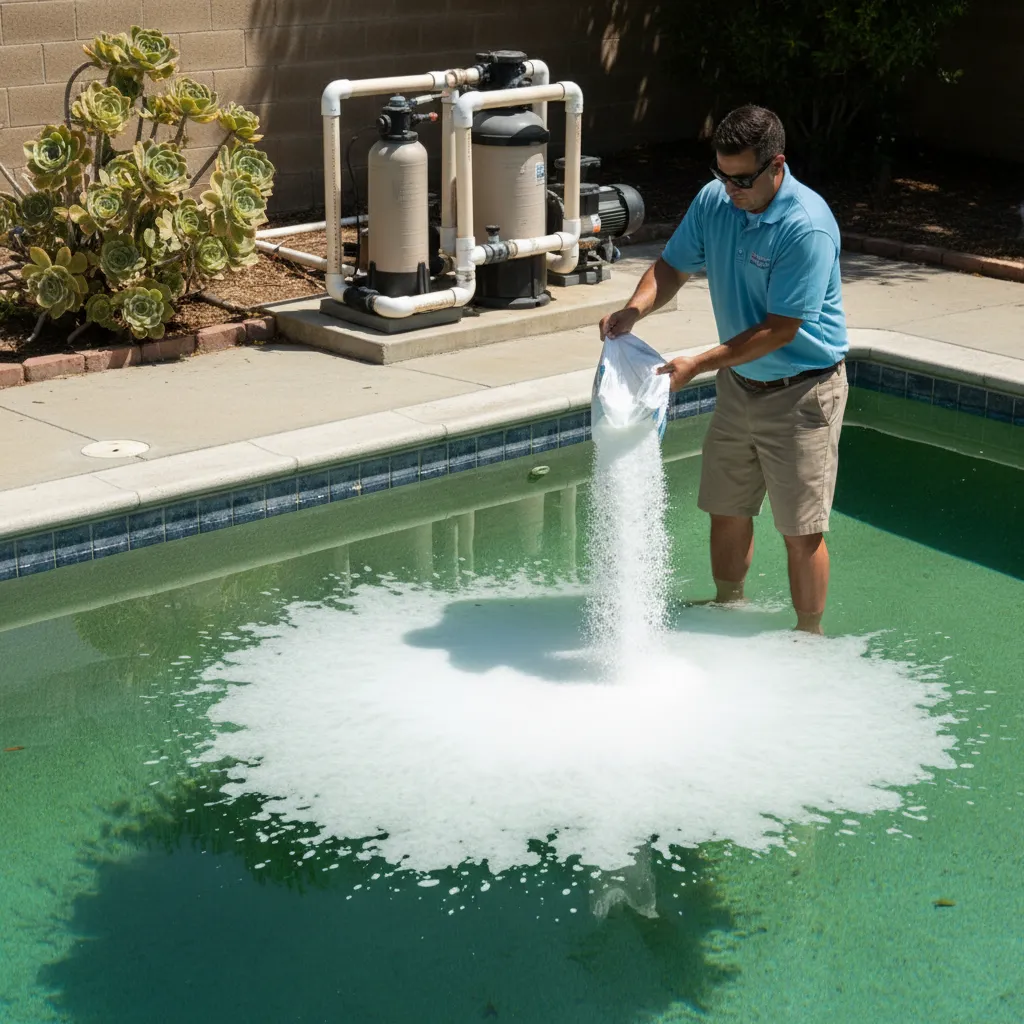
You’ll also need to brush the pool vigorously again, at least once a day, and sometimes twice. Algae loves to cling to the walls and floor, and dead algae can settle there, too. Brushing helps stir up these particles so they can be drawn into the filter. Pay special attention to corners, steps, and any rough spots where algae might hide.
As the filter works, it will get clogged with the dead algae. This means you’ll need to clean your filter much more frequently than usual. For a cartridge filter, this means taking it out and rinsing it thoroughly. For a D.E. filter, you’ll need to backwash and re-charge it. For a sand filter, regular backwashing is crucial. If you don’t clean your filter, its efficiency will drop drastically, slowing down the entire clearing process. Many DIYers underestimate how often they need to clean their filter during green pool recovery, which is a common reason for extended timelines.
By the end of day three, if you’ve been consistent with shocking, filtering, and brushing, your pool should be much clearer. You might still have some cloudiness, but you should be able to see the bottom of the shallow end, and perhaps even the deep end. At this point, you’ll re-test your water, adjust chemicals as needed (especially chlorine, which will have depleted), and likely add a clarifier to help bind the remaining fine particles for easier filtration. The Pool Filter Cleaning & Replacement service can be especially helpful during this phase if your filter is struggling.
When it takes a week or more (and why)
While a few days might suffice for a mildly green pool, many scenarios will push the clearing timeline to a week or even longer. Understanding these factors is crucial for setting realistic expectations and deciding when it’s time to call in the professionals.
Severe Algae Blooms (Black Green): As mentioned, a pool that’s gone completely black or is filled with thick, slimy algae presents a significant challenge. The sheer volume of organic matter requires multiple, heavy doses of shock, followed by extensive vacuuming to waste (meaning the dirty water is discharged, not returned through the filter). This process itself can take days, and then you still need to filter out the remaining particles. A full drain and acid wash may be the most effective, albeit time-consuming and costly, solution for these extreme cases.
Equipment Issues: A struggling or undersized pool pump can’t circulate water effectively, meaning chemicals don’t get distributed well, and the filter can’t do its job. A dirty, old, or improperly sized filter will also drastically slow down the process. If your filter isn’t capturing particles efficiently, you’ll be running your pump for days with minimal results. Worn-out filter media (sand, D.E. grids, cartridges) might need replacement, which adds to the timeline and cost. Issues like a pool pump not priming or a pool skimmer not working can also impede recovery.
Improper Chemical Balance: Simply dumping shock into a green pool won’t always work. If your pH is too high, chlorine becomes much less effective. If your stabilizer (CYA) levels are too high, chlorine is also less potent. Getting the water chemistry right before and during the shocking process is critical. DIYers often struggle with this delicate balance, leading to repeated attempts and wasted chemicals.
Lack of Consistency/Knowledge: Clearing a green pool requires consistent effort: daily brushing, frequent filter cleaning, and careful chemical monitoring. Missing a step or not knowing how to react to changing water conditions can easily extend the timeline. For instance, if you don’t backwash your filter when the pressure rises, it stops filtering effectively, and the water stays cloudy. Many San Diego homeowners find they simply don’t have the time or expertise for this intensive process.
High Phosphate Levels: Phosphates are a food source for algae. If your pool has very high phosphate levels (often from decaying organic matter, fertilizers, or certain pool chemicals), algae can rebound quickly even after heavy shocking. Removing phosphates requires a separate treatment, which adds another step and more time to the recovery process.
In these situations, the difference between DIY and professional service becomes stark. A professional has the experience, commercial-grade chemicals, and tools to diagnose and address these complex issues efficiently, significantly reducing your recovery time and frustration.
How professional service gets it done faster
When your pool turns green, you want it clear and swimmable again as quickly as possible. That’s why Green Pool Recovery & Algae Treatment is designed to tackle even the toughest algae blooms with speed and precision, often getting your pool clear much faster than a DIY approach.
Expert Diagnostics from the Start: No guessing. Experienced technicians begin with a comprehensive water analysis to pinpoint the exact type and severity of algae, as well as any underlying chemical imbalances like high pH, low chlorine, or elevated phosphates. That’s how a tailored treatment plan gets built from day one, avoiding wasted time and chemicals on ineffective approaches. The equipment gets inspected too, to make sure it’s functioning optimally for the recovery process and to catch issues like a failing pump or clogged filter that might hinder progress.
Commercial-Grade Chemicals & Techniques: Pros use powerful, professional-grade algaecides and shock treatments that are simply not available to the average homeowner. A large-volume liquid chlorine shock, for instance, often delivers a more immediate and potent algae kill than granular products. Specialized flocculants and clarifiers quickly drop dead algae to the bottom or bind fine particles for faster filtration, accelerating the clearing process significantly. These methods are tried and tested across countless San Diego pools.
Intensive Filtration & Equipment Management: Clearing a green pool demands continuous and efficient filtration. Pool technicians keep the pump running optimally and clean the filter thoroughly and frequently, knowing exactly when to backwash or clean a filter to maintain maximum efficiency, a critical step often overlooked by homeowners. If equipment needs attention, it can often get addressed on the spot, with Pool Repair and Pool Equipment Installation & Upgrades handled through the same network.
Consistent Monitoring & Adjustment: Algae recovery isn’t a one-and-done process. Consistent, often daily, follow-up visits monitor water chemistry, re-dose chemicals as needed, brush the pool, and clean the filter. This continuous oversight means the tech can react immediately to changing conditions, keeping the recovery process on track and preventing setbacks. A systematic approach ensures every step is executed correctly and efficiently, minimizing the time your pool remains green.
Safety and Peace of Mind: Handling large quantities of pool chemicals requires knowledge and caution. Experienced technicians are trained in safe chemical handling and application, protecting both your property and your family. The guesswork and the heavy lifting get taken out of green pool recovery, so you can relax while the pool gets restored to its pristine condition. For more context, you can read about why is my pool green to better understand the issues.
When to call us
While a light green pool might be a manageable DIY project, a severely green or black pool often requires professional intervention. If you’re struggling to clear your pool after a few days, or if the problem is extensive from the start, it’s time to call in the experts. Pros in our network have the experience, commercial-grade tools, and chemical expertise to safely and efficiently restore your pool. Call us at (858) 400-6757 and we’ll connect you with a vetted local pool pro.
Frequently asked questions
How long does it take to clear a green pool completely?
The timeline for clearing a green pool varies significantly based on the severity of the algae. A light green pool might clear in 2-3 days with proper treatment, while a black, heavily contaminated pool could take a week or more, even with professional help.
Can I swim in a green pool?
No, you should never swim in a green pool. Green water indicates a high concentration of algae, bacteria, and other contaminants that can cause skin rashes, ear infections, gastrointestinal issues, and other health problems. It's also a significant slipping hazard.
What should I do first when my pool turns green?
The first step is to test your water chemistry, especially pH and alkalinity, and then perform a heavy shock treatment. Ensure your filter is clean and running continuously. For severe cases, consider hiring a professional for effective and fast treatment.
Why does my pool keep turning green after treatment?
If your pool keeps turning green, it's likely due to an underlying issue. Common causes include insufficient chlorine levels, poor filtration, high phosphates, unbalanced pH, or inadequate circulation. A professional can diagnose and correct these recurring problems.
Is it cheaper to clear a green pool myself or hire a professional?
While DIY seems cheaper initially, a severely green pool requires significant chemicals, equipment, and time. Mistakes can lead to wasted money, further complications, and prolonged recovery. Professionals often clear pools faster and more efficiently, saving you money and frustration in the long run.
Need professional help in San Diego County?
Splash Pro Pools connects San Diego homeowners with pool pros for the work in this post.