Heads up before you read: Splash Pro Pools keeps pools clean; pool repair is a different trade. Call (858) 400-6757 and we’ll match you with a local pro who handles it.
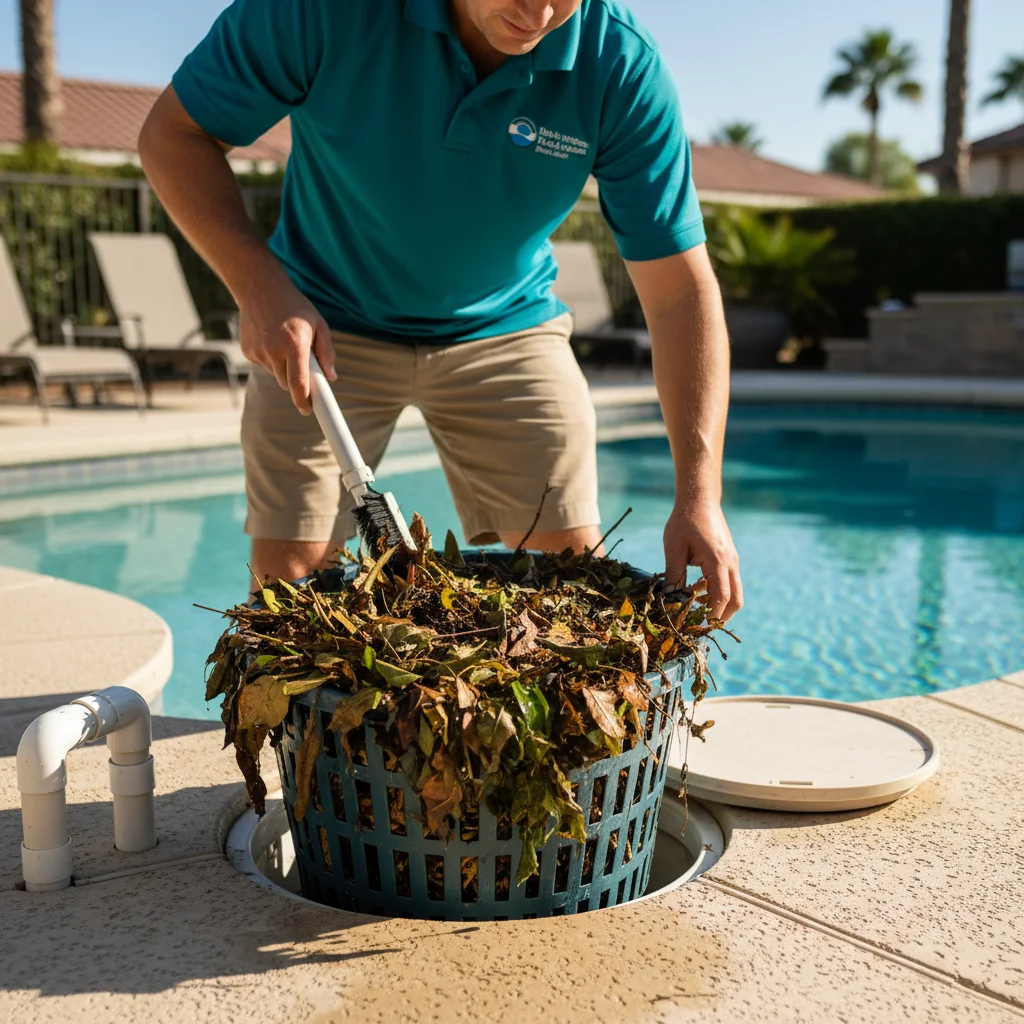
The most common reason a pool skimmer stops working is weak or no suction, and the first thing to check is the skimmer basket. A basket packed with leaves chokes off water flow and is the quickest fix on the list. If that’s clear and suction is still weak, a clog in the plumbing line, an air leak, or a stuck weir door is likely the culprit.
Before you can fix the problem, it helps to know what a healthy system looks like. We’ll walk through the common symptoms, from weak suction to a complete standstill, to help you pinpoint the cause and get your pool back on track.
How a pool skimmer is supposed to work
Think of your pool skimmer as the gateway to your entire filtration system. Its job is to skim the surface of the water, pulling in floating debris like leaves, pollen, and bugs before they have a chance to sink and decay. This simple function is critical for maintaining clear, healthy water and reducing the strain on your pump and filter.
A skimmer has a few key parts that work together:
- The Skimmer Mouth: This is the opening on the pool wall where water enters.
- The Weir Door: This is the floating flap inside the mouth. When the pump is on, it hangs at an angle, creating a little waterfall effect that speeds up the surface water entering the skimmer. When the pump turns off, it floats up to a vertical position, trapping the collected debris inside so it can’t float back into the pool.
- The Skimmer Basket: This is the primary collection point. It’s a removable basket that catches all the large debris. Keeping this clean is the single most important piece of skimmer maintenance.
- The Suction Line: At the bottom of the skimmer housing, a pipe connects directly to your pool pump. The pump’s suction is what pulls water through the skimmer mouth, into the basket, and on to the filter.
In a perfect world, the pump creates powerful suction, the weir door directs debris in, and the basket catches it all. When this chain is broken, you start seeing the symptoms of a skimmer that’s not working.
Weak suction: air leaks and clogged lines
The most common complaint we hear is a skimmer with weak suction. The water is moving, but just not fast enough to pull in debris effectively. This is almost always caused by one of two things: a clog or an air leak.
Start with the simple clogs
Before you start worrying about underground pipes, check the obvious spots.
- The Skimmer Basket: Pop the lid. Is the basket overflowing with leaves? If so, you’ve found your culprit. A full basket chokes off water flow. Empty it and see if suction returns.
- The Pump Basket: Turn off the pump and check the basket inside the pump housing. If the skimmer basket was full, there’s a good chance some debris got through and is now clogging the pump basket. A full pump basket restricts flow from all suction lines.
Finding a line clog
If both baskets are clean and suction is still weak, you may have a clog in the plumbing between the skimmer and the pump. You can test this by checking your diverter valves at the equipment pad. If you have a main drain line, try turning the valve to pull water only from the skimmer. If the pump struggles to prime or the suction remains weak, a clog is likely. A plumbing bladder or a specialized jet tool can sometimes clear these clogs, but using them incorrectly can damage your pipes.
Hunting for air leaks
If there are no clogs, an air leak is the next suspect. Your pump is designed to move water, not air. When air gets into the suction side, it dramatically reduces the pump’s efficiency. You’ll often see tiny bubbles coming out of your pool’s return jets if you have an air leak.
Common places for air to sneak in include:
- The Pump Lid: Is the O-ring cracked, dry, or missing? Is the lid screwed on tight?
- Pipe Fittings: Check the threaded fitting that goes into the front of the pump. A bad seal here is a very common source of air leaks.
- Valves: The O-rings inside your diverter valves can wear out over time.
An air leak can also cause other issues, like your pump making strange noises. If you hear a grinding or gurgling sound, it might be related to the same problem causing your weak skimmer suction. Our guide to troubleshooting pool pump noises can help you diagnose that further.
No suction: pump prime and weir door issues
If you have zero suction at the skimmer, the problem is more severe but often has a straightforward cause. It means that either no water is being pulled from the skimmer line at all, or the pump isn’t moving any water whatsoever.
First, check your pool’s water level. Here in San Diego, evaporation can drop the water level surprisingly fast. If the water line is below the skimmer’s opening, it can’t pull in any water, it’s just sucking air. This will cause your pump to lose its prime (the solid column of water it needs to operate). Your water level should always be about halfway up the skimmer mouth.
Next, check your equipment pad.
- Is the pump running? It sounds basic, but make sure the breaker hasn’t tripped and the timer is set correctly.
- Has the pump lost prime? Look at the clear lid on your pump. If it’s not full of water while running, the pump has lost prime. This could be due to a low water level or a major air leak.
- Check the diverter valves. Many pools have a valve that lets you choose between pulling water from the skimmer, the main drain, or both. It’s possible the valve was accidentally turned to shut off the skimmer line completely. Make sure the handle is positioned to allow flow from the skimmer.
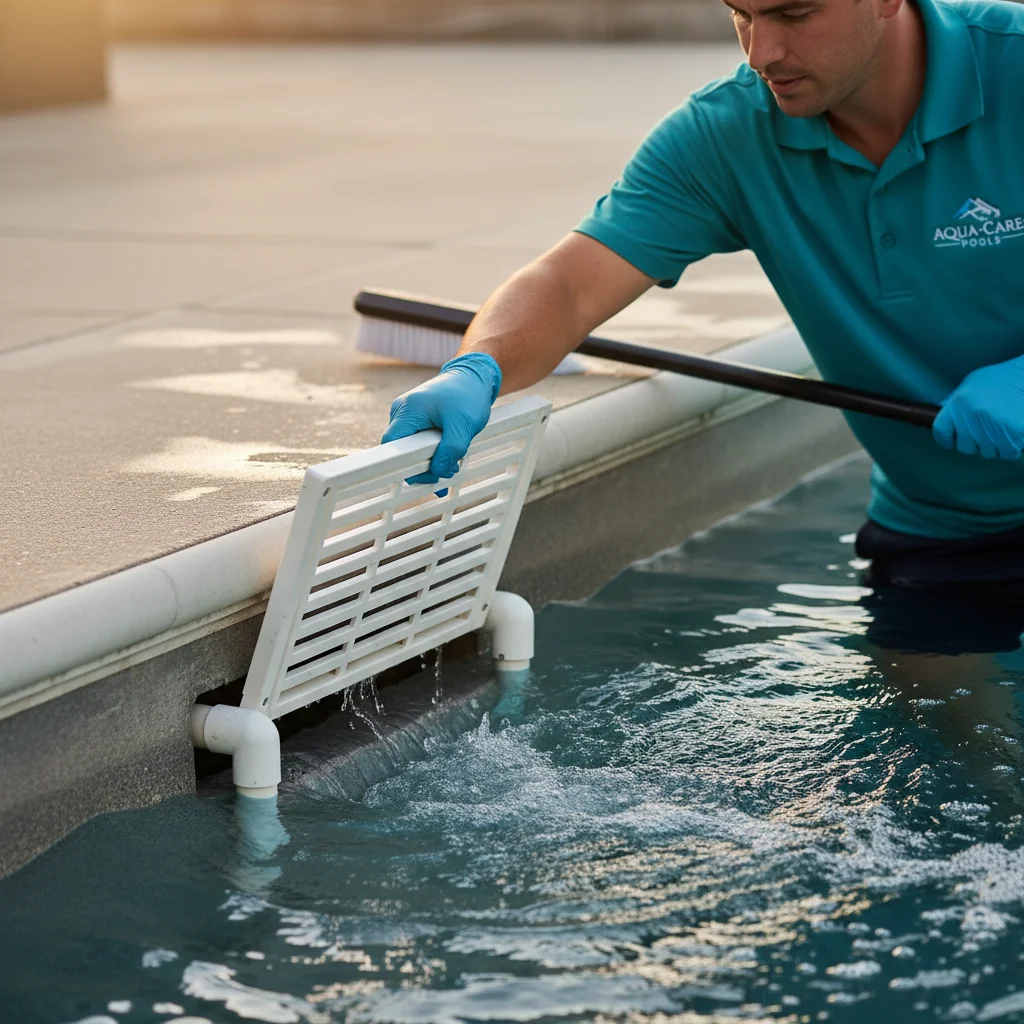
Finally, inspect the pool skimmer weir door. If the weir door gets stuck in the “up” or closed position, it can completely block water from entering the skimmer. This can happen if a stick or pool toy gets wedged in it. Make sure it moves freely. If it’s broken or missing, it won’t block the flow, but it will allow all the debris to float back out into the pool every time the pump cycles off.
Cracked skimmer body: when to repair vs. replace
Sometimes, the problem isn’t with the flow but with the skimmer itself. The plastic body of a pool skimmer can develop cracks over time due to ground shifting, sun exposure, and water pressure. A cracked skimmer is more than a cosmetic issue; it’s a leak that can lead to significant water loss and even damage the pool’s structure.
You can spot a crack by carefully inspecting the inside of the skimmer housing, especially around the corners and where the skimmer meets the pool wall (the “throat”). Another tell-tale sign is localized water loss. If you notice the ground around your skimmer is constantly damp, a crack is a likely cause. When you can’t pin down where the water is going, our pool leak detection service can find it without digging.
For a very small hairline crack above the waterline, a temporary fix using a two-part pool epoxy or putty might work. This can seal the crack for a while and stop a minor leak.
However, for any significant crack, especially one below the waterline or that goes all the way through the skimmer body, a patch is not a reliable long-term solution. Water pressure will eventually work its way through the patch, and the leak will return. In these cases, a professional pool skimmer repair is necessary. This can sometimes involve plastic welding or injection techniques, but more often than not, a full replacement is the most durable solution.
Replacing a skimmer is a major job. It requires carefully cutting out the section of the concrete deck around the skimmer, excavating it, cutting and re-doing the plumbing, setting the new skimmer perfectly level, and then pouring new concrete. This is a complex task that requires expertise to ensure it doesn’t leak or fail. It’s not a DIY project for the average homeowner.
When to call us
You can solve many common skimmer problems with a little bit of troubleshooting. Cleaning baskets, adjusting valves, and checking for obvious air leaks are all great first steps. But some jobs are best left to a professional.
If you’re dealing with a persistent clog deep in the plumbing, a mysterious air leak you can’t find, or any kind of crack in the skimmer body, it’s time to call for help. Attempting complex plumbing or structural repairs without the right tools and experience can lead to bigger, more expensive problems. Our experienced technicians have the diagnostic equipment and expertise to handle any issue correctly the first time.
Call us at (858) 400-6757 and we’ll connect you with a vetted local pool pro.
Frequently asked questions
Why is my pool skimmer not collecting debris?
This is usually due to weak or no suction. Common causes include a full skimmer basket, a clog in the plumbing line, an air leak in the system, or a faulty weir door that isn't trapping debris properly.
How do I know if my pool skimmer line is clogged?
If your pump basket is clean and you still have weak suction just from the skimmer, you might have a clog. You can test this by closing other suction lines (like the main drain) at the equipment pad. If skimmer suction doesn't significantly improve, a clog is the probable cause.
Can I fix a cracked pool skimmer myself?
Small, hairline cracks above the waterline can often be patched with pool-safe epoxy or putty as a temporary fix. However, larger cracks, especially below the waterline or near plumbing connections, require professional repair to prevent major leaks and further deck damage.
What does the pool skimmer weir door do?
The weir door, that little flapper at the skimmer's mouth, is crucial. It creates a faster flow of surface water into the skimmer and traps debris in the skimmer basket when the pump shuts off. If it's stuck, broken, or missing, leaves can float back into your pool.
Need this done in San Diego County?
For repair and renovation work like this, we hand you to our trusted partner, Del Rancho Pools.