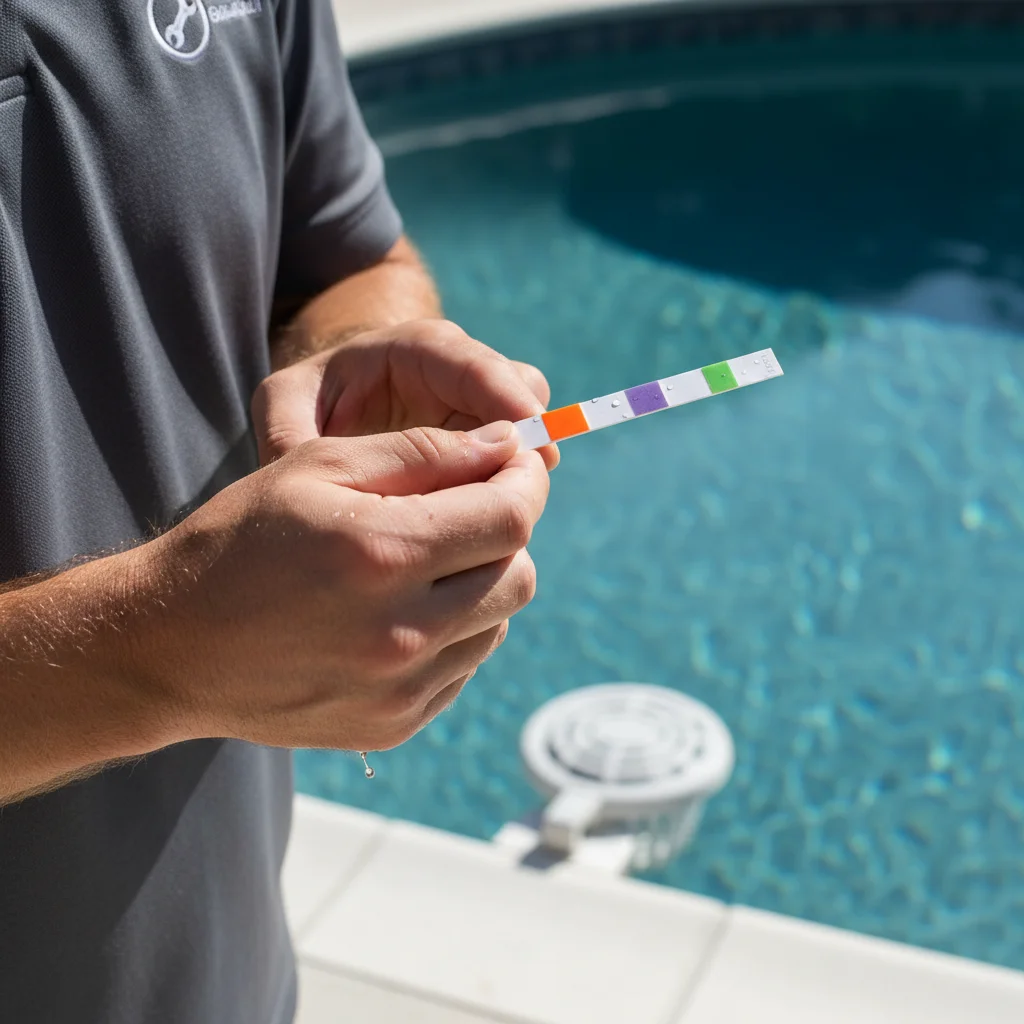
A high chlorine demand pool keeps showing low free chlorine because sunlight, swimmers, debris, jets, or active contamination consume sanitizer faster than it’s replaced. High pH or a stabilizer mismatch can also make detected chlorine work more slowly. The fix is to identify the loss pattern, then correct its cause instead of adding chlorine blindly.
What a high chlorine demand pool is telling you
High chlorine demand is a symptom, not one chemical condition. It means chlorine is disappearing quickly, working too slowly, or facing more contamination than the current treatment can handle.
Free chlorine reacts with material introduced by swimmers and the surrounding yard. The CDC’s May 2024 home pool guidance identifies pee, poop, sweat, dirt, sunlight, and droplet-making jets as factors that reduce chlorine levels.
The same guidance recommends at least 1 ppm free chlorine in pools without cyanuric acid. That minimum rises to at least 2 ppm when the water contains CYA or stabilized chlorine, such as dichlor or trichlor.
Those figures provide a testing baseline, not a diagnosis. A low reading after a crowded afternoon points somewhere different from a steady loss in an unused pool. Your recent weather, swimmer load, chemical history, and pH readings help separate those causes.
Adding more chlorine may produce a temporary rise. It won’t explain why the level fell. A short testing log often reveals more than another unmeasured dose.
The main causes of fast chlorine loss
Fast chlorine loss usually traces to several overlapping patterns. The visible symptom may look identical, but each cause calls for a different response.
| Demand pattern | What you may notice | What the pattern means |
|---|---|---|
| Heavy swimming | Chlorine falls after the pool gets busy. | Sweat, dirt, and other swimmer waste give chlorine more material to handle. |
| Dust and organic debris | The drop follows wind, falling leaves, or yard cleanup. | Dirt and decaying material keep sanitizer occupied. |
| Strong sunlight | Chlorine holds poorly during bright, exposed days. | Sunlight reduces chlorine, while stabilizer changes how chlorine performs. |
| Water features and jets | Loss increases when fountains, spillways, or jets run often. | Droplet-making jets are another chlorine-reducing factor identified by the CDC. |
| High pH | A test finds chlorine, but sanitation performance lags. | Once pH rises above 7.8, chlorine kills germs more slowly. |
| CYA mismatch | Stabilized chlorine has been used repeatedly, yet results keep weakening. | CYA affects chlorine activity and the minimum free-chlorine level needed. |
| Algae supported by phosphates | The water repeatedly turns dull, cloudy, or green. | Phosphates can support algae, and active algae creates continuing chlorine demand. |
Several causes can stack together. An East County pool may handle heavy summer use, then catch a load of Santa Ana wind dust. Chlorine is now reacting with swimmer waste and windblown dirt at the same time.
That overlap explains why a single-cause fix sometimes disappoints. Lowering one source of demand won’t remove another source that remains active.
It also explains why “chlorine lock” isn’t a complete diagnosis. Homeowners often use that phrase whenever chlorine seems ineffective. The dedicated chlorine lock guide explains the testing and chemistry mismatches behind that label.
Follow this chlorine-demand troubleshooting flow
The fastest diagnosis comes from comparing chlorine loss with real events around the pool. Change one variable at a time, then test again.
-
Establish a reliable starting reading. Test free chlorine and pH before making another correction. The CDC recommends testing both at least twice per day and more often during heavy use. A DPD kit is more accurate than test strips.
-
Compare quiet and busy periods. A sharp drop after swimmers points toward bather load. Similar loss while the pool sits unused shifts attention toward sunlight, debris, algae, jets, or the chemistry surrounding the chlorine.
-
Review pH and stabilizer together. Chlorine works more slowly above pH 7.8, while CYA changes its germ-killing speed and recommended minimum. Don’t judge the chlorine reading without that context.
-
Inspect the water and surrounding yard. Leaves, soil, pollen, and windblown dirt add demand. Cloudiness or returning algae suggests that active contamination, circulation, filtration, and sanitizer all need attention.
-
Retest after correcting the likely cause. A lasting improvement supports the diagnosis. Another rapid drop means a second demand source may still be present.
The timing often tells the story. Loss after a weekend gathering points toward swimmer contamination. A steady daytime decline points toward sunlight and stabilizer balance. A drop after Santa Ana winds points toward dirt and organic debris.
Recurring algae needs its own branch of the diagnosis. If oxidation treatment fits the water condition, follow a measured process rather than guessing at the dose. Our guide to shocking a pool explains that process in more detail.
Why San Diego pools develop chronic demand
San Diego’s year-round swim season keeps chlorine demand active during any month. There isn’t a dependable off-season that erases neglected chemistry, accumulated stabilizer, or recurring organic load.
A busy El Cajon backyard pool may face repeated swimmer demand through summer. An Encinitas pool beneath mature trees can collect leaves and fine debris. Santa Ana winds can then carry dirt into inland and coastal yards during the same weather event.
These pools may all show low chlorine, but they don’t share one cause. The El Cajon pool may need closer testing around heavy use. The Encinitas pool may need tighter debris control. Another pool may have a CYA or pH problem hiding behind an ordinary-looking chlorine result.
Local conditions can also change from week to week. A pool that held chlorine during a quiet stretch may behave differently after visitors, wind, bright weather, or extended jet use. Testing should follow actual use and exposure, not the calendar alone.
Homeowners within the city can find local service information through our San Diego pool service hub. The diagnostic process stays the same across the county, but each yard produces its own mix of sunlight, debris, and swimmer load.
Fix the cause instead of chasing the reading
The durable fix removes demand or corrects the chemistry slowing chlorine’s work. More product alone can hide the pattern for a short time.
Start with physical contamination. Skim leaves, remove settled debris, and keep water moving through a clean filtration system. Chlorine shouldn’t carry the entire burden of material that can be removed from the water.
Match testing to pool use. Heavy swimmer days place more demand on chlorine, so the CDC advises testing more often during heavy use. That lets you catch a falling level before several causes become tangled together.
Correct the pH context next. Chlorine kills germs more slowly above pH 7.8. Bringing pH back within the CDC’s recommended 7.0 to 7.8 range helps the chlorine present perform as intended.
Then review the pool’s stabilizer history. Repeated use of stabilized chlorine introduces CYA. That stabilizer protects chlorine from sunlight, but it also slows germ-killing action. Our guide to cyanuric acid that’s too high covers that single cause without mixing it into the broader demand diagnosis.
Treat phosphates as an algae-support issue, not a substance that directly eats chlorine. A phosphate result matters most when algae pressure and recurring chlorine loss appear together. The San Diego pool phosphates guide explains that relationship and the cases where phosphate treatment may distract from the real problem.
Finally, repeat the test after each correction. If several things change at once, you won’t know which one solved the loss. A simple record of pool use, weather, free chlorine, and pH makes the next drop easier to interpret.
Persistent demand can be difficult to untangle without consistent testing. Weekly pool cleaning gives the independent pros we connect you with a regular view of chemistry, debris, and equipment operation. That continuing pattern is often more useful than one isolated water sample.
Frequently asked questions about chlorine demand
High chlorine demand becomes easier to solve once the timing and chemistry pattern are clear.
Why does my pool keep eating chlorine?
Chlorine disappears quickly when sunlight, swimmers, dirt, organic debris, jets, or active contamination consume it faster than you replace it. High pH and excess stabilizer can also make detected chlorine work more slowly, so testing the whole pattern matters.
Does sunlight cause high chlorine demand?
Yes. The CDC lists sunlight among the factors that reduce chlorine levels. Stabilizer can protect chlorine from sunlight, but it also changes how chlorine performs, so the answer isn’t simply adding more of either product.
Can high CYA cause chlorine to disappear?
High CYA doesn’t make chlorine vanish from a test, but it can slow chlorine’s germ-killing action. The CDC recommends at least 2 ppm free chlorine when CYA or stabilized chlorine is used, compared with at least 1 ppm otherwise.
Do phosphates consume chlorine?
Phosphates don’t consume chlorine by themselves. They can support algae growth, and active algae creates ongoing sanitizer demand, so phosphate control belongs inside a broader algae and water-care diagnosis.
How often should I test a high-demand pool?
The CDC recommends testing chlorine and pH at least twice per day, with more frequent checks during heavy use. A DPD test kit gives a more accurate result than test strips and makes a better troubleshooting baseline.
When should I call a pool professional?
Call when repeated testing still doesn’t reveal why chlorine falls, algae keeps returning, or chemistry changes don’t hold. The independent pros we connect you with can test the water, review equipment operation, and trace the demand pattern.
Frequently asked questions
Why does my pool keep eating chlorine?
Chlorine disappears quickly when sunlight, swimmers, dirt, organic debris, jets, or active contamination consume it faster than you replace it. High pH and excess stabilizer can also make detected chlorine work more slowly, so testing the whole pattern matters.
Does sunlight cause high chlorine demand?
Yes. The CDC lists sunlight among the factors that reduce chlorine levels. Stabilizer can protect chlorine from sunlight, but it also changes how chlorine performs, so the answer isn't simply adding more of either product.
Can high CYA cause chlorine to disappear?
High CYA doesn't make chlorine vanish from a test, but it can slow chlorine's germ-killing action. The CDC recommends at least 2 ppm free chlorine when CYA or stabilized chlorine is used, compared with at least 1 ppm otherwise.
Do phosphates consume chlorine?
Phosphates don't consume chlorine by themselves. They can support algae growth, and active algae creates ongoing sanitizer demand, so phosphate control belongs inside a broader algae and water-care diagnosis.
How often should I test a high-demand pool?
The CDC recommends testing chlorine and pH at least twice per day, with more frequent checks during heavy use. A DPD test kit gives a more accurate result than test strips and makes a better troubleshooting baseline.
When should I call a pool professional?
Call when repeated testing still doesn't reveal why chlorine falls, algae keeps returning, or chemistry changes don't hold. The independent pros we connect you with can test the water, review equipment operation, and trace the demand pattern.
Need professional help in San Diego County?
Splash Pro Pools connects San Diego homeowners with pool pros for the work in this post.