Fill-in leaves most of the shell in the ground after the top is broken and the cavity is packed. Full removal hauls the concrete out so the yard can take a lawn, a patio, or a later building. That is the choice behind pool demolition La Mesa searches: a lighter pool fill in La Mesa when you only need usable yard, or a complete swimming pool removal La Mesa lots need when something heavier is coming. East County access and an older kidney shell decide which path even fits the lot.
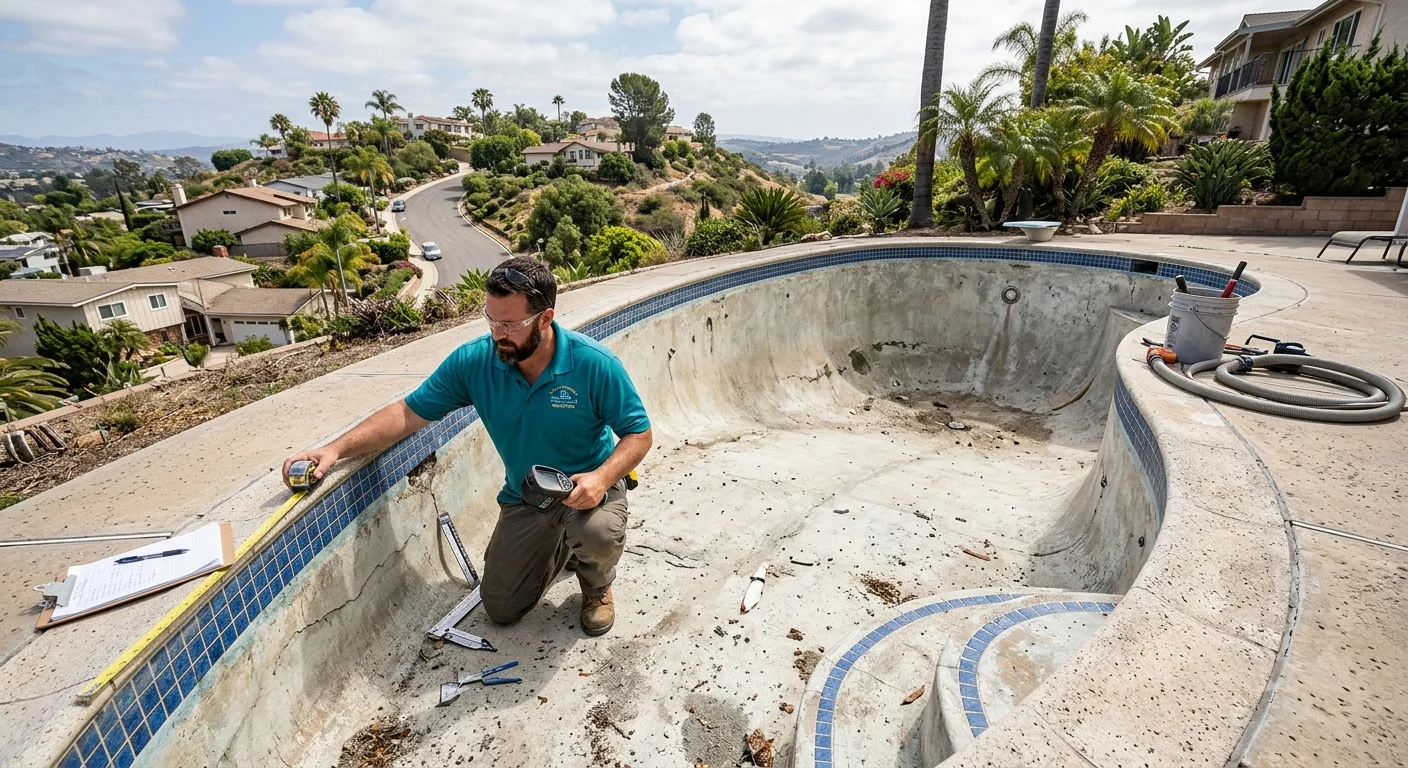
What fill-in and full removal change on a La Mesa lot
A fill-in is a partial demolition. The crew opens the floor so rain and groundwater can pass through the buried bowl, cuts the walls down below grade, and packs the cavity in lifts. Coping and a ring of deck often come out with the top of the shell. Grass, turf, or a light patio can go on top. The rest of the gunite stays in the dirt like a hidden basin.
Full removal is a different hole. The breaker takes the walls, the floor, and usually the plumbing that served the pool. Trucks haul that mass off the lot. The excavation then gets clean fill, compacted in layers, and graded to the yard. You are not planting over a leftover bowl. You are putting the ground back closer to ordinary soil, which is the point if a structure may sit there later.
On a La Mesa lot that difference shows up in the first walk-through. Many shells sit a few feet from the house, a downslope neighbor, or a block retaining wall. Leave a buried bowl and water still has to leave that pocket, or the yard can settle in a soft oval for years. Take the shell out and you change how that slope sheds water, which is why the backfill and the drain path belong in the proposal, not as a handshake extra.
The next use of the yard is the real fork. A play lawn, raised beds, or pavers over a packed fill-in can work when nobody plans to build. A room addition, a garage, or an ADU wants the shell gone and the soils work that goes with that. Tell the independent contractor that plan before anyone prices a method. A fill-in priced as if it were a building pad is the wrong job.
Some older bowls in this city are tired plaster on a shell that still holds water. That is pool resurfacing, not demolition. A crack that keeps returning, a leak at the floor, or a hopper that has already been patched more than once is pool repair first, then a honest call on whether the shell is done. HomeGuide’s June 2024 remodel guide puts a typical remodel in a $5,000-$30,000 national range, with resurfacing at $2,000-$15,000. Those are market figures, not a local bid, and they only apply if you are keeping the pool.
Why East County access and older shells shape the job
La Mesa is older East County housing, not a wide ranch driveway. Mid-century kidney shells sit on lots that step down toward Grossmont, pinch in along La Mesa Boulevard, and squeeze equipment through side yards fenced in the 1960s. The machine that would roll straight in on a coastal estate lot may not fit here. A smaller excavator, more hand breaking, and a longer debris path are the usual result.
The shell itself is part of the access problem. Gunite kidneys from that era have a thick bond beam at the top, a deep hopper at one end, and tile that has taken decades of East County sun. Breaking that beam next to a plaster house wall is slow work. A spa tied into the shallow end adds another pour. Steel in the shell does not change the method so much as the time the breaker spends on each wall.
Hillside lots add a second constraint: where the dirt goes while the hole is open. Spoil piled on the high side of a Baltimore Drive or Jackson Drive yard can lean on a fence. Spoil on the low side can creep toward a neighbor. The contractor who has already walked the grade will tell you where the stockpile sits, how the trucks turn around, and which gate is the only way in. A proposal that never mentions the gate is not a La Mesa proposal.
Water in the bowl has to leave before steel hits concrete. A typical inground pool holds about 10,000-15,000 gallons, per Angi’s May 2026 saltwater conversion guide. La Mesa is not the City of San Diego, so City of San Diego storm-drain rules do not apply here. Your city sets its own stormwater rules. Confirm the legal discharge path with the city before the valve opens. Landscape irrigation that the soil can actually take, or a sanitary connection the city allows, is the kind of path to ask about. Dumping chlorinated water to a gutter is how a simple demo becomes a code problem.
If the shell is still in play and you are only hunting leaks, start with the local repair picture in La Mesa pool repair. Demolition is the step after that conversation ends.
Permits, drainage, and where the debris goes
The City of La Mesa sets demolition, grading, and inspection rules for lots inside city limits. The independent contractor should name the permit, who pulls it, and which inspections close the job. Confirm those steps with the city. Nearby unincorporated pockets follow the county, not City Hall, so the address on the water bill is the first fact to check.
California’s contractor-license exemption in Business and Professions Code §7048 is narrow and conditional. Unlicensed work stays legal only when the aggregate contract is under $1,000, the job is casual, it needs no building permit, it is not a slice of a larger operation, the person does not advertise as a contractor, and nobody is hired to help. Ask any pro who breaks the shell for a current license number. Check that number on the CSLB license lookup before a deposit moves. The swimming-pool classification in 16 CCR §832.53 covers building pools, spas, and related trades. Demolition is its own scope. Ask the bidder which license class they hold for this job, and match that class to what the city wants on the permit.
Drainage is not only the water leaving the full pool. After a fill-in, the buried floor still has to pass rain and groundwater, which is why crews punch the slab. After a full removal, the new fill has to shed water the way the rest of the yard does, or the low spot becomes a winter pond. On a hillside lot that path may run toward a neighbor. The proposal should say how water leaves the former pool, in writing.
Debris has a destination. Broken gunite, tile, and deck concrete leave on trucks. The hauler and the city decide which yard, recycler, or landfill can take it. Steel, filter tanks, and a heater on the pad are separate loads. A spa shell, a fake-rock waterfall, or extra patio beyond the pool edge changes the pile. Ask where the material goes and how many loads the bidder is counting. “We’ll handle the junk” is not a disposal plan.
The San Diego County Water Authority’s member agencies set local water rules across the county, as described on the Authority’s members page. La Mesa’s rates and drain rules come from its own city and water provider, not from a single county utility. Name that provider from your bill when you talk to the contractor, because refill water, if any, and discharge both sit with them.
Fill-in versus full removal, side by side
The cheaper-feeling path is almost always the fill-in, because most of the shell never leaves the lot. The heavier path is full removal, because every yard of concrete is a truck, and the hole is a real excavation. Future building is the tie-breaker, not the look of the empty yard on day one.
| What you are deciding | Fill-in (partial) | Full removal |
|---|---|---|
| What stays in the ground | Most of the floor and lower walls, with drainage openings | The shell comes out; the hole is packed with new fill |
| What the yard can become | Lawn, turf, planting, light patio or pavers | Same landscaping, plus a cleaner path toward a future structure |
| Haul and machine time | Less mass leaves the lot, so fewer loads | The whole bowl, and often more deck, leaves on trucks |
| Tight La Mesa access | Still needs a breaker in the side yard, with a smaller spoil pile | Needs room to stage, load, and turn trucks without chewing the drive |
| Later construction | A buried bowl is a poor building pad | The open excavation can be packed as a building site if the city and soils work agree |
| Paperwork to watch | Permit, drainage openings, compaction, final grade | Permit, full excavation, compaction, and any soils reporting the city asks for |
County-wide cost drivers, without treating them as a La Mesa average, live in our pool demolition and removal cost guide. Access, shell size, fill-in versus haul-away, and how much deck goes with the pool are the levers. A printed bid that skips those levers is not comparable to one that names them.
A fill-in done with random dirt and no compaction is how a pretty lawn becomes a dish two winters later. A full removal that leaves plumbing live in the hole is how the next owner finds a surprise. The method is only as good as the backfill and the utility cap.
How to compare two demolition proposals
Line the two packets up on scope, not on the number at the bottom. One bidder may be filling the kidney and leaving the rear deck. The other may be hauling the shell, the spa, and fifteen feet of patio. Those are different jobs. Make them describe the same yard before you pick.
Read the method in plain words. The packet should say fill-in or full removal, how the floor is opened or removed, what fill goes back in, and how it is compacted. “Dirt in the hole” is not a spec. If you plan to build, the packet should say so, and it should match what the city will inspect.
Utilities belong in the same paragraph. Pump, filter, heater, gas, and the electrical run to the light niche have to be made safe. Underground lines get capped where the contractor and the city agree. An equipment pad poured tight to the house is easy to skip on a rushed walk-through and expensive to discover mid-job.
Access should match the lot you actually own. A note about the side-yard gate, the slope, the fence that has to come down, and where trucks sit on the street tells you they walked the property. A generic East County paragraph does not.
Permits and close-out sit last on purpose. Who pulls the permit, who calls the inspection, and what document you keep for a later sale or a later building permit are part of the work. Ask to see the license number, then confirm it on the CSLB site. Splash Pro Pools is a referral service. The independent licensed contractor does the demolition, holds the license, and sets the price you pay them.
When to call us
Call when the shell is past repair, the yard would work harder without a pool, or two demolition bids disagree on fill-in versus full removal. We match La Mesa homeowners with licensed independent local pool professionals. Call us at (760) 642-1256 and we’ll connect you with a licensed local pool pro.
Frequently asked questions
What is the cheapest way to remove an inground pool in La Mesa?
A fill-in is usually the lighter job. The crew breaks the upper shell, opens the floor so water can drain, and packs the cavity instead of hauling every yard of gunite. Full removal costs more because the whole shell leaves the lot on trucks. Access, decking, and what the city wants to inspect still move the number, so two written scopes beat a guess.
Should I resurface an older La Mesa pool or take it out?
Keep the pool if the shell is structurally sound and you still want water in the yard. Tired plaster, rough tile, and worn coping are resurfacing and repair work. Take it out when the bowl is cracked, the layout wastes the lot, or you want a patio, lawn, or a future building on that footprint. A licensed pro can tell you if the shell can still hold water.
Do I need a permit for swimming pool removal in La Mesa?
The City of La Mesa sets demolition, grading, and inspection rules for lots inside city limits. The independent contractor should name the permit, who pulls it, and which inspections close the job. Confirm the current steps with the city before anyone breaks the shell. County rules apply only if the lot sits outside city limits.
Can I build on a filled-in pool later?
A fill-in leaves most of the shell in the ground, so the yard is built over a buried bowl. That is a poor base for a room, garage, or ADU. Full removal takes the shell out and packs the excavation more like ordinary soil, which is the path when a structure is part of the plan. Ask the city and the contractor what that lot can support after each method.
How does pool demolition San Diego work on a tight East County lot?
On many La Mesa lots the machine has to fit a narrow side yard, a steep drive, or a block-wall gate. That can mean a smaller excavator, more hand breaking, and extra care around the house and neighbors. Drain the pool under local stormwater rules, cap utilities, then fill in or haul the shell. Compacted backfill and a city inspection finish the hole.
Need professional help in San Diego County?
Splash Pro Pools connects San Diego homeowners with pool pros for the work in this post.