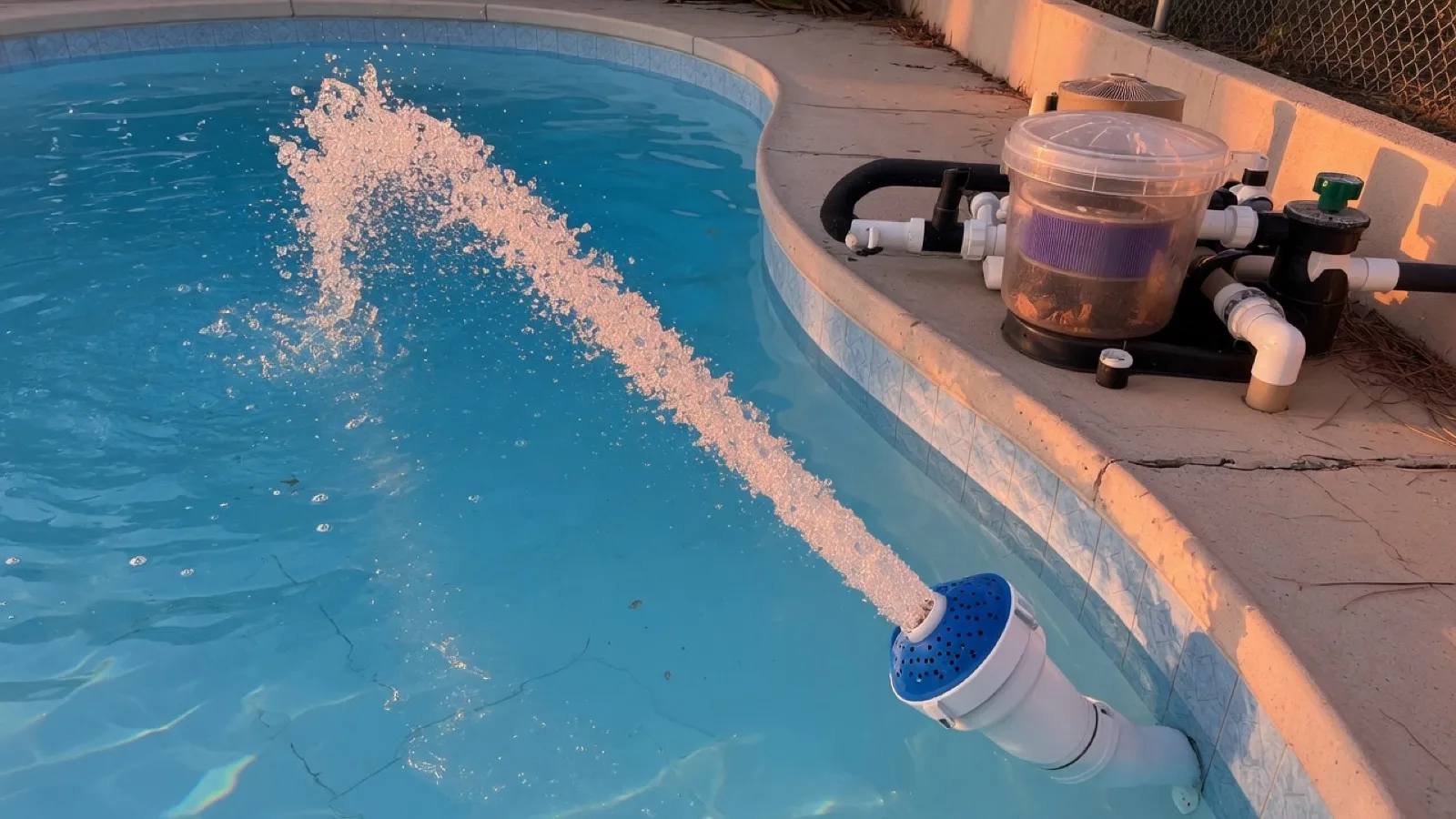
Persistent air bubbles in the pool jets, after the pump is primed, usually mean air is entering on the suction side and riding through the impeller into the returns. A matched local pool pro starts where Hayward starts: lid, water level, weir, plugs, fittings, valves, then the housing. That is the diagnosis for air bubbles in pool return lines on a San Diego pad.
What return bubbles usually mean
The suction side runs from the skimmer and main drain to the pump inlet. A small gap there can pull air inward without dripping water onto the concrete. The impeller mixes that air into the stream, and the returns show it as bubbles.
Hayward’s knowledge base is blunt: if air is returning into the pool there might be a leak on the suction side of the pump, and it may be necessary to contact an authorized dealer for repair. A spa blower, an aerator ring, or a dedicated air injector is a different story. Those features are supposed to make bubbles. The returns on a quiet rectangular plaster pool in Clairemont are not.
A pump that will not fill at all is a different page: pool pump not priming. Noise without bubbles is another: pool pump noise troubleshooting.
Hayward’s suction-side checklist
Hayward’s published list is the order a matched pro walks:
- Strainer cover and O-ring. Tighten if loose, replace the gasket if it is damaged, flattened, or dirty.
- Water level low enough that the skimmer mixes air.
- Skimmer weir stuck in the up position.
- Drain plugs on the pump strainer housing.
- Threaded fittings and the sealant on them.
- Glued fittings and bad glue joints.
- Valves, especially valve stem O-rings.
- Cavitation, when the pump is starved for water.
- Cracks in the pump housing.
Look through a clear lid while the pump runs. A growing air pocket or a stream of bubbles in the basket supports suction-side entry. A full, quiet basket with bubbles only at one spa jet points at an aerator, not a lid.
San Diego water level and skimmer habits
Inland East County pads lose volume to sun. A Santee or El Cajon pool can drop below the weir in a hot week if the auto-fill sticks or the owner has been chasing a low skimmer on purpose to “save water.” Hayward names that mix of air and water in the skimmer as a cause. Coastal yards under the marine layer lose less, then a Santa Ana week arrives and the same skimmer starts to gurgle.
A weir door jammed up with pine needles in Encinitas does Hayward’s stuck-weir trick. A cracked skimmer throat from age is a different repair. Empty the pump basket and the skimmer basket before anyone blames the impeller. Cavitation from a packed basket looks like air even when the lid seal is perfect.
When bubbles are a leak, not a lid
If the accessible seals check out and air still shows in the basket, the suction pipe in the soil can pull air. That leak often stays dry on the pad. It is the same family of work as why is my pool losing water, except the first symptom here is bubbles, not a falling waterline.
Valve stem O-rings are a common suction leak point on Hayward’s list. A three-way valve that was rebuilt years ago, or never, will pull air while the handle still turns. Cracked housings show up on older pumps that have sat in East County heat. If the visit turns into cutting pipe or replacing the pump, that is construction. California’s C-53 classification covers swimming-pool contractors. Confirm the license on the CSLB lookup.
When to call us
Call when the returns keep fizzing after the pump is primed, when the basket shows a standing air pocket, or when the skimmer gulps even with the water at mid-mouth. A matched local pool pro will walk Hayward’s list and stop guessing at the lid.
Frequently asked questions
Are a few bubbles at startup normal?
A short burst while the pump primes can clear air that sat in the lid overnight. Bubbles that keep streaming from the returns after the pump is fully primed point to air still entering on the suction side.
What does Hayward say to check first?
Hayward's knowledge base says if air is returning into the pool there might be a leak on the suction side of the pump. The list is the strainer cover and O-ring, low water mixing air into the skimmer, a weir stuck up, drain plugs on the strainer housing, threaded and glued fittings, valve stem O-rings, cavitation, and a cracked pump housing.
Can low water cause bubbles in the jets?
Yes. Hayward names a low water level that mixes air into the skimmer, and a skimmer weir stuck in the up position doing the same thing. San Diego evaporation makes that a weekly issue on inland pads that lose volume to sun and wind.
Is this the same as a pump that will not prime?
A pump that never fills is a priming failure. Persistent return bubbles with a full basket are air getting in after the pump is already running. They share suction-side causes, and they are not the same call. The priming walkthrough is a separate page.
When is this a plumbing leak?
When the lid, water level, weir, plugs, and visible unions check out, and air still shows in the basket, the suction pipe in the dirt can be pulling air without wetting the pad. That is leak-detection territory, not a lid O-ring.
Need this done in San Diego County?
For repair and renovation work like this, we hand you to our trusted partner, Del Rancho Pools.