A note on scope: this is pool repair work, which sits outside what Splash Pro Pools does. Call (858) 400-6757 and we’ll match you with a vetted local pro who covers it.
Grinding usually means worn bearings, and the motor can seize in days to a few weeks. Shut it off. Bearings last about 8 to 12 years, less in salt air. Repair if the pump is under 8 years and the fix is under half a new unit. Call (858) 400-6757.
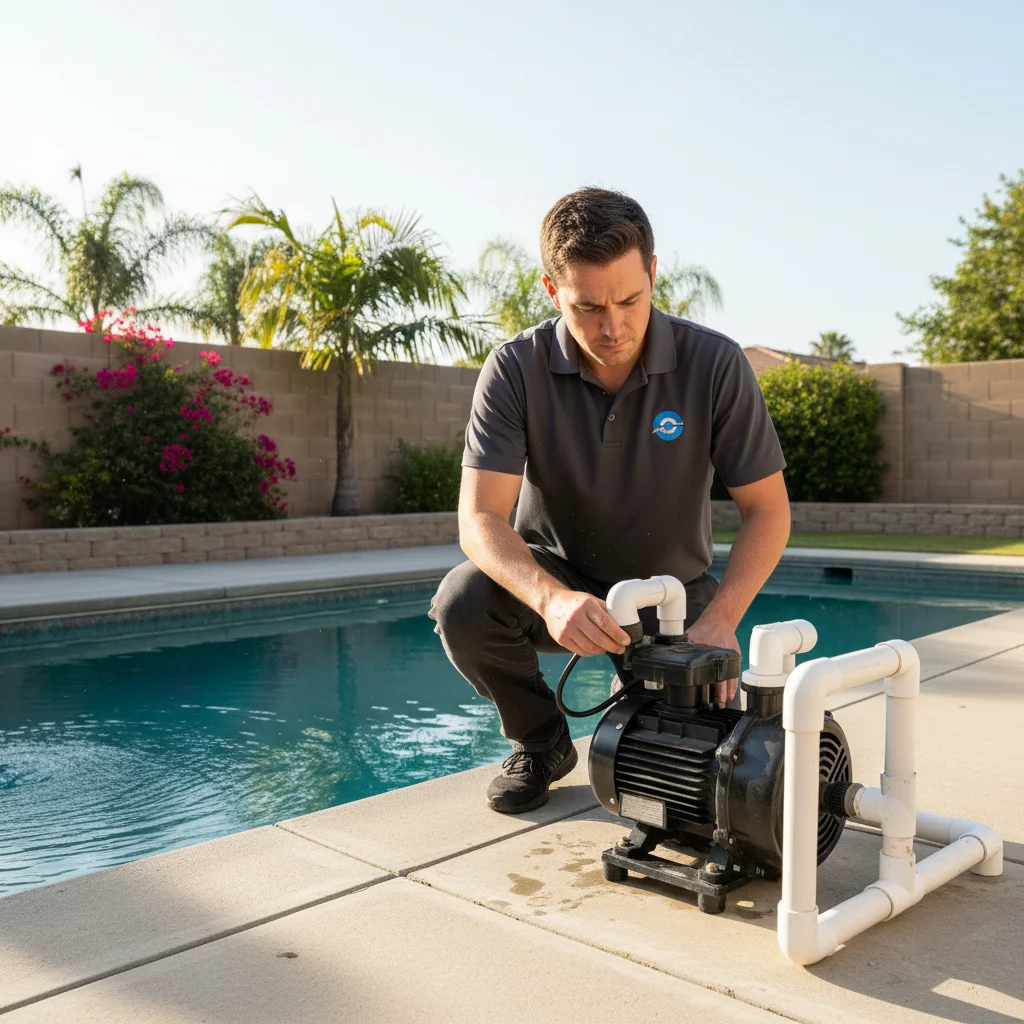
Grinding: bearings on their way out
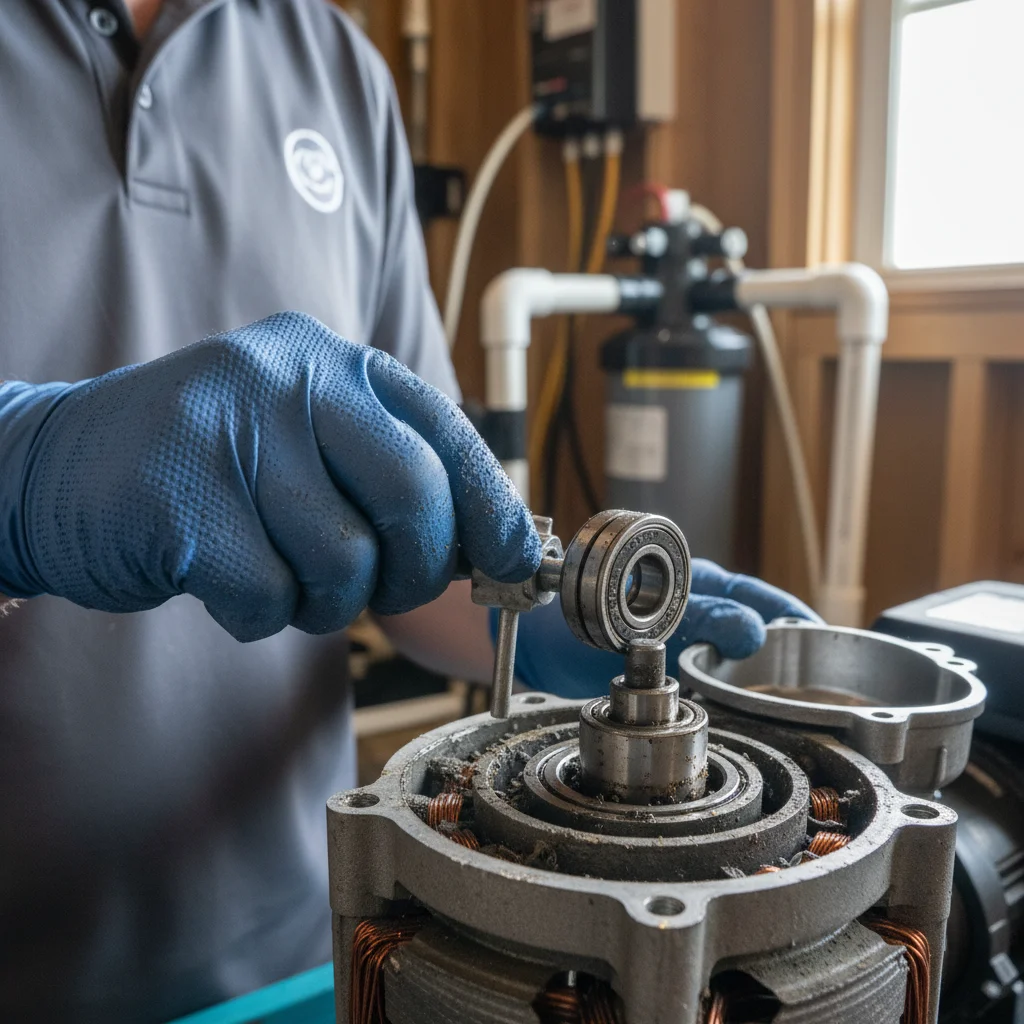
A grinding noise is the most common loud pool pump complaint we hear, and it’s almost always the motor bearings. Bearings are the small steel rings that let the motor shaft spin freely. When they wear out, metal grinds against metal, and that sound is exactly what you’d expect.
Bearings fail for a few reasons. Age is the most common. Most bearings have a useful life of 8-12 years before the grease breaks down and the metal races start to pit. Moisture intrusion speeds that up, water wicks in through a degraded shaft seal and corrodes the bearing from the inside. Running the pump dry even briefly can also destroy bearings fast, since there’s no water jacket to cool the motor.
In coastal San Diego, think La Jolla, Del Mar, Oceanside, salt-laden air is an extra factor. It accelerates oxidation on any exposed metal, including bearing races.
Here’s what makes grinding dangerous: it’s progressive. Once grinding starts, you typically have days to a couple of weeks before the bearing seizes entirely, which can burn out the motor windings and turn a $150 bearing replacement into a $500+ motor replacement. If you’re hearing grinding, don’t put it off.
A technician can usually confirm bearing failure by hand-spinning the motor shaft with power off. Roughness, wobble, or a gritty feel through the shaft confirms it. Bearing replacement is a moderate repair, the motor end-caps come off, the old bearing presses out, a new one presses in. It’s worth doing if the motor is otherwise in good shape.
Screeching: motor or shaft seal trouble
A high-pitched screech or squeal, especially at startup, usually means one of two things: a failing shaft seal or a motor that’s struggling to turn over.
The shaft seal sits where the motor shaft passes through the pump housing into the wet end. Its job is to keep water out of the motor. When the seal wears or cracks, it can bind against the shaft and produce that sharp, fingernails-on-chalkboard sound. A leaking shaft seal also lets water into the motor cavity, which then attacks the bearings, so the two problems often show up together.
If the screech happens only at startup and fades after a few seconds, it may be a dry or glazed seal rather than a fully failed one. That’s still worth addressing. Shaft seals are inexpensive parts, but they require draining the pump and disassembling the wet end to replace, not a job to skip just because it quieted down.
A motor that’s screeching and struggling to start may also have a failing start capacitor. The capacitor gives the motor its initial torque kick. When it weakens, the motor labors and screams trying to reach operating speed. Capacitors are cheap to replace and a straightforward fix for an experienced technician.
Either way, screeching is not a “wait and see” noise. It usually gets worse, and the downstream damage compounds quickly.
Cavitation hum: air or flow problems
Cavitation sounds different from mechanical noise, it’s more of a low, erratic hum or gurgling rumble, sometimes accompanied by visible turbulence in the pump basket lid. It happens when the pump impeller spins faster than water can flow to it, creating low-pressure pockets that collapse violently. Those micro-implosions erode the impeller over time and stress the motor.
The most common causes in San Diego-area pools:
Low water level. If the water drops below the skimmer opening, the pump pulls air. Keep the water level at mid-skimmer.
Clogged skimmer or pump basket. A basket packed with leaves chokes the suction line. Check and empty both baskets weekly, more often after a Santa Ana wind event or heavy debris fall.
Partially closed valve. Someone may have partially closed a suction-side valve after a repair and not fully reopened it. Walk the plumbing and confirm all valves are open.
Air leak on the suction side. Cracked fittings, a loose pump lid O-ring, or a degraded union seal can all let air into the suction line. The pump gets a mix of air and water instead of pure flow. Look for bubbles returning through the return jets as a tell.
Undersized plumbing. Less common, but older San Diego homes sometimes have 1.5-inch suction lines paired with newer, higher-flow pumps. The pipe simply can’t deliver enough water.
Fixing cavitation is often a matter of clearing a blockage or reseating a lid O-ring, simple stuff. But if cavitation has been going on for months, inspect the impeller for pitting or cracking. A damaged impeller won’t move water efficiently even after the root cause is fixed, and it’ll need replacing. Our full pool pump repair guide walks through impeller inspection and replacement in more detail.
Rattling: loose mounts or debris in the impeller
A rattling or vibrating noise that changes with RPM is usually one of two things: something is loose on the outside of the pump, or something is lodged inside the impeller.
Loose mounts. Pool pumps sit on rubber-isolated feet or mounting pads that absorb vibration. Over time, the hardware loosens or the rubber degrades and hardens. When the pump vibrates against a hard surface, the rattle can be surprisingly loud. Check the mounting bolts and replace any hardened isolation pads. This is a five-minute fix if that’s the culprit.
Debris in the impeller. Small rocks, seeds, pieces of leaf stem, or even a small acorn can slip past the pump basket and lodge in the impeller vanes. The impeller spins, hits the debris, and produces a rhythmic click or rattling sound. The fix requires shutting off the pump, draining the wet end, and removing the impeller to clear the obstruction.
Don’t ignore impeller debris. Even a small pebble can crack an impeller vane, and a cracked impeller loses hydraulic efficiency, you’ll see reduced flow and higher energy consumption before you ever hear a new noise.
Loose plumbing or pipe straps. Sometimes the rattle isn’t the pump itself, it’s the PVC plumbing vibrating against the pad or equipment wall. Run your hand along the pipes while the pump is running (carefully, keeping clear of moving parts) to feel for vibration transfer. Adding a pipe strap or a foam isolator can silence it immediately.
If rattling is accompanied by reduced flow or cloudy water, check your pool equipment installation setup, the issue may be upstream of the pump entirely.
Repair vs. replace: when each makes sense
Not every noisy pump needs a full replacement, but not every repair is worth it either. Here’s how to think through the decision.
Repair usually makes sense when:
- The pump is under 8 years old
- The repair addresses a single, isolated component (bearings, shaft seal, capacitor, impeller)
- The repair cost is less than 40-50% of a comparable new pump
- The motor frame and housing are in good physical condition
Replacement usually makes sense when:
- The pump is 10+ years old and showing multiple issues
- The motor windings are burned (you’ll smell it, acrid, electrical)
- Repair costs approach or exceed the price of a new unit
- You’re still running a single-speed motor
That last point is worth expanding. California’s Title 20 regulations now require variable-speed motors on most new pool pump installations, and for good reason, a quality variable-speed pump can cut pump-related energy use by 50-70% compared to a single-speed unit. The California Energy Commission has documented the efficiency gains, and San Diego Gas & Electric offers rebates that further reduce the upfront cost. If your single-speed pump is already failing, replacement with a variable-speed model is often the smarter long-term move even if repair is technically possible.
Our post on variable-speed pool pumps in San Diego breaks down the cost math if you want to run the numbers before deciding.
One more thing: if your pump is failing and you’re not sure whether it’s the pump itself or something upstream, a clogged filter reducing flow back-pressure, for example, read through our pool pump repair guide before authorizing any work. Understanding the full circulation system helps you ask better questions and avoid replacing parts that aren’t actually the problem.
When to call us
Pool pump motor work involves electrical components, pressurized plumbing, and close tolerances that can cause further damage if reassembled incorrectly. If you’re hearing grinding, screeching, or persistent cavitation, or if a rattle has turned into reduced flow, it’s time to have a licensed technician take a look. Always verify any contractor you hire holds a current license through the CSLB license check before they touch your equipment. Call us at (858) 400-6757 and we’ll connect you with a vetted local pool pro.
Frequently asked questions
Why is my pool pump suddenly making a loud grinding noise?
A grinding noise almost always points to worn motor bearings. Bearings degrade from age, moisture intrusion, or running the pump dry. Once grinding starts, the bearing typically fails within days to a few weeks, schedule a repair before the motor seizes.
Can I run my pool pump if it's making noise?
It depends on the sound. A mild hum or rattle may be safe short-term if you address it quickly. Grinding or screeching means the motor is actively damaging itself, shut it off and call a technician to avoid a costlier repair.
How long do pool pump bearings last?
Most pool pump bearings last 8-12 years with normal use. In San Diego's climate, salt air in coastal areas like La Jolla or Del Mar can accelerate corrosion and shorten that lifespan considerably.
What causes a pool pump to cavitate?
Cavitation happens when the pump can't draw enough water, usually due to a clogged skimmer basket, low water level, a partially closed valve, or an air leak on the suction side. The pump starves for flow and the impeller churns air instead of water.
Is it worth repairing an old pool pump or should I replace it?
If your pump is under 8 years old and the repair cost is less than half the price of a new unit, repair usually makes sense. For pumps over 10 years old with repeated failures, replacing with a variable-speed model often pays for itself in energy savings within 2-3 years.
Need this done in San Diego County?
For repair and renovation work like this, we hand you to our trusted partner, Del Rancho Pools.