Weekly pool cleaning cost Rancho Bernardo quotes can be benchmarked against HomeGuide’s September 22, 2025 national guide: $20-$50 per weekly visit, with weekly or biweekly plans listed at $80-$150 monthly. Your actual quote depends on the work included, the pool’s starting condition, and whether chemicals or filter care sit outside the base visit. Rancho Bernardo’s inland sun also adds chemistry and top-off water to the calculation.
Rancho Bernardo pricing, anchored to the published market
The published market gives Rancho Bernardo homeowners a useful starting point, not a fixed local rate. HomeGuide’s September 22, 2025 guide places weekly maintenance at $20-$50 per visit. It lists weekly or biweekly service plans at $80-$150 per month.
Those figures describe different service arrangements, so they won’t always divide neatly. One monthly plan may cover routine cleaning and chemistry. Another may treat chemicals, filter cleaning, or heavier debris removal as separate work. Compare the included tasks before comparing the totals.
HomeGuide also lists basic care at $30-$95 monthly. That category shouldn’t be mistaken for full weekly attention without reading the scope. A low figure can reflect fewer visits, fewer tasks, or more work left to the homeowner.
Starting condition changes the first bill. HomeGuide’s same guide places first-time cleaning at $150-$350 and cleaning labor at $60-$90 per hour. A clear, maintained pool creates a different workload than cloudy water, packed baskets, or a neglected filter. Access, pool size, surface condition, debris, and chemical needs can also move a quote.
Our San Diego weekly pool service cost guide gives the wider county picture. Use it as a benchmark, then judge the Rancho Bernardo quote by its written scope. Splash Pro Pools doesn’t set the price. The independent local pro gives the quote, performs the work, and receives payment directly.
RB is City of San Diego: the water-bill angle
Rancho Bernardo falls within City of San Diego limits, so City water rates apply here. Effective January 1, 2026, single-family rates are $8.51 per HCF for the first usage tier, $9.50 for the middle tier, and $11.89 above that tier. One HCF equals 748.05 gallons.
That makes top-off water measurable. Suppose your meter or measured fill volume shows that 500 gallons went into the pool. The calculation is:
500 gallons ÷ 748.05 = about 0.668 HCF
Multiplying that amount by the three current rates gives about $5.69, $6.35, or $7.95. The result depends on which tier receives that added usage. This is the water portion only, not a cleaning charge or a complete utility-bill calculation.
A larger refill shows why small losses deserve attention. A 15,000-gallon refill uses about 20 HCF because 15,000 ÷ 748.05 = about 20. At the published City tiers, that water alone lands around $170-$240, depending on where the usage stacks, before sewer charges.
The pool’s fill line therefore belongs in a cost conversation. Evaporation needs replacement water, while a persistent drop can point to another source of loss. The City also treats overfilling as prohibited water waste under San Diego Municipal Code §67.3803(e).
Water rules and rates aren’t countywide. The San Diego County Water Authority’s member list shows 22 retail agencies serving the region. Rancho Bernardo’s place inside City limits is what makes the City figures relevant here.
Inland sun on well-kept tract pools
A well-kept Rancho Bernardo pool can look spotless while its chemistry keeps moving. Clear water and a tidy tile line don’t reveal how much sanitizer the sun consumed or how quickly pH shifted.
The CDC’s home pool guidance explains that sunlight reduces chlorine. Sweat, dirt, swimmer waste, and water-moving jets consume it too. A sunny pool after a busy weekend can therefore need more correction than its clean surface suggests.
The CDC recommends keeping pool pH between 7.0 and 7.8. Above 7.8, chlorine kills germs more slowly. Below 7.0, the water can corrode pipes and equipment. Brushing and skimming matter, but they can’t replace chemistry testing.
Evaporation creates a second inland cost mechanism. Water leaves the pool, but dissolved minerals stay behind. Fresh top-off water restores the level while adding its own dissolved material. Over time, that cycle can contribute to deposits along the tile line and inside equipment. No single visual clue diagnoses the water, so testing carries more weight than appearance.
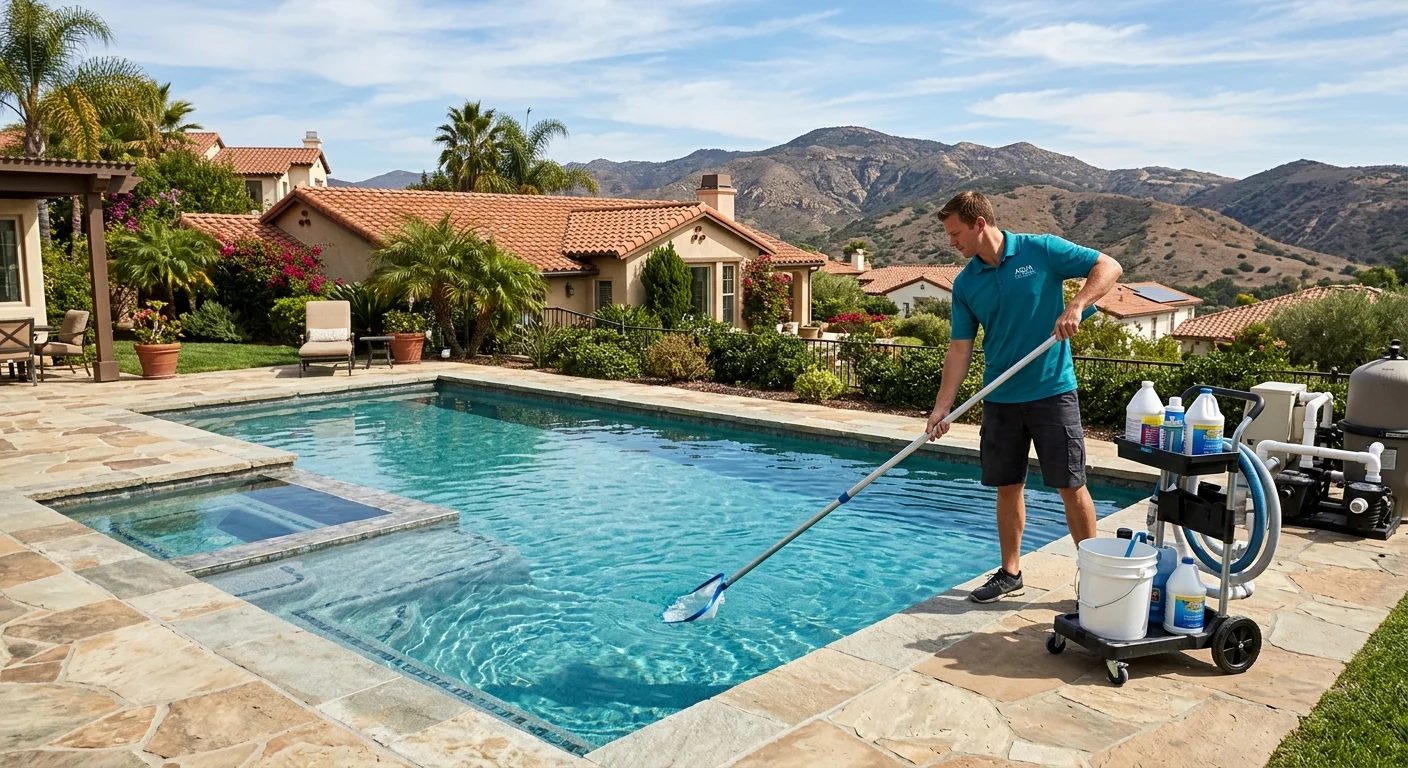
Picture the clean rectangular pool behind a terracotta roof, with dry ridgelines beyond the yard. The surface may need only light debris removal that week. The water can still require careful testing and adjustment.
A written weekly pool cleaning and maintenance plan should make both sides visible. Surface care handles what lands in the pool. Chemistry care handles what sunlight, use, and fresh fill water change inside it.
How often is often enough here
Weekly service creates a shorter professional correction loop, but it doesn’t replace testing between visits. Pool chemistry changes every day, especially under direct sun or heavy swimmer use.
The CDC recommends testing chlorine and pH at least twice daily. It advises testing more often during heavy use and notes that DPD test kits are more accurate than test strips. A scheduled service visit and household testing solve different problems. The pro handles the agreed cleaning and treatment scope, while between-visit testing can reveal a change before the next appointment.
The practical difference between weekly and biweekly service is the work left between professional visits:
| Service factor | Weekly plan | Biweekly plan |
|---|---|---|
| Professional rhythm | The pool receives scheduled attention each week. | More time passes between professional checks. |
| Owner involvement | Testing and basic observation still continue between visits. | The owner carries more interim testing and debris care. |
| Chemistry drift | Changes have a shorter window before the next service visit. | Sunlight and pool use have more time to alter the water. |
| Cleaning load | Debris is removed on a tighter schedule. | Debris can remain longer unless the owner removes it. |
| Practical fit | It suits owners who want steadier professional oversight. | It asks for more active care between appointments. |
Pool exposure matters as much as the calendar. Direct sun increases chlorine demand. Swimmer waste and dirt reduce chlorine too. A covered, lightly used pool presents a different workload from an exposed pool used throughout the week, but both still need testing.
Our guide to how often a San Diego pool should be cleaned explains how use, debris, chemistry, and owner involvement shape the schedule. Choose the cadence by the work required, not by the shortest quote.
Reading an RB quote line by line
A strong Rancho Bernardo quote makes the base visit and every exclusion visible. The total matters, but the service description tells you what that total buys.
Start with the visit itself. The quote should identify the cleaning tasks, chemistry work, and routine equipment observations included. Skimming, brushing, vacuuming, basket emptying, and water testing are separate actions. Don’t assume one phrase such as “pool service” includes all of them.
Chemicals need their own clear treatment. Some plans bundle routine products into the monthly amount. Others bill them separately or exclude specialty treatments. The quote should explain that boundary before work begins. That prevents a low base figure from hiding a different final scope.
Filter care also needs plain language. Observing pressure or checking circulation isn’t the same work as opening and cleaning a filter. Replacement media, damaged parts, and equipment repairs sit outside ordinary surface cleaning unless the quote says otherwise.
The starting visit may carry a different workload. HomeGuide’s September 22, 2025 guide places first-time cleaning at $150-$350 and pool-cleaning labor at $60-$90 per hour. If a pro uses either structure, the quote should connect it to the actual work needed. Cloudy water, packed debris, or overdue filter care shouldn’t be buried under a vague setup label.
Repairs deserve a separate scope. A cleaning agreement shouldn’t quietly turn into authorization for pump, electrical, plumbing, or structural work. Ask the pro to identify the contractor responsible for that work and provide the license number. You can confirm it through the California Contractors State License Board.
Finally, read the cancellation, skipped-visit, chemical, and repair terms. A clear quote explains who performs the work, what happens during each visit, and what receives a separate approval.
When to call us
Call when you want consistent weekly care, chemistry keeps drifting between visits, or a quote mixes maintenance with equipment work. Splash Pro Pools connects homeowners with licensed independent local professionals, and the customer contracts with the selected pro directly. Call us at (760) 642-1256 and we’ll connect you with a licensed local pool pro.
Frequently asked questions
What does weekly pool cleaning cost in Rancho Bernardo?
HomeGuide's September 22, 2025 national guide places weekly pool maintenance at $20-$50 per visit and weekly or biweekly plans at $80-$150 monthly. The pool's condition and the work included shape the actual quote.
Does a weekly pool cleaning quote include chemicals?
Coverage varies by pro and plan. The written quote should state whether routine chemicals, specialty treatments, and filter service are included or billed separately.
Do City of San Diego water rates apply in Rancho Bernardo?
Yes. Rancho Bernardo is within City of San Diego limits. City single-family water rates effective January 1, 2026 are $8.51, $9.50, and $11.89 per HCF across the three usage tiers.
Is weekly professional service enough for water testing?
A weekly visit doesn't replace testing between visits. The CDC recommends testing pool chlorine and pH at least twice daily, with more testing during heavy use.
Need professional help in San Diego County?
Splash Pro Pools connects San Diego homeowners with pool pros for the work in this post.