Most backyard pools here need a full cleaning every week, even when nobody swam yesterday. If you searched “how often should pool be cleaned san diego,” use weekly service as the working baseline, then tighten the schedule when swimmers, sunlight, wind, or trees load the water faster. Cleaning isn’t the same as testing: chlorine and pH need attention much more often.
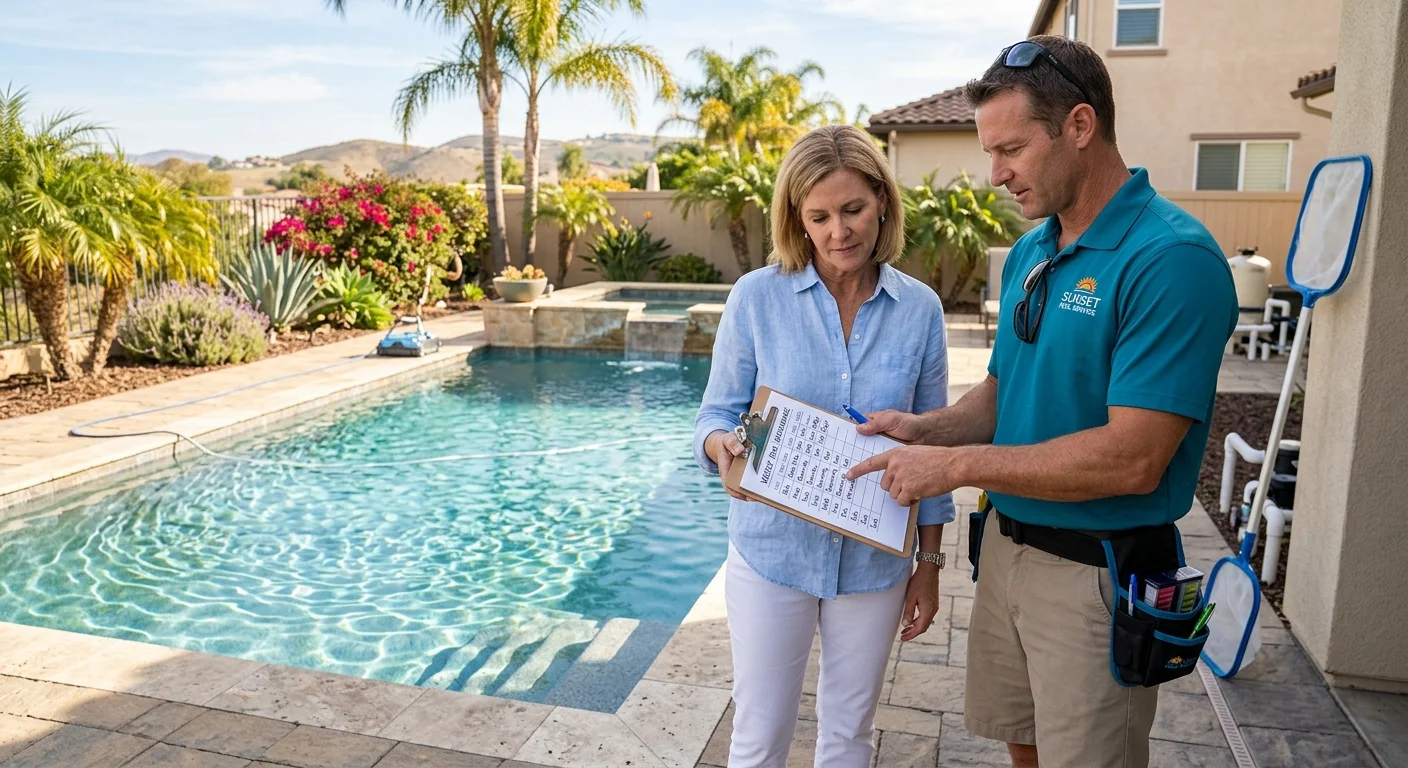
Weekly cleaning is the working answer for most San Diego pools
Weekly cleaning gives most San Diego pools a practical rhythm. It keeps leaves, dust, insects, and settled dirt from piling up between visits. It also creates a regular moment to inspect the waterline, baskets, surfaces, and visible equipment.
A complete visit usually combines several jobs. Floating debris gets skimmed before it reaches a basket or sinks. Brushing loosens material clinging to steps, walls, corners, and the tile line. Vacuuming or a robotic cleaner collects what settles below. Skimmer and pump baskets need attention because trapped material interferes with water movement.
That work matters even when the water still looks clear. Appearance only shows what can be seen from the deck. It doesn’t reveal a changing chlorine level, rising pH, restricted basket, or weak return flow. A weekly appointment puts those physical signs on a repeatable schedule.
Weekly is a baseline, not a promise that every pool behaves alike. A screened or lightly used pool may stay tidier between cleanings. A pool under a jacaranda, beside an open slope, or used throughout the weekend can change much faster. The right response is to add attention when the pool’s workload rises, not wait for the next calendar date.
Our weekly pool cleaning and maintenance service connects homeowners with independent local pros who handle that recurring physical care. The homeowner still has a separate role in checking the water between visits.
Cleaning and testing are different clocks
Cleaning and chemistry testing run on separate schedules. Weekly service handles recurring debris and surface care. Water testing shows what is happening now, including changes that occur long before the next cleaning day.
The CDC’s home pool guidance recommends testing chlorine and pH at least twice per day. Testing should happen more often during heavy use. The CDC also says DPD test kits are more accurate than test strips.
For pools, the CDC recommends a pH between 7.0 and 7.8. It calls for at least 1 ppm free chlorine, or at least 2 ppm when cyanuric acid or stabilized chlorine is used. Those figures describe chemistry checks, not how often someone should brush or vacuum.
| Care task | Working rhythm | What changes it |
|---|---|---|
| Physical cleaning | Weekly is the usual baseline. | Falling leaves, windblown dirt, and frequent swimming create more debris. |
| Chlorine and pH testing | It happens much more often than cleaning. | Heavy swimming calls for added tests because the water changes faster. |
| Basket checks | They happen between cleanings when debris is active. | A full basket restricts water movement through the system. |
| Surface inspection | It belongs in every cleaning routine. | Rough spots, discoloration, and recurring deposits deserve closer attention. |
The clocks differ because the problems differ. A leaf remains visible until someone removes it. Chlorine can fall without changing the pool’s appearance. Sunlight consumes chlorine, while sweat, dirt, and other material from swimmers reduce it further. Droplet-making jets also add demand.
A weekly visit can’t freeze those conditions for seven days. Testing between visits catches movement while there is still time to respond. That distinction is the heart of a workable maintenance routine.
Why San Diego pools never get an off-season
San Diego pools need a live care plan all year. The county’s long swim season doesn’t create a winter shutdown month when every pool can be ignored. Use may slow in one backyard while debris or weather keeps another busy.
Conditions also change across short distances. A Point Loma pool can sit beneath the marine layer while a Santee pool gets brighter direct sun. Coastal North County and inland neighborhoods won’t place the same load on water every day. Sun matters because it consumes chlorine. Shade can reduce that effect, but shade often comes from trees that drop material into the pool.
Winter doesn’t erase the physical work. Wind can move leaves, seed pods, and dust across a covered patio. Rain can carry surrounding dirt toward the water. A pool may look quiet from the kitchen window while its skimmer basket fills under the surface.
The equipment keeps moving water through the same plumbing, filter, and returns. Restricted flow, a dirty basket, or debris in a corner doesn’t become harmless because fewer people are swimming. The task mix may change, but the pool still needs observation.
This is why a fixed national season doesn’t fit San Diego well. The useful calendar is local to the yard. Look at swimmer activity, sunlight, debris, water readings, and equipment behavior. Then keep weekly cleaning as the anchor while adjusting the work around those signals.
For homeowners building their own routine, a detailed pool maintenance schedule can organize recurring tasks without pretending every month behaves the same.
What more use, more sun, and more trees change
More swimmers, stronger sun, and heavier debris increase the work between cleanings. They don’t automatically create one universal schedule. Each factor affects a different part of pool care.
Swimming adds sweat and dirt to the water. The CDC identifies both as things that reduce chlorine levels. A family weekend, pool party, or steady stream of guests can therefore change chemistry faster than a quiet week. Testing needs to follow the activity.
Direct sun creates a separate pressure because sunlight consumes chlorine. An exposed El Cajon or Rancho Bernardo pool may show chemistry movement that a shaded coastal pool doesn’t. That doesn’t mean shade solves maintenance. A shaded pool beneath trees trades some sunlight for leaves, flowers, pollen, and small debris.
Wind makes that tree load less predictable. A clean surface in the morning can collect a visible layer by afternoon. Debris may float, settle on steps, or pack into the skimmer basket. Removing it early keeps the weekly cleaning from turning into a recovery job.
These drivers also overlap. A sunny pool used by several swimmers while a dry breeze pushes debris across the deck faces more than one kind of load. Chemistry, circulation, and physical cleanliness need separate attention.
Watch the pattern instead of guessing from the season. If the same basket fills between visits, check it more often. If chlorine falls faster on swim days, add testing around those days. If dirt repeatedly settles in one corner, include that spot in between-visit cleanup.
The working rule stays simple: weekly cleaning sets the structure. Pool use and the surrounding yard tell you when to add care.
What a homeowner still does between visits
Homeowner checks keep weekly service connected to the pool’s daily condition. The most useful task is regular chlorine and pH testing, following the CDC frequency and adding tests during heavy use.
A quick look across the water also reveals changes worth acting on. Remove floating leaves before they sink. Check the skimmer basket after wind or visible debris. Notice whether water is returning to the pool normally and whether the pump sounds different from its usual pattern. Those observations give a service pro better information when something changes.
The waterline deserves attention too. New discoloration, rough deposits, or a recurring film can point to a pattern that ordinary skimming won’t address. Early attention is simpler than allowing the same material to build week after week.
Automation can reduce the amount of settled dirt. A robotic cleaner moves across pool surfaces and collects material in its own filter compartment. It doesn’t test chlorine, interpret pH, empty the pool’s skimmer basket, or assess the circulation system. Our guide to robotic pool cleaners for San Diego pools explains where those machines fit.
DIY care and professional service aren’t opposites. Many homeowners handle daily observation and water testing while a pro takes responsibility for the recurring cleaning route. The comparison in our pool service versus DIY guide can help divide those jobs clearly.
Equipment or structural work sits in a different category. Ask anyone touching those systems for a contractor license number, then confirm it through the California Contractors State License Board. A cleaning problem may expose a repair issue, but it doesn’t make them the same job.
When to call us
Call when weekly cleaning isn’t keeping pace, water readings won’t hold, or equipment behavior has changed. We match San Diego County homeowners with licensed, independent local pool professionals, and the homeowner contracts with the pro directly.
Call us at (760) 642-1256 and we’ll connect you with a licensed local pool pro.
Frequently asked questions
How often should a San Diego pool be cleaned?
Weekly cleaning is the working baseline for most San Diego pools. Heavy swimming, direct sun, wind, and nearby trees can create a need for added attention between visits.
Does weekly pool service replace water testing?
No. The CDC recommends testing chlorine and pH at least twice per day and more often during heavy use. Cleaning and chemistry testing run on different schedules.
Should a pool be cleaned more often during summer?
Summer use and stronger sunlight can increase the pool's workload. Add attention when debris accumulates, chlorine drops faster, or swimming activity rises.
Can a robotic cleaner replace weekly pool service?
A robotic cleaner can collect dirt from surfaces, but it doesn't test water, empty every basket, or assess equipment. It works best as one part of a wider care routine.
Need professional help in San Diego County?
Splash Pro Pools connects San Diego homeowners with pool pros for the work in this post.