For the weekly pool cleaning cost Lakeside homeowners are searching, HomeGuide’s September 22, 2025 guide gives a national market average of $20–$50 per week. The final quote depends on the pool’s starting condition, debris load, chemistry, access, and agreed service scope.
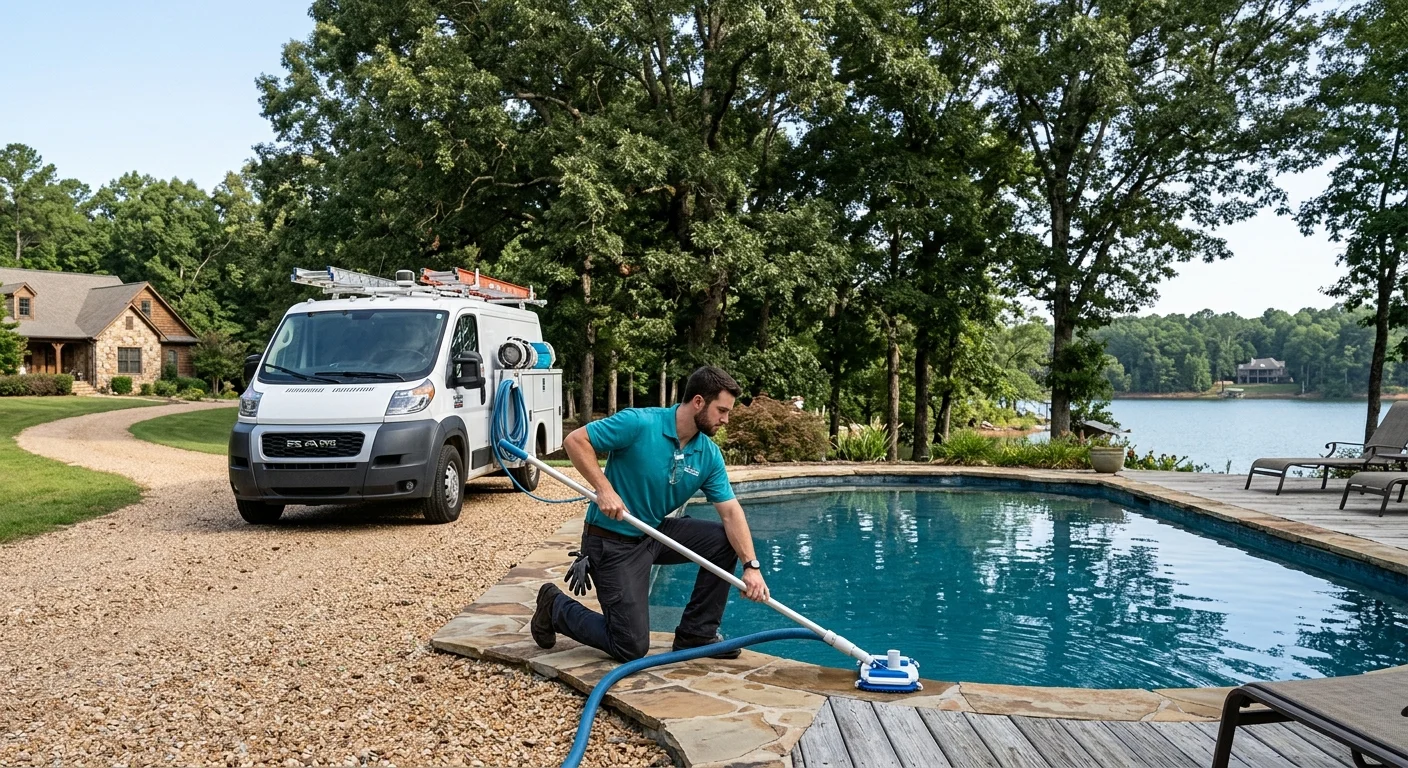
The price answer for weekly pool cleaning in Lakeside
HomeGuide’s September 2025 guide places weekly pool maintenance at $20–$50 per week, depending on workload. It also lists $80–$150 per month for weekly or biweekly service. These are market figures, not prices set by Splash Pro Pools.
That broad range makes more sense when you picture two Lakeside pools. One sits near the house with little surrounding vegetation. The other borders a dusty horse property beneath mature trees. Both need recurring care, but they don’t create the same amount of skimming, brushing, vacuuming, and basket cleaning.
The opening condition also matters. HomeGuide lists first-time pool cleaning at $150–$350 in its September 2025 guide. That first visit may carry accumulated debris or chemistry work before recurring maintenance settles into a pattern. For work billed by time, the same guide places typical pool cleaning rates at $60–$90 per hour.
A quote should separate the initial cleanup from the recurring service. Otherwise, a higher first invoice can look like the normal weekly rate. It should also explain how chemicals, filter cleaning, and repairs are handled. Those items can change the total without changing the scheduled visit.
Our San Diego weekly pool service cost guide provides broader county context. Lakeside still deserves its own calculation. Inland sunlight, exposed lots, mature trees, and windblown dust shape the actual workload here.
East County heat is the real cost driver here
Lakeside’s inland sun increases the work required to hold steady water chemistry. Sunlight consumes chlorine, according to the CDC’s home pool treatment guidance. Swimmer waste, dirt, and droplet-making jets also reduce chlorine levels.
That mechanism matters during long, bright stretches. A sunny pool can lose sanitizer between service visits even when the water looked balanced earlier. Evaporation also removes water while leaving dissolved material behind. Fresh fill water replaces the lost volume, but it doesn’t remove what remained in the pool.
The CDC recommends keeping pool pH between 7.0 and 7.8. Above 7.8, chlorine kills germs more slowly. Below 7.0, the water can corrode pipes and equipment. The agency also recommends at least 1 ppm free chlorine in pools, or at least 2 ppm when cyanuric acid or stabilized chlorine is used.
One weekly visit doesn’t replace checks between visits. The CDC recommends testing chlorine and pH at least twice daily, with more testing during heavy use. It also says DPD test kits are more accurate than test strips. A service plan should explain what the pro handles and what the homeowner handles between appointments.
This is where a cheaper, narrow plan can become a poor fit. If it covers a quick chemical dose but leaves recurring debris and brushing untouched, an exposed Lakeside pool may keep falling behind. The right comparison starts with workload, not the smallest advertised figure.
What the weekly visit covers on an inland pool
A weekly visit should remove the physical load and address the water’s current condition. The written scope decides which specific tasks the pro performs. Don’t rely on “full service” as a complete description.
Skimming removes floating leaves and other material before it settles. Brushing loosens buildup from walls, steps, corners, and the waterline. Vacuuming addresses debris that has already reached the floor. Emptying skimmer and pump baskets helps water move through the circulation system without packed debris blocking the path.
Water testing guides chemical adjustments. A pro can measure the water present that day, then dose according to the pool’s needs and the service agreement. That’s different from adding the same product automatically every week. Sunlight, dirt, swimmers, and water replacement can change the chemistry between visits.
Equipment observation belongs in the conversation too. A weekly cleaner may notice unusual noise, poor return flow, a loss of prime, or visible leakage. Diagnosis and repair are separate work, so the quote should explain what happens when a cleaning visit uncovers an equipment problem.
Use this comparison when reading service descriptions:
| Service format | Where it fits | What changes the workload |
|---|---|---|
| Recurring weekly care | A pool needing a consistent cleaning and chemistry rhythm | Debris, surface area, exposure, and the agreed task list |
| First-time cleanup | A pool entering service with accumulated work | Starting water condition and settled debris |
| Hourly cleaning | A defined cleanup or irregular task | Time on site and the exact work authorized |
Our weekly pool cleaning and maintenance service connects homeowners with independent local professionals. The customer contracts with and pays the matched professional directly.
Lot size, trees, and dust: Lakeside’s workload variables
Lakeside workload often begins beyond the waterline. A pool beside open ground collects a different mix of material than one protected by walls and close landscaping. Dust settles across the surface, reaches the floor, and adds work throughout the circulation path.
Mature trees create another pattern. Leaves can float briefly, sink, or gather in baskets. Small fragments spread farther than a single large leaf. A pool beneath oaks may look calm from the patio while debris collects in corners and around steps.
Large rural lots also expose pools to more moving dust. Horse properties and gravel drives add recognizable Lakeside texture. A vehicle crossing dry ground can raise material that eventually reaches nearby water. The pool’s distance from the road doesn’t eliminate that load when the surrounding area is open.
Pool size changes the same tasks. More surface means more water to skim and more floor to vacuum. More wall area means more brushing. Complicated steps, benches, attached spas, and narrow corners create extra surfaces where debris can settle.
Access affects the work plan as well. A clear route to the equipment pad and pool keeps the visit focused on care. Locked gates, loose animals, covered equipment, or stored items around the pad can interrupt that route. The service agreement should state how access will work without making arrival promises.
These variables point in different directions throughout the year. Tree debris may dominate one visit, while dust and fast-changing chemistry dominate another. A sound quote accounts for the recurring pattern instead of treating every Lakeside backyard as identical.
Reading a Lakeside quote before you sign
A useful Lakeside quote defines the recurring work, exclusions, and starting condition in plain language. It should show the visit schedule, cleaning tasks, testing duties, chemical coverage, filter responsibilities, and handling of repair discoveries.
Read the chemical terms carefully. “Chemicals included” can mean different things across service agreements. The document should identify what’s covered and how unusual treatment needs are priced. It should also distinguish routine filter observations from a separate filter cleaning or replacement.
Next, look for a clear first-visit line. HomeGuide’s September 2025 figures separate first-time cleaning, at $150–$350, from recurring weekly maintenance. A pool with settled dirt and neglected baskets shouldn’t be compared directly with one already receiving steady care.
Water charges and discharge rules sit outside the cleaning quote unless the agreement says otherwise. The San Diego County Water Authority member list includes Lakeside Water District by name. The county has several retail water agencies, so there isn’t one county-wide pool-water rate. Confirm the current rate with the agency serving your address.
Lakeside isn’t inside the City of San Diego. Don’t apply City of San Diego drain rules or water rates to a Lakeside property. Before draining, backwashing, or refilling, confirm current requirements with your local stormwater authority and serving water agency.
Routine cleaning isn’t construction. When a visit uncovers equipment or structural work, ask the person doing that work for a license number and verify it through the California Contractors State License Board. California’s pool contractor classification is C-53 under 16 CCR §832.53. Larger resurfacing and remodeling work requires a licensed contractor, which matters when comparing a cleaning recommendation with an East County resurfacing project.
When to call us
Call when recurring dust, drifting chemistry, or equipment trouble has turned weekly care into a moving target. Splash Pro Pools matches Lakeside homeowners with licensed, independent local pool professionals, while the customer contracts with and pays the professional directly. Call us at (760) 642-1256 and we’ll connect you with a licensed local pool pro.
Frequently asked questions
How much does weekly pool cleaning cost in Lakeside?
HomeGuide's September 2025 guide places weekly pool maintenance at $20–$50 per week, depending on workload. Your actual quote depends on the pool, debris, service scope, and starting condition.
Does a weekly pool service quote include chemicals?
Chemical coverage depends on the service agreement. The quote should identify which products are included, which carry separate charges, and how unusual treatment needs are handled.
Why might the first pool cleaning cost more?
A first visit may involve accumulated debris, neglected baskets, drifting chemistry, or other work needed before routine care begins. HomeGuide's September 2025 guide lists first-time cleaning at $150–$350.
Who sets Lakeside pool water rates and drain rules?
Your serving water agency and local stormwater authority set the applicable rates and discharge rules. Confirm both for your address before draining or refilling a pool.
Need professional help in San Diego County?
Splash Pro Pools connects San Diego homeowners with pool pros for the work in this post.