One thing to flag: Splash Pro Pools does not take this work on. It goes to a vetted local salt water conversion pro, reachable at (858) 400-6757.
A salt conversion in San Diego usually costs $1,200 to $2,500 including the cell, salt, and labor. The cell still makes chlorine. Hard tap water scales the plates and can cut cell life versus a softer-water market. Call (858) 400-6757 to route the install.
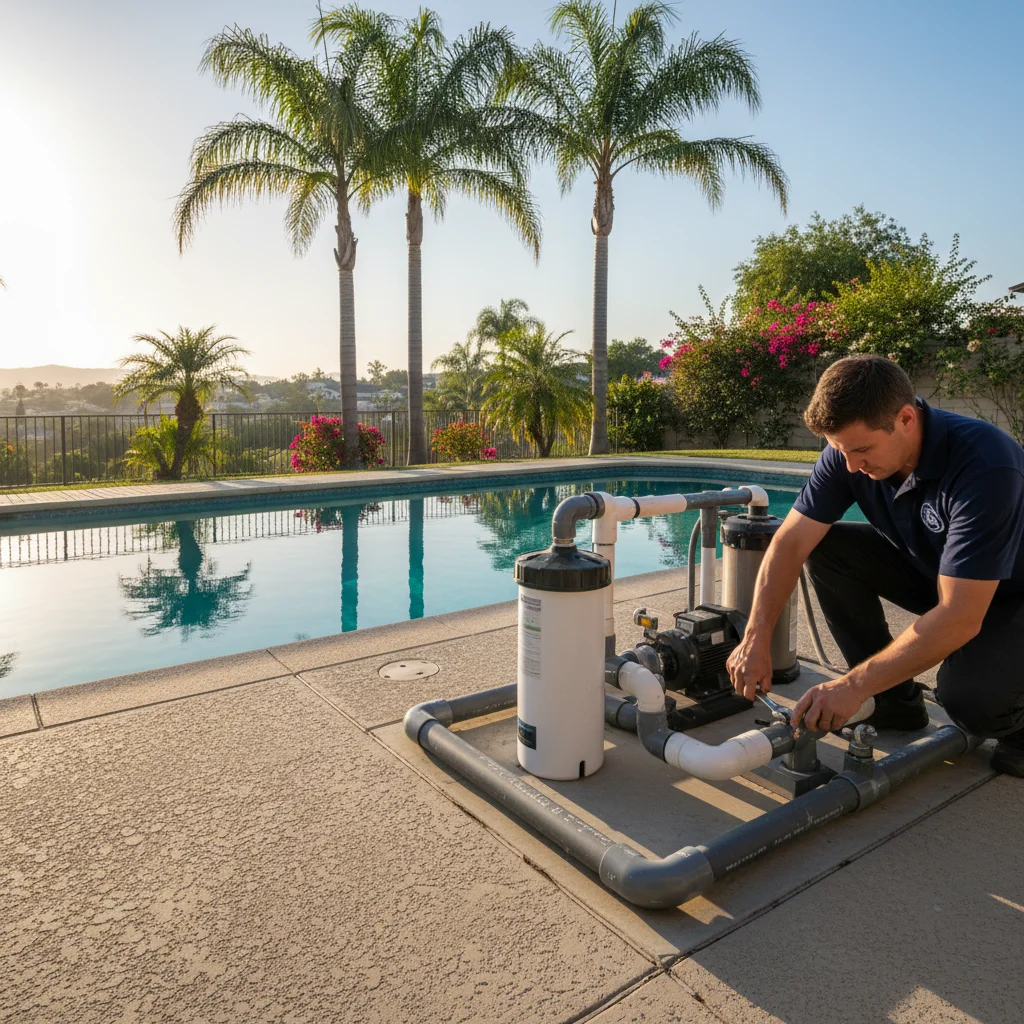
What a salt water conversion actually changes
A salt water pool is still a chlorine pool. That’s worth saying clearly, because the marketing around salt water can make it sound like something entirely different.
Here’s what actually happens: you dissolve a moderate amount of pool-grade salt into the water, typically 2,700 to 3,500 parts per million (ppm). That’s about one-tenth the salinity of ocean water, which is why you can barely taste it. The water passes through a salt chlorinator cell mounted on your equipment pad. Inside that cell, a low-voltage electrical current splits the sodium chloride molecules and generates chlorine in the form of hypochlorous acid. That chlorine sanitizes the pool, then reverts back to salt, and the cycle repeats.
What changes for you day-to-day:
- No more weekly chlorine tablets or liquid chlorine in most cases. The cell handles baseline sanitization automatically.
- Softer-feeling water. The chloramines that cause red eyes and that sharp chemical smell are far lower when chlorine is generated continuously at low levels.
- A new piece of equipment to maintain. The salt cell needs periodic inspection, occasional acid cleaning, and eventual replacement.
- New chemistry to watch. Salt levels, cell output percentage, and stabilizer (cyanuric acid) all matter more than they did before.
Your existing pump, filter, and plumbing stay in place. A salt water conversion is an equipment addition, not a full replumb. Most jobs take a few hours.
Real conversion cost ranges in San Diego County
Prices vary based on the brand you choose, your pool’s volume, and whether any electrical work is needed at the equipment pad.
Equipment cost
Entry-level salt chlorinators from brands like Hayward or Pentair run $400-$700 for the unit itself. Mid-range systems with variable output controls and self-cleaning cells sit in the $800-$1,400 range. The premium tier, units with phone app control, integrated flow sensors, and longer cell warranties, can reach $1,800 or more just for the equipment.
Salt
A typical 15,000-gallon pool needs roughly 450-500 pounds of salt to reach the target concentration on initial fill. At current San Diego-area prices, that’s around $80-$120. You’ll top off salt each season, but ongoing amounts are small.
Labor and electrical
Installation labor in San Diego County runs $300-$600 for a straightforward swap onto an existing equipment pad with adequate electrical access. If your panel needs a new breaker or the conduit run is complex, add another $150-$300.
Total installed cost: $1,200-$2,500 for most residential pools. Higher-end systems with premium cells land at $2,500-$3,200.
Worth noting: you’ll recover some of that in reduced chemical costs. A well-maintained salt pool typically spends $20-$50 less per month on chlorine versus a traditional setup. The math on payback depends on your current chemical spend, but most homeowners see the system pay for itself in three to five years, assuming the cell lasts that long.
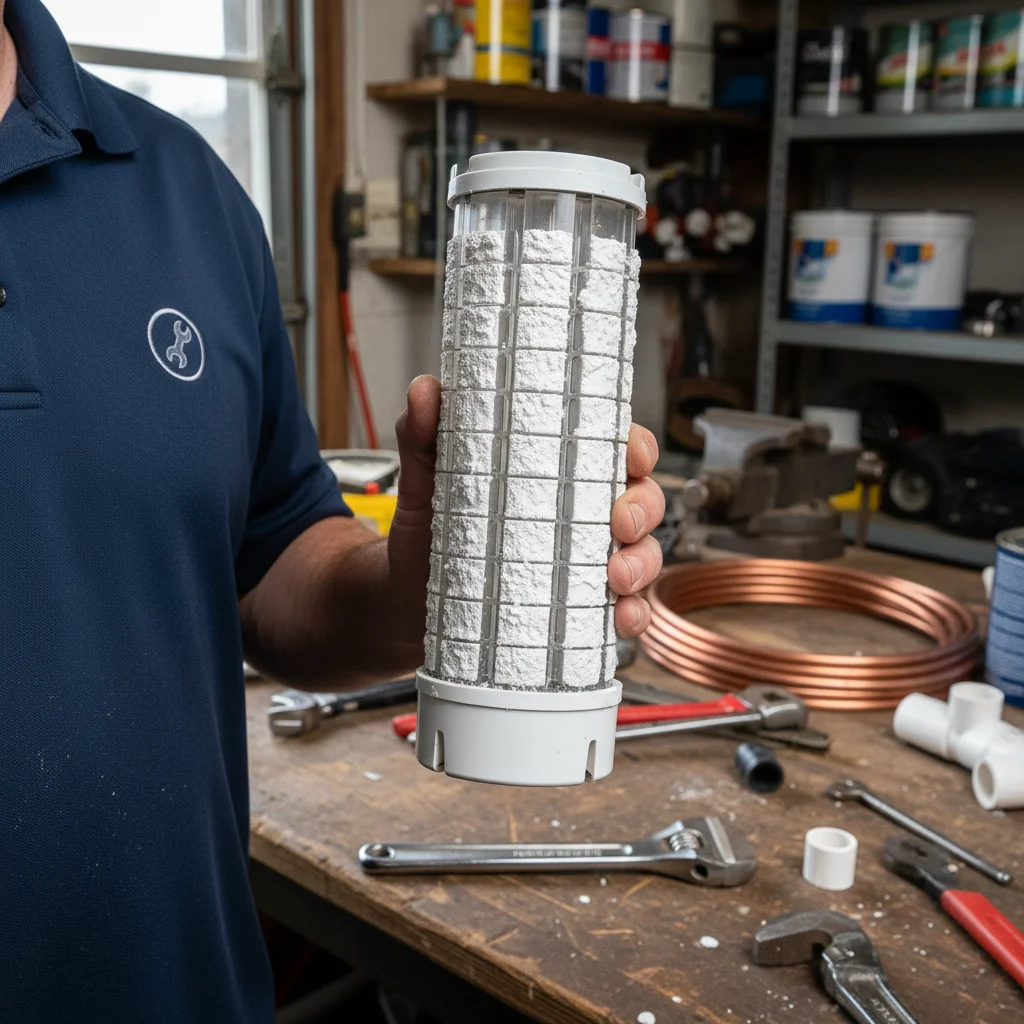
Why hard water makes salt cells fail faster here
This is the part of the conversion conversation that tends to get skipped over, and it’s the part that matters most if you live in San Diego.
San Diego’s tap water is some of the hardest in the country. The San Diego County Water Authority reports average hardness levels well above 300 mg/L (roughly 17+ grains per gallon), depending on the blend of Colorado River and State Water Project water reaching your neighborhood. We’ve written a full breakdown of what that means for your pool in our hard water pool guide.
The short version: calcium and magnesium in hard water precipitate onto the titanium plates inside your salt cell. This is called calcium scaling, and it looks like the crusty white buildup you’ve seen on faucets and showerheads. On a salt cell, that scale acts as insulation. It reduces the electrical efficiency of the cell, forces the system to work harder to hit your chlorine output target, and accelerates plate degradation.
A salt cell that might last eight years in Phoenix or Portland can fail in three to four years here without intervention.
What prevents it:
- Acid washing the cell every 90-120 days. A diluted muriatic acid soak dissolves the scale without damaging the plates. Most manufacturers recommend checking the cell quarterly; in San Diego, that schedule is non-negotiable.
- Keeping calcium hardness in range. Target 200-400 ppm in the pool water. If your fill water is pushing you above that, a sequestering agent or partial drain-and-refill helps.
- Running a saltwater-compatible phosphate remover. Phosphates feed algae and complicate cell chemistry. San Diego’s recycled water sources tend to run higher in phosphates than most.
- Watching pH. High pH causes scale faster. Salt pools tend to drift alkaline because of CO₂ off-gassing from the electrolysis process. Check pH weekly and keep it at 7.4-7.6.
If you’re already dealing with white calcium deposits on your tile line, that’s a preview of what your salt cell will see. Our pool tile and calcium cleaning service addresses that buildup, and tackling it before a conversion means you’re starting with cleaner chemistry.
Maintenance after conversion, what’s easier, what’s not
People convert to salt expecting a “set it and forget it” pool. That’s partially true, and partially a myth worth correcting.
What genuinely gets easier:
Weekly chemical management simplifies considerably. You’re not dosing chlorine manually every few days. Water tends to feel more balanced. Homeowners who previously over-chlorinated their pools (a common cause of cloudy pool water) often find their water clarity improves just from the steadier, lower-level chlorine generation.
You also handle fewer concentrated chemicals, which is a real safety and convenience win. No more storing liquid chlorine jugs or dissolving trichlor tabs.
What stays the same or gets harder:
- pH management. Salt pools need more frequent pH monitoring because the electrolysis process raises pH continuously. A liquid acid feeder paired with your salt system solves this, it’s worth the additional $150-$300.
- Stabilizer (CyA) levels. Salt-generated chlorine degrades in UV light faster than stabilized tablet chlorine. You’ll need to maintain CyA around 70-80 ppm and check it every month or two.
- Salt cell inspection and cleaning. This is the new maintenance task. Budget 30 minutes every three months to inspect and acid-wash the cell, or add it to a weekly pool cleaning service plan.
- Annual salt level testing. Salt doesn’t evaporate, but it dilutes when you top off water or get heavy rain. Test salt level at the start and end of each season.
Overall, most San Diego pool owners find maintenance genuinely easier after conversion, as long as they stay on top of that cell.
Is conversion worth it for your pool?
For most San Diego homeowners, the answer is yes, with realistic expectations.
If you swim regularly, have kids or pets in the pool often, or find yourself dealing with chemical sensitivity (itchy eyes, bleached swimwear), salt water delivers a noticeable quality-of-life improvement. The water feels different in a way that’s hard to describe until you’ve swum in a well-maintained salt pool.
If your pool equipment is aging, it’s worth evaluating that first. A salt system connected to a single-speed pump from 2010 and an undersized filter is going to underperform. The California Energy Commission now requires variable-speed pumps on new pool equipment installations; if you’re already due for a pump upgrade, pairing it with a salt conversion makes sense economically and practically.
If your pool has existing corrosion issues, degraded heater components, deteriorating light niches, soft plaster, address those before conversion. Salt water doesn’t cause corrosion out of thin air, but it can accelerate problems that are already developing.
One last thing: make sure whoever installs your system is licensed. California law requires electrical work on pool equipment to be performed by a licensed contractor. You can verify any contractor’s license at the CSLB license check tool before signing anything.
When to call us
Salt water conversions involve electrical work at the equipment pad, proper cell sizing for your pool volume, and first-fill chemistry that sets the tone for years of performance. Getting any of those wrong costs more to fix than getting them right the first time. If you’re already seeing signs of calcium scaling on an existing salt cell, equipment that needs updating, or water chemistry that’s been off for a while, it’s worth having a pro assess the full picture before you buy equipment.
Call us at (858) 400-6757 and we’ll connect you with a vetted local pool pro.
Frequently asked questions
How much does a salt water pool conversion cost in San Diego?
Most San Diego homeowners pay between $1,200 and $2,500 for a complete conversion, including the salt chlorinator, salt, and labor. Higher-end variable-speed-compatible systems can push that to $3,000 or more.
Do I still need to add chlorine to a salt water pool?
Your salt cell generates chlorine continuously from dissolved salt, so you rarely need to add chlorine manually. You may still shock the pool occasionally, especially after heavy use or a rainstorm.
How long does a salt cell last in San Diego?
Most salt cells are rated for 7-10 years, but San Diego's hard water shortens that lifespan significantly. Without regular acid washing or an inline cell cleaner, many cells fail in 3-5 years here.
Will a salt water pool damage my pool equipment or finish?
Salt water is gentler on skin and eyes than a heavily chlorinated pool, but the salt and the chlorine it produces can accelerate corrosion on heaters, certain light fixtures, and stone or travertine deck materials. Using compatible equipment and keeping chemistry balanced minimizes this.
Can I convert my pool to salt water myself?
The electrical work required to install a salt chlorinator must be done by a licensed contractor in California. Buying the equipment yourself is legal, but improper wiring is a safety hazard and can void the equipment warranty.
Need this done in San Diego County?
For repair and renovation work like this, we hand you to our trusted partner, Del Rancho Pools.