Before you read on: this sits outside what Splash Pro Pools does. We hand it to a vetted local resurfacing and replastering pro, reachable on (858) 400-6757.
Spot tile repairs are a few hundred dollars. A full waterline replacement typically starts at $3,000 and can reach $8,000-plus. Plan 3 to 7 days. Hard water and failed grout are the usual reasons tiles crack or pop. Call (858) 400-6757.
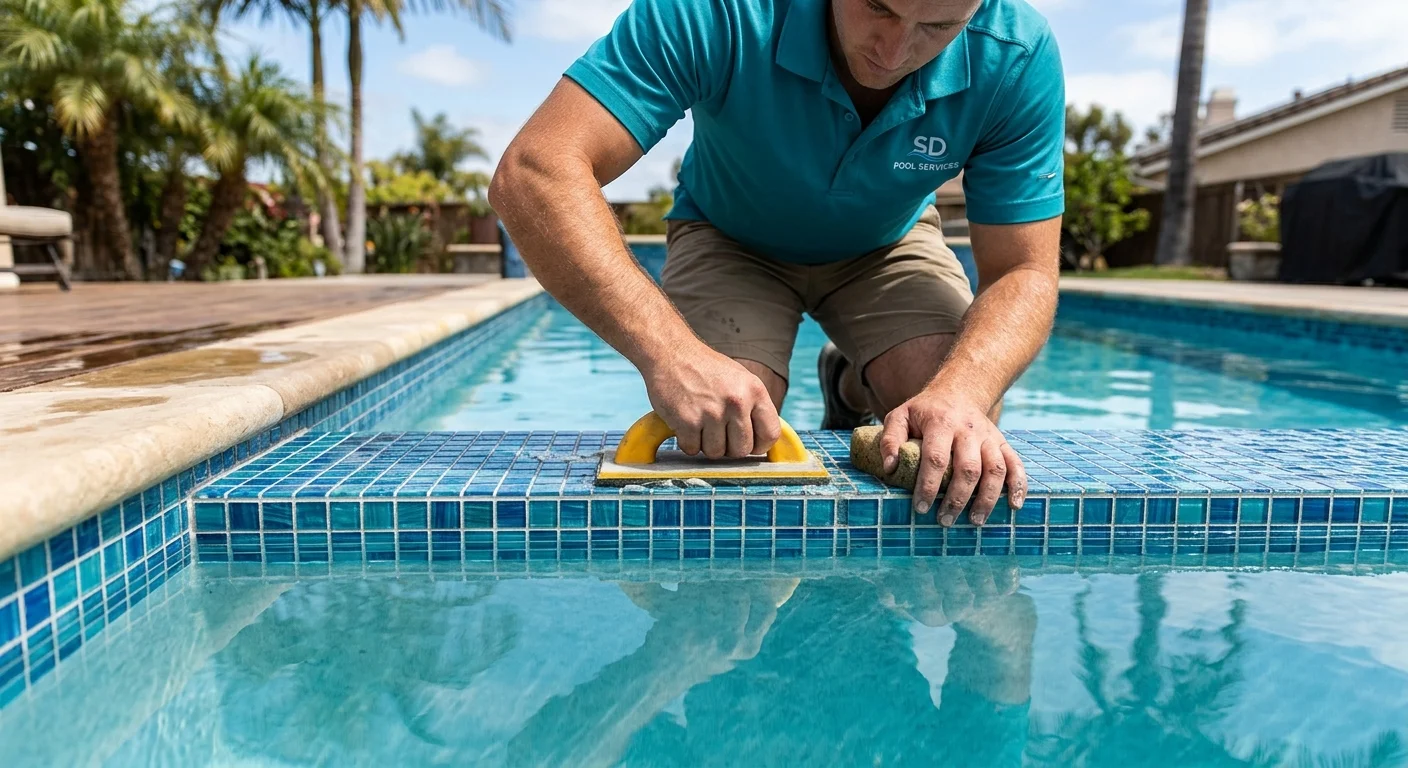
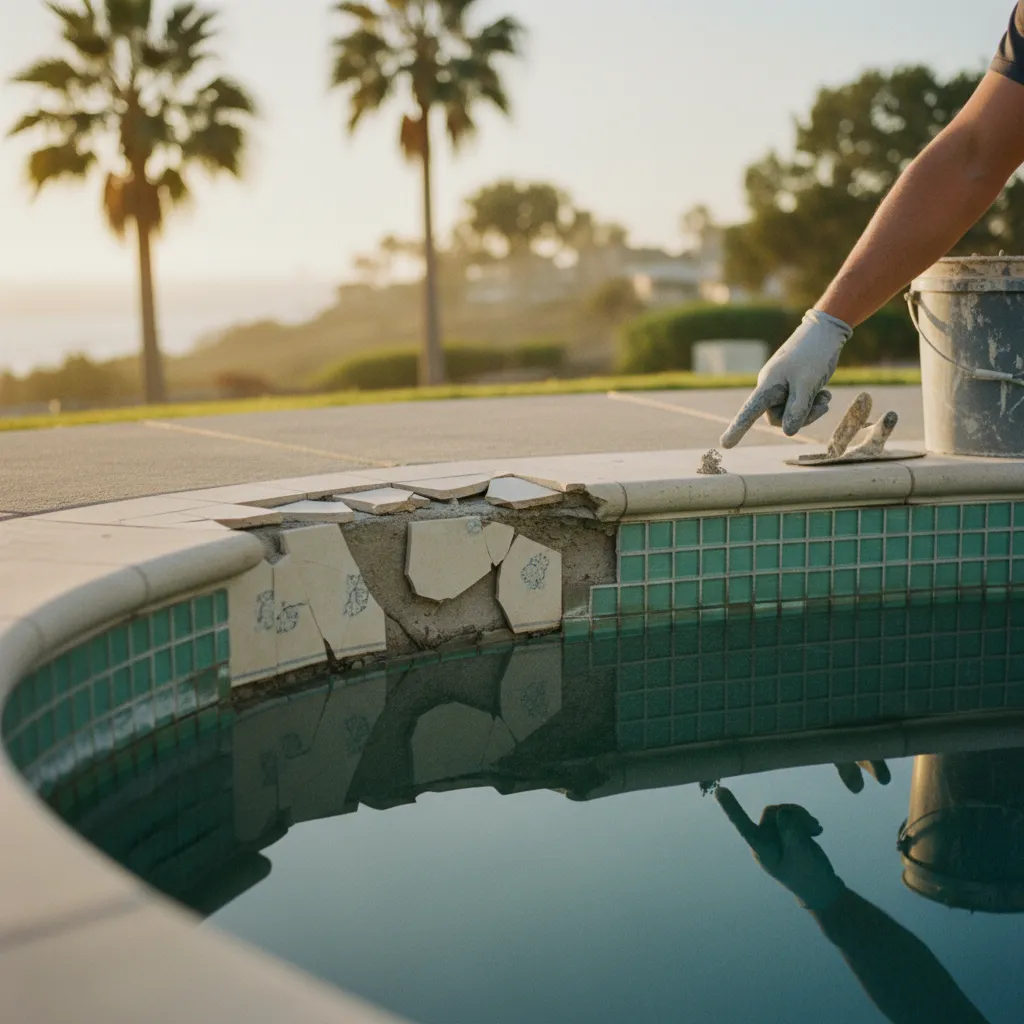
Why San Diego pool tile cracks, pops, or hollows out
San Diego’s climate and water quality play a significant role in pool tile deterioration. You’ve likely heard about our hard water; it’s a major factor. The high mineral content, especially calcium, leaves behind noticeable deposits on your tiles. You can learn more about this in our article on San Diego’s hard water pools.
The calcium connection
Over time, calcium deposits build up on the waterline tiles and in the grout lines. This isn’t just an aesthetic issue. These mineral layers can expand and contract differently than the tile and grout itself. This stress contributes to grout cracking and weakening, eventually leading to tiles losing their adhesion. When the grout fails, water can seep behind the tiles, further compromising the bond and causing them to pop off.
Temperature fluctuations
Although San Diego enjoys mild weather, even our seasonal temperature shifts can affect pool tile. The expansion and contraction of the pool shell and coping, along with the tiles themselves, can stress the grout and adhesive. When combined with the weakening effects of calcium buildup, this thermal cycling accelerates wear and tear.
Poor installation
Sometimes, the problem stems from the initial installation. If the surface wasn’t properly prepared, the wrong adhesive was used, or the grout wasn’t applied correctly, tiles can fail prematurely. Improper expansion joints or a lack of waterproofing can also contribute to problems.
Age and general wear
Even with perfect installation and diligent maintenance, pool tiles and grout have a lifespan. After years of exposure to pool chemicals, sunlight, and everyday use, the materials simply degrade. Grout becomes brittle, and the adhesive loses its grip.
Spot repair vs. full waterline tile replacement
When you first notice damaged tiles, you might wonder if a quick fix is enough or if you need a more extensive overhaul. The choice between spot repair and full waterline replacement depends heavily on the extent and nature of the damage.
Spot repair: when it works
Spot repair is a good option if you have only a few isolated tiles that are cracked, chipped, or have fallen off. This approach is usually more cost-effective and less disruptive. It involves carefully removing the damaged tiles, preparing the exposed surface, and setting new tiles in their place. Techs make sure to match the existing grout color as closely as possible for a clean, even look.
Spot repairs are best for:
- A handful of tiles in one or two small areas.
- Recent damage, such as a single cracked tile from an impact.
- Situations where the surrounding grout and tiles are still in excellent condition.
However, if the underlying cause (like widespread calcium damage or failing grout throughout the waterline) isn’t addressed, new tiles installed as part of a spot repair might not last long.
Full waterline tile replacement: when it’s necessary
Full waterline tile replacement involves removing all the existing tiles around the perimeter of your pool. This is a more involved process but offers a comprehensive and lasting solution, especially when:
- Widespread damage: Many tiles are cracked, loose, or missing in multiple areas.
- Extensive grout failure: The grout lines are crumbling, discolored, or showing signs of heavy calcium scaling along large sections of the waterline.
- Aesthetic upgrade: You want to completely change the look of your pool with new, modern tiles.
- Resurfacing projects: It’s often smart to replace tiles when you’re already planning a pool resurfacing project. More on that below.
A full replacement ensures a fresh start, addressing any underlying issues with the tile bed and providing a uniform, durable finish. It’s an investment that significantly enhances your pool’s longevity and appearance.
Matching old tile vs. choosing a new waterline band
Once you’ve decided on repair or replacement, the next step is selecting your tiles. This can be an exciting part of the process, especially if you’re looking for a fresh aesthetic.
Finding a match for spot repairs
For spot repairs, the primary goal is to find tiles that match your existing ones as closely as possible. This can sometimes be a challenge, especially if your pool is older or the original tile pattern is no longer readily available. Pros in our network have extensive experience sourcing tiles and often know where to find similar styles or compatible alternatives. They’ll work with you to find the best possible match to maintain your pool’s original look. It’s usually about finding a balance between perfect replication and a subtle, attractive blend.
Embracing a new look with full replacement
With a full waterline replacement, you have the freedom to transform your pool’s appearance completely. This is a chance to update your pool’s style and add a personal touch. San Diego homeowners often choose from a wide range of materials and designs:
- Ceramic and porcelain: These are popular choices, durable and available in countless colors, patterns, and sizes. They’re great for achieving classic or modern looks.
- Glass mosaics: For a touch of sparkle and luxury, glass tiles come in vibrant colors and reflective finishes that truly make your waterline pop.
- Natural stone: Travertine, slate, or flagstone can create a rustic or earthy aesthetic, though they require more maintenance to protect against San Diego’s hard water.
- Specialty tiles: Options like iridescent finishes or custom designs can give your pool a unique, high-end feel.
When selecting new tiles, consider how they complement your pool’s existing finish, coping, and deck. Think about how the colors will look with the water, and whether you prefer a subtle blend or a striking contrast. The pro can guide you through the options, showing you samples and helping you visualize the finished product. This way, you choose a waterline band that you’ll love for years to come.
What pool tile replacement costs in San Diego
Understanding the cost of pool tile replacement in San Diego is crucial for budgeting. The price can vary significantly depending on several factors, including the scope of the work (spot repair vs. full replacement), the type of tile you choose, and the amount of preparation needed.
Factors influencing cost
- Scope of work:
- Spot repairs: These are typically the least expensive, ranging from a few hundred dollars to perhaps a thousand for more extensive patches. It covers labor, materials, and a small amount of calcium removal if needed.
- Full waterline replacement: This is a larger investment, usually starting around $3,000 and going up to $8,000 or more for larger pools, complex designs, or premium materials.
- Tile material: The cost of the tile itself is a major factor. Standard ceramic or porcelain tiles are generally more affordable, while glass mosaics, natural stone, or specialty custom tiles can significantly increase the overall price.
- Labor and installation complexity: Intricate patterns, small mosaic tiles, or unusually shaped pools require more skilled labor and time, which affects the cost.
- Preparation work: Before new tiles can go in, the old ones need to be removed, and the surface must be thoroughly cleaned and prepped. If there’s significant calcium buildup, that adds to the labor and specialized cleaning costs.
- Grout and adhesive: High-quality, durable grout and adhesive are essential for longevity, and their cost is factored into the estimate.
Getting an accurate estimate
Because so many variables are at play, it’s impossible to give a precise quote without seeing your pool. That’s why an on-site assessment is the only way to price pool tile replacement in San Diego. During this visit, the pro will inspect your pool’s current condition, discuss your preferences, and provide a detailed estimate that outlines all costs involved. A written quote is what tells you exactly what to expect.
Remember, investing in professional tile replacement prevents more costly problems down the road, such as leaks or further damage to your pool’s structure. It also boosts your home’s curb appeal and enjoyment.
How calcium buildup gets handled before new tile goes in
Calcium buildup is a persistent issue for San Diego pool owners. It’s not just unsightly; it’s a primary reason why tiles detach and grout deteriorates. Before any new tile goes in, thoroughly addressing existing calcium is non-negotiable.
On a tile replacement project, especially a full waterline job, calcium removal is a critical first step. Pros can’t just lay new tile over existing deposits. That would compromise the bond of the new adhesive and grout, leading to premature failure and wasted investment.
The calcium removal process
- Draining the pool: For a full waterline replacement, the pool needs to be drained below the tile line. This provides clear access to the entire affected area.
- Assessing the buildup: The pro examines the extent and type of calcium scale. San Diego’s hard water can create incredibly stubborn deposits.
- Specialized cleaning methods: Pros use a variety of techniques to safely and effectively remove calcium without damaging the pool’s surface. These include:
- Eco-friendly bead blasting: This is a highly effective method where specialized beads (often glass or soda ash) are propelled at high pressure to chip away calcium. It’s gentle on the tile and plaster but tough on minerals. This is also how pros handle routine pool tile cleaning and scale removal.
- Acid washing (selective application): In some cases, a controlled application of diluted acid might be used to dissolve tough calcium spots, always with extreme care to protect the surrounding pool surfaces and ensure proper neutralization.
- Manual scraping: For particularly thick or localized deposits, manual scraping might be necessary, followed by chemical treatment.
You can learn more about our general approach to these issues in our blog post, Pool Tile Calcium Cleaning San Diego.
By meticulously removing all calcium and preparing a clean, smooth surface, the pro ensures that your new pool tiles have the best possible foundation. This commitment to proper preparation is what guarantees the longevity and beauty of your pool tile replacement.
Doing tile and resurfacing together to save money
If your pool tiles are failing, there’s a good chance your pool’s interior surface might also be showing signs of wear. Often, homeowners facing tile replacement are also considering a pool resurfacing. Combining these projects makes a lot of sense, both financially and practically.
Why combine tile replacement and resurfacing?
- Cost savings: When you schedule pool tile replacement with a full pool resurfacing project, you often save money on labor, equipment mobilization, and materials. The pool is already drained and prepped for work, reducing redundant setup costs.
- Cohesive aesthetics: Replacing your tiles and resurfacing your pool at the same time ensures a cohesive and updated look. You can choose new tile colors and patterns that perfectly complement your fresh new plaster, quartz, or pebble finish. This creates a uniform, brand-new appearance for your entire pool.
- Efficiency: Why drain your pool twice? Combining projects means less disruption to your backyard and a faster return to enjoying your pool. The crew doing the work can coordinate both aspects efficiently, minimizing the overall project timeline.
- Long-term investment: Both tile and surface materials have lifespans. Addressing them simultaneously means you’re investing in a complete renovation that will last for many years, delaying the need for future repairs.
Consider this scenario: you replace your tiles now, only to find your plaster needs resurfacing in a year or two. You’d have to drain the pool again, potentially deal with impacts on your new tile, and incur a separate set of mobilization fees. By planning ahead, you avoid this double hassle and expense.
When the pro assesses your pool for tile replacement, they can also provide an assessment of your pool’s surface. They’ll discuss the condition of your existing plaster or finish and help you understand if combining projects is the most economical and beneficial option for your San Diego home. It’s often the smartest move for maximizing your pool renovation budget.
When to call us
Don’t let cracked or falling pool tiles detract from your backyard oasis or lead to bigger problems. Early intervention can save you significant time and money in the long run. If you’re noticing any signs of tile damage, from a few loose tiles to extensive cracking or heavy calcium buildup, it’s time to get a professional assessment. Call us at (858) 400-6757 and we’ll connect you with a vetted local pool pro. We’ll help you understand your options and provide a clear path to restoring your pool’s beauty and integrity, and remember that bundling tile work with a resurface usually costs less than doing them separately.
Frequently asked questions
How long does pool tile replacement take?
A typical waterline tile replacement in San Diego can take anywhere from 3-7 days, depending on the size of your pool, the complexity of the tile work, and whether significant calcium removal is needed beforehand. Small spot repairs are often quicker, usually completed in a day or two.
Is it better to repair or replace pool tile?
The decision to repair or replace depends on the extent of the damage. If only a few tiles are cracked or missing in an isolated area, a spot repair can be effective. However, if multiple sections are failing, grout is deteriorating widely, or the existing tile is heavily encrusted with calcium, a full waterline replacement provides a more durable and aesthetically pleasing long-term solution.
How much does it cost to replace pool tile in San Diego?
The cost for pool tile replacement in San Diego varies widely. Spot repairs can range from a few hundred dollars, while a full waterline replacement typically starts at $3,000 and can go up to $8,000 or more for larger pools or intricate tile selections. Factors like tile material, prep work, and calcium removal all influence the final price. An on-site assessment is what makes an estimate accurate.
Can I replace pool tile myself?
While it's possible for skilled DIYers to replace a few tiles, full waterline tile replacement is a complex job best left to professionals. It involves draining the pool, meticulous surface preparation, precise tile setting, and proper grouting. Incorrect installation can lead to leaks, premature failure, and further damage. San Diego's hard water also requires specialized calcium removal, which pros are equipped to handle.
Should I replace pool tile when I resurface?
Absolutely. Replacing your pool tile during a full pool resurfacing project is highly recommended. It saves money on labor and equipment mobilization since the pool is already drained and prepped. It also ensures a cohesive, fresh look for your entire pool, and you avoid the hassle of draining the pool twice. Many homeowners find this the most cost-effective approach for a complete pool refresh.
Need this done in San Diego County?
For repair and renovation work like this, we hand you to our trusted partner, Del Rancho Pools.