One thing to flag: Splash Pro Pools does not take this work on. It goes to a vetted local equipment installation and upgrades pro, reachable at (858) 400-6757.
The first 30 days after new plaster decide whether the finish mottles or lasts. Stay out of the water 5 to 7 days. Brush daily to pull plaster dust. San Diego hard water etches if chemistry drifts. Call (858) 400-6757 for a multi-visit startup.
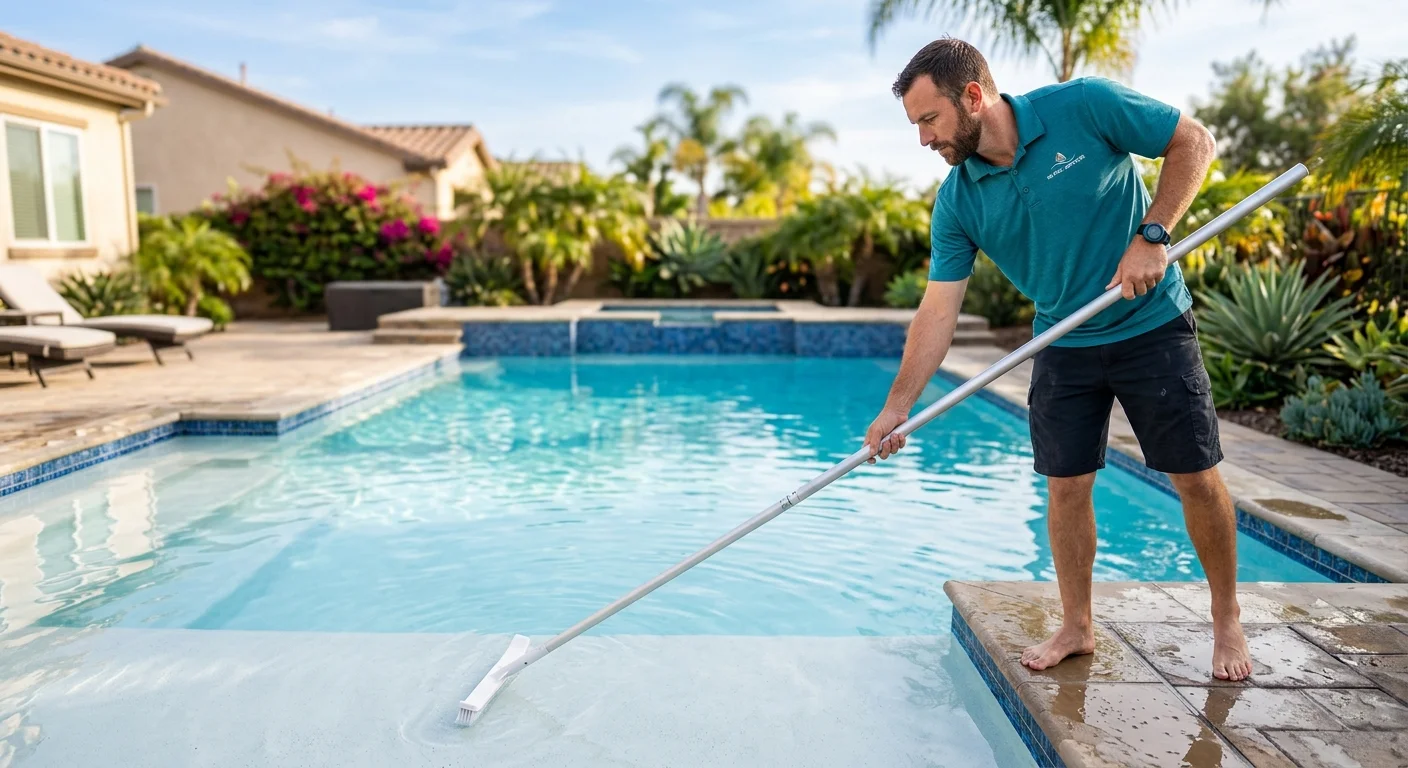
Getting this phase right, especially with San Diego’s notoriously hard fill water, is essential. Skipping or rushing the startup can lead to permanent damage like mottling, staining, or a rough finish that significantly shortens your plaster’s lifespan. Our specialized pool startup service in San Diego ensures your investment is protected from day one.
Why new plaster needs a special startup, not normal service
A newly plastered pool isn’t just a clean slate; it’s a living, curing surface that interacts intensely with the water you fill it with. This delicate process requires a very different approach than standard weekly pool cleaning and maintenance. Normal pool service assumes a stable, cured surface. New plaster is anything but stable.
The fresh plaster is rich in calcium hydroxide. When water is added, this calcium begins to leach out, creating “plaster dust” and significantly impacting the water chemistry. If not managed correctly, this leaching can lead to etching, staining, or a soft, chalky surface. The goal of a startup is to gradually balance the water chemistry to harden the plaster, allowing it to cure properly. This involves daily testing, specific chemical additions, and rigorous brushing, far beyond the scope of a typical weekly visit. It’s a specialized, labor-intensive process that demands expertise to protect your substantial investment in pool resurfacing.
Bicarb vs. traditional startup and which we use in San Diego
When it comes to new plaster startups, there are two primary methodologies: the traditional acid start and the bicarbonate (bicarb) start. Both aim to cure the plaster, but they take different paths to get there.
The traditional acid start involves filling the pool and immediately lowering the pH and alkalinity with muriatic acid. The idea is to etch away the initial layer of plaster dust and rapidly balance the water. While effective for some finishes, it can be aggressive, especially for standard white plaster, and carries a higher risk of streaking, mottling, or uneven etching if not executed perfectly.
The bicarbonate (bicarb) start, also known as the “no-acid” startup, is our preferred method in San Diego, particularly given our local water conditions. This method focuses on slowly raising the calcium hardness and alkalinity while keeping the pH stable and slightly higher in the initial stages. By minimizing immediate acid use, it allows the plaster to cure more gently and evenly, reducing the risk of permanent damage. This approach is more forgiving and produces a more consistent, durable finish. San Diego’s water is already hard, meaning it has a high concentration of minerals like calcium. An acid start can aggressively pull even more calcium from the new plaster, potentially causing problems. The bicarb method works better with our local water by gradually introducing calcium and balancing other factors, allowing the plaster to solidify without over-stressing it. This ensures a smoother, longer-lasting finish for your San Diego pool.
The first-week brushing schedule and why it’s daily
The first week of your new plaster startup is arguably the most critical for brushing. You’ll need to brush the entire surface of your pool daily, sometimes twice a day. This isn’t just about cleaning; it’s a fundamental part of the curing process.
As the new plaster interacts with the fill water, calcium hydroxide leaches out, creating a fine white powder known as “plaster dust.” This dust needs to be meticulously removed from the surface every single day. If it’s allowed to settle and remain on the plaster, it can re-deposit and harden, leading to calcium carbonate scale, streaks, or uneven curing that results in permanent discoloration or mottling. Daily brushing gently scrubs this dust away, preventing it from adhering to the surface and allowing the filtration system to remove it. It’s a physical act that directly contributes to a smooth, uniform, and durable finish. Using a specialized, soft-bristle brush is key to avoid scratching the delicate new surface while still being effective.
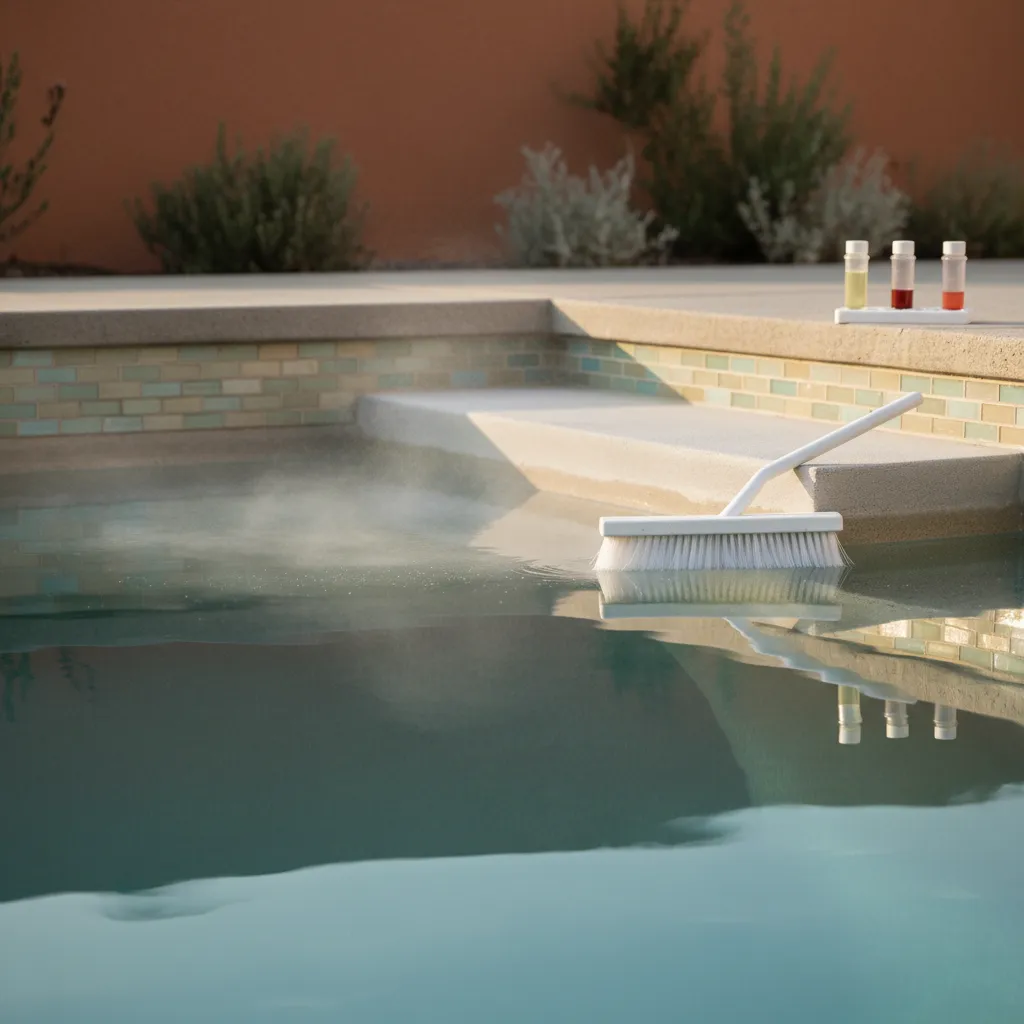
Beyond removing plaster dust, consistent brushing also helps to ensure even water circulation across the entire surface. This minimizes areas where chemicals might concentrate or stagnate, further promoting an even cure. For the first 7-10 days, this daily brushing commitment is non-negotiable for a successful startup.
Balancing chemistry on fresh plaster in San Diego’s hard water
Balancing water chemistry during a new plaster startup is a science, and it’s even more complex here in San Diego County. Our region’s tap water is notoriously hard, meaning it naturally contains high levels of dissolved minerals, especially calcium. This presents a unique challenge for fresh plaster.
When new plaster, which is itself calcium-based, is exposed to San Diego’s hard fill water, the interaction must be carefully managed. If the water’s calcium hardness is too low, the water will aggressively pull calcium from the plaster, potentially causing etching or “plaster scale.” If it’s too high, it can lead to immediate calcium deposits. The bicarb startup method we employ aims to gradually bring the water to a state of saturation, where it neither aggressively dissolves nor deposits calcium from the plaster. This involves precise additions of calcium chloride to bring the hardness up slowly, followed by careful adjustments to pH and total alkalinity. We monitor these parameters daily for the first week, and then frequently for the remaining 30 days.
Maintaining the Saturation Index (SI) within a tight range is paramount. This index predicts whether water will be corrosive, balanced, or scale-forming. For new plaster, we aim for a slightly positive SI to encourage the plaster to harden without developing scale. This continuous, detailed chemical management is critical to prevent issues like uneven curing, etching, or excessive calcium scaling that can permanently mar your beautiful new finish. It’s why a professional pool startup service in San Diego is so valuable; we understand the nuances of local water and its impact on your investment. We also link to external resources like the San Diego County Water Authority if you want to learn more about our local water quality.
Plaster dust, mottling, and what’s normal vs. a real problem
As your newly plastered pool fills and begins its curing process, you’ll inevitably encounter some visual changes. Knowing what’s normal and what signals a potential problem is key to avoiding unnecessary worry or, conversely, neglecting a serious issue.
Plaster dust
As mentioned, plaster dust is completely normal. It’s a fine, white powder that will appear in your pool daily, particularly during the first week. This is calcium hydroxide leaching from the fresh plaster as it cures. Daily brushing and proper filtration are designed to remove this dust. If you see it, don’t panic; just make sure it’s being brushed and filtered out. Persistent, thick layers of dust could indicate a chemistry imbalance or insufficient brushing.
Mottling
Mottling refers to uneven patches of light and dark on the plaster surface, often resembling clouds or blotches. In many cases, a very subtle, natural mottling can be a characteristic of plaster finishes, especially with colored plaster. However, distinct, sharply defined, or dark mottling can be a sign of improper startup chemistry, particularly an aggressive acid start or uneven mixing of the plaster materials during application. While minor mottling might be aesthetically tolerable, severe or widespread mottling can indicate a compromised surface that may not last as long. Early detection and immediate adjustment of water chemistry are crucial if significant mottling develops.
Stains and discoloration
True stains (e.g., rust-colored, green, or black spots) are usually not a normal part of the plaster curing process. These often point to external factors like metal in the fill water, organic debris left on the surface, or improper chemical application. White spots or streaks could indicate calcium carbonate deposits from water that was too alkaline or had excessively high calcium hardness during the cure. It’s important to distinguish between plaster dust (which brushes off) and actual stains or deposits (which are more stubborn). If you notice anything beyond the expected plaster dust, it’s wise to contact a professional immediately to assess the issue.
Handing off to a regular weekly schedule once it’s cured
The intensive 30-day startup period is a marathon, not a sprint. But once it’s complete, and your new plaster has properly cured, your pool is ready to transition to a standard maintenance routine. This transition is a significant milestone, signifying that your investment has been successfully protected through its most vulnerable phase.
After the first 30 days, the matched pro should re-test and look at the surface. Daily brushing can stop. Then weekly pool cleaning keeps pH, alkalinity, calcium, and sanitizer in range so the new plaster does not stain. Splash matches that route. It does not do the plaster work.
When to call us
Protecting your new pool plaster with a professional startup service is one of the smartest investments you can make after a pool replastering project. Given the complexities of San Diego’s hard water and the delicate nature of fresh plaster, this isn’t a task for the inexperienced. If you’ve just replastered your pool or are planning to, ensure your finish and warranty are protected from day one. Call us at (858) 400-6757 and we’ll connect you with a vetted local pool pro.
Frequently asked questions
Why is new pool plaster startup so important?
The first 30 days after replastering are crucial for a proper cure. Incorrect water chemistry and brushing can lead to permanent damage like mottling, staining, and a shortened lifespan for your new finish.
How does San Diego's hard water affect new plaster startup?
San Diego's naturally hard tap water contains high levels of calcium. Without careful management during startup, this calcium can etch the fresh plaster, causing a rough surface or calcium deposits that are difficult to remove.
What is plaster dust and is it normal?
Plaster dust is a fine white powder that appears in the pool water after replastering. It is normal and consists of calcium hydroxide leaching from the plaster. Daily brushing and filtration are essential to remove it and prevent it from settling back onto the surface.
Can I use my pool during the startup period?
It's best to avoid swimming for at least the first 5-7 days after plastering to allow the initial cure. After that, limited, gentle use might be possible, but heavy activity should still be minimized during the full 30-day startup phase.
How much does a pool startup service cost in San Diego?
The cost for a professional pool startup service varies based on pool size and specific needs. It's a specialized, multi-visit service. We recommend getting a custom quote to understand the investment in protecting your new finish.
Need this done in San Diego County?
For repair and renovation work like this, we hand you to our trusted partner, Del Rancho Pools.