If you’re searching for pool skimmer repair near me in San Diego, start with the failure point. A damaged lid, basket, or weir often needs focused work, while a cracked body, failed wall connection, or buried suction line can make replacement the better scope. Weak suction alone doesn’t prove the skimmer has failed.
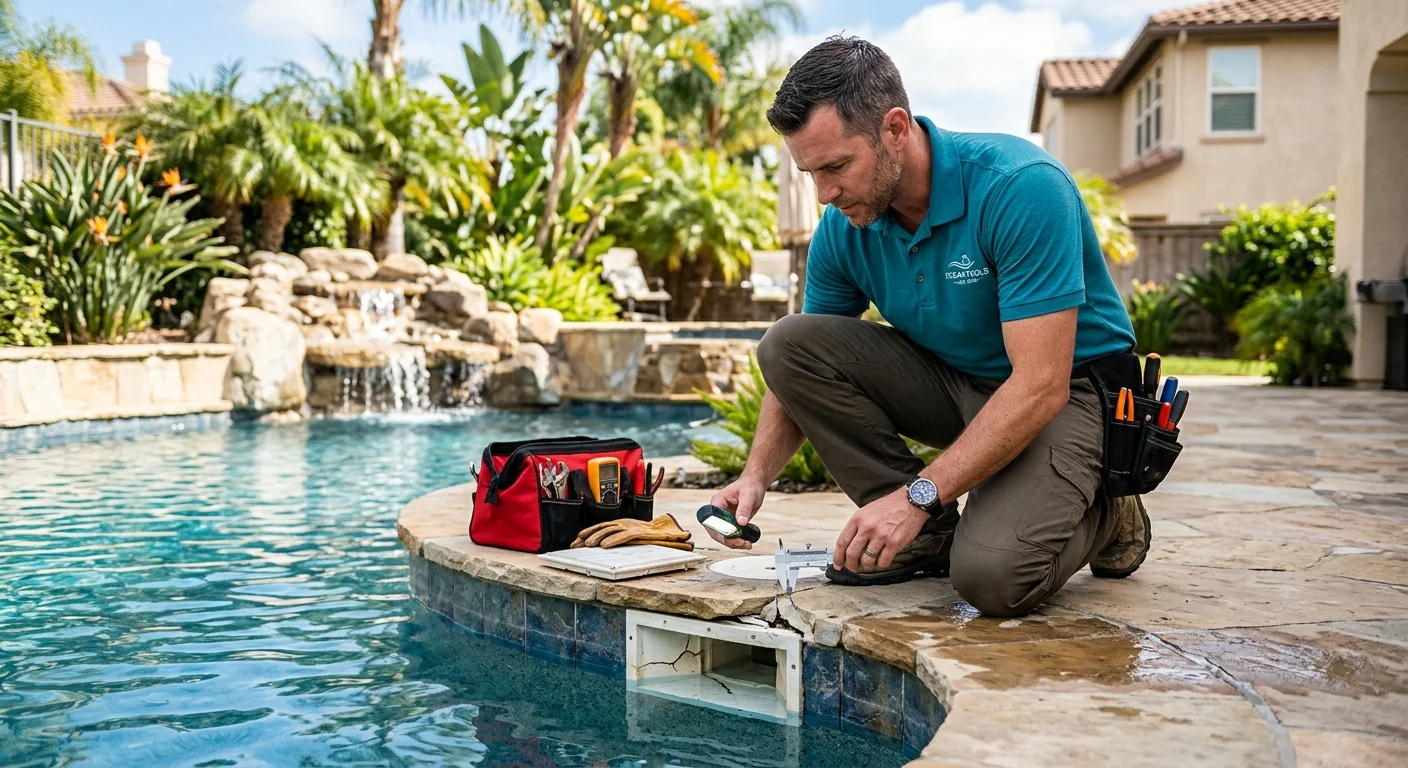
What pool skimmer damage a pro can repair
A pro can often keep the existing skimmer when damage stays near its accessible parts. The lid covers the opening. The basket catches leaves before they enter the suction line. The weir is the moving flap between the pool and skimmer throat.
Each part creates a different symptom. A warped lid may rock or sit poorly. A split basket can let debris continue toward the pump. A stuck weir can restrict surface flow, while a missing weir changes how debris enters the skimmer. These problems don’t automatically call for cutting into the deck.
San Diego’s dry winds can fill a basket quickly. A packed basket after a windy afternoon in Poway may make the skimmer look broken, even though the body remains sound. Fine debris around an Encinitas pool can create a different pattern. The diagnosis begins by clearing the removable parts and observing the flow again.
The connection at the pool wall also deserves attention. A loose fitting, worn seal, or localized opening near the skimmer face may allow a targeted repair when the surrounding body remains stable. The pro needs to identify the exact path before sealing anything.
Our guide to a pool skimmer that isn’t working covers the first troubleshooting clues. Persistent damage needs hands-on pool repair so the pro can inspect the basket well, weir, throat, fittings, and suction path together.
A focused repair makes sense when it addresses the actual failure. Replacing a basket won’t solve a crack behind it, and sealing a visible seam won’t clear a blocked pipe.
When a cracked skimmer body points to replacement
A cracked skimmer body points toward replacement when the damage affects the shell, a plumbing connection, or material embedded behind the pool wall. The body isn’t a removable accessory. It forms the chamber that holds water and feeds the suction line.
Crack location matters. A small opening near an accessible face differs from a split running behind the coping. Movement around a pipe connection also differs from surface damage inside the basket well. A pro should trace the full crack and determine whether the surrounding material still supports a lasting repair.
Replacement becomes more likely when several problems meet in one place. The body may be cracked, the suction connection may be leaking, and the surrounding joint may have shifted. Covering the visible line alone doesn’t address movement or a hidden opening farther back.
Access changes the scope. Some bodies can’t be removed without opening material around the skimmer. That work may involve coping, deck material, plumbing, or the pool wall. The pro should explain what must be opened, which components can remain, and how the repaired area will tie back into the pool.
Searches for cracked pool skimmer repair often lead to patch products. A surface patch can hide the visible mark without proving where water travels. That distinction matters because water can follow a seam, fitting, or nearby joint before appearing somewhere else.
Replacement also shouldn’t be the starting assumption. An intact body with a broken basket, jammed weir, or clogged suction path doesn’t need structural removal. The decision should follow diagnosis, not the most dramatic symptom.
How suction trouble differs from a skimmer leak
Suction trouble affects water movement, while a skimmer leak allows water to escape from the system. They can appear together, but they require different tests.
Weak skimming may begin with a full basket or stuck weir. Valve position can direct less flow toward one skimmer. A blockage can narrow the suction path. Air entering elsewhere on the suction side can also disturb flow. A dirty filter or pump problem can reduce circulation across the pool, making the skimmer seem like the source.
A leak follows a different pattern. Water may escape around the skimmer face, through the body, at a fitting, or along the buried line. Wet soil near the deck can be a clue, but it doesn’t locate the opening by itself. Water can travel before it becomes visible.
The water level can offer useful context. Loss that changes as the level approaches the skimmer opening deserves investigation near that elevation. It still isn’t proof. Evaporation, splashing, other fittings, and underground plumbing remain possible paths.
A pool pro can isolate sections of the system and test them separately. That prevents a flow problem from being labeled as a leak, or a buried leak from being treated as a removable-part failure. For unexplained water loss, pool leak detection and repair provides the right diagnostic scope.
Water service also varies across San Diego County. Homeowners receive water through local retail agencies rather than one countywide utility. The San Diego County Water Authority lists its member agencies, so your provider is the right source for current local rates.
A precise diagnosis protects the repair decision. It also keeps a pump, filter, or valve issue from turning into an unnecessary skimmer replacement.
Repair and replacement compared side by side
Repair preserves the existing body when the problem is accessible and contained. Replacement removes the failed body when its structure or buried connections can’t support a dependable repair.
| Decision point | Focused repair | Skimmer replacement |
|---|---|---|
| Failed component | The problem sits in a lid, basket, weir, seal, or accessible fitting. | The body, throat, or buried connection has failed. |
| Access | The damaged area can be reached without removing the skimmer body. | Reaching the failure requires opening material around the skimmer. |
| Crack pattern | The damage is localized and the surrounding material remains stable. | The crack crosses the body, reaches a fitting, or accompanies movement. |
| Water loss | Testing identifies a contained opening that can be addressed directly. | Testing traces the leak to a failed body or inaccessible joint. |
| Suction symptoms | Flow returns after the obstruction or removable part is corrected. | Flow trouble comes from a damaged connection that requires reconstruction. |
| Surrounding finish | Coping, deck material, and the pool wall can remain in place. | Nearby material must be opened and restored to remove the body. |
The best scope may also combine tasks. A pro might replace a damaged body while preserving an unaffected suction line. Another pool may need a plumbing repair while the original skimmer body stays in place. “Repair” and “replacement” describe the failed component, not every part nearby.
If you’re comparing pool skimmer replacement near me options, ask for a written scope that identifies the diagnosed failure. It should distinguish the body, suction line, pool-wall connection, and surrounding finish. That makes competing recommendations easier to compare.
Contractor rules can depend on the value and nature of the work. Structural or plumbing work should be handled by the appropriate licensed professional. You can confirm a contractor’s license through the California Contractors State License Board.
What a San Diego skimmer visit should cover
A San Diego skimmer visit should separate removable-part damage, circulation trouble, and water loss before anyone recommends demolition. The inspection starts at the pool and continues through the equipment path.
- The pro should inspect the lid, basket, weir, throat, and visible body because each part can produce a different symptom.
- The waterline connection and surrounding joint should be examined because openings there can resemble a body crack.
- The suction path should be tested because a blockage, valve setting, air entry point, filter issue, or pump problem can weaken skimming.
- Leak testing should isolate the body, fittings, and line because visible moisture doesn’t identify the source by itself.
- The proposed scope should state what will be repaired, removed, preserved, and restored.
The setting provides more context. A basket packed after Santa Ana winds presents differently from steady water loss beside a calm pool. Windblown sand near the coast may load the basket with fine debris, while dry leaves can overwhelm an inland pool quickly. Neither scene proves that the body has failed.
The pro should also look beyond the visible crack. Deck movement, failed joints, and pipe connections can change the correct repair. If surrounding material must be opened, the scope should explain how access will be created and what finishes will need restoration.
For pool skimmer leak repair, diagnosis is the valuable first step. Splash Pro Pools matches homeowners with licensed, independent local pool professionals. The matched pro performs the inspection, recommends the scope, and completes the approved work. You contract with and pay that professional directly.
When to call us
Call when water loss persists, suction stays weak after the basket is cleared, or a crack reaches the skimmer body or surrounding pool wall. These problems need a licensed local pool pro who can separate a small repair from buried plumbing or structural work.
Call us at (760) 642-1256 and we’ll connect you with a licensed local pool pro.
Frequently asked questions
Can a pool skimmer be repaired instead of replaced?
Yes. Damage limited to the lid, basket, weir, seal, or another accessible part may allow a focused repair. A cracked body or failed buried connection can require replacement.
Does weak skimmer suction mean the skimmer is broken?
Not necessarily. A full basket, stuck weir, valve position, clogged suction path, dirty filter, air leak, or pump problem can also reduce skimmer flow.
How does a pro confirm a skimmer leak?
The pro isolates the skimmer, checks the waterline connection and body, tests the suction path, and traces water loss before recommending repair or replacement.
Who performs repairs arranged through Splash Pro Pools?
Splash Pro Pools is a referral service. We connect homeowners with licensed, independent local pool professionals who diagnose the problem, explain the scope, and perform the work.
Need professional help in San Diego County?
Splash Pro Pools connects San Diego homeowners with pool pros for the work in this post.