A note on scope: this is resurfacing and replastering work, which sits outside what Splash Pro Pools does. Call (858) 400-6757 and we’ll match you with a vetted local pro who covers it.
La Jolla bluff pools often need resurfacing every 7 to 15 years. Salt air, sun, and hillside movement wear plaster faster than a flat inland lot. Pebble, aggregate, and quartz are the usual high-end finishes. Call (858) 400-6757.
Why coastal La Jolla pools require special resurfacing care
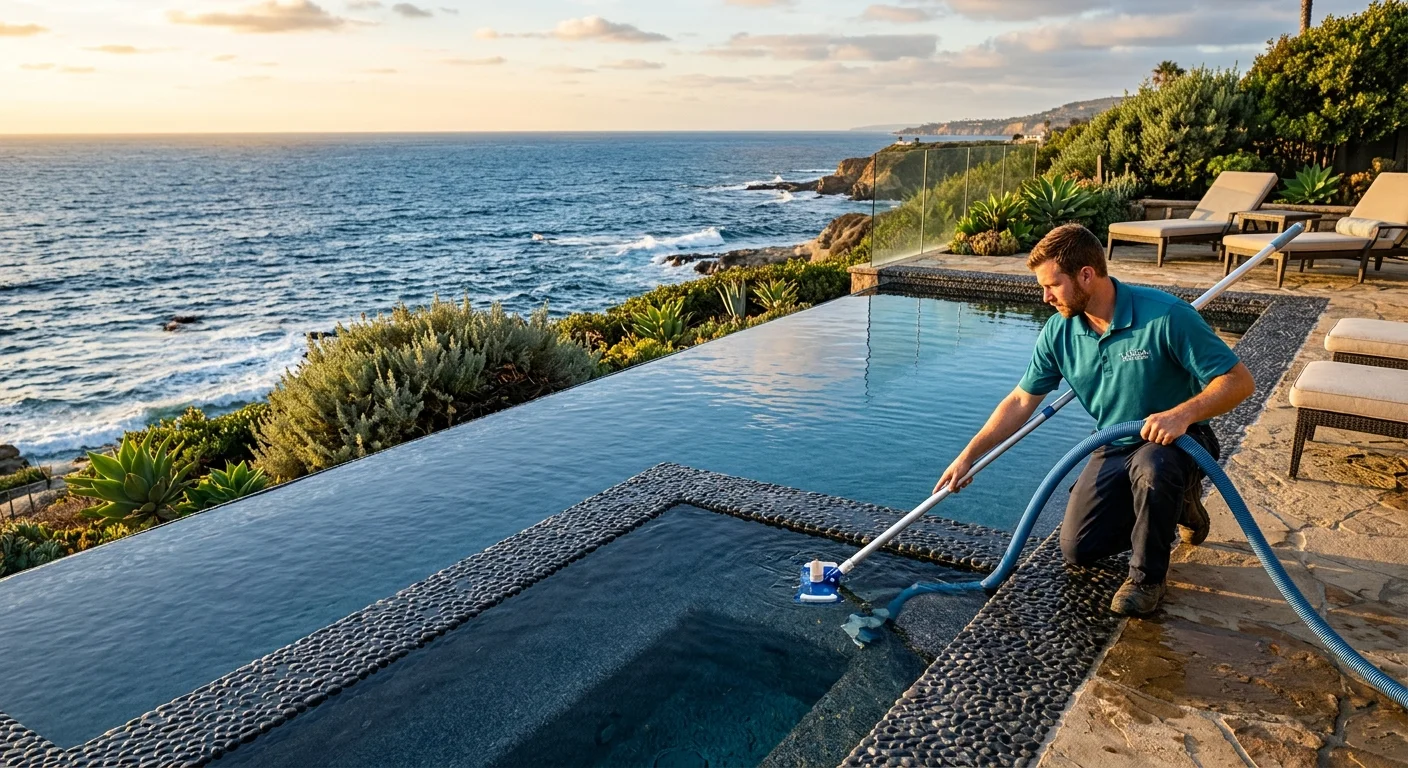
La Jolla isn’t just another San Diego neighborhood; it’s a unique coastal ecosystem. Pools here face environmental pressures that inland pools simply don’t. The most significant factor is the relentless salt air. Microscopic salt particles carried by ocean breezes constantly settle on pool surfaces, accelerating the breakdown of traditional plaster and aggregate finishes. This saline environment can lead to increased etching, efflorescence, and a more rapid deterioration of the surface material.
Bluff-top and hillside properties introduce another layer of complexity: ground movement. While often subtle, this constant, minor shifting can put stress on a pool’s shell, leading to hairline cracks that allow water intrusion and further surface damage. The interaction of moisture from the hillside with the pool structure also needs careful consideration during the resurfacing process to ensure proper adhesion and longevity of the new finish.
Beyond the environmental factors, La Jolla pools are often architectural statements. Homeowners expect a superior finish that not only withstands the elements but also complements the high-end design and natural beauty of their property. This means selecting materials and application techniques that offer both exceptional durability and sophisticated aesthetics. For these reasons, professional pool resurfacing in La Jolla isn’t just about aesthetics; it’s about protecting your investment with specialized care.
Signs of surface failure from salt air and hillside moisture
Understanding when your La Jolla pool needs resurfacing begins with recognizing the telltale signs of surface failure. These issues are often exacerbated by the coastal environment.
Visible cracks and delamination
One of the most obvious indicators is the presence of cracks. Hairline cracks can develop from minor ground movement common on La Jolla’s hillsides. If left untreated, these can widen, allowing water to penetrate the shell and compromise its integrity. Delamination, where the surface material separates from the underlying shell, often appears as hollow spots or areas that chip off in sheets. This is frequently a result of moisture intrusion and poor adhesion, a problem intensified by the humid, salty air.
Etching, staining, and rough textures
Salt air and inconsistent water chemistry can lead to etching. This creates a rough, abrasive texture that’s uncomfortable for swimmers and a breeding ground for algae. Persistent staining, particularly brown or black discoloration, can indicate mineral deposits or algae growth that has penetrated the surface. While regular maintenance helps, severe staining often means the finish itself is compromised. You might also notice a loss of color or a dull appearance, indicating the finish is fading and no longer offering its original luster.
Calcium buildup and plaster pitting
Calcium buildup, or scaling, is common in San Diego’s hard water, but it can worsen on a damaged surface. It appears as white, crusty deposits, especially at the waterline. Plaster pitting, small indentations or holes in the surface, indicates the material is dissolving or eroding. For La Jolla pools, this erosion can be accelerated by the constant saline environment. Addressing these issues early can prevent more extensive damage and a higher “La Jolla pool resurfacing cost” down the line.
Real costs for La Jolla pool resurfacing in 2026
When planning for pool resurfacing in La Jolla, it’s important to understand that several factors influence the final price. While we can’t provide exact figures without a detailed assessment, we can discuss the elements that contribute to the cost.
Key factors influencing cost
The primary drivers of your “La Jolla pool replastering” or resurfacing cost include the size and depth of your pool, the condition of the existing surface, and your chosen finish material. Larger pools naturally require more material and labor. If the existing surface is severely damaged with extensive cracking or delamination, more intensive prep work like chipping out the old material will be necessary, increasing labor hours.
Accessibility is also a major consideration in La Jolla, particularly for bluff-top or hillside properties. Difficult access can mean additional costs for equipment and labor to safely transport materials and remove debris. The need for specialized equipment or additional structural assessment for hillside stability can also add to the overall investment.
Finish material choices
The type of finish you select has the most significant impact on cost. Standard white plaster is generally the most economical, but it typically offers less durability in harsh coastal conditions. Quartz finishes, which combine plaster with colored quartz aggregates, provide increased durability and a wider range of colors at a moderate price point. High-end finishes like “PebbleTec La Jolla” or other exposed aggregate surfaces are often preferred for their exceptional longevity, natural appearance, and resistance to staining and etching. These premium materials naturally come with a higher price tag but offer superior performance and aesthetics over a longer lifespan.
Which high-end finishes match La Jolla architecture
La Jolla homes are renowned for their sophisticated architecture, often blending modern design with natural elements. Your pool’s finish should complement this aesthetic, offering both visual appeal and resilience against the coastal environment.
Pebble and exposed aggregate finishes
For a truly luxurious and durable option, pebble finishes stand out. Brands like PebbleTec and WetEdge offer a stunning array of natural stone colors and textures. These finishes consist of small pebbles embedded in plaster, creating a beautiful, slip-resistant surface that mimics natural riverbeds or ocean floors. Their strength and resistance to chemicals, staining, and salt air make them ideal for La Jolla pools. Darker pebble finishes, such as those with black, gray, or deep blue tones, are particularly popular as they enhance the reflection of the sky and ocean, creating a dramatic, mirror-like effect that perfectly suits a bluff-top setting.
Quartz and specialty plasters
Quartz finishes provide a dazzling shimmer and improved durability compared to traditional plaster. By incorporating colored quartz aggregates into the plaster, they offer a vibrant, long-lasting surface that resists etching and staining better than standard white plaster. You can choose from a broad spectrum of colors to match your home’s exterior or landscaping. For those seeking unique visual depth, specialty plasters often include iridescent glass beads or other aggregates that create a subtle sparkle, particularly stunning under the bright San Diego sun.
Custom tile and mosaic accents
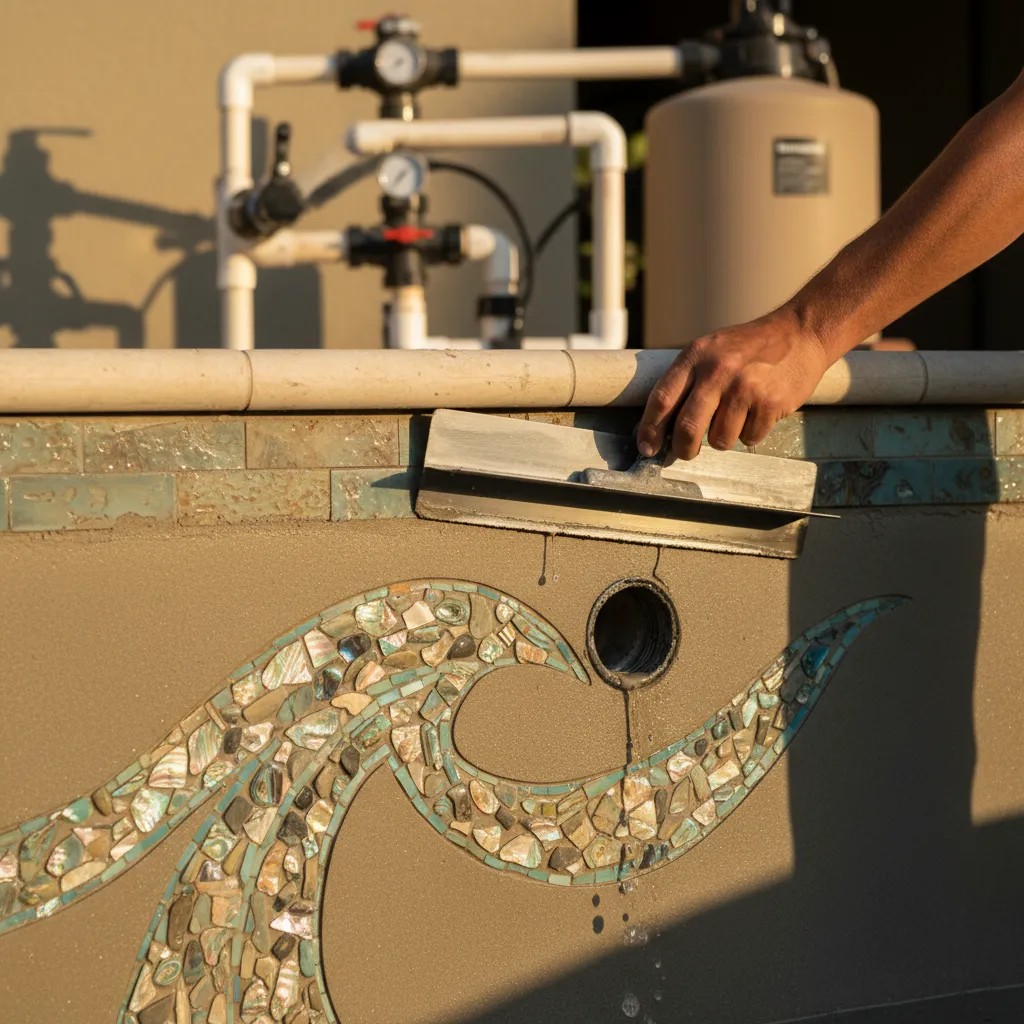
Beyond the main surface, custom tile work and mosaics can elevate your pool to an art piece. From intricate waterline tiles that define the pool’s edge to custom mosaic inlays on steps or the pool floor, these details allow for personalization. Many La Jolla homeowners opt for iridescent glass tiles, natural stone tiles, or hand-painted ceramics to create bespoke features that reflect their personal style and the distinctive local architecture. When considering pool resurfacing La Jolla CA, incorporating these elements can transform your pool into a truly unique outdoor oasis.
The process: from draining to the first swim
Pool resurfacing is a multi-step process that demands precision and expertise. Understanding each stage can help you appreciate the care and craftsmanship involved in restoring your La Jolla pool.
Draining and surface preparation
Once empty, the resurfacing crew inspects the shell, chips loose material, and repairs cracks before the bond coat. Splash does not do that work.
Applying the new finish
After the bond coat, they trowel plaster, quartz, or pebble by hand across steps and coves. Even coverage is what makes the finish last.
Curing, filling, and chemical startup
Once the new finish is on, it has to cure, then refill. Fresh plaster dumps minerals, so startup chemistry matters. The matched resurfacing crew runs that, not Splash. A pool filter cleaning in La Jolla after refill helps the water stay clear.
When to call us
If your La Jolla pool shows any signs of surface wear, from minor etching to significant cracks, it’s time to consider professional resurfacing. Addressing these issues promptly can prevent more extensive and costly repairs down the line. A pool resurfacing specialist can assess your pool’s condition, recommend the best high-end finishes for your coastal property, and ensure the job is done right, protecting your investment and enhancing your outdoor living space. Call us at (858) 400-6757 and we’ll connect you with a vetted local pool pro.
Frequently asked questions
How often do La Jolla pools need resurfacing?
Given the unique coastal environment of La Jolla, pools often need resurfacing every 7-15 years. Salt air, intense sun, and ground movement can accelerate wear compared to inland areas, necessitating more frequent attention.
What are the best high-end finishes for La Jolla pools?
Pebble finishes like PebbleTec or WetEdge, exposed aggregate, and specialty quartz plasters are popular choices. They offer superior durability and a luxurious aesthetic that complements La Jolla's architecture and natural surroundings.
What causes damage to La Jolla pool surfaces?
Primary causes include constant exposure to salt-laden air, ground movement from hillside properties, fluctuating water chemistry, and the intense UV radiation of the San Diego sun. These factors can lead to cracking, delamination, etching, and staining.
Is pool resurfacing messy?
Resurfacing involves draining the pool, chipping out old material, and applying new finishes, which can create dust and debris. Professional crews from Splash Pro Pools take extensive measures to contain the mess and protect your property during the process, ensuring a clean work site.
Does pool resurfacing affect my pool equipment?
While resurfacing primarily focuses on the pool's interior, it's a good time to inspect other components. Sometimes, slight adjustments to skimmers or main drains are made. It's also an opportune moment to consider inspecting or updating your [pool filter](/services/pool-filter/) or other equipment if needed, ensuring optimal performance with your new surface.
Need this done in San Diego County?
For repair and renovation work like this, we hand you to our trusted partner, Del Rancho Pools.