A note on scope: this is resurfacing and replastering work, which sits outside what Splash Pro Pools does. Call (858) 400-6757 and we’ll match you with a vetted local pro who covers it.
Pool mastic is the flexible seal in the expansion joint between coping and deck. It typically lasts 5 to 10 years here, less if it is cracked or gapped. Failed mastic lets water under the deck. Cost is by linear foot after an inspection. Call (858) 400-6757.
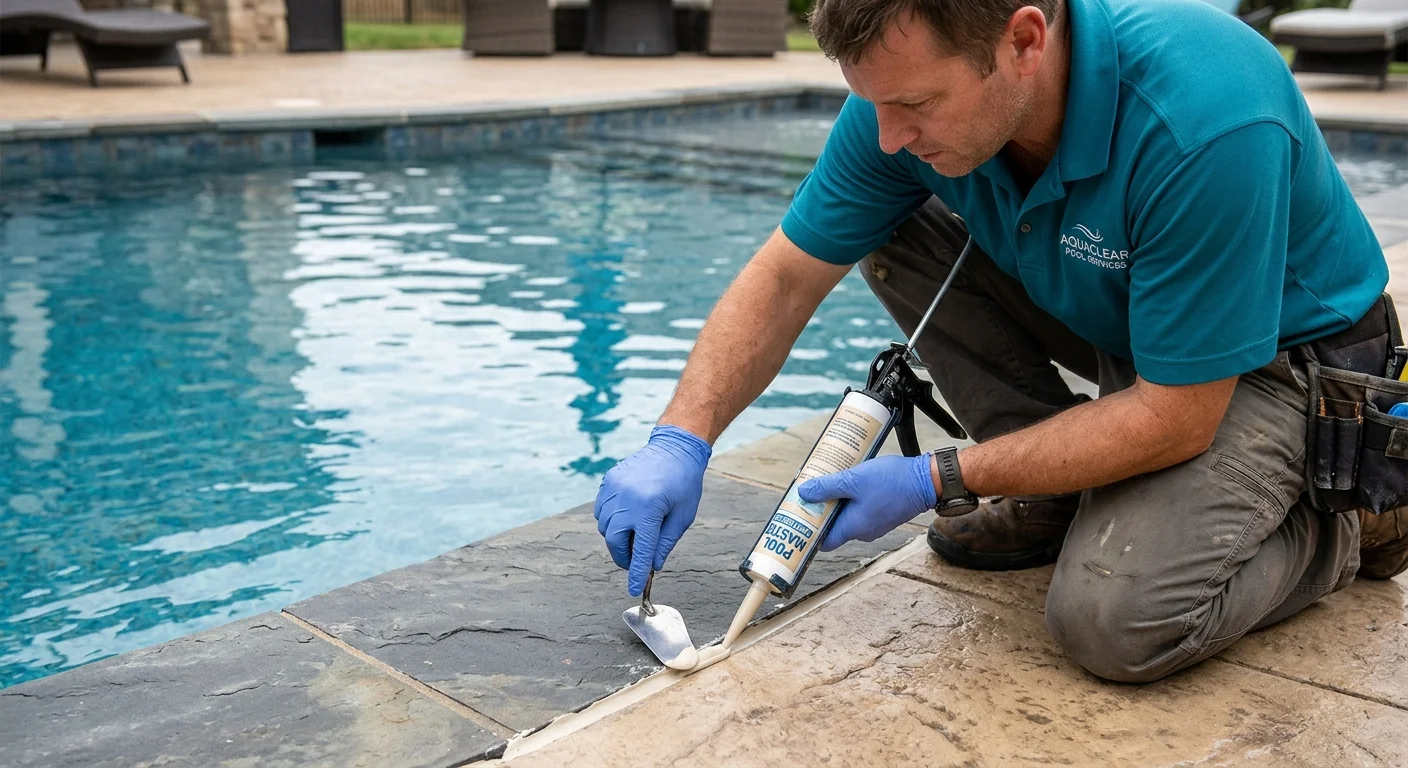
Pros in our network specialize in comprehensive pool repair services, including expert pool mastic replacement. Here’s what mastic is, why it’s so important, and when you should consider replacing it to keep your San Diego backyard oasis protected.
What is pool mastic (and why is it called an expansion joint)?
Imagine your pool deck and the pool itself as two separate, very large structures. They’re built from different materials and they expand and contract at different rates with temperature changes. Without a buffer between them, they’d push against each other, causing stress and cracks. This is where the “expansion joint” comes in. It’s simply the intentional gap left between your pool’s coping (the cap around the edge of the pool) and your pool deck.
Now, that gap can’t be left open, or water, dirt, and critters would get right in. That’s why it gets filled with “mastic.” Think of pool mastic like a flexible, waterproof gasket or caulk. It’s a specialized sealant designed to stretch and compress as the pool and deck move. Its primary job is to create a watertight seal, stopping water from seeping underneath your deck and pool structure. This material is often a high-grade silicone, polyurethane, or a proprietary blend like Deck-O-Seal. It sounds technical, but it’s really just a protective seal that keeps water where it belongs: in your pool.
Why mastic fails in the San Diego climate
Even the best pool mastic has a lifespan, and San Diego’s beautiful climate can sometimes accelerate its demise. Here’s why your mastic might be failing:
- UV exposure: Our abundant sunshine, while great for swimming, is tough on sealants. Constant exposure to ultraviolet (UV) rays breaks down the mastic over time, causing it to become brittle, crack, and lose its flexibility. It’s like leaving a rubber band out in the sun for too long.
- Temperature fluctuations: San Diego isn’t known for extreme temperatures, but even our moderate swings from cool nights to warm days cause the pool and deck materials to expand and contract. This constant movement puts stress on the mastic.
- Water exposure: Of course, mastic is constantly exposed to pool water, rain, and even chemicals. Over time, this can degrade the material, especially if pool chemistry isn’t perfectly balanced.
- Ground movement: While rare, minor ground shifts or settling can also put pressure on the expansion joint, causing the mastic to tear or pull away.
- Age and wear: Like everything else, mastic simply wears out. Most pool mastic is designed to last 5-10 years. Beyond that, it starts losing its effectiveness.
When mastic fails, it creates gaps where water can easily penetrate. This water can erode the soil beneath your deck, leading to sinking or cracking deck sections. Even worse, it can get behind your pool shell, potentially causing structural issues or costly problems like cracks in your pool’s plaster, which would necessitate a pool resurfacing project. That’s why keeping an eye on your mastic is critical preventative maintenance.
Signs your pool mastic needs to be replaced now
You don’t need to be a pool expert to spot the signs of failing mastic. Regular visual inspections can save you a lot of headaches and money. Here’s what to look for:
- Cracks: This is the most common and obvious sign. Hairline cracks can quickly turn into wider fissures, creating direct pathways for water.
- Gaps: If the mastic has pulled away from either the pool coping or the deck, you’ll see visible gaps. These are essentially open invitations for water intrusion.
- Hardening or brittleness: Healthy mastic should be somewhat pliable. If it feels hard, rigid, or crumbly to the touch, it’s lost its ability to flex with the pool and deck movement.
- Pitting or erosion: The surface of the mastic might look pitted, eroded, or simply deteriorated. This indicates it’s losing its structural integrity.
- Stains or discoloration: While not always a direct sign of failure, noticeable discoloration or staining around the mastic can sometimes point to water seeping in and carrying minerals or dirt with it.
- Pooling water on the deck: If you notice water lingering on your deck near the pool’s edge long after rain or splashing, it could be escaping through compromised mastic.
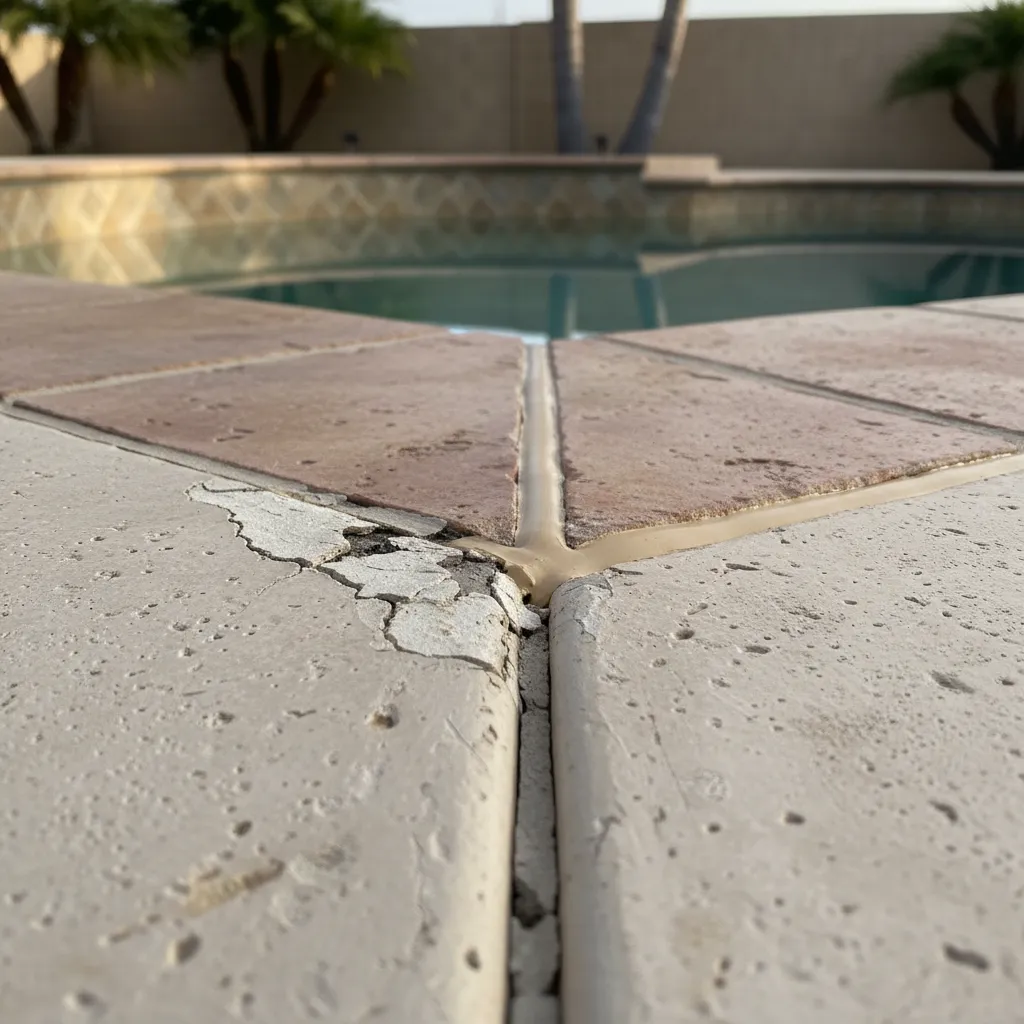
Ignoring these signs means you’re leaving your pool deck and even your pool shell vulnerable to water damage. The cost of replacing mastic is minimal compared to repairing a cracked deck or a compromised pool structure. Early detection and replacement are your best defense.
The mastic replacement process from start to finish
Pros in our network follow a meticulous process to ensure your new pool mastic provides lasting protection and a clean finish. They don’t cut corners, because they know the long-term impact of a job well done.
1. Assessment and preparation
First, pool technicians thoroughly inspect the existing mastic and the condition of the expansion joint. They look for underlying issues that might have contributed to the failure. Then, they carefully remove all the old, failing mastic. This is a crucial step; any remnants can compromise the adhesion of the new material. The joint gets cleaned thoroughly, removing debris, dirt, and old caulk, to leave a pristine surface for the new mastic. If necessary, a backer rod is used to ensure proper depth and adhesion of the new sealant.
2. Application of new mastic
Once the joint is clean and prepped, the new, high-quality pool mastic gets expertly applied. Pros use professional-grade materials specifically designed for pool environments, capable of withstanding San Diego’s climate, UV rays, and pool chemicals. Pool technicians ensure a consistent, smooth application, tooling the mastic to create a clean, aesthetic finish and a watertight seal.
3. Curing and cleanup
After application, the mastic needs time to cure properly. The pro will advise you on the necessary drying time, which can vary depending on the product and weather conditions. Finally, the work area gets cleaned up thoroughly, leaving your pool deck tidy and your new mastic looking sharp. The goal is to make sure your pool area is protected and looks great, giving you peace of mind.
The cost of replacing pool mastic in San Diego
When considering the cost of pool mastic replacement, it’s important to view it as a wise investment in preventative maintenance rather than an expense. The price in San Diego can vary based on several factors:
- Linear footage: The total length of the expansion joint around your pool is the primary factor. Larger pools with more perimeter will naturally cost more.
- Condition of existing mastic: If the old mastic is particularly stubborn or difficult to remove, it might require more labor, slightly impacting the cost.
- Joint preparation: If the expansion joint itself needs significant cleaning or repair before new mastic can be applied, this could also factor into the overall price.
- Type of mastic: While pros always use high-quality, durable materials, there can be slight variations in cost depending on the specific sealant chosen for optimal performance in your pool’s conditions.
A clear, written estimate follows after the pro inspects your pool, detailing the scope of work and the exact cost. On average, you can expect pool mastic replacement to cost a fraction of what major pool repair or a full pool deck resurfacing would entail if water damage were allowed to progress. It’s a small price to pay for protecting your significant investment.
When to call us
If you’ve noticed any of the signs of failing pool mastic, cracks, gaps, or brittleness, it’s time to take action. Ignoring these issues can lead to much larger, more expensive problems down the road for your pool deck and shell. Don’t wait for water damage to become severe. Call us at (858) 400-6757 and we’ll connect you with a vetted local pool pro.
Frequently asked questions
What is pool mastic?
Pool mastic is a flexible, waterproof sealant applied to the expansion joint between your pool's coping and your deck. It acts as a protective barrier, preventing water from seeping into the ground beneath your pool and deck.
How often should pool mastic be replaced in San Diego?
Typically, pool mastic lasts 5-10 years. However, San Diego's sunny climate and temperature fluctuations can accelerate its degradation, making annual inspections important. You'll likely need replacement sooner if you see cracks or gaps.
Why is pool mastic replacement important?
Replacing failing pool mastic is crucial preventative maintenance. It prevents water from undermining your pool deck, eroding the soil, and potentially causing structural damage to your pool shell. It's much cheaper to replace mastic than to deal with major structural repairs.
Can I replace pool mastic myself?
While it might seem like a DIY project, proper pool mastic replacement requires specific materials, tools, and expertise for correct preparation and application. Incorrectly installed mastic can lead to bigger problems. It's best to call a professional pool service.
What does pool mastic replacement cost?
The cost of pool mastic replacement in San Diego varies depending on the linear footage, accessibility, and the condition of the existing mastic and joint. A clear, upfront estimate follows a thorough inspection.
Need this done in San Diego County?
For repair and renovation work like this, we hand you to our trusted partner, Del Rancho Pools.