Heads up before you read: Splash Pro Pools keeps pools clean; pool repair is a different trade. Call (858) 400-6757 and we’ll match you with a local pro who handles it.
A pre-purchase pool inspection in San Diego typically costs $200 to $400 and takes 1 to 2 hours. It should cover pump, filter, heater, surface, tile, coping, deck, and leak or pressure tests. A general home inspector is not enough. Call (858) 400-6757.
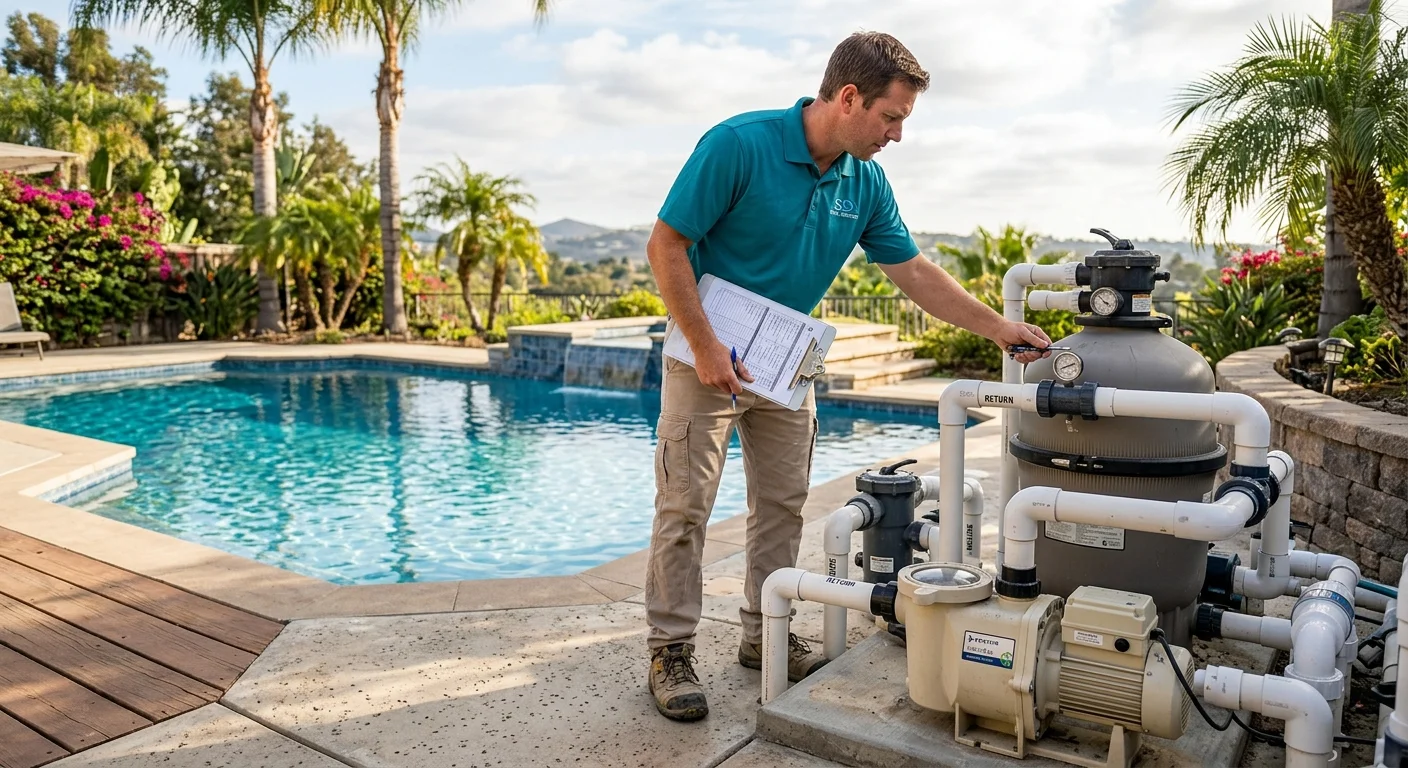
What a real pool inspection includes beyond a quick look
A proper pool inspection goes far beyond a quick visual check. It’s a deep dive into every critical component, designed to uncover both obvious flaws and hidden issues. A real inspection doesn’t just look at the water; it scrutinizes the entire system that keeps that water clean and circulating. Many pools in San Diego County are 20 years old or more, meaning their original equipment and surfaces may be nearing the end of their lifespan. A thorough inspection helps you budget for necessary repairs or replacements.
The inspection starts with the foundation: the pool’s structure, checking for cracks in the shell, evidence of shifting, and proper drainage around the pool perimeter. Next comes the interior surface, plaster, pebble, or tile, checking for delamination, staining, etching, or excessive wear. These seemingly small issues can be indicators of bigger problems or lead to expensive resurfacing down the road. Main drain covers get assessed for safety compliance too, especially important in older pools that might not meet current standards. Barrier compliance comes up constantly at sale time too; our guide to the California pool fence law covers what buyers’ inspectors look for. Every detail contributes to a complete picture of the pool’s health.
Equipment: pump, filter, heater, automation, age and condition
The equipment pad is the heart of any pool system. A detailed pool inspection in San Diego dedicates significant time here. The pump, the workhorse that circulates your pool water, gets checked meticulously. This includes listening for unusual noises, checking for leaks around seals, and assessing its overall operational efficiency. A failing pump can mean high energy bills or complete system shutdown.
Next is the filter, which keeps your water sparkling clean. The inspector determines the type of filter (cartridge, D.E., or sand), its condition, and how effectively it’s removing debris. A dirty or damaged filter can lead to poor water quality and put stress on other equipment. If the home has a pool heater, its operation, ignition system, heat exchanger, and venting get inspected. Heaters are complex and often expensive to repair or replace, so a thorough check is crucial.
Automation systems, valves, and plumbing lines visible above ground also get examined, looking for corrosion, cracks, or improper installations. The age of the equipment is a major factor. If a pump or heater is 10-15 years old, even if it’s currently working, it might be nearing the end of its functional life. Knowing this helps you anticipate future costs and negotiate accordingly. The findings can point to potential pool repair costs in San Diego.
Surface, tile, coping, and deck: what failures cost to fix
The visible elements of a pool are often the first thing home buyers notice, and they can also be among the most expensive to repair. The pool’s interior surface, whether it’s plaster, pebble, or tile, is crucial for both aesthetics and water retention. The inspection looks for cracks, etching, delamination, and severe staining that might indicate underlying issues or simply a need for costly pool resurfacing. Many San Diego pools have older plaster that shows significant wear, making this a critical area of inspection.
The tiles and coping around the pool’s edge are inspected for loose pieces, cracks, missing grout, or efflorescence (mineral deposits). Damaged coping can allow water to seep behind the pool shell, potentially causing structural damage over time. The surrounding deck is just as important. It gets checked for cracks, heaving, settling, or pooling water, which could indicate drainage problems or even active leaks impacting the deck’s integrity. Repairing or replacing a significant portion of pool tile, coping, or deck can run into the thousands, making these observations vital for your budgeting.
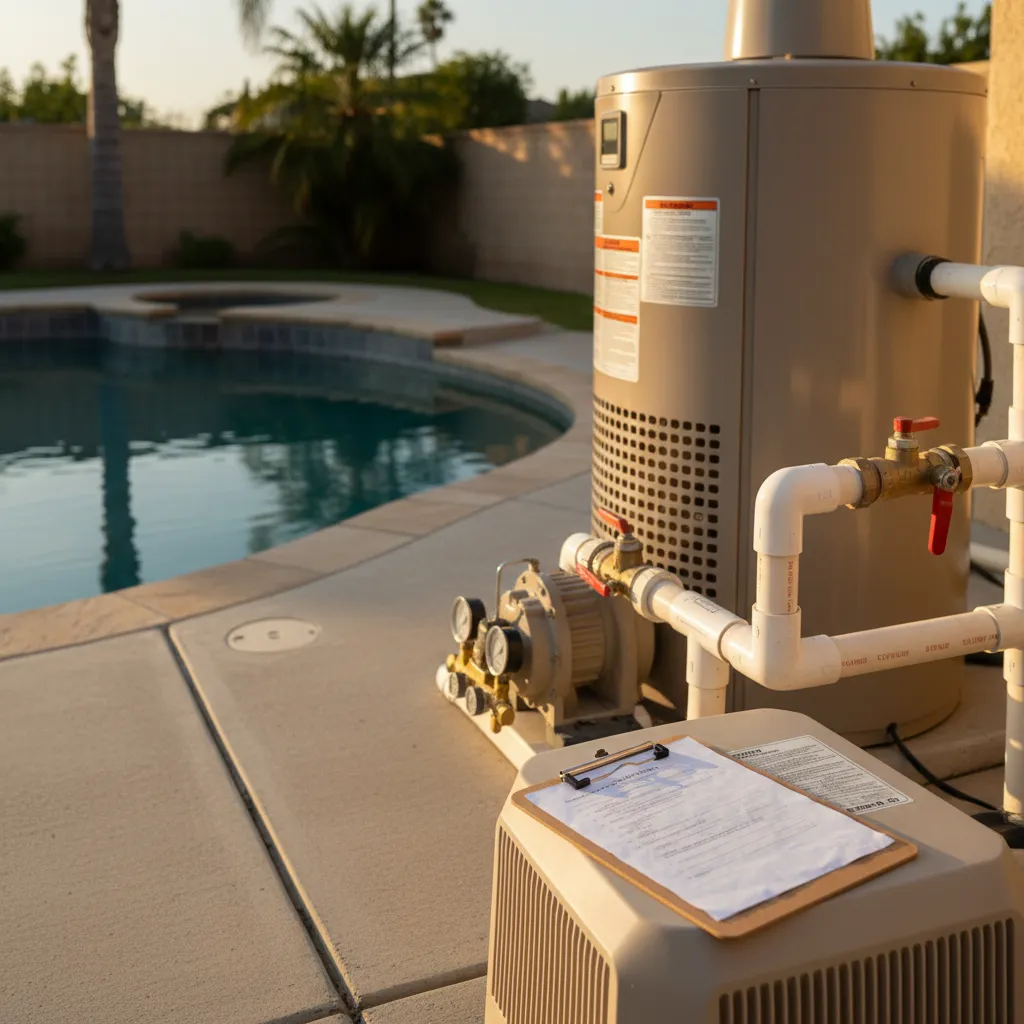
Leak and pressure testing as part of the inspection
One of the most insidious and costly problems a pool can have is a leak. Unlike a visible crack, a leak can be hidden, slowly draining water and causing damage without immediate detection. That’s why leak detection is a non-negotiable part of a comprehensive pool inspection in San Diego. Specialized tests identify whether the pool is losing water beyond normal evaporation, often involving checking the water level over a period, dye testing, and listening for tell-tale sounds.
Beyond the pool shell itself, pressure testing gets done on the plumbing lines. This involves isolating sections of the pipes and pressurizing them to see if they hold steady. A drop in pressure indicates a leak somewhere in the underground plumbing, which can be very expensive and disruptive to repair, often requiring digging up the deck or surrounding landscape. Catching these issues early is key; a small leak can quickly become a big problem, wasting water and potentially causing structural damage to your property. Knowing the integrity of the plumbing system gives you invaluable peace of mind.
Reading the report: must-fix vs. budget-for-later
After a thorough inspection, you’ll receive a detailed report outlining the findings. This isn’t just a list of problems; it’s a guide to understanding the pool’s condition. Issues get categorized to help you prioritize. “Must-fix” items are those that pose immediate safety hazards, risk further major damage, or prevent the pool from operating at all. This could include a faulty main drain cover, an electrical hazard, or a significant leak that’s actively damaging the property. These are the items you’ll want to address before closing, either by negotiating repairs with the seller or factoring their cost into your offer.
Then there are “budget-for-later” items. These are components that are aging, showing wear, or operating at diminished capacity but aren’t immediate emergencies. For example, an older pump that’s still working but inefficient, or plaster that’s stained but not delaminating. These items indicate future expenses you’ll need to plan for, allowing you to create a realistic budget for ongoing pool ownership. The goal is to present the information clearly, so you understand the implications of each finding and can make an informed decision about your home purchase. The inspector is also happy to walk you through the report in plain terms.
Why a general home inspector usually isn’t enough for a pool
Many home buyers rely solely on a general home inspector, assuming they’ll cover all aspects of the property, including the pool. However, this is a common misconception that can lead to significant oversights and costly surprises down the road. General home inspectors are trained to evaluate a wide range of household systems, from roofs to foundations, but they typically lack the specialized expertise, equipment, and insurance to perform a truly comprehensive pool inspection.
Their pool check often involves a basic visual assessment: is the water clear, does the pump turn on, are there obvious cracks? They typically won’t perform leak detection, pressure test plumbing lines, thoroughly assess internal pump or filter components, or delve into the specifics of pool surface integrity. Missing these critical details means potential problems, like a slow leak, an aging heater, or compromised plaster, go undetected until after you’ve closed on the home. By then, fixing these issues comes directly out of your pocket. For true peace of mind and an accurate understanding of your potential pool investment, a dedicated pool inspection in San Diego by a qualified pool professional is essential.
When to call us
When you’re buying a home with a pool in San Diego County, a professional pool inspection is one of the smartest investments you can make. It protects you from unexpected expenses and gives you a clear understanding of what you’re buying. Don’t leave the condition of your future pool to chance. Call us at (858) 400-6757 to schedule your pre-purchase pool inspection on your timeline, and let us help you make an informed decision.
Frequently asked questions
How much does a pool inspection cost in San Diego?
The cost of a pool inspection in San Diego typically ranges from $200 to $400, depending on the complexity of the pool system and the scope of the inspection. It's a small investment that can save you thousands in unexpected repairs.
What does a pre-purchase pool inspection cover?
A thorough pre-purchase pool inspection covers all major components: pump, filter, heater, automation, surface, tile, coping, deck, and includes leak and pressure testing. It identifies current problems and potential future issues.
Can a general home inspector check the pool?
While a general home inspector may give the pool a cursory look, they often lack the specialized knowledge and equipment to perform a detailed pool inspection. Many critical issues, like subtle leaks or internal equipment wear, can be missed.
How long does a pool inspection take?
A comprehensive pool inspection usually takes 1-2 hours, depending on the size and complexity of the pool and its associated equipment. The inspector will then prepare a detailed report outlining their findings.
What should I do if the pool inspection finds problems?
If the inspection reveals significant issues, you have a few options. You can negotiate with the seller for repairs, request a credit at closing, or factor the repair costs into your home purchase decision. A clear report helps you make informed choices.
Need this done in San Diego County?
For repair and renovation work like this, we hand you to our trusted partner, Del Rancho Pools.