For pool demolition Rancho Santa Fe homeowners need a site-specific proposal, not a countywide price. Removal method, shell size, machine access, drainage, backfill, and disposal determine the real cost. A long private drive or pool tucked behind mature landscaping can change the plan before demolition begins.
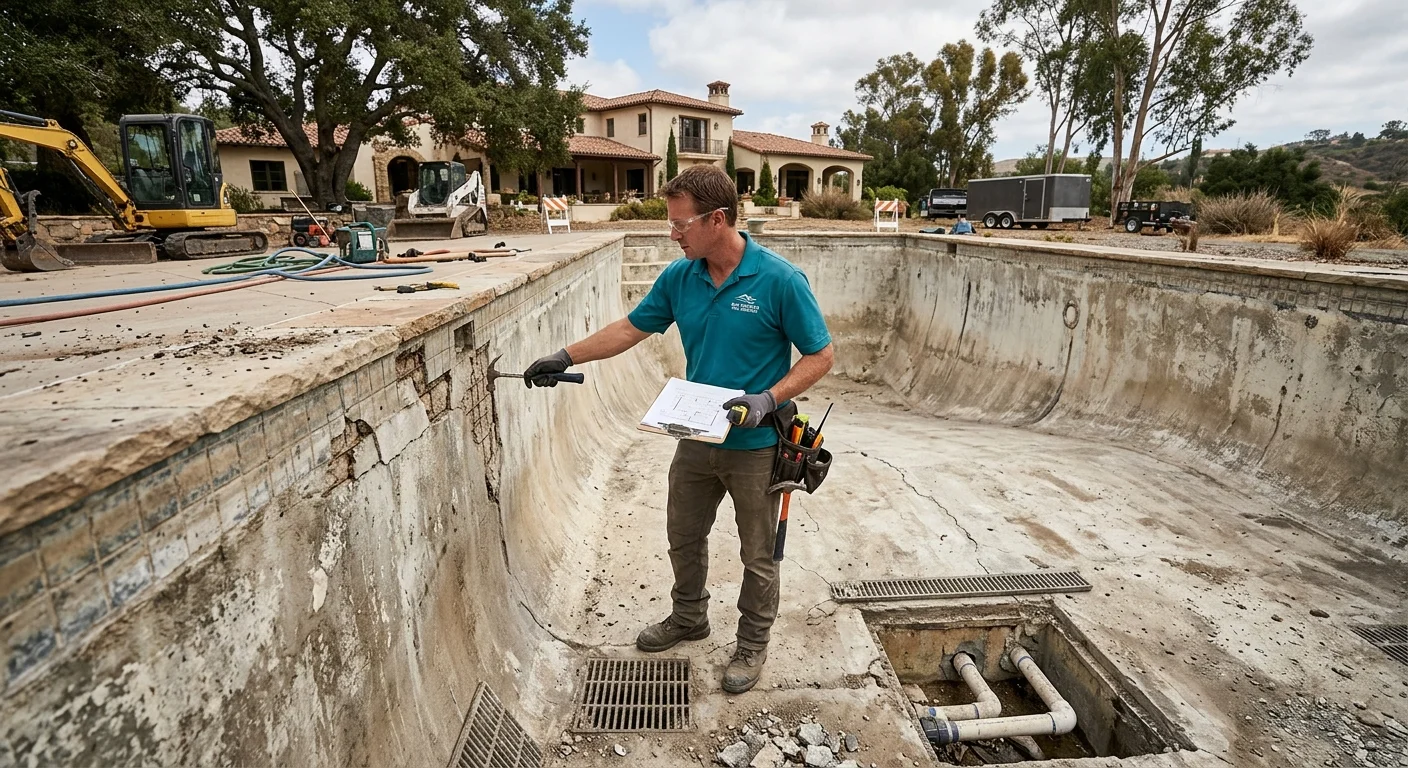
What full and partial pool removal change
Partial and full removal leave very different conditions below the finished yard. A partial removal breaks or removes selected parts of the shell, then places fill into the remaining structure. Full removal takes out the shell and creates a larger excavation to backfill.
That difference changes the amount of breaking, loading, hauling, fill, and machine work. Removing less shell can reduce demolition and export volume. It can also shift more attention toward drainage openings, fill placement, and documentation of what remains underground. Full removal creates more debris and usually needs more imported material because the entire shell no longer occupies the hole.
Neither name tells you everything. One contractor may use “partial removal” for a different scope than another. The written proposal should explain exactly which walls, floor sections, plumbing, and equipment will stay or leave.
| Decision point | Partial removal | Full removal |
|---|---|---|
| Shell work | Selected portions are broken or removed, while other sections remain below the fill. | The shell is removed rather than buried beneath the finished area. |
| Debris and hauling | Less shell material may leave the property, depending on the approved plan. | More concrete, reinforcing material, and related debris must be loaded and hauled. |
| Backfill | Fill goes inside and above the remaining structure. | Fill replaces the volume left by the removed shell. |
| Site records | The proposal should identify every buried component and the documentation provided. | The proposal should document removal, fill placement, and any required inspections. |
| Future yard plans | Future construction needs careful review because part of the pool remains underground. | Future use still depends on soil conditions and approval from the governing authority. |
Removal isn’t the only path for a tired pool. Compare it with a Rancho Santa Fe pool remodel, structural pool repair, or professional pool resurfacing before choosing permanent demolition. HomeGuide’s June 2024 national guide places pool remodels at $5,000-$30,000 and resurfacing at $2,000-$15,000. Those figures aren’t demolition prices, but they help frame the repair-versus-removal decision.
How access, shell material, and backfill shape cost
Access controls how efficiently material can move between the pool and the street. A machine that can reach the deck does different work than one stopped behind a narrow gate, retaining wall, guesthouse, or planted slope. Restricted access can mean smaller equipment, more handling, and more trips across the property.
Shell material shapes the breaking and loading plan. The contractor needs to inspect the pool rather than price it from surface dimensions alone. A custom shell with raised bond beams, an attached spa, deep sections, or surrounding concrete creates a different debris stream than a simple rectangular pool. Deck removal should be listed separately so there’s no confusion about where the demolition boundary ends.
Backfill is another major cost mechanism. The proposal should name the material, where it comes from, how it will be placed, and how the finished elevation will be established. More pool volume means more empty space after the shell leaves. Full removal therefore redirects part of the budget from buried concrete toward excavation, imported fill, placement, and soil work.
Haul-off can move a proposal in either direction. The volume of broken shell matters, but so do loading access and the receiving facility’s current terms. Disposal facilities set their own acceptance rules and charges. The contractor should identify the intended destination and confirm current requirements before work begins.
Watch for allowances that hide quantities. “Backfill as needed” doesn’t explain what is included. A clearer proposal states how changing site conditions will be measured and approved. That gives you a useful way to compare bids without pretending every property should receive the same price.
Why Rancho Santa Fe estate access changes the job
An estate property can turn a straightforward demolition into a careful logistics project. The pool may sit behind the main house, beyond a gated drive, or beside established trees and hedges. The shortest route from shell to truck may cross the part of the property you most want protected.
Start with a drawn access route. It should show where machines enter, where debris is staged, and where haul trucks can load. Gate width, turns, overhead branches, walls, irrigation, and changes in grade all affect that route. The contractor should also separate removable obstacles from features that must stay untouched.
Long driveways deserve their own discussion. Repeated machine and truck travel can affect surfaces and edges differently than normal passenger traffic. A proposal should state what equipment will cross the drive, where protective measures begin and end, and who handles any temporary access work. Vague language makes it difficult to compare responsibility between bidders.
Mature landscaping can also change the sequence. A contractor may need to keep excavation, staging, and fill placement within a narrow working corridor. That can reduce the amount moved in each pass. It may also separate the job into demolition, export, fill delivery, and finish grading stages.
A larger custom pool magnifies every access choice. More shell creates more material to break and remove. More pool volume also creates more space to fill. Attached spas, water features, equipment pads, decks, and buried lines should appear as separate scope items rather than disappear inside one demolition line.
The strongest proposal connects those property details to the work. It doesn’t merely call access “difficult.” It explains which machine fits, where material moves, and what changes if the planned route can’t be used.
Where permits, drainage, and disposal enter the plan
Permitting, water discharge, and disposal should be resolved before physical demolition starts. The governing building and stormwater authorities decide which approvals apply to the property. Ask the contractor to identify those authorities in writing and state who will secure any required permit or inspection.
Don’t copy City of San Diego discharge rules onto a Rancho Santa Fe address. City rules apply only inside City of San Diego limits. The correct authority for the property should confirm where pool water may go, what preparation is required, and whether advance approval is needed.
San Diego County doesn’t have one retail water agency for every address. The San Diego County Water Authority lists 22 retail member agencies serving the region. Your water bill can help identify the agency connected to the property, but drainage and stormwater questions may belong to a different authority. The contractor should confirm the correct contacts rather than relying on a rule from another city.
Draining also needs a method, not just a destination. The proposal should address pool water, remaining sediment, filter waste, and any water generated during demolition. Saltwater, algae, suspended debris, and treatment chemicals can affect which discharge path an authority accepts. The approved route should be settled before a pump hose reaches the driveway.
Disposal begins with separating what leaves the site. Broken shell, reinforcing material, deck material, equipment, pipes, and mixed soil may not share the same destination. The receiving facility sets current acceptance terms and charges. Ask for the facility name and how rejected or contaminated loads would be handled.
License verification belongs here too. California’s C-53 classification covers swimming pool construction under 16 CCR §832.53, but the bidder should identify the classification covering the complete removal scope. Check the license number and status through the California Contractors State License Board before signing.
How to compare demolition proposals
Comparable proposals describe the same finished result. A low total can hide retained decking, limited haul-off, unspecified fill, or finish grading that stops short of the homeowner’s plan. Put every bid beside one written scope before comparing price.
The removal method should be unmistakable. Look for the parts of the shell being removed, the parts remaining, and the treatment of the spa, deck, coping, plumbing, electrical components, and equipment pad. The proposed yard elevation and final surface should also be named.
Access deserves equal detail. The contractor should identify machine size, entry path, staging area, and truck loading location. If a wall, gate, fence, or planted area must be altered, the proposal should explain removal and restoration. That keeps an access assumption from becoming a surprise change later.
Backfill language should connect material to placement. Ask the bidder to describe the fill source, placement process, and any testing, reports, or inspections required by the governing authority. If actual soil conditions change the plan, the contract should explain how the added work gets documented and priced.
Drainage and disposal shouldn’t sit under “miscellaneous.” The proposal should identify the planned discharge method, debris destination, included haul volume, and responsibility for facility charges. It should also explain what happens when the receiving facility rejects a load or the site produces more material than expected.
Finally, compare exclusions as carefully as inclusions. Landscaping restoration, irrigation work, deck removal, utility changes, finish grading, and the final yard surface can sit outside a demolition contract. Clear exclusions aren’t automatically a problem. Hidden ones are.
Splash Pro Pools is a referral service. We connect homeowners with licensed, independent local pool professionals, while the homeowner contracts with and pays the selected professional directly. That keeps the contractor’s scope, price, permit duties, and work responsibility visible from the start.
When to call us
Pool removal calls for professional site review when the shell, buried utilities, access route, drainage plan, or backfill scope isn’t clear. We can match you with an independent local professional who can inspect the property and prepare a site-specific proposal. Call us at (760) 642-1256 and we’ll connect you with a licensed local pool pro.
Frequently asked questions
How much does pool demolition cost in Rancho Santa Fe?
Pool demolition is priced for the specific property. Shell size, removal method, equipment access, backfill, drainage, hauling, and disposal all shape the contractor's proposal.
What is the difference between partial and full pool removal?
Partial removal leaves portions of the shell below the fill. Full removal takes out the shell and creates a larger excavation that needs more backfill.
Can pool water be discharged into a Rancho Santa Fe street gutter?
Do not assume that gutter discharge is allowed. Ask the contractor to identify the governing stormwater authority and confirm the approved discharge method for the property.
How can I verify a pool demolition contractor?
Ask which California contractor classification covers the proposed work, then confirm the license number and status through the Contractors State License Board.
Need professional help in San Diego County?
Splash Pro Pools connects San Diego homeowners with pool pros for the work in this post.