La Jolla filters usually need a full teardown at least twice a year, three or four times with heavy use, because 10 to 12 grain hard water plus salt air scales the media. Do not pressure-wash cartridges. Splash matches the job. Cleaning is (760) 642-1256. Repair is (858) 400-6757.
Why Your La Jolla Filter Gets So Clogged
Most pool maintenance guides talk about dirt, debris, and oils. That’s all true, but here it’s only half the story. In places like Bird Rock or La Jolla Shores, two extra troublemakers come into play: salt air and seriously hard water.
The Salt Air Problem
That beautiful ocean breeze that keeps things cool does a number on your pool equipment. It’s not just about rust on a heater cabinet. The air itself carries fine, aerosolized salt particles. These particles are tiny and sticky. They get pulled into your skimmer, through your pump, and slammed right into your filter media.
On their own, they might not be a huge deal. But they mix with sunscreen, body oils, dust, and pollen to create a gummy, grimy paste. This paste is fantastic at clogging the microscopic pores in your filter cartridges or the DE grids. It’s a binder. It takes regular old dirt and turns it into a stubborn film that a simple rinse won’t touch. You can’t see the salt, but you can definitely see the effect it has when your pressure gauge (PSI) starts creeping up just a week or two after a cleaning.
San Diego’s Hard Water: The Real Culprit
On top of the salt grime, we have the water itself. The City of San Diego water district reports water hardness around 10-12 grains per gallon (gpg). For context, anything over 7 gpg is considered “hard,” and over 10.5 is “very hard.” So, we’re right on the upper end of that scale.
What does this mean for your filter? It means your pool water is loaded with dissolved minerals, primarily calcium carbonate. As water evaporates and as your pool chemistry fluctuates (especially pH), this calcium comes out of the solution and attaches to surfaces. It creates that white, crusty scale you might see on your waterline tile or your spillway.
Well, it’s doing the same thing inside your filter, where you can’t see it. The calcium builds up on the delicate polyester fabric of your cartridge pleats or the fabric of your DE grids. It essentially turns the filter material into stone. The water can’t pass through it easily, so your pump has to work harder and harder to force it through. This is what causes your PSI to skyrocket.
When you combine the sticky salt-air grime with the hard calcium scale, you get a mess that is incredibly difficult to remove. The grime acts like a glue for the scale, and the scale provides a rough surface for more grime to stick to. It’s a nasty cycle.
The Right Way to Clean a Filter in the 92037
Because of this unique challenge, a quick five-minute hose-down just isn’t going to cut it. You might lower the PSI for a day or two, but the underlying problem, the calcium scale, is still there. To do it right, you need a deeper, more chemical approach. This is the exact process pros follow for pool filter cleaning in La Jolla.
For Cartridge Filters (The Most Common)
Most newer pools, especially in communities around UCSD and Mount Soledad, have large, multi-cartridge filters like the Pentair Clean & Clear Plus or the Jandy CV series. They’re great filters, but they need the right care.
-
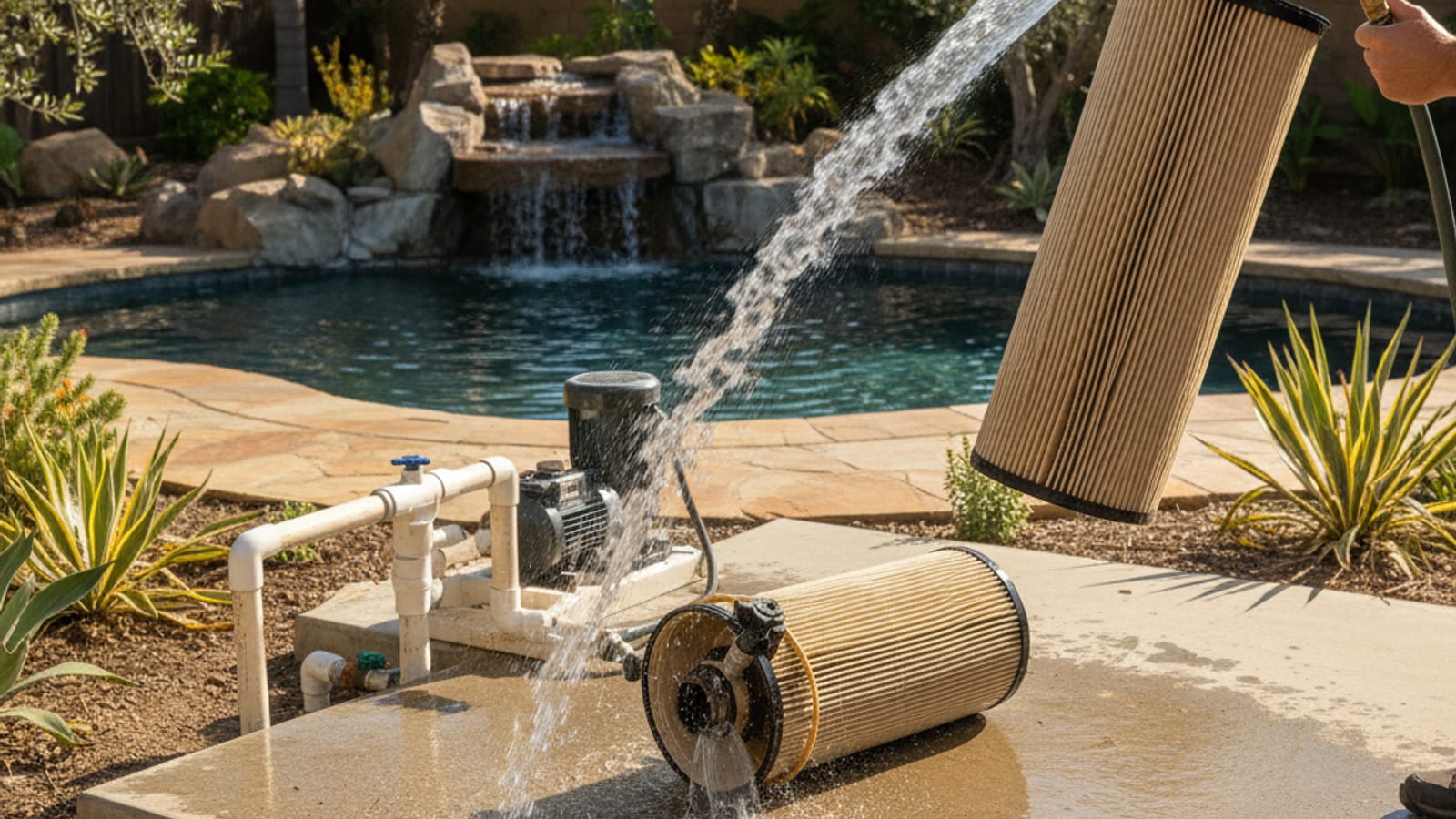
The Pre-Rinse: After turning off the system and bleeding the air, the cartridges come out. The first step is a thorough rinse with a regular garden hose. The key here is to not use a high-pressure nozzle from a pressure washer. That much force can tear the delicate filter fabric (called Reemay), rendering the cartridge useless. You want to get in between every single pleat, from top to bottom, and wash away all the loose debris.
-
The Acid Bath (The Critical Step): This is the part that solves the La Jolla problem. Once the loose stuff is gone, you can see the white or gray tint of the calcium scale still embedded in the fabric. To get rid of it, the cartridges need a chemical soak. A typical solution is one part muriatic acid to twenty parts water in a large, clean trash can. The cartridges soak in this solution for a few hours. You’ll actually see it fizzing as the acid dissolves the calcium carbonate. Safety is huge here: always add acid to water, never the other way around, and wear gloves and eye protection. There are also commercial, non-acid filter cleaners that work well, but they often take longer.
-
The Final Rinse and Inspection: After the acid bath, the cartridges get another very thorough rinse to remove any residual acid and dissolved calcium. Now, the fabric should look much closer to its original white color. Before putting them back in, each cartridge gets inspected carefully, checking for:
- Rips or tears in the fabric.
- “Crushed” pleats that are permanently flattened together.
- Cracked end caps.
- Bands that have snapped or become brittle. If any of these show up, it’s time for a new set of cartridges. A damaged cartridge lets dirt pass right through it and back into your pool.
For Diatomaceous Earth (DE) Filters
DE filters offer incredible water clarity but require more work. The process is similar, but with more parts to inspect.
- Backwash First: You start by backwashing the filter to get the bulk of the old DE powder and gunk out.
- Full Teardown: Next is the full teardown. The tank opens and the entire grid assembly lifts out carefully.
- Grid Rinse: Each of the eight grids (seven full, one partial) gets rinsed individually, just like a cartridge. You have to be gentle, as the fabric is even more delicate.
- Acid Bath: The entire grid assembly gets the same acid bath treatment to dissolve the calcium scale that’s clogging the fabric.
- Manifold Inspection: This is a crucial step. The top manifold gets checked for any cracks, which is a common failure point. A cracked manifold will bleed DE powder back into your pool.
- Reassembly and Recharge: Once clean and inspected, the filter gets reassembled, the main o-ring lubricated, and new DE powder added through the skimmer.
A proper cleaning like this removes the grime and the scale, bringing your filter’s starting PSI back down to its clean, normal level (usually 10-20 PSI, depending on your system).
A clogged filter will kill a new pump
A spray-down every few months can leave calcium packed in the pleats. The cartridges turn heavy and gray. The pump then screams against that back-pressure, bearings fail, heaters and salt cells starve, and the pad dies early. A real acid soak or replacement drops starting PSI back into the teens. That is the core of La Jolla pool service.
Frequently asked questions
How often should I get my pool filter cleaned in La Jolla?
Because of the hard water and salt air here, a full teardown and chemical cleaning is recommended at least twice a year. For pools that get heavy use or have a lot of surrounding vegetation, three or even four times a year might be necessary to keep the system running efficiently.
Can I just use my pressure washer to clean my filter cartridges?
Please don't. A pressure washer is too powerful for the polyester fabric (Reemay) on the cartridges. It will tear tiny holes in the material, which lets dirt and debris pass right through the filter and back into your pool, defeating the whole purpose. A regular garden hose nozzle is all you need.
What is the white, crusty stuff on my filter grids?
That's calcium carbonate scale. It comes from the very hard water we have in the San Diego area (10-12 gpg). A simple hose rinse won't remove it; it requires a mild acid bath to dissolve it and restore your filter's performance.
My HOA in La Jolla has rules about draining water. How does that affect filter cleaning?
That's a great point, as many La Jolla HOAs are strict about water runoff. When backwashing a DE or sand filter, the water must be drained into the sewer system (your home's sewer cleanout), not into the street or storm drains. Pros use the proper hookups to stay compliant with both city and HOA regulations.
Need professional help in San Diego County?
Splash Pro Pools connects San Diego homeowners with pool pros for the work in this post.