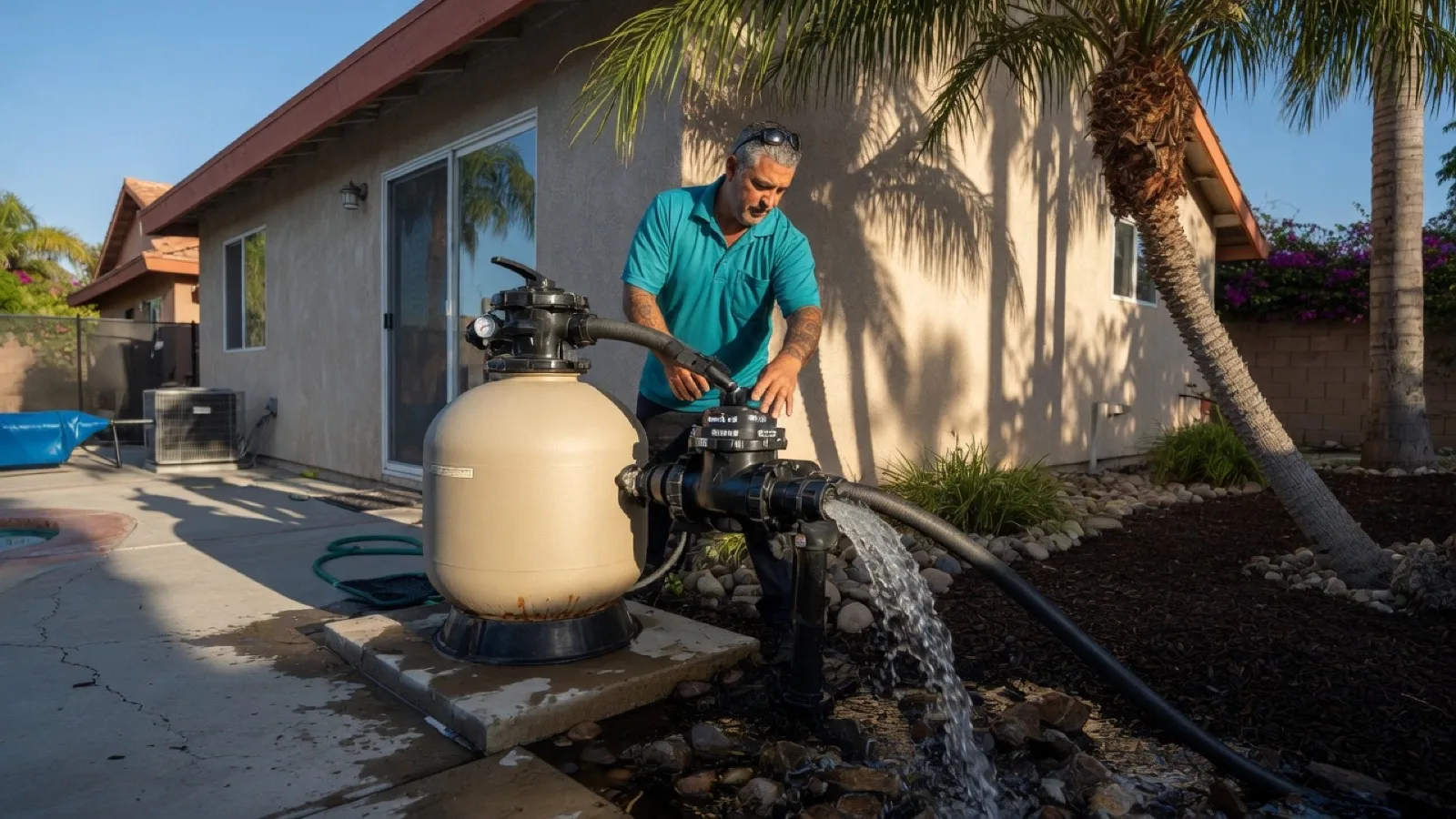
A matched local pool pro backwashes a sand or DE filter by reversing flow through the tank until the waste line runs clear, then putting the valve back on filter. That is how to backwash a pool filter on a San Diego pad: pump off, valve to waste, pump on, watch the sight glass, rinse if the valve has that setting, pump off, valve home, pump on. Cartridge filters never get this cycle. They come apart.
What the reverse-flow cycle actually does
Dirt sits in the sand bed or on the DE-coated grids. Forward flow packs that dirt tighter, the gauge climbs, and the returns go soft. Backwash flips the path so water lifts the dirt and sends it out the waste port. The pool loses volume. The filter gets a new starting pressure.
The pro records the clean number after a thorough cycle, not a guess from a neighbor’s tank. Two Hayward sand filters of the same size can sit at different clean readings because of plumbing, pump speed, and how packed the bed already is. A variable-speed pump on a low-RPM program will also show a lower gauge than the old single-speed did. Our variable speed pool pump page covers that trap.
Sand, DE, and why cartridge tanks skip this
Sand uses a multiport or push-pull valve. Waste, then rinse if the valve has it, then filter. The sight glass is the stop signal. DE uses the same reverse flow, then needs a fresh charge of powder so the grids coat again. Cartridge elements have no waste port that reverses through the pleats. Rinsing them with a hose is a different job, and it lives on our pool filter cleaning guide.
A Santee plaster pool that evaporates hard all August will also pack the filter with mineral and dust. An Encinitas cartridge pad next to Torrey pine duff fills with needles and sunscreen oil. Same county, different tank, different service. If sand is coming back through the returns, that is a broken lateral, not a backwash question, and it belongs with pool filter repair.
The City of San Diego waste-water rule
Inside City of San Diego limits, including neighborhoods such as Rancho Bernardo and Rancho Peñasquitos, filter backwash may not enter the storm drain. San Diego Municipal Code §43.0304 and §43.035(e)(3), cited in the City’s Pools, Spas & Fountains Storm Water Fact Sheet (February 2016), also set penalties that can reach $10,000 per day per incident. The same fact sheet says clean filters over absorbing landscape, and send backwash fluids to the sanitary sewer through a legal connection after the pH sits between 7 and 8. Acid-cleaning waste follows the same ban.
Oceanside, Vista, Encinitas, El Cajon, and the rest of the county run their own stormwater programs. The rule you follow is the one your city publishes. A hose in the gutter behind a Normal Heights bungalow is not a legal plan.
How a matched pro runs the cycle
Power off. Pressure relieved. Multiport handle only moves with the pump stopped, or the spider gasket tears. Valve to waste. Pump on. Sight glass watched until the stream clears, then the rinse setting if that valve has one. Pump off. Valve back to filter. On a DE tank, fresh powder goes in before anyone calls the job done. The pro checks the new gauge against the clean baseline they wrote down last time.
They also look at where the waste hose is pointed. Landscape that can soak it without runoff. A legal sewer connection when the volume is more than the soil will take. Never the storm inlet. If the visit turns into cutting pipe or replacing a valve, that is construction territory. California’s C-53 classification covers swimming-pool contractors, and the CSLB license lookup is how you confirm the person touching the gear.
A weekly pool cleaning stop is how most yards catch a climbing gauge before the pump starts to labor.
When backwashing is the wrong move
If the gauge is already at the clean number, more reverse flow just dumps water. If the gauge stays high after a real cycle, the bed is channeled, the DE grids are scaled, the valve is bypassing, or the gauge itself is stuck. Another backwash will not fix that. If the pool is green, dead algae will load the tank in hours; the recovery plan on our green pool recovery page is the parent job, and the filter is only one step.
When to call us
Call when the gauge will not come back down, when sand or DE is in the pool, or when nobody on the pad can say where the waste water is going. A matched local pool pro will run the cycle the tank was built for and keep that water off the storm drain.
Frequently asked questions
Do cartridge pool filters get backwashed?
No. Cartridge tanks have no reverse-flow waste cycle. The pro shuts the pump down, opens the clamp, pulls the element, and rinses it. Sand and DE filters are the ones with a multiport or push-pull valve that can send water to waste.
Where can backwash water go in San Diego?
Inside City of San Diego limits, San Diego Municipal Code §43.0304 and §43.035(e)(3) make it illegal to put filter backwash in the storm drain. The City's Pools, Spas & Fountains fact sheet (February 2016) says clean filters over absorbing landscape, and send backwash to the sanitary sewer through a legal connection only after the fluid is in the pH 7 to 8 range. Other cities set their own stormwater rules.
How do I know it is time to backwash?
The manufacturer of that tank publishes a clean starting pressure. When the gauge sits well above that clean reading and the returns feel weak, a sand or DE filter is ready for a reverse-flow cycle. If the gauge barely moves after a real backwash, the media or the valve is the problem, not a missed rinse.
Does backwashing waste a lot of water?
It uses pool water on purpose. That is why a matched pro watches the sight glass and stops when the water runs clear, instead of leaving the valve on waste as a habit. A cartridge filter avoids that waste cycle entirely, which is one reason many newer San Diego pads use one.
Can I backwash a DE filter without adding powder?
A DE cycle that ends without a recharge leaves the grids undercoated. The tank will run, but it will not filter the way the grids were designed to. The pro backwashes, then adds fresh DE to the skimmer or designated port per that filter's label.
Need professional help in San Diego County?
Splash Pro Pools connects San Diego homeowners with pool pros for the work in this post.