Heads up before you read: Splash Pro Pools keeps pools clean; spa and hot tub repair is a different trade. Call (858) 400-6757 and we’ll match you with a local pro who handles it.
Rinse the spa filter weekly and deep-clean it monthly. Drain and refill every 3 to 4 months, sooner if the water stays cloudy, foamy, or smells off. San Diego hard water scales heaters fast. Splash cleaning is for pools. Spa repair routes to (858) 400-6757.
What San Diego’s water does to your hot tub
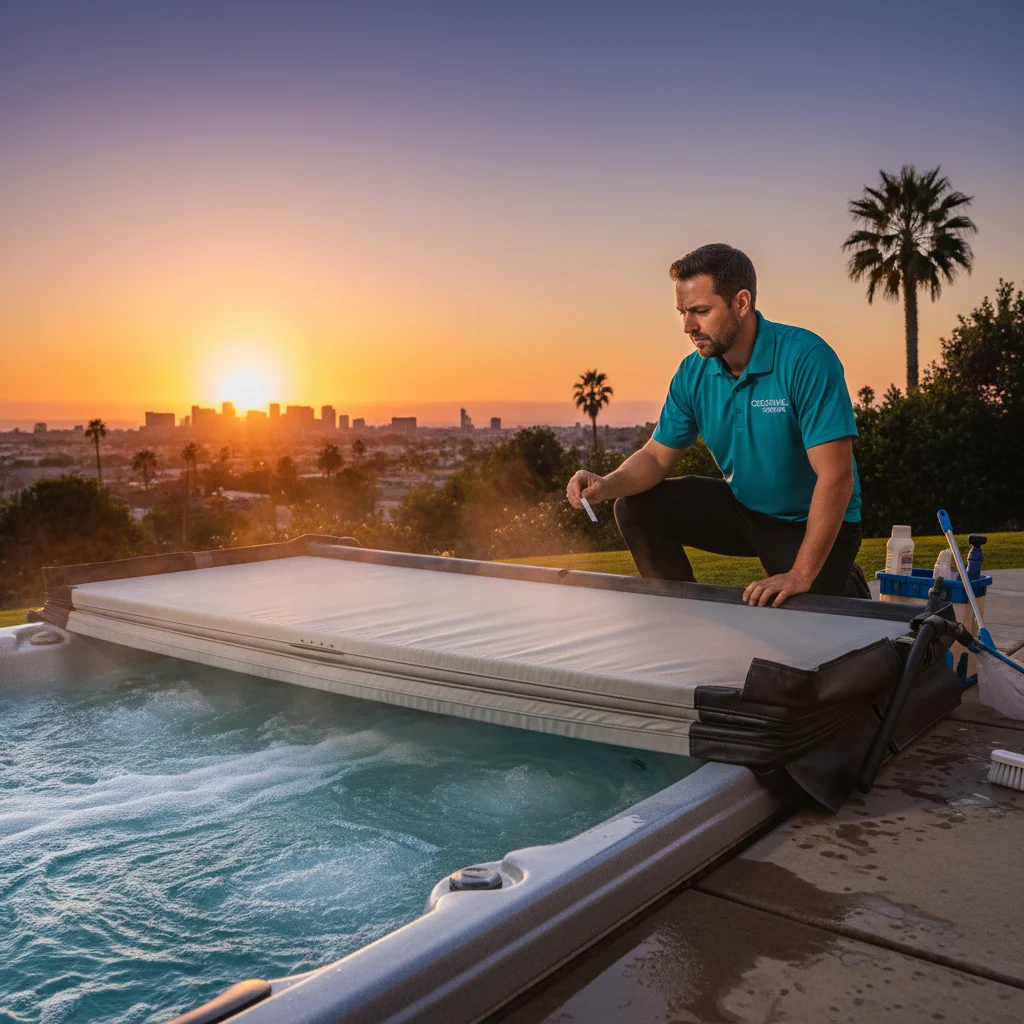
San Diego County’s water is known for being hard. This means it has a higher concentration of dissolved minerals, primarily calcium and magnesium. While perfectly safe for drinking, this mineral content can be a real headache for your hot tub. These minerals don’t just disappear; they build up. Over time, they create scale on your hot tub’s surfaces, heater elements, and plumbing. This scale can look like white or grayish deposits, and it makes your hot tub appear dingy.
More importantly, hard water affects your water chemistry. It can make it harder to maintain proper pH and alkalinity levels, creating a constant battle with your chemicals. Scale also reduces the efficiency of your heater, costing you more in energy bills. It can even shorten the lifespan of vital components like pumps and filters. San Diego’s typically warm climate also contributes to faster chemical depletion and more rapid algae growth if not managed correctly. Understanding these local challenges is the first step toward effective maintenance. You can learn more about managing hard water issues in our specific guide on hard water in San Diego pools. Regular attention to your calcium hardness levels is crucial to mitigate these effects.
Weekly checks that take five minutes
Don’t let the word “maintenance” intimidate you. Many critical tasks take just a few minutes each week. Consistent weekly checks prevent small issues from escalating.
First, test your water chemistry. You’ll want to check pH, alkalinity, and sanitizer levels (chlorine or bromine). Aim for a pH between 7.4 and 7.6, alkalinity between 80 and 120 ppm, and your sanitizer within its recommended range. Adjust chemicals as needed. San Diego’s sunshine can quickly burn off sanitizers, so this check is non-negotiable.
Second, skim debris from the surface. Leaves, pollen, and other environmental particles find their way into your hot tub. A simple net makes quick work of this. Removing debris keeps your water clearer and reduces the load on your filter.
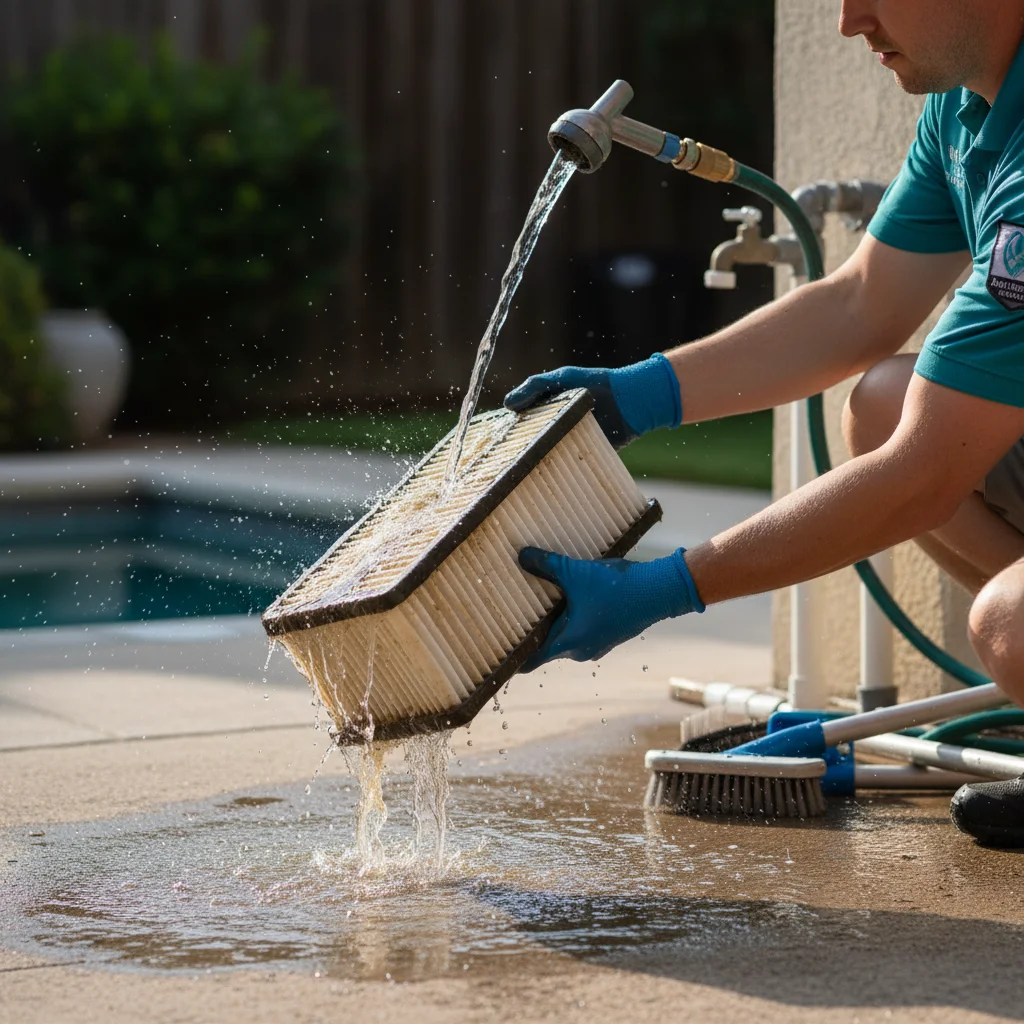
Third, inspect your filter cartridge. A quick visual check can tell you if it’s clogged with debris. If it looks dirty, give it a rinse with a garden hose. This helps maintain good water flow and filtration.
Fourth, wipe down the waterline. A ring can form where the water meets the spa shell. Use a non-abrasive cleaner specifically designed for hot tubs to prevent buildup. This keeps your shell looking new.
Finally, check your water level. Evaporation is common, especially with hot water. Make sure the water level is above the skimmer opening to prevent your pump from sucking air, which can damage it. A little top-off once a week is usually all it takes. Following these simple steps ensures your hot tub is mostly ready for use whenever you are. For more in-depth care tips, especially for filters, check out our general pool filter cleaning guide.
Monthly tasks most owners skip
While weekly checks keep things ticking, monthly tasks are where you tackle deeper cleaning and prevent long-term problems. Skipping these leads to cloudy water, stubborn stains, and costly repairs down the road.
Deep clean your filter cartridge. A quick rinse isn’t enough for long. Every month, remove your filter and soak it in a specialized filter cleaner solution. This dissolves oils, lotions, and fine particles that get trapped deep within the pleats. This is crucial for optimal filtration and extends the life of your filter. This monthly ritual is vital for effective hot tub performance and longevity. Investing in a spare filter allows you to rotate them, ensuring one is always clean and ready while the other soaks. When it comes to specialized filter cleaning or replacement, our pool filter cleaning and replacement service can handle it efficiently.
Clean your hot tub cover. The cover protects your hot tub, but it also collects dirt, debris, and can develop mold or mildew. Use a mild cleaner and a soft brush to clean both the top and underside. Pay attention to the skirt and hinges. Treat the cover with a UV protectant to prevent cracking and fading from the San Diego sun. A well-maintained cover insulates better and lasts longer.
Check your jets and plumbing. Ensure all jets are moving freely and providing good pressure. Sometimes mineral buildup can restrict them. Inspect visible plumbing for any signs of leaks or deterioration. Small leaks can quickly become bigger problems.
Balance calcium hardness. This is particularly important in San Diego. Use a test strip or kit to measure calcium hardness. If it’s too high, you might need a sequestering agent. If it’s too low, you can add calcium hardness increaser. Keeping this balanced prevents scaling and corrosion.
When to drain and refill, the real schedule
Draining and refilling your hot tub is one of the most important, yet often overlooked, parts of maintenance. It’s not just about adding new water; it’s about resetting your water chemistry and removing dissolved solids that build up over time. These dissolved solids, known as Total Dissolved Solids (TDS), make your chemicals less effective and can lead to cloudy water, foamy water, and skin irritation.
The general rule of thumb is to drain and refill your hot tub every 3-4 months. However, several factors in San Diego can influence this schedule:
- Usage: If you use your hot tub daily or have many guests, you’ll need to drain it more frequently, perhaps every 6-8 weeks. The more people in the tub, the faster contaminants build up.
- Water Chemistry: If you’re constantly struggling to balance your chemicals, or if the water consistently looks dull, cloudy, or foamy despite proper chemical levels, it’s probably time for a drain and refill. High TDS levels mean your water is “saturated” and can’t effectively process new chemicals.
- San Diego’s Hard Water: Our hard water in San Diego contributes to faster TDS buildup and potential scale. While some chemicals can help mitigate scale, a fresh start with new water is often the best solution.
- Smell: A persistent, unpleasant odor that doesn’t go away with shocking often indicates high TDS and bacterial buildup.
When you drain, make sure to thoroughly clean the shell of your hot tub, removing any waterline stains or residue. You can also use a “purge” product before draining to clean out the plumbing lines, which can harbor biofilm and bacteria. This ensures you’re starting with a truly clean system, not just clean water. For complex draining procedures or if you need professional cleaning after a drain, our spa and hot tub service team can assist.
When to call a tech instead of fixing it yourself
While a good monthly routine covers most hot tub maintenance, some problems definitely require a professional. Attempting DIY repairs on complex issues can often lead to more damage, void warranties, or even create safety hazards. Knowing when to call a licensed technician saves you time, money, and stress.
Here are clear signs it’s time to contact Splash Pro Pools:
- Persistent Leaks: You’ve checked the easy spots, but water levels keep dropping, or you see puddles around the spa. Locating and repairing leaks can be tricky, involving specialized equipment. Our pool leak detection and repair experts are trained for this.
- Equipment Failure: Your heater isn’t heating, the jets aren’t working with proper pressure, or the pump is making unusual noises or not running at all. These issues often involve electrical components, motors, or intricate plumbing.
- Electrical Problems: Flickering lights, tripped breakers when the hot tub is running, or non-responsive control panels are serious. Electrical work around water is extremely dangerous and must be handled by a qualified professional.
- Advanced Water Chemistry Issues: If you’ve tried everything and your water remains stubbornly cloudy, green, or imbalanced despite correct chemical additions, there might be an underlying issue with your filtration, circulation, or even a build-up of contaminants that only a professional can effectively diagnose and treat.
- Strange Noises or Odors: Grinding, squealing, or burning smells coming from the equipment are red flags. Don’t wait for total failure; address these immediately.
- Cover Issues: If your cover is waterlogged, ripped, or no longer insulating properly, it might need replacement. While you can measure for a new one, a professional can often advise on the best options.
For those failures, use spa and hot tub repair in San Diego. Call (858) 400-6757.
When to call us
If the heater, pump, or cover is the failure, call (858) 400-6757. Splash matches spa and hot tub service. It does not repair spas. Call us at (858) 400-6757 and we’ll connect you with a vetted local pool pro.
Frequently asked questions
How often should I clean my hot tub filter in San Diego?
You should rinse your hot tub filter weekly and perform a deep chemical cleaning monthly, especially with San Diego's harder water. Replace filters every 1-2 years depending on usage.
What are the signs my hot tub needs to be drained?
Beyond the recommended 3-4 month schedule, drain your hot tub if the water is persistently cloudy, foamy, or develops a strong odor despite chemical treatment. High TDS levels also indicate it's time for a refill.
Why is San Diego's water hard, and how does it affect my hot tub?
San Diego's water contains higher levels of minerals like calcium and magnesium, making it 'hard.' This can lead to scale buildup on surfaces and equipment, cloudy water, and inefficient chemical reactions in your hot tub. Regular maintenance and proper chemical balancing are key.
When should I call a professional for hot tub maintenance?
Call a professional if you notice persistent leaks, equipment malfunctions (like heaters or pumps not working), strange noises, electrical issues, or if you can't get your water chemistry balanced. Complex repairs and diagnostics are best left to licensed technicians.
Can I use pool chemicals in my hot tub?
While some basic chemicals like pH balancers are similar, hot tubs require specific, often smaller, dosages and types of sanitizers. Always use products designed for hot tubs to avoid damaging your equipment or irritating your skin.
Need this done in San Diego County?
For repair and renovation work like this, we hand you to our trusted partner, Del Rancho Pools.