A note on scope: this is pool repair work, which sits outside what Splash Pro Pools does. Call (858) 400-6757 and we’ll match you with a vetted local pro who covers it.
TL;DR
- A booster pump is the separate, smaller pump that powers a pressure-side cleaner like a Polaris 280 or 380. It is not your main filtration pump.
- If your pressure cleaner stopped moving, the booster is almost always the cause, not the cleaner itself.
- Repairs run $150 to $450. A seal or capacitor fix sits at the low end. A motor or full pump swap runs $400 to $700 installed.
- San Diego’s hard inland water scales seals and bearings early, so booster pumps here often need attention by year five or six.
If your pressure-side pool cleaner suddenly sits in one corner and won’t budge, the cleaner is rarely the problem. The booster pump that drives it is. That’s the small second pump on your equipment pad, separate from the main filtration pump, and it fails in a handful of predictable ways. The good news is most booster pump problems are a quick, affordable fix once you know what you’re looking at.
This guide covers what a booster pump actually does, the five failures we see most on San Diego service calls, what repair costs locally, and how to decide between a fix and a replacement.
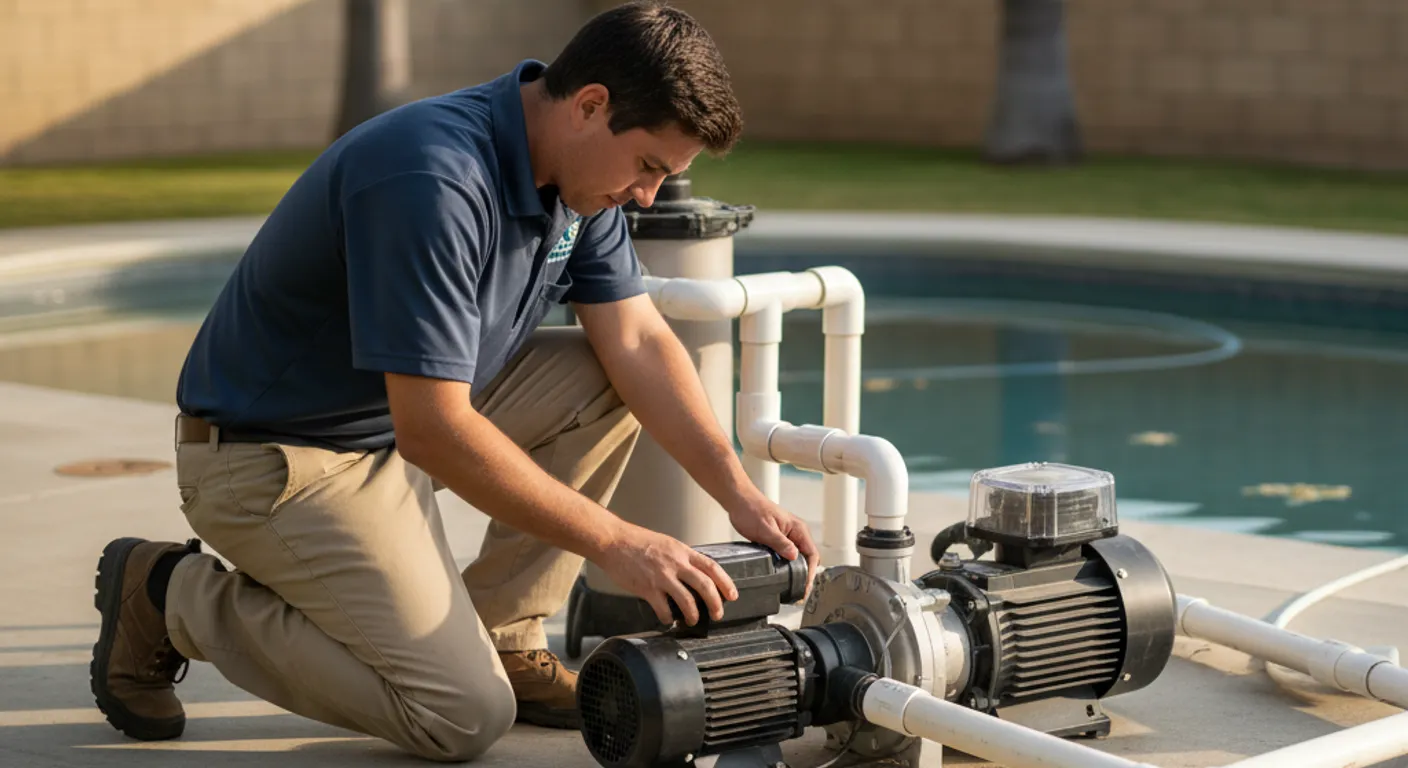
What a booster pump does and why it’s separate
Most pools in San Diego run one pump that pulls water through the skimmer and main drain, pushes it through the filter, and returns it clean. That’s your main filtration pump.
A booster pump is a second, smaller pump with one job: drive a pressure-side cleaner. If you have a Polaris 280, 380, or a similar pressure cleaner that crawls the floor and walls with a tail whipping behind it, that cleaner runs on a dedicated booster. The booster takes a small feed of water and pushes it at high pressure through a separate wall fitting and hose straight to the cleaner.
It matters that the two are separate. The booster has its own breaker, its own timer, and usually runs an hour or two a day, only when the cleaner is working. So when your cleaner dies, you’re almost never looking at the main pump. You’re looking at the booster.
The most common booster pump in San Diego backyards is the Polaris PB4-60. You’ll also see Letro and a few Hayward units. They’re all built around the same idea, so the failure patterns repeat.
Five reasons a booster pump fails
1. The cleaner stopped moving but you hear a hum
This is the most common call we get. The booster powers on, you hear a steady hum, but the cleaner doesn’t move and the pump shaft isn’t spinning. That hum almost always means a dead start capacitor.
The capacitor is a small cylinder under the pump’s end cap that gives the motor the jolt it needs to start spinning. They wear out, especially in San Diego heat where the equipment pad bakes in the afternoon sun. A capacitor is a $15 part, and the repair is usually $150 to $200 with labor. It’s one of the cheapest pool fixes there is, which is why it’s worth diagnosing before you assume the whole pump is shot.
2. Total silence, nothing happens
If the booster makes no sound at all when the cleaner’s cycle should start, the problem is upstream of the pump. Check three things in order: the timer that triggers the booster, the dedicated breaker in your panel, and the wiring at the pump.
Boosters run on their own timer so they only fire when the main pump is already circulating. If that timer slipped, lost a trippet, or failed, the booster never gets the signal. A tripped breaker is the next suspect. If both check out and there’s still no sound, the motor windings may have failed, which usually means a motor or full pump replacement.
3. Runs fine but the cleaner barely moves
The booster sounds healthy, but your Polaris creeps along or sits in one spot. Two likely causes here.
First, a worn impeller. The impeller is the spinning vane inside the pump that creates pressure. Over years of running it wears down and loses its bite, so the pump turns but moves less water. Second, a clog or air leak in the dedicated cleaner line. Check the wall fitting, the in-line screen, and the cleaner’s own filter bag or screen before condemning the pump.
4. Leaking water at the pump
A booster leaking water from the housing, usually right where the motor meets the pump body, has a failed shaft seal. The seal keeps water on the wet side and away from the motor bearings. When it goes, water seeps in and, left alone, destroys the bearings and then the motor.
A leaking booster is the one failure you don’t want to ignore. A $200 seal replacement caught early turns into a $500-plus motor or pump swap if you let it run wet for weeks. In San Diego’s hard-water inland areas, seals are the part that needs replacing most often.
5. Loud grinding or screeching
A booster that runs but screeches or grinds has worn bearings. Bearings let the shaft spin smoothly, and when they dry out or get chewed up by water from a failed seal, they get loud. Bearings can sometimes be replaced on their own, but on a smaller booster it’s often more cost-effective to replace the motor or the whole unit, especially if the pump is already eight or nine years old.
If you want a deeper walkthrough of pump diagnostics that also applies to your main pump, our pool pump repair guide covers the wider picture. And if your main pump is the one acting up, the symptoms in our pool pump humming but not running post overlap closely with booster capacitor failures.
What booster pump repair costs in San Diego
Here’s what homeowners across the county actually pay in 2026.
| Repair | Typical cost (parts + labor) |
|---|---|
| Start capacitor replacement | $150-$250 |
| Shaft seal replacement | $200-$350 |
| Impeller replacement | $200-$300 |
| Motor replacement | $350-$550 |
| Full booster pump swap (PB4-60) | $450-$700 |
A few things move these numbers. Equipment pad access matters: a booster wedged in a tight side yard takes longer to service than one out in the open. Hard plumbing that has to be cut and re-glued adds time over a unit on simple unions. And the model matters. A Polaris PB4-60 is the easiest to source parts for; older or off-brand units sometimes cost more because parts are harder to find.
One honest note on repair versus replace. If your booster is under seven years old and the failure is a capacitor, seal, or impeller, repair almost always makes sense. If it’s nine-plus years old and needs a motor, a full swap usually costs about the same once you add up parts and labor, and you reset the clock with a new warranty.
Why San Diego water is hard on booster pumps
Booster pumps fail earlier here than the national average, and it comes down to water chemistry and heat.
Inland San Diego County has some of the hardest water in the region. Cities like Santee, El Cajon, Escondido, and San Marcos draw water with high calcium content that scales everything it touches. Inside a booster pump, that scale builds on the seal faces and the bearings, wears them rough, and shortens their life. A booster that might last ten years in soft water often needs a seal by year five or six inland. Our hard water pool guide for San Diego goes deeper on what local water does to pool equipment.
Heat is the second factor. Booster pumps sit on the equipment pad in full sun much of the year. The capacitor, which is already the most failure-prone part, hates heat. A pad that hits 120 degrees on a summer afternoon ages capacitors faster than the same pump would age in a shaded or coastal location.
Coastal cities like La Jolla, Del Mar, and Encinitas have softer water, so seals last longer, but salt air adds its own corrosion to the motor housing and electrical connections. There’s no part of the county where a booster runs trouble-free forever.
Booster pump or main pump? How to tell them apart
People mix these up constantly, and getting it wrong means paying for the wrong diagnosis. Here’s the quick test.
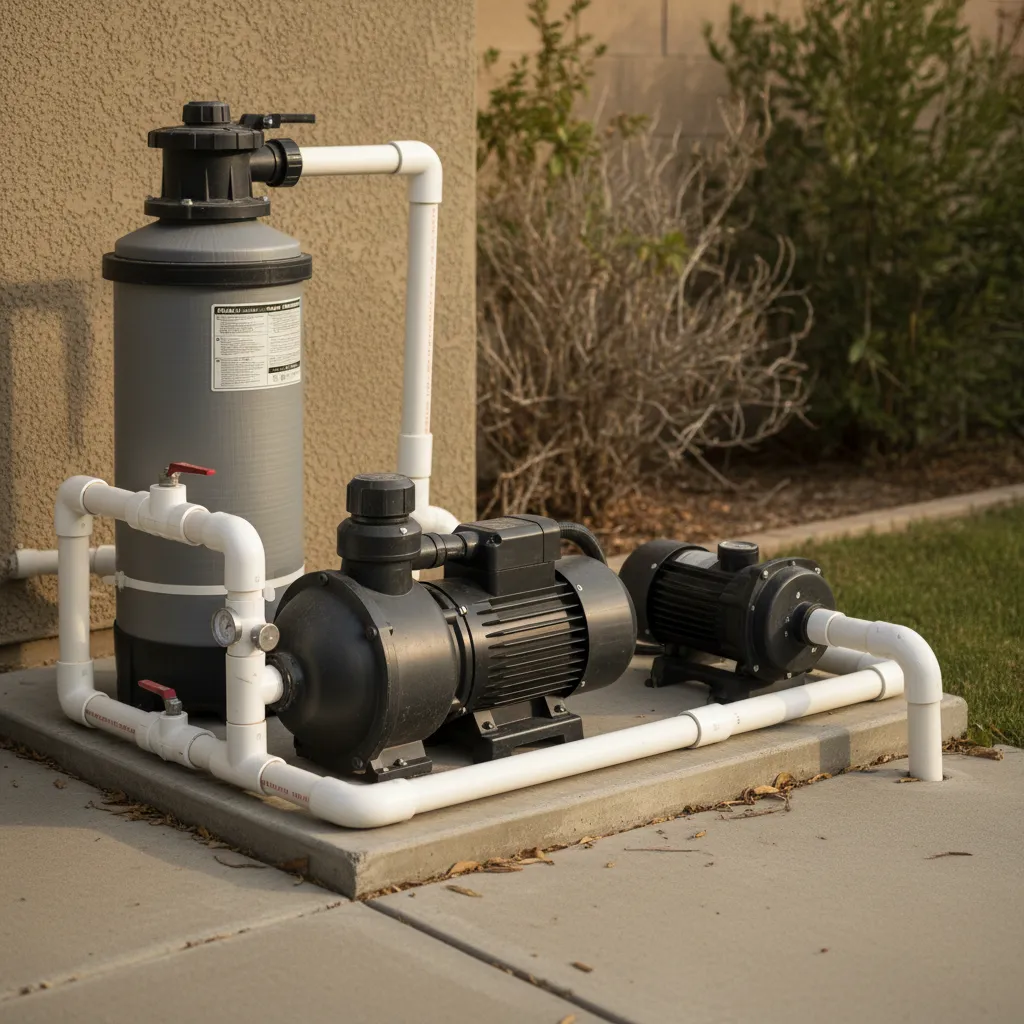
Look at your equipment pad. The larger pump connected to the filter and the skimmer plumbing is your main filtration pump. If there’s a second, smaller pump nearby with a single line running off toward a dedicated wall fitting, that’s your booster. The booster is usually about two-thirds the size of the main pump.
Then watch the behavior. If your pool water is going cloudy or green, that’s a filtration problem, which points at the main pump, not the booster. If the water is clean but your pressure cleaner won’t crawl, that’s the booster. A booster failure never affects your water clarity, because it has nothing to do with filtration. That single distinction tells you which pump to look at first.
If your main pump is the actual culprit, the fix path is different and the stakes are higher, since it affects your whole pool’s circulation. Our pool repair page covers diagnosis for main pump and equipment failures.
DIY checks before you call
A few of these you can safely check yourself before booking a service call.
- Confirm the booster’s timer is firing. The booster only runs when its timer trips, and only while the main pump is already on. Make sure the timer trippets are set and the main pump runs first.
- Check the dedicated breaker. Boosters run on their own breaker. A tripped breaker is a thirty-second fix.
- Clear the cleaner and the in-line screen. Pull the cleaner’s filter bag or screen and the in-line screen at the wall fitting. A clog there mimics a weak booster.
- Listen. Hum with no movement points to the capacitor. Silence points to power or the timer. Grinding points to bearings. Leaking points to the seal.
What you should not DIY: anything involving opening the motor, replacing the capacitor (it can hold a charge and shock you), or rewiring the 230V circuit. Boosters carry the same electrical risk as any pool pump, and a wrong move can damage the motor or hurt you.
If you’d rather skip the diagnosis entirely, a booster pump fix usually fits inside a routine weekly pool cleaning visit, so it gets caught and handled before the cleaner sits idle for weeks.
When to call us
A booster pump that hums, leaks, grinds, or sits silent isn’t going to fix itself, and a leaking seal in particular gets more expensive the longer it runs. If your pressure cleaner has stopped moving, if you hear a hum with no action, or if you spot water pooling under the pump, that’s the time to bring in a pro who can diagnose the exact failure before you pay for the wrong part.
Booster pumps get serviced across San Diego County, from Santee and El Cajon out to Encinitas, Fallbrook, and the coast. Call us at (858) 400-6757 and we’ll connect you with a vetted local pool pro.
Frequently asked questions
How much does booster pump repair cost in San Diego?
Most booster pump repairs in San Diego run $150 to $450. A seal or capacitor replacement falls at the low end, around $150 to $250. A new motor or a full booster pump swap runs $400 to $700 installed, depending on the model. Polaris PB4-60 booster pumps are the most common unit on local equipment pads.
Why did my pressure-side pool cleaner stop moving?
Nine times out of ten the booster pump failed, not the cleaner. The booster is the separate pump that drives a Polaris or pressure-side cleaner. If it hums but won't start, the capacitor is likely dead. If it's silent, check the timer and the dedicated breaker. If it runs but the cleaner barely moves, the impeller is worn or the wall fitting line is clogged.
Can I run my pressure cleaner without a booster pump?
No. Pressure-side cleaners like the Polaris 280 and 380 need the extra water pressure a booster pump provides. The main filtration pump alone does not push enough flow through the dedicated cleaner line. If your booster is dead, the cleaner sits still until it's repaired or replaced.
How long does a booster pump last in San Diego?
Seven to ten years is typical, but hard water shortens that. Inland cities like Santee, El Cajon, and Escondido have very hard water that scales the seal and bearings faster. A booster that runs an hour or two a day under that load often needs a seal or capacitor by year five or six.
Is a booster pump the same as my main pool pump?
No. The main pump circulates all your pool water through the filter. The booster is a smaller second pump on its own breaker and timer that only powers a pressure-side cleaner. They fail differently and cost different amounts to fix, so the diagnosis matters before you pay for parts.
Need this done in San Diego County?
For repair and renovation work like this, we hand you to our trusted partner, Del Rancho Pools.