Heads up before you read: Splash Pro Pools keeps pools clean; pool repair is a different trade. Call (858) 400-6757 and we’ll match you with a local pro who handles it.
That dreaded humming with no water moving is usually a dead start capacitor. The motor has power. It cannot spin. Turn the breaker off first so the motor does not cook. Then check for a jammed impeller. Call Del Rancho Pools at (858) 400-6757 if the shaft will not turn by hand or you are not opening a live 240-volt motor.
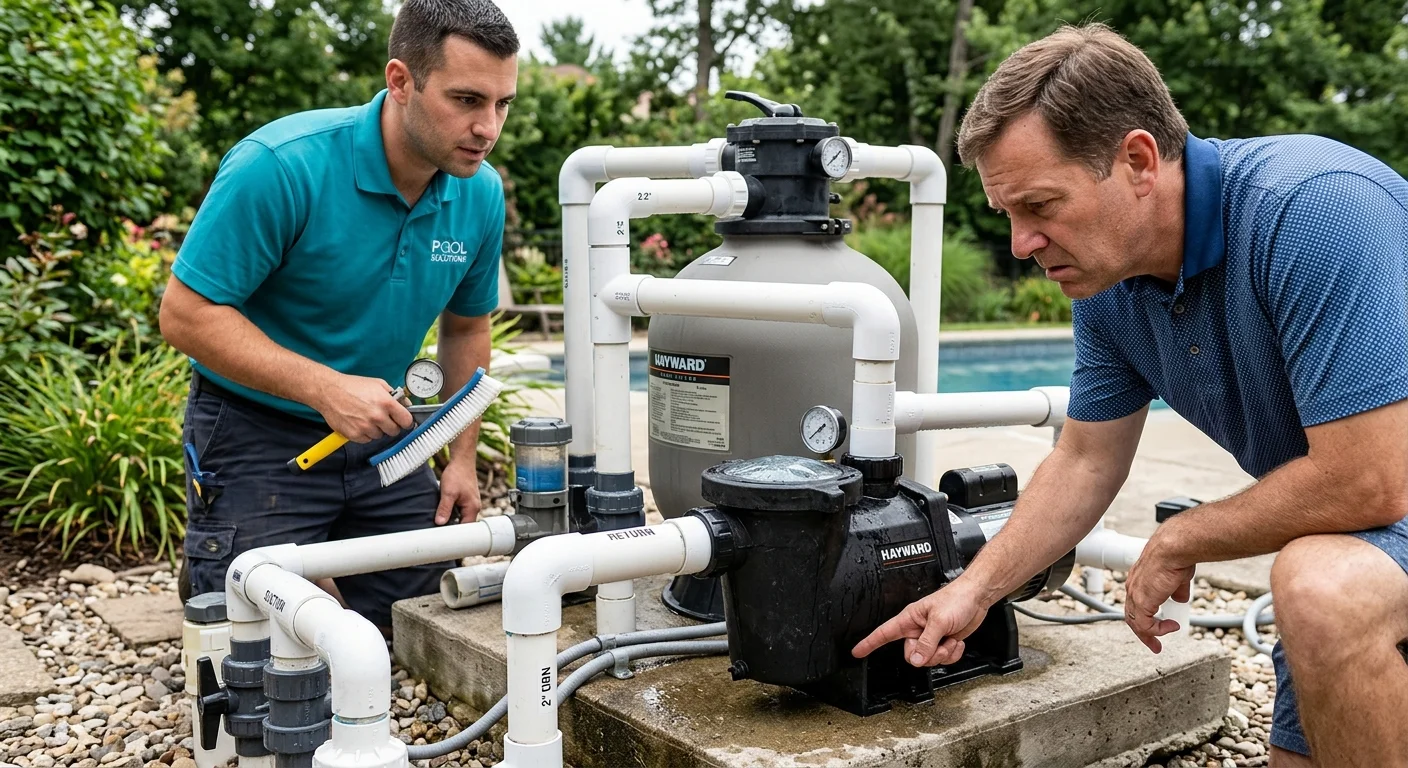
Understanding what causes this issue can help you decide your next steps. Sometimes, it’s a simple fix, but often, it requires a professional touch. For homeowners in San Diego County, knowing these signs helps you maintain your pool’s health and prevent costly major repairs.
Why a humming sound is a classic sign of trouble
When your pool pump makes a humming noise but doesn’t start, it’s telling you something critical. The humming means electricity is flowing into the motor, creating a magnetic field. However, the motor’s rotor isn’t able to spin and engage the impeller. Think of it like a car engine trying to turn over but failing to catch.
This stalled state isn’t harmless. The motor is drawing a significant amount of current, attempting to start, but since it’s not moving, all that electrical energy is converted into heat. Prolonged humming can cause the motor windings to overheat, potentially damaging them permanently. It’s a clear indicator that something is mechanically or electrically preventing the motor from initiating its rotation. Addressing this quickly can save your pump and your wallet from a full replacement.
The most common cause: a bad start capacitor
In most cases, when your pool pump hums but doesn’t start, the prime suspect is a faulty start capacitor. What exactly is a start capacitor? It’s a small, cylindrical electrical component attached to the motor that provides a crucial jolt of electricity. This initial burst of power is essential to get the motor spinning from a complete stop. Without it, the motor simply can’t overcome its inertia.
How a capacitor fails
Over time, or due to power surges and normal wear and tear, a capacitor can degrade. When it fails, it can no longer deliver the necessary jolt. You’ll hear the motor hum as it receives power, but it won’t be able to turn. Sometimes, a capacitor can visibly swell or leak, which is a clear sign of failure. Other times, there are no external indicators, making diagnosis a bit trickier.
Replacing a start capacitor can often revive a humming pump. However, this isn’t a DIY job for everyone. Capacitors store a high electrical charge, even when the power is off, and can deliver a dangerous shock. If you’re not comfortable with electrical work, it’s always safer to call a qualified pool technician for pool repair. They have the tools and expertise to safely test and replace the capacitor, ensuring your pump is back up and running without risk.
How to check if the impeller is clogged or stuck
While electrical issues are common, mechanical obstructions are another frequent reason for a humming pump. The impeller is the spinning component inside the pump housing that creates the water flow. If it’s blocked or stuck, the motor can’t turn, even if it’s receiving power.
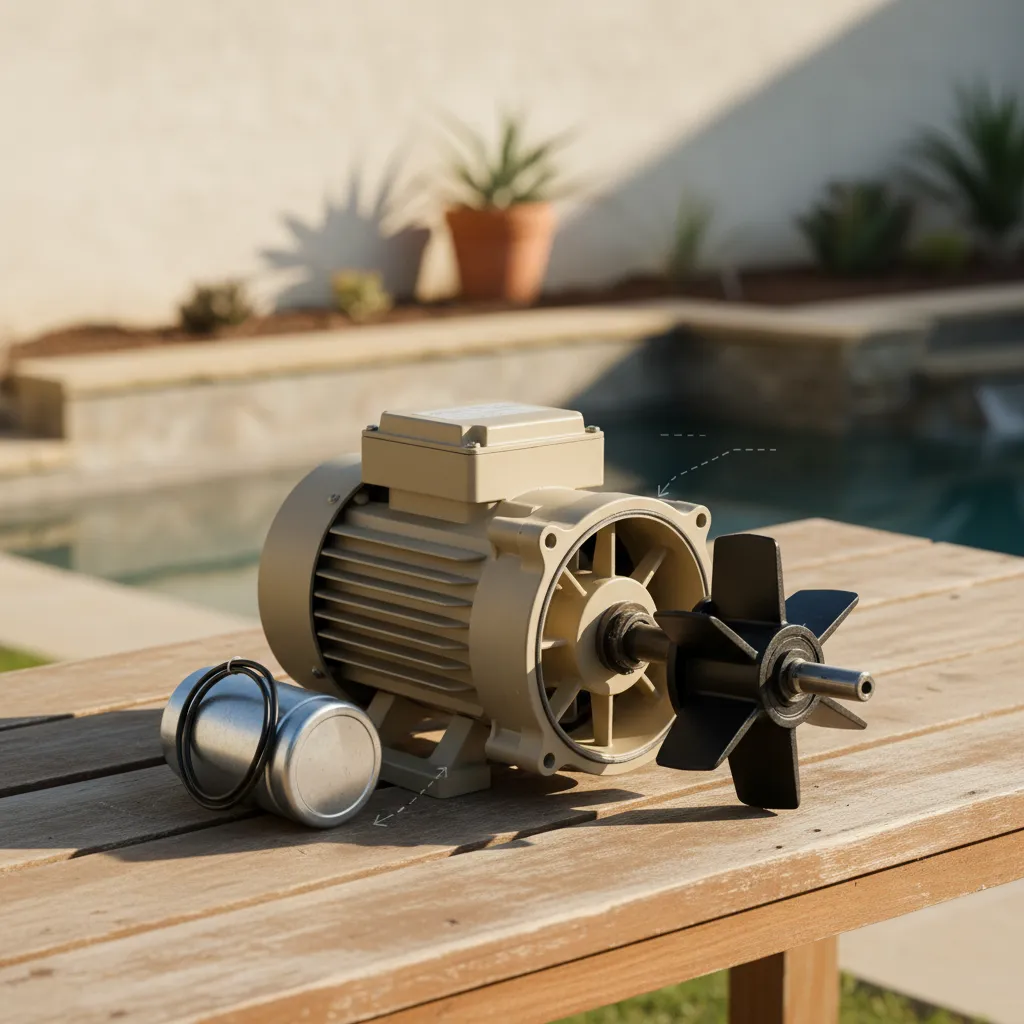
Steps to check the impeller
- Turn off all power: This is the most critical step. Go to your circuit breaker and completely shut off the power to the pump. Safety first.
- Remove the pump basket and lid: You’ll need access to the impeller housing.
- Inspect for debris: Look for large leaves, hair, small toys, or other debris that might be lodged in the impeller vanes. Sometimes, even a small pebble can seize it up.
- Try to manually turn the impeller: Carefully reach into the pump housing. You might see the impeller directly, or you may need to access the motor shaft at the rear of the pump (under a cover, requiring a wrench to turn). If you can turn it freely, the issue likely isn’t a clog. If it’s stiff or won’t move, you’ve found your blockage.
- Clear any obstructions: Use needle-nose pliers or a small, flat-head screwdriver to carefully remove any debris. Be gentle to avoid damaging the impeller blades.
- Reassemble and test: Once clear, put everything back together and restore power. See if the pump starts normally.
If you find a persistent clog or difficulty in turning the impeller, especially if it feels rough, it might indicate damage or an issue further down the line. In such cases, or if you’re uncomfortable performing these steps, it’s wise to consult a professional for emergency pool service. They can diagnose internal issues that aren’t visible from the outside.
Could it be a seized motor?
Beyond capacitor failure or impeller clogs, a more serious problem causing a humming pump is a seized motor. A seized motor means the internal bearings or windings have corroded, rusted, or otherwise failed, preventing the motor shaft from rotating at all. It’s essentially “locked up.”
Signs of a seized motor
- Difficulty turning the shaft: If, after turning off the power, you try to manually spin the motor shaft (usually found at the very back of the motor, often requiring a wrench on the non-drive end) and it’s extremely stiff or won’t budge, the motor is likely seized.
- Overheating: A seized motor will quickly overheat as it tries to draw power without moving. You might smell burning, or the motor housing might feel extremely hot to the touch.
- Loud hum: The humming noise might be particularly loud or strained, indicating the motor is trying with all its might but failing.
A seized motor is rarely repairable. In most cases, it means the motor needs to be replaced entirely, or even the entire pump unit if the motor isn’t easily separable or cost-effective to replace alone. This is a more significant repair than a simple capacitor swap or clog removal. For a comprehensive overview of pump issues and their fixes, you might find our general pool pump repair guide helpful.
When to call for a professional repair vs. DIY
Deciding whether to tackle a humming pool pump yourself or call a professional often comes down to comfort level, specific diagnosis, and safety.
When DIY might be an option
If you’re confident in your ability to follow safety procedures, a simple impeller clog can often be cleared by a homeowner. This involves shutting off power, accessing the pump basket, and carefully removing visible debris. Always remember to turn off the breaker first.
When to call a professional
For anything beyond a straightforward clog, especially involving electrical components like a capacitor, or if you suspect a seized motor, it’s always best to call a qualified pool repair professional. Here’s why:
- Safety: Electrical components, particularly capacitors, can store dangerous charges. Working with them without proper training and tools can lead to serious injury.
- Accurate diagnosis: A professional can quickly and accurately diagnose the root cause, saving you time and preventing you from replacing parts unnecessarily. They have specialized testing equipment for capacitors and motor windings.
- Proper installation: Ensuring new components are installed correctly prevents future issues and extends the life of your equipment.
- Warranty: Many repairs performed by a professional technician come with a warranty, giving you peace of mind.
- Cost-effectiveness: While there’s a service fee, a professional can often fix the problem efficiently and correctly the first time, potentially saving you from greater damage or needing a full pump replacement later.
Splash Pro Pools specializes in diagnosing and fixing all types of pool pump issues across San Diego County. We’re equipped to handle everything from capacitor replacements to full motor overhauls, ensuring your pool water stays sparkling clear. Don’t risk further damage or personal injury when professional help is readily available.
When to call us
When your pool pump is humming but not running, it’s a critical situation that demands immediate attention to avoid more costly damage. If you’ve tried basic troubleshooting like checking for clogs and the problem persists, or if you’re uncomfortable working with electrical components, it’s time to bring in the experts. Call us at (858) 400-6757 and we’ll connect you with a vetted local pool pro.
Frequently asked questions
Why is my pool pump humming but not turning on?
A humming sound without the pump turning on usually points to an electrical issue or a seized motor. The most common culprit is a faulty start capacitor, which provides the initial jolt of power the motor needs to begin spinning.
Can I fix a humming pool pump myself?
Some minor issues, like clearing a visible clog from the impeller, might be a DIY fix. However, electrical component replacements like capacitors or diagnosing a seized motor often require professional expertise due to safety risks and the complexity of the repair.
How much does it cost to replace a pool pump capacitor?
The cost to replace a pool pump capacitor in San Diego County can vary based on the specific capacitor needed and the service provider. While the part itself is relatively inexpensive, the labor involved in proper diagnosis and safe installation contributes to the overall cost. It's usually much less than replacing the entire pump.
How do I know if my pool pump motor is seized?
You can often check for a seized motor by turning off the power, removing the pump basket, and attempting to manually spin the impeller or motor shaft. If it's difficult or impossible to turn, the motor is likely seized. A seized motor usually means a full motor replacement is needed.
What should I do immediately if my pool pump is humming?
First, turn off the power to the pump at the circuit breaker to prevent further damage or overheating. Then, you can perform a quick visual inspection for obvious clogs. If the issue isn't immediately apparent or involves electrical components, it's best to contact a professional pool repair service.
Need this done in San Diego County?
For repair and renovation work like this, we hand you to our trusted partner, Del Rancho Pools.