The weekly pool cleaning cost Valley Center homeowners see is best framed against HomeGuide’s September 22, 2025 national benchmark of $20-$50 per week. A local quote can climb when acreage adds access time or grove debris adds cleaning work. Pool condition and service scope matter too.
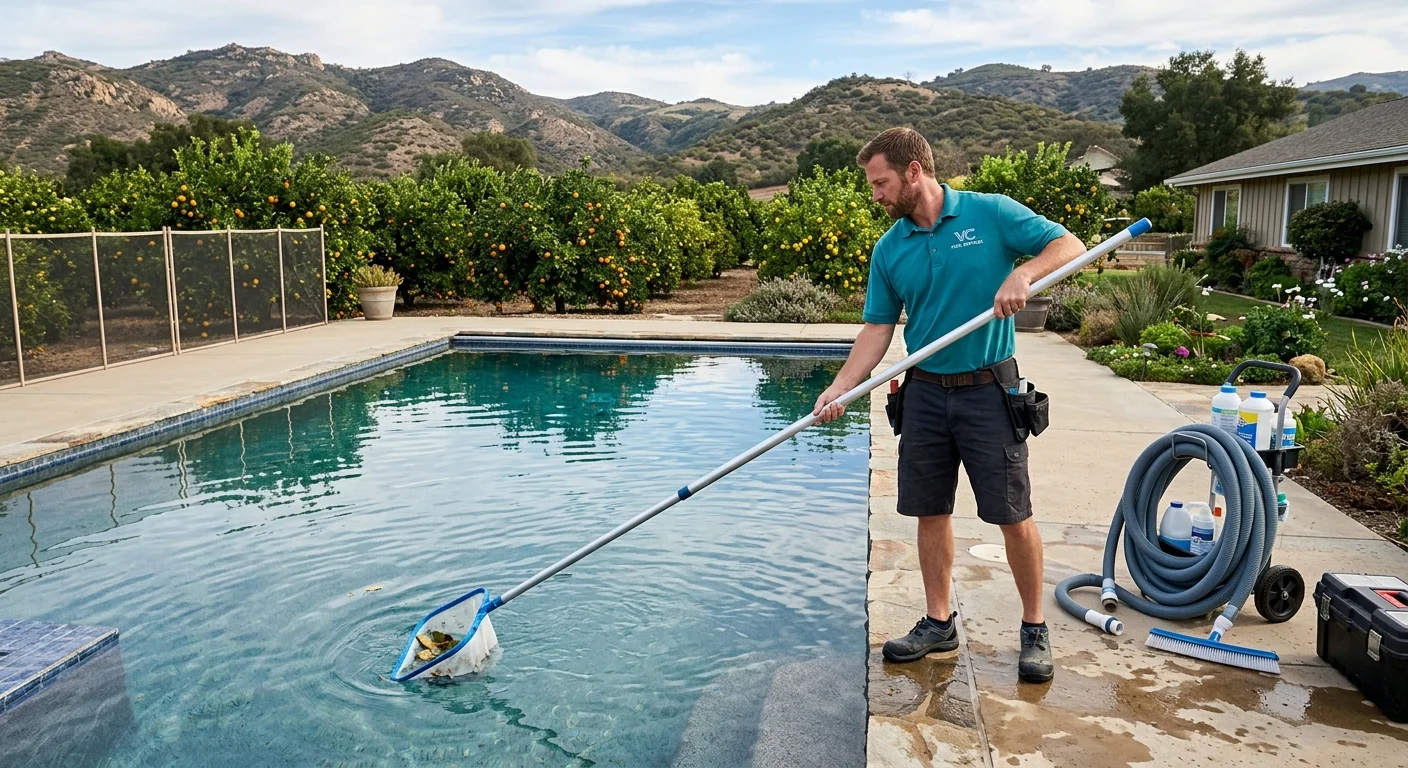
What weekly pool cleaning costs in Valley Center
HomeGuide’s September 2025 “Pool Maintenance Cost” guide places weekly maintenance at $20-$50 per week. It also lists $80-$150 per month for weekly or biweekly service. These are national market benchmarks, not Splash Pro Pools prices or a fixed Valley Center rate.
The useful question is what the local quote includes. Basic surface care won’t carry the same workload as brushing, basket cleaning, water testing, and chemical adjustment. HomeGuide lists basic care at $30-$95 per month, which shows how a narrow scope can differ from a fuller service plan. Compare written scopes before comparing totals.
Acreage affects the route in practical ways. The water doesn’t care how large the parcel is, but the service professional does need to reach it. A long private drive, a locked gate, distant equipment, or limited parking can add setup time. Those conditions don’t exist at every Valley Center home, so they belong in the quote rather than a blanket surcharge.
HomeGuide also lists typical pool cleaning labor at $60-$90 per hour. That benchmark helps explain why extra access or debris work can change the total. It doesn’t predict one property’s bill.
Our weekly pool cleaning and maintenance service connects homeowners with independent local pros. For a wider regional baseline, the San Diego weekly pool service cost guide explains how service frequency and scope affect market pricing across the county.
Rural properties make longer visits
Rural access can make a normal cleaning visit longer before the net touches water. That difference often comes from the property layout, not the pool’s dimensions.
A suburban pool may sit steps from ordinary street parking. On acreage, the professional may need to pass through a gate, follow a long driveway, and carry testing or cleaning gear farther. Equipment can also sit away from the house or behind landscaping. Each extra step is small, but the route repeats every week.
Clear arrival instructions help the pro price that work honestly. Gate access, parking limits, loose animals, and the equipment location should be discussed before service begins. That keeps an access problem from turning into a shortened visit or a missed part of the agreed scope.
The main quote drivers look different on rural land:
| Property condition | How it affects service | Why it matters |
|---|---|---|
| Direct access near the pool | Setup stays simpler | The pro can move equipment and supplies with fewer steps |
| A long driveway or gate | Access takes more route time | Entry and setup become part of every visit |
| Trees beside the water | Skimming and basket work can increase | Leaves, blossoms, and fruit reach the pool more easily |
| Open soil near the deck | Windblown dust can add cleaning work | Fine material settles on surfaces and reaches the filter |
| A neglected starting condition | Recovery work may come first | Routine maintenance can’t replace an initial cleanup |
A good estimate separates recurring service from one-time catch-up work. It should also describe access assumptions. That gives you a quote built around the actual driveway, pool, and equipment pad.
Citrus, avocados, and what falls in the pool
Groves change the cleaning workload because organic debris rarely lands all at once. Citrus and avocado trees can send leaves, blossoms, small twigs, and dropped fruit toward nearby water. Open land can also feed dust into the pool when wind crosses bare soil.
Large pieces collect at the surface or in baskets. Smaller material settles, breaks apart, or reaches the filter. A full basket restricts normal water movement, while fine debris keeps circulating until filtration or manual cleaning removes it. The pool can look mostly clear while the equipment handles a steady dirt load.
Tree placement matters more than the parcel’s total acreage. A large property with an open pool area may create less cleaning work than a smaller yard with branches hanging over the coping. A pro should look at what reaches the water between visits, not price the job from the lot size alone.
This is also why skimming alone gives an incomplete picture. Brushing moves attached material from pool surfaces. Basket cleaning clears captured debris. Filtration handles smaller particles. Our pool filter cleaning guide explains how that system fits into routine care.
Water chemistry still needs attention beneath the visible debris. The CDC’s home pool guidance recommends a pH of 7.0-7.8 and at least 1 ppm free chlorine in pools. The minimum rises to 2 ppm when cyanuric acid or stabilized chlorine is used. The CDC also says sunlight, swimmer waste, and dirt consume chlorine.
A weekly visit doesn’t turn chemistry into a set-it-and-forget-it system. The CDC recommends testing chlorine and pH at least twice daily, with more testing during heavy use. Professional maintenance and homeowner monitoring cover different parts of the week.
Neglect turns green fast out here
A neglected pool can leave the routine-service category and require recovery work. The change begins when sanitizer, circulation, filtration, and debris removal no longer keep up with the water’s load.
Sunlight and dirt reduce available chlorine, according to the CDC. Leaves and other organic material add more demand. If water circulation also weakens, algae can gain ground in areas that receive less treated water. Green walls or cloudy water signal a different job than an ordinary weekly skim and chemistry check.
Adding more chemicals without diagnosing the cause can waste product. The pro needs to assess the water, remove debris, confirm circulation, clean or inspect the filter, and choose a treatment based on the pool’s condition. A failed pump, blocked basket, dirty filter, or chemistry problem can each change the recovery plan.
HomeGuide’s September 2025 guide lists first-time pool cleaning at $150-$350. It also lists typical cleaning labor at $60-$90 per hour. Those national figures show why catch-up work is priced differently from a stable weekly route. They aren’t a Valley Center quote, and they don’t define the cost of every green pool.
Our guide to green pool cleaning in San Diego explains the recovery process in more detail. After the water and equipment are stable, weekly service can focus on preventing the same cycle. That transition should appear clearly in the proposal, with recovery work separated from recurring maintenance.
A quote built for acreage, not a suburb
The strongest Valley Center quote describes the property and the work in plain language. It doesn’t hide different service levels behind one monthly total.
The document should state the visit frequency and routine tasks. It should identify whether brushing, skimming, basket cleaning, filter care, water testing, and chemical adjustment are included. Chemical billing also needs a clear line. Some independent providers may bundle certain products, while others bill them separately.
Access belongs in the same conversation. Share the gate process, safe parking location, equipment location, and any condition that changes how the pro reaches the pool. If nearby citrus or avocado trees fill baskets between visits, say so. The quote can then account for a real debris pattern instead of assuming a tidy suburban yard.
Use identical scope when comparing providers. A lower total may cover fewer tasks or exclude chemicals. A higher total may include more cleaning work. The written details reveal the difference.
Water service also varies across San Diego County. The San Diego County Water Authority’s member list names Valley Center Municipal Water District among its member agencies. Confirm the retailer for your exact parcel, then ask that agency about current water rates and any local rules affecting draining or discharge. City of San Diego rates and drain rules don’t govern Valley Center.
Routine cleaning isn’t the same as construction work. Equipment repairs, resurfacing, and structural work need separate attention from a maintenance quote. Ask anyone touching equipment or the pool structure for a license number, then check it through the California Contractors State License Board.
Splash Pro Pools is a referral service. We connect homeowners with licensed, independent local pool professionals. The homeowner contracts with and pays the matched professional directly, so that pro sets the scope, price, and terms.
When to call us
Call when grove debris keeps overwhelming routine care, the water is slipping green, or an equipment concern sits beyond ordinary cleaning. Splash Pro Pools will match you with a licensed, independent local pool pro who can assess the property and provide a direct quote.
Call us at (760) 642-1256 and we’ll connect you with a licensed local pool pro.
Frequently asked questions
How much does weekly pool cleaning cost in Valley Center?
HomeGuide's September 2025 national guide lists weekly pool maintenance at $20-$50. A Valley Center pro sets the actual quote after considering the pool, service scope, debris, and property access.
Can a rural property cost more to service?
It can. Long driveways, gates, equipment access, and heavier grove debris can add work to each visit. The quote should explain which property conditions affect the price.
Are pool chemicals included in weekly service?
Chemical policies vary by independent provider. A written quote should state which products are included, which are billed separately, and what water testing the visit covers.
Does a green pool count as routine weekly cleaning?
A green pool may need separate recovery work before routine care begins. HomeGuide's September 2025 guide lists first-time cleaning at $150-$350, but the local pro must inspect the water and equipment before pricing the job.
Need professional help in San Diego County?
Splash Pro Pools connects San Diego homeowners with pool pros for the work in this post.