The weekly pool cleaning cost Del Mar homeowners can use as a starting benchmark is $20-$50 per week, based on HomeGuide’s September 22, 2025 national guide. A Del Mar quote can move within or beyond that range because coastal exposure, pool finish, access, and current condition change the work. The independent professional sets the actual scope and price after reviewing the pool.
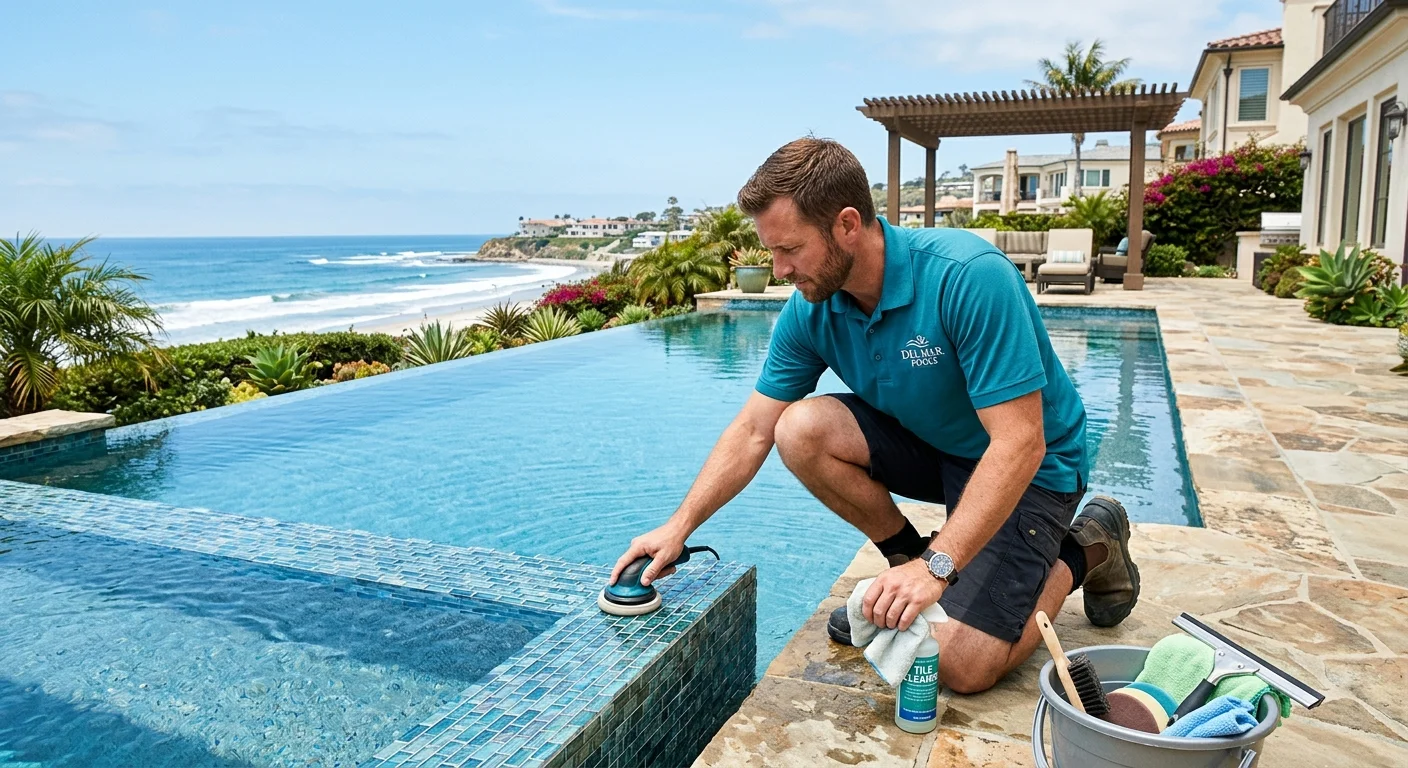
Del Mar weekly service: benchmark first, then the beach tax
Start with the national benchmark, then compare the work behind each quote. HomeGuide’s September 22, 2025 guide lists weekly pool maintenance at $20-$50 per week, depending on workload. It separately lists $80-$150 per month for weekly or biweekly service. Those figures describe different billing formats and scopes, so they won’t always line up neatly.
Here, “beach tax” means added workload rather than an official surcharge. A pool exposed to marine air may need closer attention around metal fittings, tile, and equipment. A compact lot near Camino del Mar can also make the equipment pad harder to reach. Neither detail automatically raises the price. Both affect what the professional must carry, inspect, clean, and document.
The starting condition matters too. HomeGuide’s same guide puts first-time cleaning at $150-$350 and hourly cleaning at $60-$90. A pool needing a major reset shouldn’t be compared with clear water already receiving routine care. The first visit may involve work that won’t repeat every week.
A written quote should identify the service cadence and the included tasks. It should also separate routine maintenance from filter work, repairs, and corrective tile cleaning. Our weekly pool cleaning and maintenance service helps homeowners connect with independent local professionals who can review those details.
For a broader regional baseline, see the San Diego weekly pool service cost guide. Use its market ranges as context, then bring the comparison back to your Del Mar pool.
Salt air works on everything metal and tiled
Salt air adds recurring inspection and cleanup around exposed pool components. Marine droplets settle on rails, fasteners, heater cabinets, control boxes, and decorative metal. Once the moisture evaporates, salts remain. That residue supports corrosion when it sits against unprotected metal.
The early signs can look minor. A rail anchor develops discoloration. A screw head begins to oxidize. A heater cabinet shows bubbling paint along an edge. Cleaning can remove surface residue, but it can’t reverse pitting or restore damaged metal. A weekly scope should distinguish routine wiping and visual checks from equipment repair.
The tile line faces a different version of the same coastal pressure. Airborne film settles at the water’s edge, where sunscreen, body oils, dirt, and mineral deposits already collect. Glass tile shows that haze quickly. Textured tile holds residue inside its surface pattern.
Pool water chemistry remains a separate issue. The CDC’s home pool guidance recommends a pH of 7.0-7.8. It also recommends at least 1 ppm free chlorine in pools, or at least 2 ppm when cyanuric acid or stabilized chlorine is used. Sunlight, swimmer waste, and dirt all consume chlorine.
The CDC recommends testing chlorine and pH at least twice daily, with more testing during heavy use. One professional visit each week doesn’t replace that between-visit testing. The homeowner or onsite caretaker still needs a routine for watching the water.
Salt air also isn’t the same thing as a saltwater pool. A saltwater system uses a cell to generate chlorine inside the plumbing. Coastal air reaches exterior parts regardless of how the pool itself is sanitized.
Small lots, high finish standards
Access and finish expectations can change the labor behind a Del Mar quote. On a compact lot, the route from the curb to the pool may pass through a narrow side gate, exterior stairs, or a furnished courtyard. Tools, hoses, and cleaning equipment still need a clear path to the water and equipment pad.
Pool size alone doesn’t settle the price. A smaller pool with glass tile, a spillover spa, detailed coping, and several corners may demand more hand work than a larger pool with simple lines. Dark finishes also make dust, scale, and uneven brushing easier to notice. The requested finish standard shapes the scope.
The most useful comparison puts each quote against the same pool conditions:
| Quote factor | Lower-workload condition | Higher-workload condition | Why the scope changes |
|---|---|---|---|
| Access | A direct path reaches the pool and equipment. | Stairs or a narrow passage separates the street from the pool. | Carrying and positioning equipment adds handling. |
| Interior design | The pool has broad surfaces and simple corners. | Steps, ledges, spillovers, and detailed tile need individual attention. | More edges create more brushing and inspection points. |
| Exposure | Walls and landscaping shelter the water. | Open coastal exposure brings more windblown film and debris. | Skimming, basket care, and surface cleaning expand. |
| Equipment layout | Components are visible and accessible. | A crowded pad limits access to valves and housings. | Routine observations take more care around tight components. |
| Starting condition | The water is clear and already maintained. | Cloudiness, algae, or heavy buildup needs corrective work. | Restoration work comes before a stable weekly routine. |
This is why two quotes can differ without either professional using the wrong benchmark. The scopes may solve different problems.
The proposal should make those differences visible. Chemistry service, filter cleaning, tile detailing, and equipment repair shouldn’t hide inside a vague “pool care” label. Clear boundaries make later comparisons much easier.
Tile and waterline care: the visible difference
Tile-line care often creates the most visible difference in a coastal pool. The waterline collects material from both sides. Pool water leaves dissolved minerals behind as it evaporates, while air and swimmers add film from above.
A fresh deposit may look like a dull band under morning light. On glass tile, even a thin film can interrupt the shine. Along textured or stone surfaces, residue settles into pores and joints. The material may be loose film, hardened mineral scale, or a mixture of both.
Routine brushing helps disturb soft deposits before they settle in. Hardened calcium bonds more firmly and may need a separate cleaning method. The correct method depends on the tile, grout, coping, and nearby pool finish. An aggressive tool that suits one surface can mark another.
That distinction belongs in the quote. Light waterline brushing may be part of ordinary weekly care. Corrective calcium removal is a different job with different tools and surface risks. Our pool tile and calcium cleaning service connects homeowners with local professionals who can identify the buildup and match the method to the surface.
Cleaning the visible band without addressing the water can leave the underlying cycle unchanged. Evaporation continues, minerals remain, and new deposits form at the changing waterline. Balanced chemistry and consistent brushing help manage that process, but existing scale may still need focused removal.
Photos can make this part of a proposal clearer. A close view of the waterline, grout, spillway, and rail anchors records the starting condition. It also separates cosmetic expectations from routine sanitation. For a Del Mar pool with reflective glass or detailed stone, that distinction matters every week.
Vetting quotes in a small coastal market
The strongest quote states who does the work, what’s included, and what remains separate. Compare the service scope before comparing the total. A low figure covering basic skimming isn’t equivalent to a proposal that also includes brushing, chemistry care, basket cleaning, equipment observations, and waterline attention.
Billing cadence needs the same clarity. HomeGuide’s September 22, 2025 figures cover weekly, biweekly, monthly, first-time, and hourly arrangements. A monthly total doesn’t reveal the visit frequency by itself. The written proposal should connect the charge to a defined cadence and task list.
Routine cleaning isn’t construction. Equipment or structural work sits differently, so ask anyone touching those systems for a contractor license number. You can check that number through the California Contractors State License Board. Repairs should also appear separately from routine maintenance, including their scope and terms.
Water handling deserves local attention as well. The City of Del Mar appears on the San Diego County Water Authority’s member-agency list. San Diego County doesn’t have one water rate or drainage rule for every city. Confirm current rates and pool discharge requirements directly with the City of Del Mar before work releases drained water or filter backwash.
Splash Pro Pools matches homeowners with licensed, independent local pool professionals. We don’t clean pools, set service prices, or perform repairs. The homeowner contracts with and pays the matched professional directly.
That structure makes the written scope especially useful. It should identify the professional, the property, the service cadence, and any excluded work. It should also explain how extra cleaning or a repair will be approved before it begins. A specific proposal is easier to compare and far easier to live with through a windy coastal season.
When to call us
Call when weekly care keeps slipping, coastal residue is showing at the waterline, or corroded equipment needs a licensed professional’s attention. Splash Pro Pools is a referral service, and the independent professional sets the scope, price, and terms before performing the work. Call us at (760) 642-1256 and we’ll connect you with a licensed local pool pro.
Frequently asked questions
What is the weekly pool cleaning cost in Del Mar?
HomeGuide's September 22, 2025 guide puts weekly pool maintenance at $20-$50 per week, depending on workload. Coastal exposure, access, pool condition, and service scope can change a Del Mar quote.
Does weekly service always include pool tile cleaning?
Not necessarily. Routine brushing and corrective calcium removal are different tasks. The professional's written scope should explain how the waterline will be maintained.
Is one weekly visit enough for water testing?
The CDC recommends testing chlorine and pH at least twice daily, with more frequent testing during heavy use. The owner or onsite caretaker needs a plan for testing between professional visits.
Who sets Del Mar pool water and drainage rules?
The City of Del Mar appears as a member agency of the San Diego County Water Authority. Confirm current water rates and pool discharge rules directly with the city before draining or backwashing.
Need professional help in San Diego County?
Splash Pro Pools connects San Diego homeowners with pool pros for the work in this post.