One thing to flag: Splash Pro Pools does not take this work on. It goes to a vetted local pool repair pro, reachable at (858) 400-6757.
That high-pitched whine from your pool equipment isn’t just annoying your neighbors over in Stoneridge. It’s often the first sign that Poway’s notoriously hard water is winning the battle inside your pump. Pros who’ve serviced pools in North County for years know the sounds a pump makes here tell a specific story, one that usually ends with a breakdown on the hottest day of the year.
Here in Poway, we’re not dealing with soft water. The City of Poway’s water reports show a hardness of about 12 to 14 grains per gallon (gpg). Anything over 10 is considered “very hard.” Think of it as liquid rock. Over time, that rock, mostly calcium carbonate, builds up on every surface it touches, especially inside the hot, fast-moving parts of your pool pump. For folks on the east side of town with well water, the problem can be even worse, with mineral content that’s off the charts and changes with the seasons.
This isn’t just a minor annoyance. That buildup, called scale, forces your pump to work harder, drives up your SDG&E bill, and drastically shortens the life of the most expensive piece of equipment on your pad. This post is for you, the Poway homeowner who hears that noise and wonders: is this a simple fix or a sign of something expensive? We’ll walk through the common pump problems we see here, what they mean, and when it makes sense to repair versus replace.
What Poway’s Water Does to Your Pool Pump
You can’t see the minerals in your water, but your pump motor feels them every minute it’s running. The core of the problem is how that hard water interacts with the heat and pressure inside your pump’s wet end.
When your water chemistry isn’t perfectly balanced, that dissolved calcium falls out of solution and sticks to surfaces. It forms a rough, white, crusty layer of scale. Here’s where it causes the most trouble:
-
On the Impeller: The impeller is a spinning disc that flings water out, creating the pressure that circulates your entire pool. When scale builds up on its delicate vanes, it throws the whole assembly off balance. It also narrows the passages, reducing water flow. The motor has to spin harder to move the same amount of water, which creates more heat and strain. This is a direct path to a higher energy bill and a burned-out motor.
-
Around the Shaft Seal: Every pump has a mechanical seal where the motor shaft enters the wet end. It’s what keeps water out of the electrical motor. This seal is a precise, two-part ceramic or carbon ring. When abrasive scale crystals form around it, they grind away at the seal, causing it to fail. A leaking shaft seal is the most common failure we see, and if not caught quickly, it will destroy the motor’s bearings and then the motor itself.
-
Inside the Volute: The volute is the snail-shaped housing around the impeller. Scale buildup here acts like plaque in an artery, restricting flow and forcing the motor to work overtime just to keep up.
For homeowners in the rural parts of Poway using well water, the situation is more complex. Well water here can have extremely high levels of calcium and magnesium, and sometimes iron and other minerals. This not only accelerates scaling but can also be corrosive if the pH isn’t managed perfectly. The variability means your water chemistry can swing wildly, making it tough to keep scale in check without constant attention.
The bottom line is that our local water puts your pump under constant stress. That stress shows up as noise, leaks, and eventually, a complete failure.
Common Pool Pump Problems We See in Poway (And How to Spot Them)
Your pump will usually give you a warning before it quits entirely. Learning to recognize these signs can be the difference between a simple repair and a full, expensive replacement. Here are the top issues pros in our network troubleshoot on service routes from Garden Road to the Maderas.
The High-Pitched Squeal or Whine
This is the classic sound of failing motor bearings. It starts as a quiet hum and grows into a screech that you can hear from inside the house. The bearings are small steel balls that allow the motor shaft to spin freely at thousands of RPMs. When the shaft seal leaks, even a tiny bit, water gets into the bearings, washes out the grease, and causes rust. The extra strain from a scale-clogged impeller also accelerates this wear and tear.
- What it means: The motor is on borrowed time. Once the bearings go, the motor will eventually seize up completely.
- The fix: This requires a motor replacement. A pro can swap out just the motor, keeping your existing pump housing (the wet end). It’s a job that involves electrical wiring and properly seating a new shaft seal, so it’s best left to a pro. Trying to do it yourself can easily lead to a fried new motor.
The Loud, Grinding or Rattling Noise
If you hear a sound like rocks in a blender, shut the pump off at the breaker immediately. This is almost always caused by one of two things:
- Debris in the Impeller: A small rock, piece of a toy, or even a clump of palm tree debris has made it past the pump basket and is being violently thrown around by the impeller.
- A Broken Impeller: The impeller itself has fractured, and the broken pieces are rattling around inside the volute.
- What it means: You have a major blockage or a broken part. Running the pump in this state will destroy the impeller, the volute, and possibly the motor.
- The fix: After killing the power, you can open the pump and clean out the basket. Look inside the intake with a flashlight to see if you can spot any debris on the impeller. If the noise continues after cleaning it out, the pump needs to be taken apart to inspect or replace the impeller.
The Pump Won’t Prime or Sucks in Air
Your pump is designed to be full of water. If it’s running but not moving water, or if you see a torrent of air bubbles through the lid, you have an air leak on the suction side of the system. This is the plumbing before the pump. The pump is pulling in air instead of water, which can cause it to overheat and damage the shaft seal.
- Common causes in Poway:
- A bad lid O-ring: This is the most common culprit. The black rubber ring under your pump lid gets dry and cracked from the sun and chlorine.
- A cracked pump lid or basket: Years of sun exposure can make the plastic brittle.
- Loose plumbing fittings: The threaded fitting going into the front of the pump can come loose.
- The fix: Start with the easy stuff. Turn off the pump, clean and lubricate the lid O-ring with a silicone-based pool lubricant (never use Vaseline, it degrades the rubber). Inspect the lid for cracks. If that doesn’t solve it, the leak is likely in the underground plumbing, which requires a more advanced pressure test to locate.
The Repair vs. Replace Decision for Poway Homeowners
When your pump fails, you’re faced with a choice: pay for a repair or invest in a whole new unit. The right answer depends on the age of your pump, the cost of the repair, and Poway’s steep electricity rates.
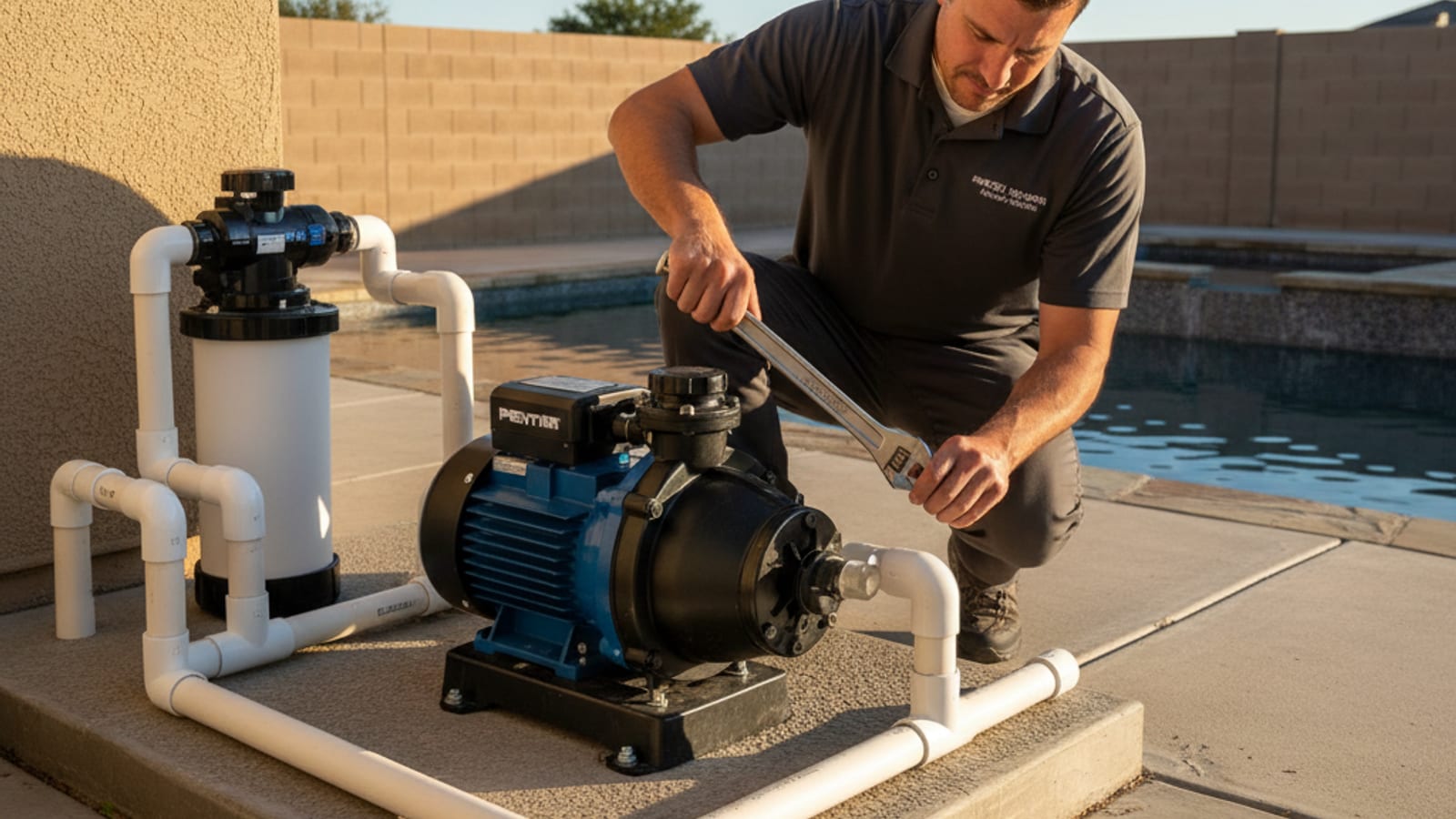
A pro in our network was out at a home off Espola Road last month that perfectly illustrates this. The owner had a classic single-speed Pentair WhisperFlo that was probably 12 years old. It was making a racket. He was on well water, and the calcium buildup inside the volute was like concrete. The motor and seals could have been replaced for about $600, but the rest of the pump housing was so brittle from the sun and calcified that it was a ticking time bomb. The plastic was one heat wave away from cracking.
For him, upgrading to a new variable-speed pump (VSP) was the only logical choice. He’ll likely save that $600 difference on his SDG&E bill in under two years.
Here’s a simple breakdown to guide your decision:
When to Repair Your Pump
A repair makes sense if:
- The pump is under 7 years old. The plastic housing and internal components are likely still in good shape.
- The problem is isolated. If it’s just a bad capacitor, a leaky seal, or a single broken part, a targeted repair is cost-effective. A motor replacement on an otherwise healthy pump can give you another 5-7 years of life.
- The repair cost is less than 50% of a new pump. A motor swap might run you $500-$800, depending on the model. A new, professionally installed VSP starts around $1,800. If your pump is only a few years old, the repair is a clear winner.
If you think your pump is a good candidate for a fix, getting a professional diagnosis is key. Pros in our network handle pool pump repair in Poway every day and can give you a straight answer on what makes the most sense for your setup.
When to Replace Your Pump
It’s time for a full replacement if:
- Your pump is over 8-10 years old. The plastic becomes brittle, and you’ll likely be chasing one repair after another.
- You have a single-speed pump. This is the big one. California’s Title 20 energy efficiency laws require variable-speed pumps for nearly all new installations and replacements on pools over a certain size. Even if it wasn’t required, it’s a smart financial move. A VSP can be run at very low speeds for most of the day, cutting its energy use by up to 90% compared to an old single-speed energy hog.
- The pump housing is cracked or warped. If the wet end is compromised, it’s not repairable. A full replacement is the only option.
With SDG&E rates being what they are, the energy savings from a VSP are substantial. A modern pump like a Pentair IntelliFlo3 or a Jandy FloPro can save a typical Poway homeowner $60-$120 per month. That’s real money that makes the upfront investment pay for itself quickly.
Preventing Future Pump Problems in the “City in the Country”
The best repair is the one you never have to make. Given our hard water, a little proactive maintenance goes a long way in protecting your pump.
- Master Your Water Chemistry: This is your number one defense. Keep your pH (7.4-7.6) and Total Alkalinity (80-120 ppm) in the proper range. This helps keep calcium in solution and prevents it from forming scale. Don’t let your Calcium Hardness level creep above 400 ppm.
- Use a Scale Inhibitor: Especially if you’re on well water, a quality sequestering agent is a must. Products like ScaleTec or Jack’s Magic The Magenta Stuff bind to the calcium minerals, preventing them from sticking to surfaces.
- Clean Your Baskets Regularly: A clogged skimmer or pump basket starves the pump for water. This makes it run hot and puts a huge strain on the motor and seals. Check them at least once a week, more if you have a lot of landscaping.
- Listen to Your Equipment: Get used to the normal, quiet hum of your pump. The moment you notice a change in the sound, investigate it. A small problem caught early is always cheaper to fix.
Taking care of your pool equipment isn’t complicated, but it does require consistency. Regular, professional maintenance is the easiest way to keep everything running smoothly and catch problems before they become catastrophes. Our Poway pool service includes a full equipment check on every single visit, so you always know where you stand.
Frequently asked questions
How much does a typical pool pump repair cost in Poway?
It varies, but a common motor replacement usually costs between $500 and $800, parts and labor included. A simpler fix like a seal kit replacement might be in the $250-$400 range. A full replacement with a new variable-speed pump will start around $1,800.
Is my loud pool pump breaking my HOA rules in a community like The Heritage?
It's very possible. Most Poway HOAs have noise ordinances that specify decibel limits, especially for early mornings or evenings. A pump with failing bearings can easily exceed these limits and lead to complaints from neighbors. Getting it repaired is a good idea for community peace.
Why is a variable-speed pump (VSP) so much better for Poway's high energy costs?
SDG&E rates are some of the highest in the country. A traditional single-speed pump runs at full power all the time, like flooring the gas pedal in your car. A VSP can be programmed to run at a very low, quiet, and energy-efficient speed for longer periods, cutting electricity use by up to 90% while still filtering all your water.
Can I just add a chemical to remove the scale from my pump?
While scale-inhibiting chemicals are great for prevention, they can't remove heavy existing buildup inside a pump. Removing thick scale requires taking the pump apart and carefully acid washing the components or physically scraping it off. It's often a sign that the pump is already damaged from the strain.
Need this done in San Diego County?
For repair and renovation work like this, we hand you to our trusted partner, Del Rancho Pools.