A note on scope: this is pool repair work, which sits outside what Splash Pro Pools does. Call (858) 400-6757 and we’ll match you with a vetted local pro who covers it.
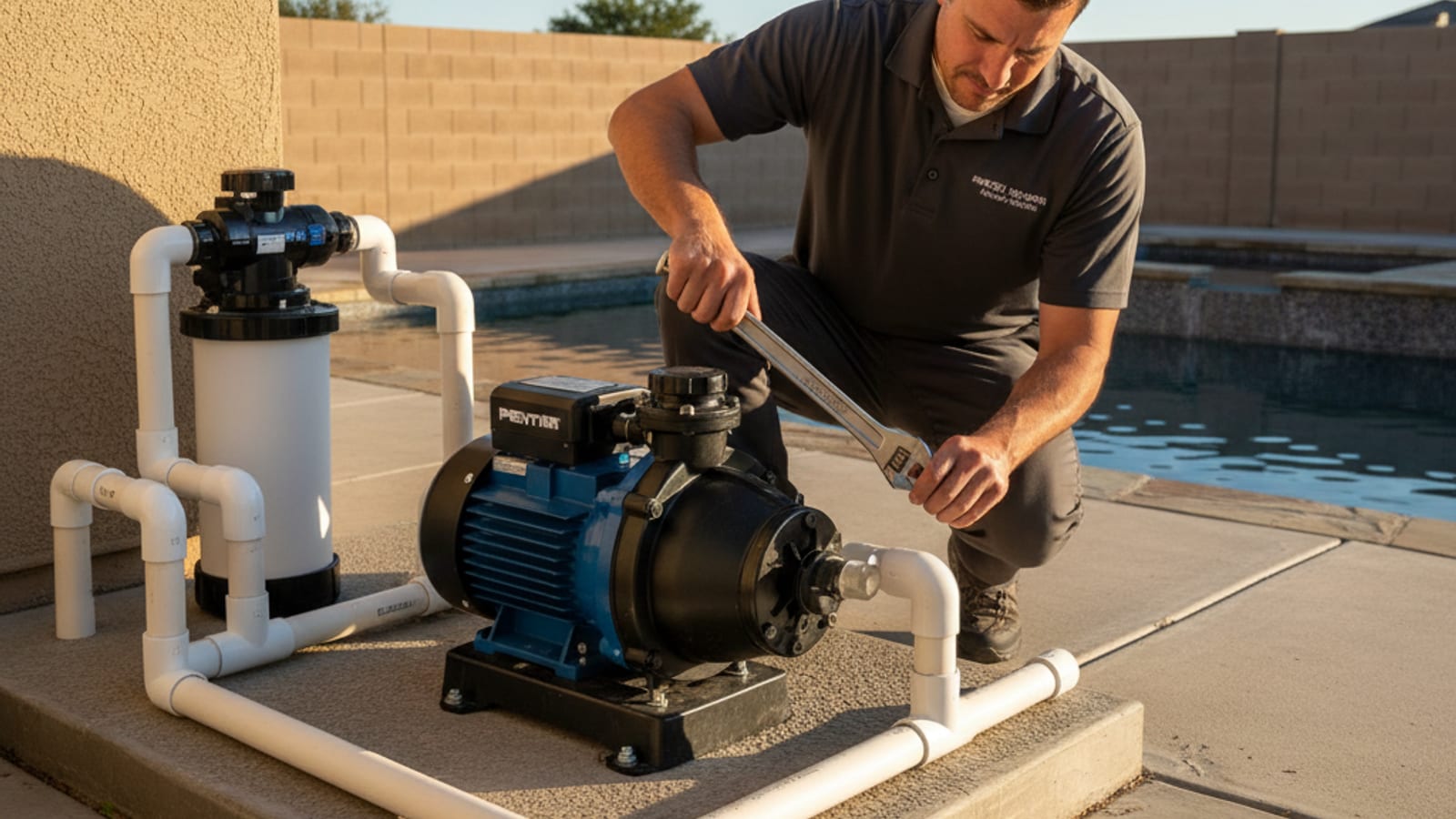
If you live in Oceanside, you know the sound of a pool pump working overtime against our hard water. But when that steady hum turns into a high-pitched whine or a grating screech, it’s a sound that says more than just “annoying”. It’s a sign your pump is fighting a losing battle against the unique challenges of our coastal town.
Oceanside pumps take salt air plus mineral-heavy City of Oceanside water. That pairing wears motors, seals, and housings faster than a pad 20 miles inland. Fire Mountain and Pendleton rentals see the same pattern. Splash matches the repair. Call (858) 400-6757. Cleaning is (760) 642-1256.
What’s That Noise? Common Pump Problems in O-side
A healthy pool pump should be relatively quiet, just a low, consistent hum. When things go wrong, the pump usually tells you with a new, unwelcome sound. Ignoring it is like ignoring the check engine light on your car. It only gets worse, and more expensive.
Here are the most common signs of trouble we see every day in Oceanside pools.
The High-Pitched Squeal or Whine
This is the classic sound of bad motor bearings. The bearings are small metal balls that allow the motor shaft to spin freely and smoothly. Over time, they wear out. In Oceanside, that process gets a serious speed boost from the salty, moist air. The marine layer rolls in, and that moisture gets inside the motor housing, causing the bearings to rust and fail.
- What’s happening: The grease inside the bearing has broken down or washed away, and now you have metal grinding on metal at thousands of RPMs.
- The risk: If you let it go, the bearings will eventually seize. When that happens, the motor will either burn out completely or trip the breaker every time it tries to start. A seized motor is almost always a full replacement job.
Grinding or Rumbling
A low, gravelly grinding noise often points to a problem inside the “wet end” of the pump, specifically with the impeller. The impeller is a spinning disk that grabs water and shoves it toward the filter.
- What’s happening: Debris like small rocks, palm tree seeds, or even a kid’s toy can get sucked into the pump basket and then into the impeller housing. As the impeller spins, it grinds against this debris. Another cause, especially with our hard water (around 12-14 grains per gallon), is calcium scale. Chunks of scale can break off from the pipes or heater and get lodged in the impeller.
- The risk: A damaged impeller loses its ability to move water efficiently. Your circulation suffers, your pool gets cloudy, and the motor has to work harder, which shortens its life.
Loud Humming, But No Action
If the pump hums loudly but the shaft isn’t spinning and no water is moving, you likely have a bad capacitor or a seized motor. The capacitor is like a battery that gives the motor a jolt to get it started.
- What’s happening: Capacitors can fail from age, heat, or a power surge. It’s a relatively easy and inexpensive part to replace. However, the same symptom can mean the motor bearings have completely seized (see the “squealing” section). You can test this carefully: with the power OFF at the breaker, try to spin the motor shaft by hand (usually accessible from the back of the motor). If it doesn’t turn, the motor is seized. If it spins freely, the capacitor is the prime suspect.
- The risk: Continuously trying to start a pump with a bad capacitor or seized motor can cause it to overheat and burn out, turning a small repair into a big one.
Water Leaks
A puddle under your pump is never a good sign. The most common source of a leak is the shaft seal. This is a two-part mechanical seal that sits where the motor shaft enters the pump housing. It’s designed to let the shaft spin while keeping water out of the motor.
- What’s happening: Our hard Oceanside water is tough on these seals. The minerals create friction and wear them down. When the seal fails, water drips out. At first, it might just be a slow drip, but it will get worse.
- The risk: The leak is bad for two reasons. First, it’s wasting water. Second, and more importantly, that water is often dripping directly onto the motor itself. Water and electricity don’t mix, and a persistent leak will short out the motor bearings and electrical components, destroying it from the outside in.
Salt, Scale, and Seals: The Oceanside Pump Killers
Why do pumps seem to fail so often here? It’s not your imagination. The environment in coastal North County puts a unique strain on pool equipment. It’s a combination of factors that work together to shorten the lifespan of your pump.
The Salt Air Factor
You don’t have to live on The Strand to feel the effects of salt air. That damp, salty breeze can travel miles inland, covering everything in a fine, corrosive layer. For your pool pump, this is a constant attack.
- Motor Housing: The metal casing of the motor is the first line of defense. But tiny scratches in the paint become entry points for rust. We often see motors that look 20 years old after just five years of service.
- Electrical Components: The terminal board, capacitors, and wiring inside the motor’s rear cover are all vulnerable. Salt-laced moisture causes corrosion on these connections, leading to poor performance and eventual failure.
- Bearings: As mentioned before, moisture is the number one enemy of motor bearings. Salt accelerates the corrosion process, turning a minor issue into a major breakdown.
The Hard Water Problem
Oceanside’s water is classified as “very hard.” While it’s perfectly safe to drink and swim in, those dissolved minerals (mostly calcium and magnesium) cause real problems for your equipment. When the water is heated or evaporates, these minerals precipitate out and form a rock-hard deposit called scale.
- Impeller Clogging: Scale can build up on the impeller, throwing it off balance and reducing its efficiency. It’s like driving with mud caked on one of your tires. This imbalance puts extra stress on the bearings and the shaft seal.
- Shaft Seal Damage: The shaft seal relies on a perfectly smooth surface to work. The abrasive minerals in our water slowly grind away at the seal, eventually causing it to fail and leak.
- Pump Housing and Lid: Scale can build up inside the pump housing, restricting water flow. It can also form on the threads of the pump lid, making it nearly impossible to get a good seal on the O-ring, which can lead to the pump sucking in air.
The Rental and Military Turnover Effect
Oceanside has a lot of rental properties, especially with Camp Pendleton right next door. This high turnover can be tough on a pool. We see it all the time. A military family gets orders, moves out, and the property sits vacant for a few weeks. Or, a short-term vacation rental has a new group of people in it every weekend.
Consistent, knowledgeable maintenance is key to a pump’s longevity. Renters, with the best of intentions, often don’t know what to look for. They might not clean the skimmer and pump baskets regularly, which starves the pump for water and makes it run hot. They might not notice a small leak or a new noise. By the time the property owner or manager finds out, a simple fix has become a full pump replacement. This is why having a reliable service company is so critical for non-owner-occupied homes. Consistent professional pool service in Oceanside can catch these small issues before they become catastrophic failures.
Repair vs. Replace: Making the Right Call
When your pump starts acting up, the big question is always: should I fix it or get a new one? There’s no single right answer. It depends on the age of your pump, the nature of the problem, and your budget.
When to Repair Your Pump
Repairing makes sense when the pump is relatively new (less than 7 years old) and the core motor is still in good shape.
- Good Candidates for Repair:
- Leaky Shaft Seal: A seal kit is inexpensive. If the motor hasn’t been damaged by the water yet, this is a straightforward and cost-effective repair.
- Bad Capacitor: This is one of the cheapest and easiest fixes. The part itself is usually under $50.
- Bad Bearings (Caught Early): If you catch the squealing noise early, a technician can often replace just the bearings and seals, saving the motor. This is a more involved repair but still much cheaper than a new pump.
- Broken Impeller or Basket: These are replaceable parts. As long as the motor is fine, there’s no reason to replace the whole unit.
A few years ago, we got a call from a homeowner in Arrowood. He had a beautiful pool, but his three-year-old Pentair IntelliFlo variable-speed pump was making a terrible racket. He was worried he was looking at a $2,000 replacement. When we got there, we could tell right away it was the bearings. The pump was tucked into a corner against a stucco wall where moisture from the sprinklers collected. We were able to pull the motor, press in a new set of high-quality bearings, replace the shaft seal for good measure, and get it running whisper-quiet again for a fraction of the cost of a new pump. That’s a perfect example of when a repair is the smart move.
When to Replace Your Pump
Sometimes, throwing more money at an old pump is a bad investment. Replacement is often the better long-term solution.
- Good Candidates for Replacement:
- Old Single-Speed Pumps: If your pump is over 8-10 years old and it’s a single-speed model, it’s living on borrowed time. More importantly, it’s costing you a fortune on your SDG&E bill. California’s Title 20 energy efficiency laws now require new and replacement pumps over a certain horsepower to be variable-speed.
- Major Motor Failure: If the motor is seized, burned out, or has a cracked housing from rust, it’s usually time for a new unit. A replacement motor alone can cost 60-70% of a whole new pump, and you’re still left with an old, worn-out wet end.
- Multiple Problems: If you have a leaky seal, bad bearings, and a cracked basket, the cost of the individual repairs starts to add up. At that point, it’s better to put that money toward a new pump with a fresh warranty.
Upgrading to a new variable-speed (VS) pump is a game-changer. Instead of running at full blast all the time, a VS pump can be programmed to run at very low speeds for longer periods. This is the key to energy savings. It’s like the difference between flooring your car at every stoplight versus cruising on the freeway. A modern VS pump can save you 50-90% on your pump’s electricity usage. For most Oceanside homeowners, the pump pays for itself in energy savings in just a couple of years.
When you’re facing a tough decision, getting a professional opinion on a pool pump repair in Oceanside is the best first step. We can accurately diagnose the problem and give you a clear, honest breakdown of your options so you can make an informed choice that’s right for your pool and your wallet.
Frequently asked questions
How much does a typical pool pump repair cost in Oceanside?
A simple repair like a capacitor or a seal kit might cost between $250 and $450, including labor. A more involved motor bearing replacement can range from $450 to $650. If the problem is severe, these costs can approach the price of a new pump, which is why a proper diagnosis is so important.
How long should a pool pump last in a coastal city like Oceanside?
In our coastal environment, a well-maintained pump motor typically lasts 5 to 8 years. The "wet end" (the plastic housing) can last much longer, over 10 years. The constant exposure to salt air and hard water definitely shortens the lifespan compared to inland areas.
Can I replace my own pool pump motor to save money?
While it's technically possible if you're very handy, we generally advise against it. It involves both high-voltage electrical wiring and precise plumbing. An improper electrical connection is dangerous, and an incorrectly installed shaft seal will fail immediately, potentially ruining your new motor.
My HOA in Ocean Hills has rules about noise. Will a new pump be quieter?
Absolutely. A new variable-speed pump running at its normal, low-speed setting is incredibly quiet, often hard to even hear from a few feet away. This is a huge benefit for homeowners in communities with strict noise rules or for anyone with a pool near a bedroom window.
Need this done in San Diego County?
For repair and renovation work like this, we hand you to our trusted partner, Del Rancho Pools.