Most San Diego pools stay filled all year, but they still need a spring reset. Start with pH 7.4 to 7.6, then alkalinity, calcium, then sanitizer. A professional opening typically runs $150 to $350. Wait 24 hours after shock and re-test before anyone swims. Call (858) 400-6757 if the water is green or the equipment sat idle.
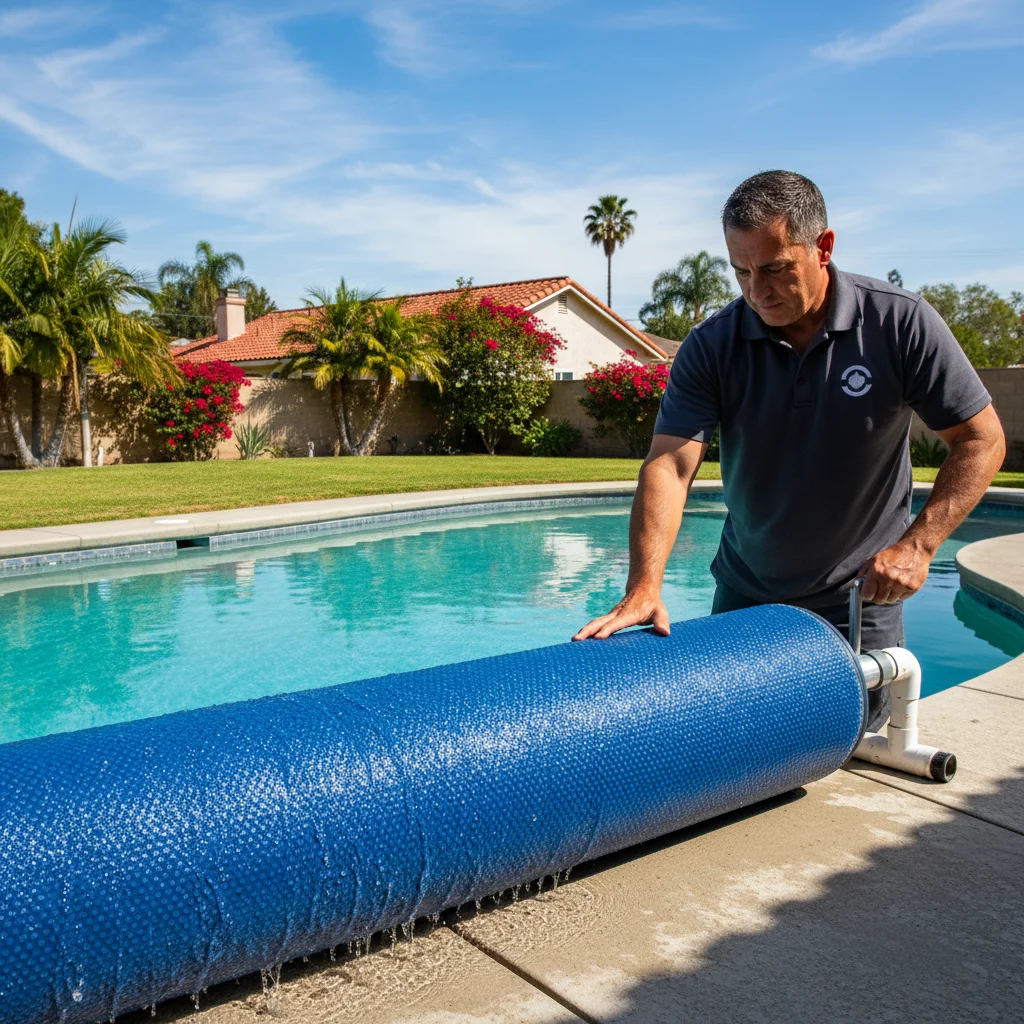
When to open your pool in San Diego County
The short answer: late April is the right window for most of San Diego County.
Water temperature is the real driver. Pool water below 60°F doesn’t support algae growth well, so there’s less urgency. But San Diego’s inland areas, El Cajon, Santee, Poway, regularly hit 80°F by early May, and pool water climbs fast once the air warms. Waiting until Memorial Day means you’re already behind.
Coastal homeowners in La Jolla or Del Mar can push into early May without much risk. If you’re east of the 15, move sooner.
San Diego also gets late-season rain through March and into April. Those rains dilute your pool chemistry more than most homeowners realize. A single heavy rain event can drop total alkalinity by 20-30 ppm and shift pH down noticeably. If your last water test was in January, you’re flying blind.
The practical rule: when daytime highs are consistently above 75°F and you’re thinking about the pool more than once a week, it’s time to open it properly.
The 10-step spring start-up sequence
Work through this in order. Skipping steps or doing them out of sequence costs you time and chemicals later.
- Remove and clean the cover. Rinse it, let it dry fully, then fold and store it. A damp cover grows mildew fast.
- Skim and vacuum. Remove leaves, debris, and sediment before running the pump. You don’t want that material cycling through your filter.
- Reinstall or check fittings. Reattach any ladders, handrails, or return fittings you removed for winter. Tighten everything.
- Inspect the equipment pad. Look at the pump, filter, and heater before you turn anything on. More on this in the equipment section below.
- Fill to the correct level. Water should sit at the midpoint of your skimmer opening, not above, not below.
- Prime the pump. Open the strainer lid, fill the basket with water, replace the lid, then start the pump. Watch for air bubbles in the sight glass clearing within 60 seconds.
- Run the system and check for leaks. Let it run 15 minutes while you walk the equipment pad and look at every fitting, union, and valve.
- Clean or backwash the filter. Don’t skip this. A filter full of winter debris can’t do its job.
- Test the water. Take a sample from elbow-depth, 12-18 inches below the surface, away from return jets.
- Add chemicals in the correct order. This is where most DIYers go wrong, covered next.
Follow your pool maintenance schedule year-round and this spring reset gets easier every year.
Chemicals to balance first (and in what order)
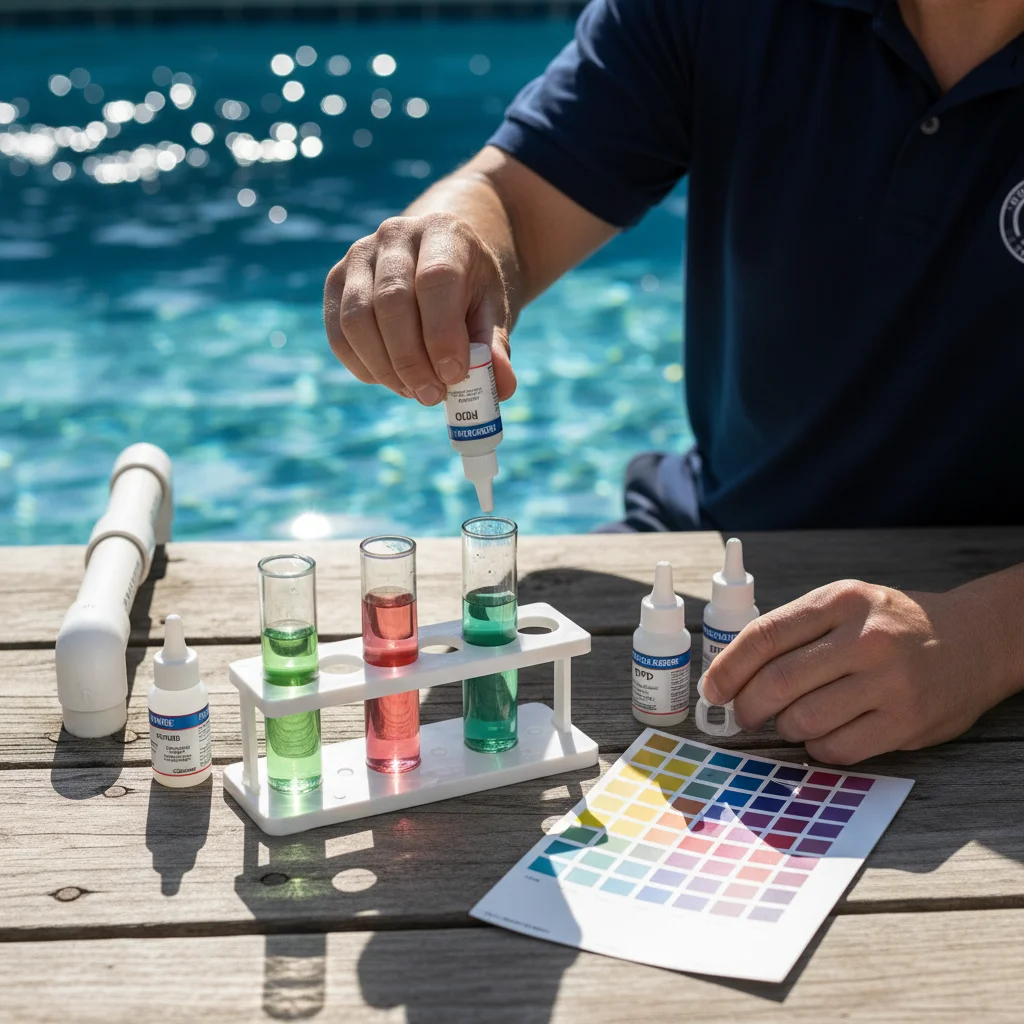
Order matters here. Add chemicals out of sequence and you’re neutralizing your own work.
Step 1: pH (target 7.4-7.6)
pH affects how efficiently every other chemical works. Low pH corrodes equipment and irritates eyes. High pH makes chlorine almost useless, at pH 8.0, chlorine is only about 20% active. Get this right first.
Use muriatic acid to lower pH. Use sodium carbonate (soda ash) to raise it. Add to the deep end near a return jet with the pump running. Wait 4 hours before re-testing.
Step 2: Total alkalinity (target 80-120 ppm)
Alkalinity buffers pH so it doesn’t swing wildly. San Diego tap water typically comes in around 100-150 ppm from the San Diego County Water Authority, so you may not need much adjustment. But winter rain dilution often pushes it low.
Use sodium bicarbonate to raise alkalinity. Lower it with muriatic acid, added slowly in multiple doses.
Step 3: Calcium hardness (target 200-400 ppm)
San Diego source water is notoriously hard. Check your current levels before adding anything, you’re more likely to need to dilute than to add calcium hardness increaser. This is worth reading more about in our post on hard water and San Diego pools.
Step 4: Sanitizer and shock
Once pH, alkalinity, and hardness are balanced, shock the pool. Use a calcium hypochlorite shock at roughly 1 lb per 10,000 gallons for a standard spring opening. If water is cloudy or green, you’ll need more. Run the pump overnight and re-test in the morning.
Cyanuric acid (stabilizer) should sit between 30-50 ppm for an outdoor pool. Don’t go above 80 ppm, it starts reducing chlorine effectiveness.
Equipment checks that prevent summer breakdowns
Summer is the worst time to discover your equipment has a problem. A pump that dies during a July heat wave means algae within 48 hours. Check everything now.
Pump: Listen for unusual noise during priming. A healthy pump is relatively quiet. Grinding, screeching, or a motor that hums but doesn’t turn points to a failing motor or impeller. Check the shaft seal for drips, a leaking seal will worsen fast.
Filter: Cartridge filters should be chemically cleaned at least once a year, not just rinsed. DE filters need fresh diatomaceous earth after backwashing. Sand filters should be backwashed until the sight glass runs clear. If your filter’s pressure gauge reads more than 8-10 psi above its clean starting pressure, it’s overdue.
Our pool filter cleaning guide covers each filter type in detail.
Heater: If you haven’t used the heater since fall, fire it up now. Watch for error codes, listen for ignition that doesn’t catch, and check the heat exchanger for corrosion. Heater repairs take time to schedule, don’t find out you need one the week guests arrive.
Valves and automation: Cycle through every valve. Stuck diverter valves are common after months of disuse. If you have an automation system, verify all schedules and modes transferred through any power outages.
Lights: Test them during the day with the pump running. Leaking light niches can cause slow water loss that’s easy to blame on evaporation.
If you’re seeing any pressure anomalies or slow water loss you can’t explain, get a pool leak detection check before summer demand peaks.
When to skip DIY and book a pro start-up
Some spring openings are straightforward, a few hours of work, a water test, and you’re swimming by the weekend. Others aren’t.
Book a professional when:
- The water is green. Visible algae means you’re past a standard shock. You need a multi-step treatment, likely with algaecide, aggressive brushing, and possibly a filter clean mid-treatment. Our green pool recovery service handles this regularly.
- The pump hasn’t run in months. Equipment that’s been idle can seize or develop hidden leaks that aren’t obvious until you pressurize the system. A tech can spot and address those before they become expensive repairs.
- You’re unsure about your water chemistry. Getting pH and alkalinity wrong early means re-doing the whole sequence. A professional water analysis costs a fraction of the chemicals you’ll waste.
- The pool wasn’t maintained through winter. If weekly care lapsed from November through March, the filter, salt cell, or other components may need service you’re not equipped to assess.
- You want a clean baseline for summer. Starting weekly pool cleaning service in spring means your technician documents your equipment’s condition, baseline chemistry, and any issues, so there are no surprises in August.
If you plan to have someone handle weekly maintenance through the swim season, spring start-up is a natural entry point. Your technician learns your system, catches deferred issues early, and sets up your water chemistry to stay stable. That’s a much easier position than calling for help after a problem develops.
When to call us
A spring start-up that uncovers pump failure, a leaking light niche, or a filter that needs replacement isn’t something to troubleshoot alone, especially when summer’s close. These situations need a professional with the right diagnostic tools and parts on hand.
If your pool came through winter looking rough, or you just want the season to start right without the guesswork, we’re ready to help. Call us at (858) 400-6757 and we’ll connect you with a vetted local pool pro.
Frequently asked questions
Do San Diego pools really need a spring opening if they never fully close?
Most San Diego pools stay filled year-round, but winter rains dilute chemistry, algae spores settle during low-use months, and equipment goes unchecked. A spring reset catches those issues before summer heat makes them worse.
What chemicals do I add first when opening my pool in spring?
Start with pH adjustment, then total alkalinity, then calcium hardness, then sanitizer. Getting pH into the 7.4-7.6 range first makes every other chemical work more efficiently.
How long after adding opening chemicals can I swim?
Wait at least 24 hours after shocking and re-test before swimming. Chlorine should read between 1-3 ppm and pH between 7.2-7.6 before anyone enters the water.
How much does a professional pool opening service cost in San Diego?
A professional spring start-up in San Diego County typically runs between $150 and $350 depending on pool size, condition, and whether filter cleaning is included. Neglected pools that need algae treatment or equipment repair will cost more.
Can I open my pool myself or should I hire a pro?
Straightforward spring resets are reasonable DIY projects if you're comfortable with water chemistry and basic equipment checks. Call a licensed pro when water is green, equipment hasn't run in months, or you notice cracks, leaks, or pressure anomalies.
Need professional help in San Diego County?
Splash Pro Pools connects San Diego homeowners with pool pros for the work in this post.