Worth knowing first: Splash Pro Pools is a cleaning and maintenance company, so equipment installation and upgrades goes to our repair partner, reachable on (858) 400-6757.
A pool light replacement in San Diego typically costs $400 to $1,200. You can usually swap the fixture without draining. LED lasts 15,000 to 30,000 hours versus a few thousand for incandescent. Call (858) 400-6757.
Why your pool light stopped working: bulb, niche, or wiring
When your pool light suddenly goes out, it’s natural to wonder if it’s just a simple bulb issue or something more serious. In San Diego, as in any coastal environment, pool equipment faces unique challenges from humidity and wear. The problem can stem from one of three primary areas: the bulb itself, the light niche and housing, or the electrical wiring.
The Bulb or LED Unit
The most common culprit is a burned-out bulb. Older incandescent bulbs have a filament that eventually breaks, just like a household light bulb. If you have an LED unit, while much longer-lasting, it can still fail due to manufacturing defects or power surges. Sometimes, the seal around the bulb or LED unit can also degrade, allowing water intrusion that short-circuits the light.
The Light Niche and Housing
The light niche is the recessed area in your pool wall where the light fixture sits. Over time, the gasket that seals the light fixture against the niche can deteriorate, allowing water to seep in and corrode internal components. The conduit leading to the niche can also become compromised, letting water reach the wiring. This corrosion can lead to intermittent operation, flickering, or complete failure. For fiberglass or vinyl liner pools, the niche integrity is particularly important, as a faulty seal can even lead to leaks outside the light itself.
The Wiring and Electrical System
More complex issues involve the electrical wiring that powers your pool light. This can include:
- Faulty GFCI Breaker: Your pool light is connected to a Ground Fault Circuit Interrupter (GFCI) for safety. If the GFCI trips repeatedly or won’t reset, it could indicate a short circuit or ground fault in the light’s wiring. This is a critical safety feature and should always be checked by a professional. If the fault traces back to the breaker panel or house-side wiring rather than the pool equipment, an electrician like Bright Pro Electric handles that side of the repair.
- Damaged Wiring: Rodents can chew through wires, or underground lines can be compromised by shifting ground or accidental digging. This can disrupt power flow to the light.
- Corroded Connections: Connections at the junction box or within the light fixture can corrode, causing resistance and preventing the light from turning on.
Diagnosing the exact problem requires expertise. Pool techs are experienced in pinpointing these issues quickly, ensuring a safe and effective repair. Sometimes, a dead light points to a deeper electrical safety concern, making a professional diagnostic a wise investment.
Old incandescent vs. modern LED pool lights
For many years, incandescent bulbs were the standard for pool lighting. They provided a warm, traditional glow, but came with several drawbacks. Today, modern LED (Light Emitting Diode) pool lights have largely replaced incandescents, offering significant advantages for San Diego homeowners looking to optimize their pool experience.
Incandescent Pool Lights
Traditional incandescent pool lights rely on a filament that heats up to produce light. While they’ve served pools well for decades, they are far less efficient. A typical incandescent pool bulb might consume 300 to 500 watts of electricity. This high power consumption translates to higher utility bills, which isn’t ideal in a city like San Diego where pools are enjoyed year-round. They also have a relatively short lifespan, often burning out within 1,000 to 5,000 hours, requiring frequent and costly bulb replacements. When an incandescent bulb fails, it’s usually a complete burn-out, leaving your pool dark.
Modern LED Pool Lights
LED pool lights are a game-changer. Instead of a filament, they use semiconductor diodes to emit light. This technology is incredibly energy-efficient, typically consuming only 20 to 70 watts for the same amount of light output as a much higher wattage incandescent bulb. This massive reduction in energy use means substantial savings on your electricity bill over time.
Beyond efficiency, LED lights boast an impressive lifespan. They can last anywhere from 15,000 to 30,000 hours, meaning you might not need to replace your pool light for well over a decade. This longevity reduces maintenance hassle and cost. Furthermore, LED lights run cooler than incandescents, which can contribute to the overall health of your pool’s electrical system by reducing heat stress on components. The switch to LED is not just an upgrade in illumination; it’s an upgrade in efficiency, longevity, and overall enjoyment.
Color-changing LED options and what they add for night swimming
One of the most exciting advancements in LED pool lighting is the introduction of color-changing capabilities. These aren’t just practical upgrades; they’re aesthetic enhancements that can truly transform your San Diego backyard into a personalized resort experience, especially during those long, inviting evenings that are perfect for a dip.
Imagine diving into a pool bathed in a tranquil blue, celebrating with friends around a vibrant red, white, and blue display, or setting a romantic mood with soft, shifting hues of purple and green. Color-changing LED lights make all of this possible with the touch of a button. Most systems come with a remote control, a wall switch, or can even be integrated with smart home systems and pool automation apps, allowing you to cycle through a spectrum of colors and pre-programmed light shows.
Enhanced Ambiance and Entertainment
The ability to customize your pool’s lighting instantly elevates the ambiance. For parties, you can sync the lights to a festive theme. For relaxation, you can choose calming, steady colors. This flexibility makes your pool not just a place to swim, but a dynamic focal point that adapts to any occasion. In San Diego, where outdoor living is a cornerstone of the lifestyle, a well-lit and vibrant pool significantly enhances your property’s appeal and usability after dark.
Improved Safety and Visibility
Beyond aesthetics, color-changing LED lights also contribute to safety. Brighter, more consistent illumination makes it easier to see the pool steps, edges, and any swimmers, reducing the risk of accidents. While standard white LED lights offer excellent visibility, the option to switch to a bright, distinct color can be particularly useful in certain situations or for visually impaired swimmers.
Energy Efficiency Continues
Even with all the dazzling color options, LED technology maintains its energy efficiency. These lights consume significantly less power than older incandescent bulbs, meaning you can enjoy stunning light shows without worrying about a spike in your electricity bill. This combination of beauty, safety, and efficiency makes color-changing LED pool lights an incredibly popular upgrade among San Diego pool owners. If you’re considering a pool light replacement in San Diego, exploring these vibrant options is definitely worthwhile.
What pool light replacement costs in San Diego
The cost of pool light replacement in San Diego can vary quite a bit, depending on the type of light, the extent of the repair, and whether you’re simply replacing a bulb or upgrading the entire fixture. Transparency matters, expect a clear estimate before any work begins.
Simple Bulb Replacement
If you have an older incandescent fixture and only the bulb needs replacing, this is generally the least expensive option. The cost usually covers the new bulb, which can range from $30 to $100 for a standard incandescent, plus the service call and labor fee. However, finding replacement incandescent bulbs is becoming harder, and many homeowners opt to upgrade the entire fixture when the bulb burns out.
Incandescent to LED Upgrade (Fixture Replacement)
This is the most common and recommended scenario. When an old incandescent light fails, most San Diego homeowners choose to replace the entire fixture with a new LED unit. The cost for an LED pool light replacement in San Diego typically ranges from $400 to $1,200. This price range accounts for:
- The LED Fixture: Basic white LED lights are on the lower end, while color-changing LED fixtures with advanced features can be on the higher end. Brands like Pentair, Hayward, and Jandy offer various models.
- Labor: The pro handles the safe removal of the old fixture, installation of the new one, and ensuring all electrical connections are secure and watertight. This often involves working with the light’s conduit and junction box.
- New Gaskets and Seals: Essential for preventing water intrusion and ensuring the longevity of your new light.
While the upfront cost for an LED upgrade is higher than a simple bulb swap, the long-term energy savings and extended lifespan typically make it a more cost-effective choice. Many San Diego residents find the enhanced aesthetics and reduced maintenance make the investment well worth it.
More Complex Repairs
If the issue isn’t just the light fixture itself but involves damaged wiring, a faulty GFCI, or corrosion within the conduit, the cost can increase. Diagnosing and repairing these issues might add $100 to $300 or more to the total, depending on the complexity of the electrical work required. For example, tracing a short or replacing a damaged conduit section takes more time and specialized tools. For any major pool repair, you can always learn more about our comprehensive pool repair services.
You’ll always get a detailed quote after a thorough diagnostic, so you understand exactly what needs to be done and why.
How a light gets replaced safely without draining the whole pool
One of the most common questions San Diego pool owners ask when their light goes out is, “Do I need to drain my whole pool just to replace a light?” The good news is, for standard pool light replacements, the answer is almost always no. Pool techs are trained to perform these replacements safely and efficiently without emptying your pool.
The design of most modern pool light fixtures allows for them to be serviced without draining the water. Here’s a general overview of the process:
- Safety First: Power Disconnection: The very first and most crucial step is to completely shut off power to the pool light circuit at the breaker panel. This eliminates any risk of electrical shock. A voltage tester always confirms the power is truly off before proceeding.
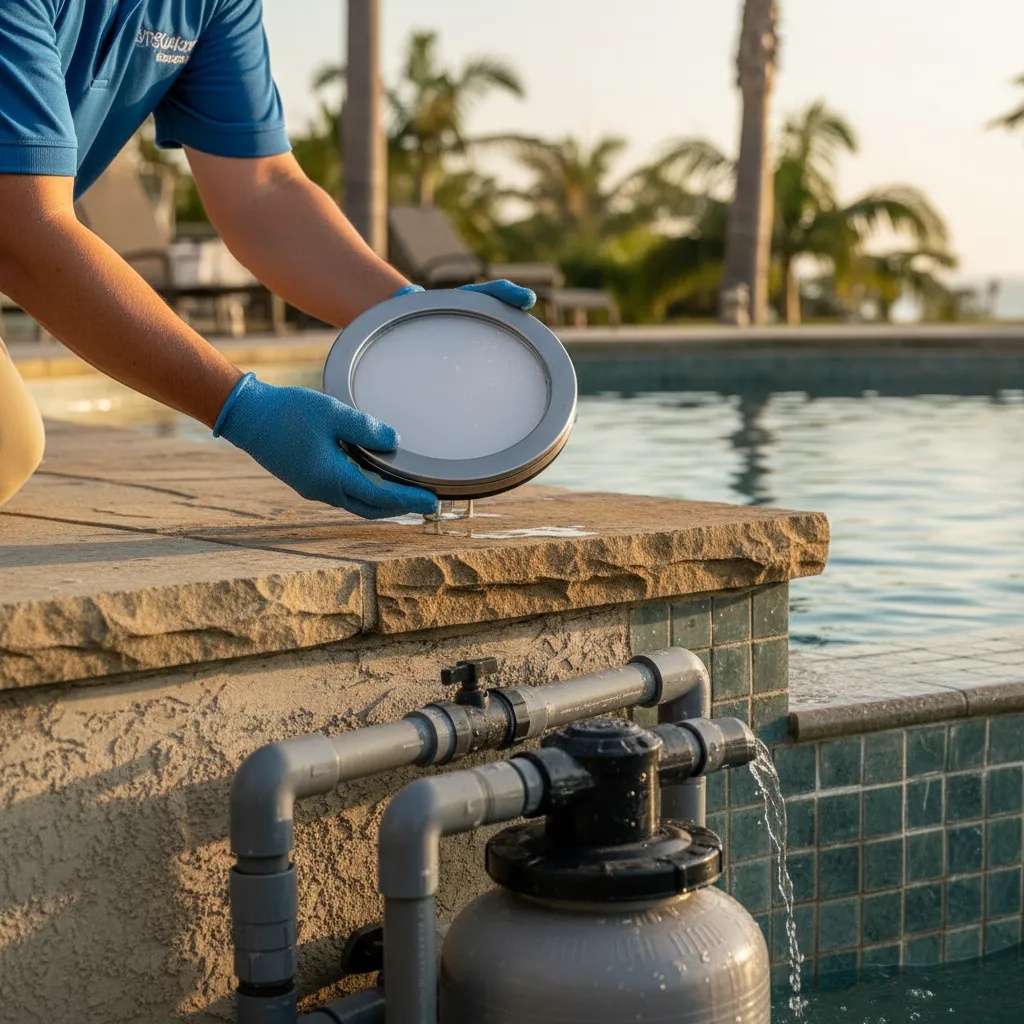
- Removing the Fixture: Pool light fixtures are designed with a sufficient length of cord (typically 10 feet or more) to be pulled out of the light niche and brought onto the deck. The pool technician carefully unscrews the fixture from the niche in the pool wall.
- Bringing it to the Deck: Once unscrewed, the fixture is gently pulled out of the water, with the excess cord allowing it to rest safely on the poolside deck. This is where all the work happens.
- Replacement or Repair:
- Bulb Replacement (Incandescent): If it’s a simple bulb replacement, the tech opens the lens assembly, removes the old bulb, inspects the gasket, and installs the new bulb.
- LED Fixture Upgrade: If upgrading to LED, the old fixture gets disconnected from the junction box, usually located near the pool deck, and the new LED fixture connected. This ensures a fresh, reliable seal and often includes an entirely new cord and fixture housing.
- Inspection and Sealing: The new or repaired fixture and its gasket get inspected thoroughly. A new gasket is almost always installed to ensure a watertight seal when the light is re-installed. A silicone lubricant is applied to the gasket to help it seat properly.
- Re-installation: The technician carefully lowers the fixture back into the water and guides it back into the light niche. The screws are then tightened evenly to ensure a secure, watertight fit.
- Testing: Once the light is back in place, power gets restored and the light tested to ensure it’s functioning correctly, checking for proper illumination and any signs of leaks.
This method minimizes disruption to your pool use and saves you the time, cost, and water waste associated with a full pool drain. It’s a precise job that requires experience to handle the electrical components safely and ensure a lasting, watertight seal. For any pool maintenance needs, including ensuring your lights are working, our weekly pool cleaning service can help catch issues early.
When a light problem is actually a GFCI or bonding issue
Sometimes, a seemingly simple pool light problem can be a symptom of a deeper, more critical electrical safety issue involving your GFCI (Ground Fault Circuit Interrupter) or the pool’s bonding system. These aren’t just inconveniences; they represent significant safety hazards that require immediate professional attention.
The GFCI Breaker
Every pool light circuit is required to be protected by a GFCI breaker. This device is designed to detect even a small imbalance in electrical current, which indicates electricity is escaping the circuit, potentially through water or a person. When it detects such a fault, it trips instantly, cutting off power to prevent severe shock.
If your pool light keeps tripping the GFCI, it’s not always just a bad bulb. It could signal:
- Water Intrusion: Water may have entered the light fixture, the conduit, or the junction box, causing a short circuit.
- Damaged Wiring: There could be a break in the wire insulation somewhere between the breaker and the light, allowing current to leak.
- Corroded Components: Internal components within the light fixture or junction box might be corroded, creating an electrical path where there shouldn’t be one.
A persistent GFCI trip means something is fundamentally wrong with the electrical integrity of your pool light system. Ignoring it or simply resetting it repeatedly can put swimmers at serious risk.
The Pool’s Bonding System
Pool bonding is a critical safety system that electrically connects all metallic components of your pool, the rebar in the shell, pump motors, heater, handrails, and yes, the light niche, to create an equipotential plane. This means all these parts are at the same electrical potential, preventing dangerous voltage differences that could cause a shock if you touch two different components simultaneously.
A problem with your pool light could sometimes be related to a compromised bonding wire or connection. If the light fixture or its niche is not properly bonded, and there’s an electrical fault, a hazardous voltage could be present in the pool water or on the metal components. Signs that a bonding issue might be present include:
- Tingling Sensations: Feeling a slight tingling when touching the pool water, handrails, or other metal components.
- Repeated GFCI Trips: While often related to the light itself, a bonding issue can exacerbate or contribute to GFCI tripping.
Diagnosing and repairing GFCI and bonding issues requires specialized knowledge of pool electrical systems and adherence to strict safety codes. This isn’t a DIY job. Pool electrical techs are trained to identify these complex problems and ensure your pool’s electrical system is safe and up to code, protecting everyone who enjoys your San Diego pool.
When to call us
A dead pool light is sometimes a simple fix, but it can also be a warning sign of a serious electrical safety issue. Don’t take chances with your family’s safety or risk further damage to your pool’s electrical system. If your pool light isn’t working, or if you’re experiencing repeated GFCI trips, it’s time to call a licensed and experienced pool service professional. Call us at (858) 400-6757 for a quick diagnostic and to get your San Diego pool safely glowing again.
Frequently asked questions
How much does it cost to replace a pool light in San Diego?
The cost to replace a pool light in San Diego typically ranges from $400 to $1,200, depending on whether you're replacing just the bulb, upgrading to LED, or need full fixture and wiring repair. LED upgrades generally cost more upfront but save money on energy.
Can I replace my old incandescent pool light with an LED?
Yes, in most cases, you can upgrade your old incandescent pool light to an LED fixture. This is a popular upgrade in San Diego as LEDs are more energy-efficient, last longer, and offer exciting color-changing options for your pool.
Why did my pool light stop working?
A pool light can stop working for several reasons, including a burned-out bulb, a faulty GFCI breaker, corrosion in the light niche, or damaged wiring. A professional diagnostic can pinpoint the exact issue, which can sometimes be a simple fix or a more complex electrical problem.
Do I need to drain my pool to replace a light?
No, in most standard pool light replacements, you don't need to drain the entire pool. Pool technicians can usually pull the light fixture out of its niche while keeping the pool full, replace the bulb or fixture, and re-install it safely.
How long do LED pool lights last?
LED pool lights have a significantly longer lifespan than traditional incandescent bulbs, often lasting between 15,000 to 30,000 hours. This translates to many years of reliable illumination, especially when compared to incandescent bulbs that might only last 1,000-5,000 hours.
Need this done in San Diego County?
For repair and renovation work like this, we hand you to our trusted partner, Del Rancho Pools.