A note on scope: this is leak detection work, which sits outside what Splash Pro Pools does. Call (858) 400-6757 and we’ll match you with a vetted local pro who covers it.
That stunning ocean view from your La Jolla backyard is priceless. But watching your pool’s water level drop an inch every day is just plain expensive. A swimming pool leak in La Jolla isn’t just a nuisance; it’s often a symptom of the unique environmental pressures our coastal homes face.
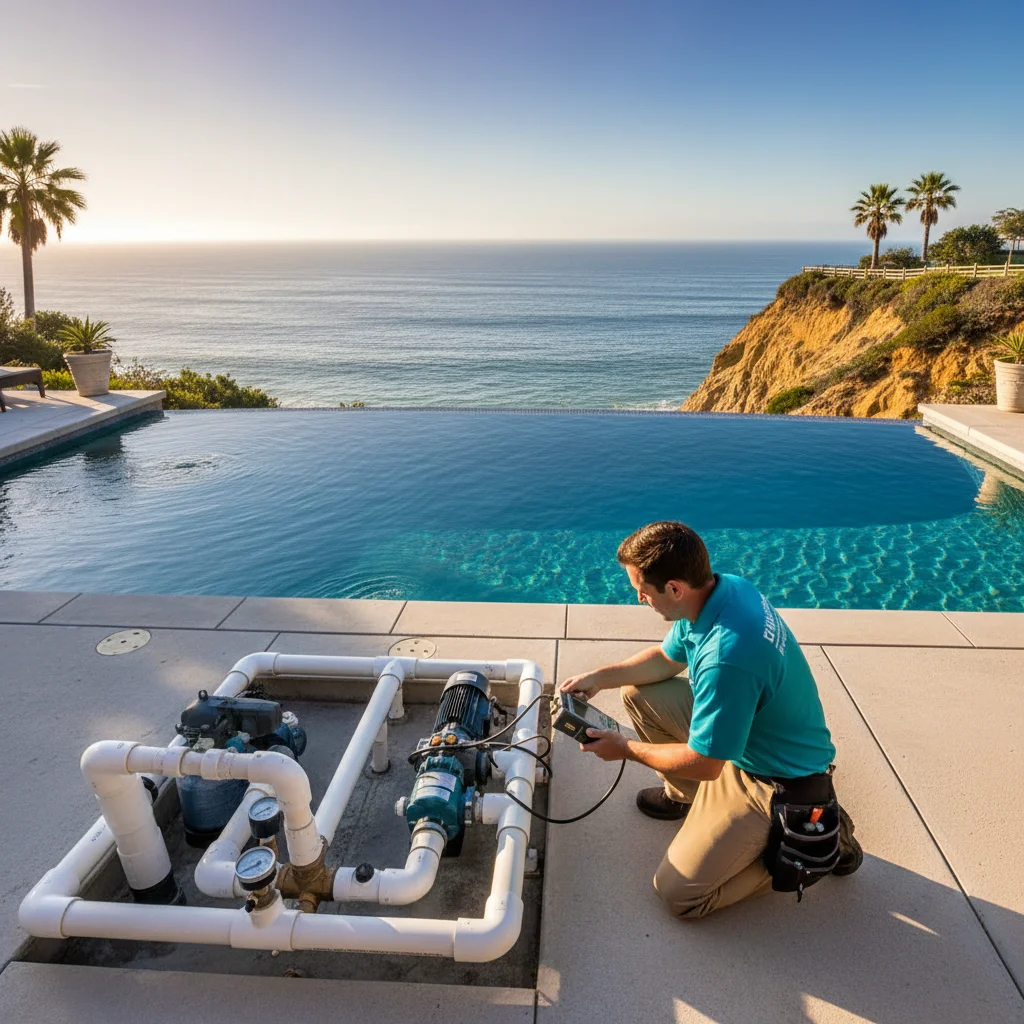
Why La Jolla pools leak differently than inland pools
A pool in Poway or Escondido battles intense summer heat, making evaporation the primary cause of water loss. Here on the coast, the situation is more complex. The marine layer can reduce evaporation, often masking the early signs of a slow leak. You might not notice a problem until it’s significant.
The real difference, however, is in the ground beneath your pool. La Jolla’s beautiful canyons and bluffs are part of a geologically active landscape. The soil composition and the subtle, constant process of coastal erosion and settling create forces that inland pools simply don’t experience. This slow, powerful ground movement puts sustained stress on the rigid structure of a gunite pool shell and its underground plumbing network.
Over years, this can lead to hairline cracks in the shell, separated skimmer throats, and strained plumbing fittings. While a pool further inland might leak due to a single failed component, a La Jolla pool leak is often the result of years of coastal exposure and ground pressure. Identifying the true source requires a specialized understanding of these local conditions.
Salt air, bluff settling, and older shell plumbing
Many of the pools in La Jolla have been in the ground for decades. They were built to last, but older plumbing, older plaster and older fittings face a trio of challenges in a coastal environment that newer materials handle better.
The corrosive power of salt air
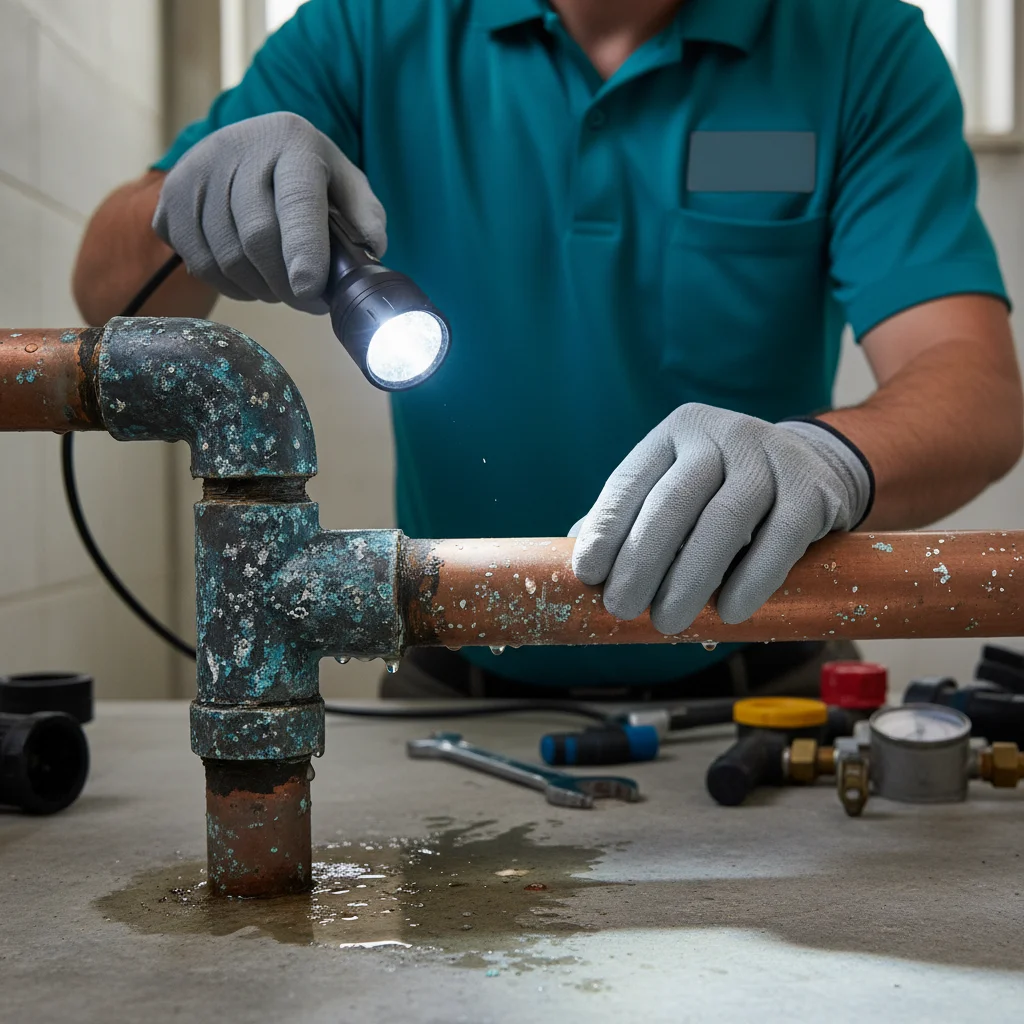
The same ocean breeze that makes for a perfect afternoon is constantly depositing a fine layer of salt on everything outside, including your pool equipment. On older pools plumbed with copper lines, this salt air dramatically accelerates corrosion. Pinhole leaks in copper pipes near the equipment pad are common, leaks so small they seep water for months before becoming obvious. This corrosive effect also shortens the life of pump seals, heater components, and metal fixtures.
Bluff settling and soil movement
This is the most significant and often invisible cause of leaks in La Jolla. The ground under your home is not perfectly static. Over decades, the settling of bluff-top properties can cause the pool shell to shift, even if only by a fraction of an inch. This movement is enough to crack the pool’s plaster and, in more serious cases, the underlying gunite structure. More commonly, it pulls on the PVC or copper pipes connected to the pool, causing joints to fail or pipes to crack deep under your deck. A leak caused by soil movement requires precise detection to avoid unnecessary and costly demolition.
Aging pool construction
A 50-year-old pool has seen a lot of service. Plaster surfaces become thin and porous, making them more susceptible to cracks (known as crazing). The original plumbing, whether it’s early-generation PVC that has become brittle or copper that’s corroded, is at the end of its functional life. When you combine these age-related factors with the stress of soil movement and salt air, you have a perfect recipe for a hidden leak. An expert in la jolla pool leak repair knows how to differentiate between a simple component failure and a symptom of a larger, age-related issue.
The acoustic and pressure-test workflow
Finding a leak isn’t guesswork. It’s a systematic process that requires specialized equipment and experience. Simply jumping in with dye is an amateur move that rarely finds the real source of the problem, which is usually underground. The comprehensive pool leak detection service follows a proven, multi-step workflow to pinpoint the exact location with minimal disruption.
First, the technician isolates every plumbing line in your pool system, the skimmers, main drains, and all return lines, sealing them off at the pool and using a sophisticated pressure testing rig at your equipment pad. By pressurizing each line with air and water, a drop on the gauges shows exactly where trouble is. If a line doesn’t hold pressure, the leak is somewhere in that specific pipe. This immediately narrows the search from the entire pool system to a single underground line.
Once the leaking line is identified, the technician switches to acoustic listening equipment. Air introduced into the pipe creates a distinct gurgling or hissing sound as it escapes through the crack and into the saturated ground. Using highly sensitive ground microphones and underwater hydrophones, the pool technician listens systematically along the path of the pipe. The sound is loudest directly above the leak, allowing the technician to mark a precise spot on your deck for repair. This technology finds leaks buried deep under concrete, saving you from a destructive and expensive “search-and-destroy” mission.
Only after every plumbing line has been pressure-tested and cleared does the technician inspect the pool’s structure itself for cracks, failed fittings, or issues with the light niche.
Typical La Jolla leak repair costs in 2026
Once the leak is found, you’ll get a firm, transparent quote for the repair. Costs can vary widely depending on the location and complexity of the issue. It’s important to remember that a single leak can waste thousands of gallons of water per month, and with water rates from the San Diego County Water Authority continuing to rise, a timely repair is a sound investment.
Here are some general cost ranges for common repairs in the La Jolla area as of 2026:
- Minor fitting or seal repairs: For leaks at the equipment pad or easily accessible locations like a skimmer throat, repairs typically range from $350 to $750. This usually involves replacing a specific fitting, valve, or seal.
- Underground plumbing repair: This is the most common type of leak we find. The cost is driven more by the location than the pipe itself. Repairing a pipe under landscaping might cost $1,200 to $1,800. If the leak is under a concrete deck, the cost can range from $1,800 to $3,500+, which includes cutting the concrete, fixing the pipe, and patching the deck.
- Structural crack repair: A minor crack in the pool shell can sometimes be repaired with epoxy injection or staples for $800 to $2,000. However, a large structural crack may indicate a more serious issue and could require more extensive work.
Leak detection is normally billed separately from the repair, which is what keeps the diagnosis unbiased. The repair gets quoted on its own once the leak is located. The challenges of coastal leaks are not unique to La Jolla; similar patterns show up in other areas covered, like those discussed in our post on pool leak detection in Encinitas.
When to call us vs. wait for weekly service
It can be hard to tell the difference between normal evaporation and a real leak. If you’re not sure, here’s a simple guide.
You can probably wait for your next weekly service visit if you notice the water level seems just a little low, perhaps dropping a quarter-inch in 24 hours. Your service technician can perform a quick bucket test and check for obvious issues at the equipment pad as part of your regular visit.
You should call us for a dedicated leak detection appointment immediately if you experience any of the following:
- Significant water loss: Your pool is losing a half-inch or more of water in a 24-hour period.
- A surprise water bill: A sudden, unexplained spike in your water bill is a classic sign of a pool or irrigation leak.
- Soggy spots in the yard: If you find squishy or unusually green patches of grass near the pool, it’s a strong indicator of an underground pipe break.
- Your auto-fill runs constantly: If you can hear your automatic fill device running for hours on end or all day, it’s struggling to keep up with major water loss.
- Visible cracks or deck lifting: If you see new cracks forming in the pool’s plaster or sections of your concrete deck are lifting or sinking, it could be caused by water eroding the soil underneath.
Don’t wait for these symptoms to worsen. A small leak can quickly compromise the soil supporting your pool and deck, leading to much more expensive structural problems.
When to call us
Finding and fixing hidden leaks beneath concrete and landscaping requires specialized tools and experience. Don’t let a small leak turn into a major foundation issue. Call us at (858) 400-6757 and we’ll connect you with a vetted local pool pro.
Frequently asked questions
How can I tell if my La Jolla pool has a leak?
The easiest way is the bucket test. Place a bucket on a pool step, fill it to match the pool's water level, and mark both levels. After 24 hours, if the pool level has dropped more than the bucket's, you likely have a leak. Constantly running auto-fill systems and unusually high water bills are also strong indicators.
Why are La Jolla pools more prone to leaks?
La Jolla's coastal environment creates unique challenges. The constant salt air accelerates corrosion of metal plumbing and equipment. More significantly, the gradual settling and shifting of coastal bluffs can put immense stress on a pool's structure and underground pipes, leading to cracks and separations over time.
How long does professional pool leak detection take?
A comprehensive leak detection service typically takes 2 to 4 hours. This allows pool technicians to methodically pressure test all plumbing lines, use acoustic equipment to listen for underground leaks, and inspect the pool shell for any structural issues. The goal is to pinpoint the exact location of the leak during this single visit.
Is the food coloring dye test for pool leaks reliable?
A dye test is a useful tool but only for specific situations. It can help confirm a suspected leak in a visible area, like a crack in the plaster or around a light fixture, where the water is still. It is not effective for finding leaks in underground plumbing, which account for the majority of pool leaks.
Need this done in San Diego County?
For repair and renovation work like this, we hand you to our trusted partner, Del Rancho Pools.