A note on scope: this is leak detection work, which sits outside what Splash Pro Pools does. Call (858) 400-6757 and we’ll match you with a vetted local pro who covers it.
You notice your pool’s auto-fill is running more than usual, or maybe your water bill has inched up for no clear reason. On a sprawling Fallbrook property, a little water loss can seem minor, easily mistaken for evaporation in the warm, dry air. But that slow, nagging drop in water level often points to a bigger problem hiding underground.
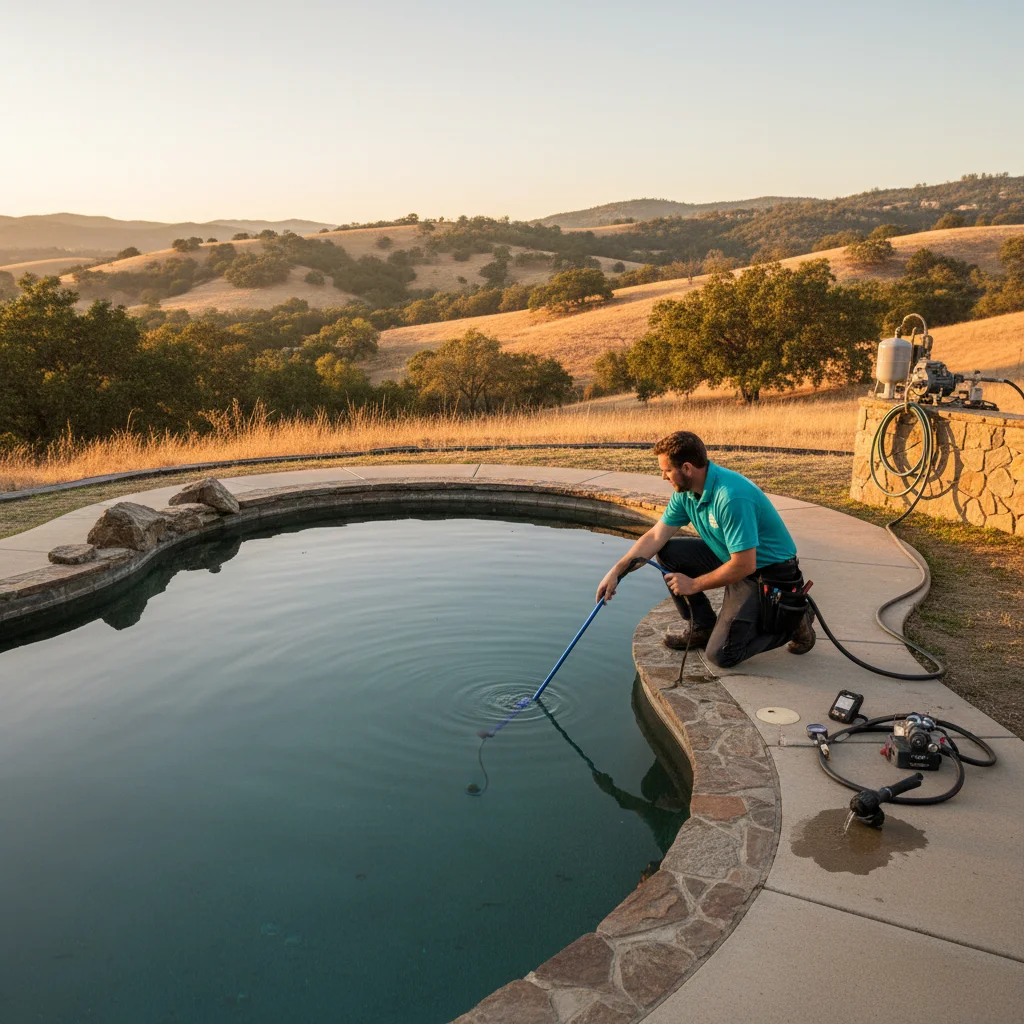
A pool in Fallbrook isn’t just a pool in San Diego. It’s a pool built on unique terrain, often supplied by well water, and subject to environmental pressures that pools in coastal communities like La Jolla or Coronado never face. Understanding these differences is the key to finding and fixing leaks before they become catastrophic.
Why Fallbrook pools leak in patterns coastal pools don’t
Pools near the coast are typically built on stable, sandy soil. It drains well and doesn’t change much with the seasons. Head 20 miles inland to Fallbrook, and the ground beneath your pool is a completely different story. Here, we deal with expansive clay soils and decomposed granite.
This type of soil acts like a sponge. When it rains, it swells. During our long, dry summers, it shrinks and cracks. This constant, powerful cycle of expansion and contraction puts immense stress on a rigid concrete pool shell and its underground plumbing. A pipe that was perfectly sealed during installation can be torqued and twisted by soil movement over several years, eventually causing a fitting to fail or a pipe to crack.
Fallbrook’s topography also plays a role. Many properties are built on hillsides and graded lots. This can lead to subtle but persistent ground settling over time, which again, stresses the pool structure. We often see leaks in Fallbrook that are directly related to soil shear, where one section of the ground has moved slightly relative to another, cracking a return line or skimmer throat right at the point of stress. This is a pattern we rarely, if ever, see in the flat, sandy lots of coastal San Diego.
Well water, soil shifting, and what they do to your shell
Many Fallbrook homes rely on well water, which introduces another layer of complexity to pool ownership. While perfectly safe, well water often has a very different mineral profile than municipal water from the San Diego County Water Authority. It’s frequently harder, with higher concentrations of calcium and other minerals.
If your pool chemistry isn’t managed with this unique source water in mind, it can become aggressive. Water that is out of balance will actively seek the minerals it lacks, pulling them from any available source, including your pool’s plaster or pebble surface. Over time, this leaching process can etch and weaken the shell, making it more susceptible to delamination and cracking. A small “weeper” through a thinned-out plaster wall is a common result.
When you combine aggressive water chemistry with the physical stress of shifting soil, you have a recipe for structural leaks. The soil pushes and pulls on the outside of the shell while the water slowly weakens it from the inside. Eventually, something has to give. This is why our Pool Leak Detection & Repair service in Fallbrook focuses on a holistic diagnosis, looking at both the physical structure and the chemical history of the pool. It’s not just about finding the crack; it’s about understanding why it happened in the first place.
How we find leaks without tearing up rural decking
The thought of finding a leak often brings to mind images of jackhammers and trenches tearing through beautiful, established patios and landscaping. On a large Fallbrook property with mature trees and extensive hardscaping, this is a homeowner’s worst nightmare. Fortunately, modern leak detection is far more precise and far less invasive.
We use a combination of advanced electronic and acoustic tools to pinpoint leaks with surgical accuracy. It starts with pressure testing. We isolate each plumbing line, the main drain, the skimmers, the returns, and use a sensitive pressure rig to see which line is losing water.
Once we’ve identified the leaking circuit, we introduce compressed air into the line. Using a highly sensitive microphone and electronic listening device, the pool technician can then walk the path of that underground pipe and listen for the distinct “gurgling” or “hissing” sound of air escaping into the water-saturated soil. This lets us mark the ground with an “X” that is often within inches of the actual break.
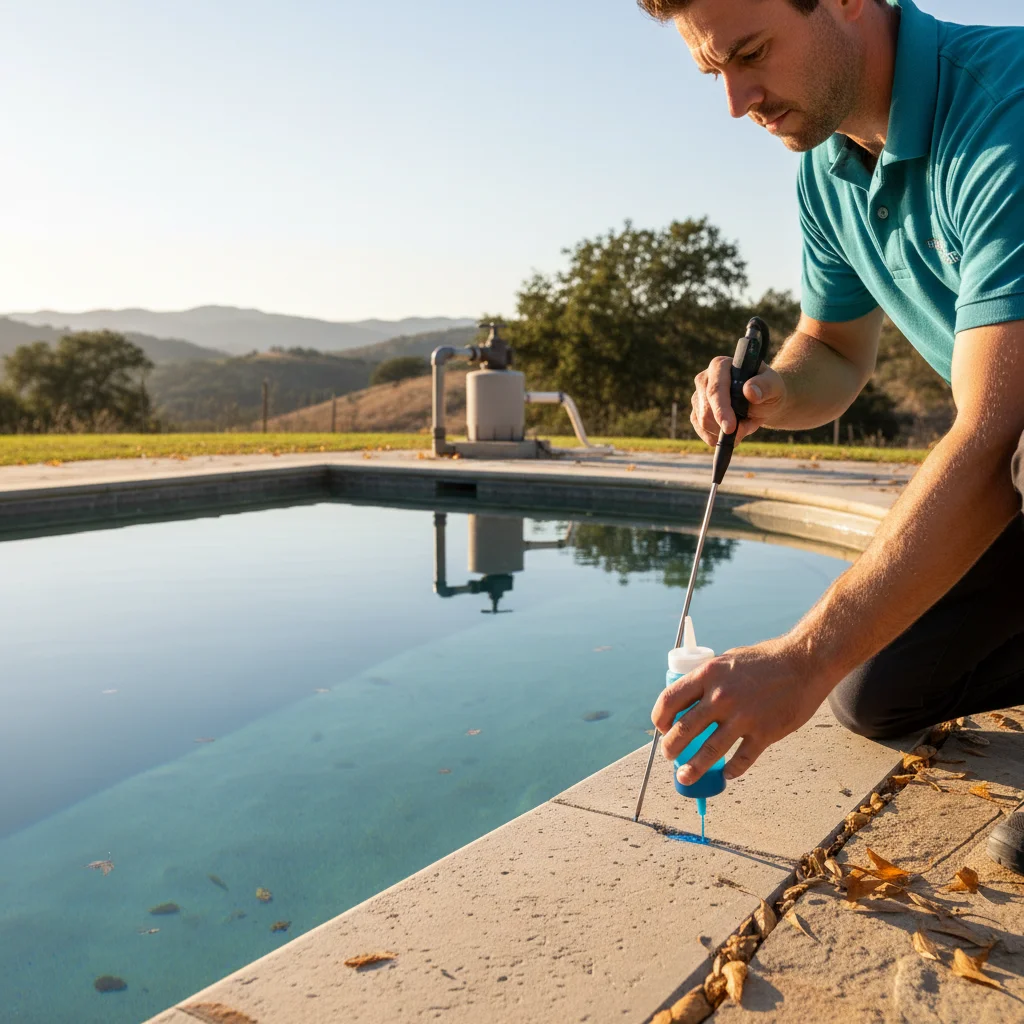
For suspected leaks in the pool shell itself, we use dye testing. With the pump off and the water still, we release a small amount of concentrated dye near a suspected crack. The water’s current will pull the dye directly into the crack, visually confirming its location. These methods mean we only have to excavate a small, targeted area for the repair, preserving the vast majority of your deck and landscaping.
What repairs cost when you’re on acreage
The cost of a pool leak repair has two main components: detection and the fix itself. The detection process is a specialized service with a relatively standard cost. The repair cost, however, can vary significantly, especially on rural properties.
The primary factor is accessibility. A leak in a skimmer body right next to the pool deck is a straightforward, relatively inexpensive fix. A cracked return line buried four feet deep, 100 feet from the equipment pad, and under a mature oak tree’s root system is a much more complex and labor-intensive job.
On large Fallbrook lots, plumbing runs are often longer, and equipment pads can be located far from the pool. This can increase the time and materials needed for a repair. Furthermore, custom features like rock waterfalls, in-floor cleaning systems, and infinity edges introduce more plumbing and more potential failure points.
A written estimate should break it down clearly:
- Location of the Leak: Is it in the plumbing, the shell, or the equipment?
- Depth and Accessibility: How much digging is required? Are there obstacles like concrete, roots, or other utility lines?
- Materials Needed: This could be a simple PVC coupling or might involve re-plastering a section of the pool shell.
The least invasive permanent fix is the one worth paying for. Splash matches that job. Call (858) 400-6757.
When a slow leak becomes a foundation problem
It’s tempting to ignore a slow leak. If you’re only losing half an inch of water a day, you might just keep the hose in and put off the repair. This is a critical mistake, especially on Fallbrook’s expansive soil. That “little” leak adds up to hundreds of gallons of water per week and thousands per year, all concentrated in one specific spot.
This constant saturation causes the clay soil to super-expand. The immense hydraulic pressure it creates can easily lift and crack heavy concrete pool decking. We’ve seen entire sections of a patio heaved up by several inches due to an ignored underground leak.
Worse, if the leak is on the side of the pool closest to your home, this soil expansion can exert pressure directly on your home’s foundation. Over months or years, this can lead to foundation cracks, doors that no longer close properly, and drywall fractures, problems that cost tens of thousands of dollars to remedy. What started as a simple pool plumbing issue becomes a major structural engineering problem. Fixing a leak isn’t just about saving water or your pool’s surface; it’s about protecting your entire property investment. A small, persistent leak is one of the most destructive forces a homeowner can face. If you suspect one, it’s an issue that requires immediate professional attention.
When to call us
If you’ve performed a bucket test and confirmed you’re losing more water than simple evaporation, it’s time to act. A slow leak never gets better on its own; it only gets worse and more expensive to fix. Protecting your property from water damage and soil heave in Fallbrook’s unique environment requires specialized expertise. Call us at (858) 400-6757 and we’ll connect you with a vetted local pool pro.
Frequently asked questions
How can I tell if my Fallbrook pool has a slow leak?
The easiest way is the bucket test. Place a bucket on your pool step, fill it with pool water to match the pool's level, and mark both the water level inside and outside the bucket. After 24 hours, if the pool water level has dropped more than the bucket's level, you likely have a leak. Constant auto-fill activity and higher than usual water bills are also strong indicators.
Does well water cause pool leaks?
Well water itself doesn't directly cause leaks, but its chemistry can. Well water in Fallbrook is often high in minerals (hard water), which can be aggressive toward pool plaster and equipment seals if not meticulously balanced. Over time, this can degrade materials and lead to leaks. It's a contributing factor, not a direct cause.
How much does it cost to find a pool leak in a rural area like Fallbrook?
The cost for professional leak detection is fairly standard across San Diego County. The potential difference for rural properties comes with the repair. Factors like longer plumbing runs, difficult equipment access on large lots, or leaks under extensive custom hardscaping can increase the complexity and cost of the final repair.
Can a small pool leak damage my home's foundation?
Yes, it absolutely can, especially with Fallbrook's expansive clay soil. A slow, persistent leak saturates the ground in one spot. This causes the clay soil to swell, which can exert immense pressure, potentially lifting pool decking, cracking the pool shell, or even causing uplift and damage to a nearby home foundation.
Need this done in San Diego County?
For repair and renovation work like this, we hand you to our trusted partner, Del Rancho Pools.