Worth knowing first: Splash Pro Pools is a cleaning and maintenance company, so leak detection goes to our repair partner, reachable on (858) 400-6757.
Coronado pools face a unique set of challenges. The constant presence of salt air, fine beach sand, and the relentless coastal environment can silently accelerate wear and tear on your pool’s infrastructure. If you’ve noticed your water level dropping faster than usual, it’s not just the San Diego sun, you might have a hidden leak, and it’s one that might behave differently than inland pools.
Why Coronado pools leak differently than inland pools
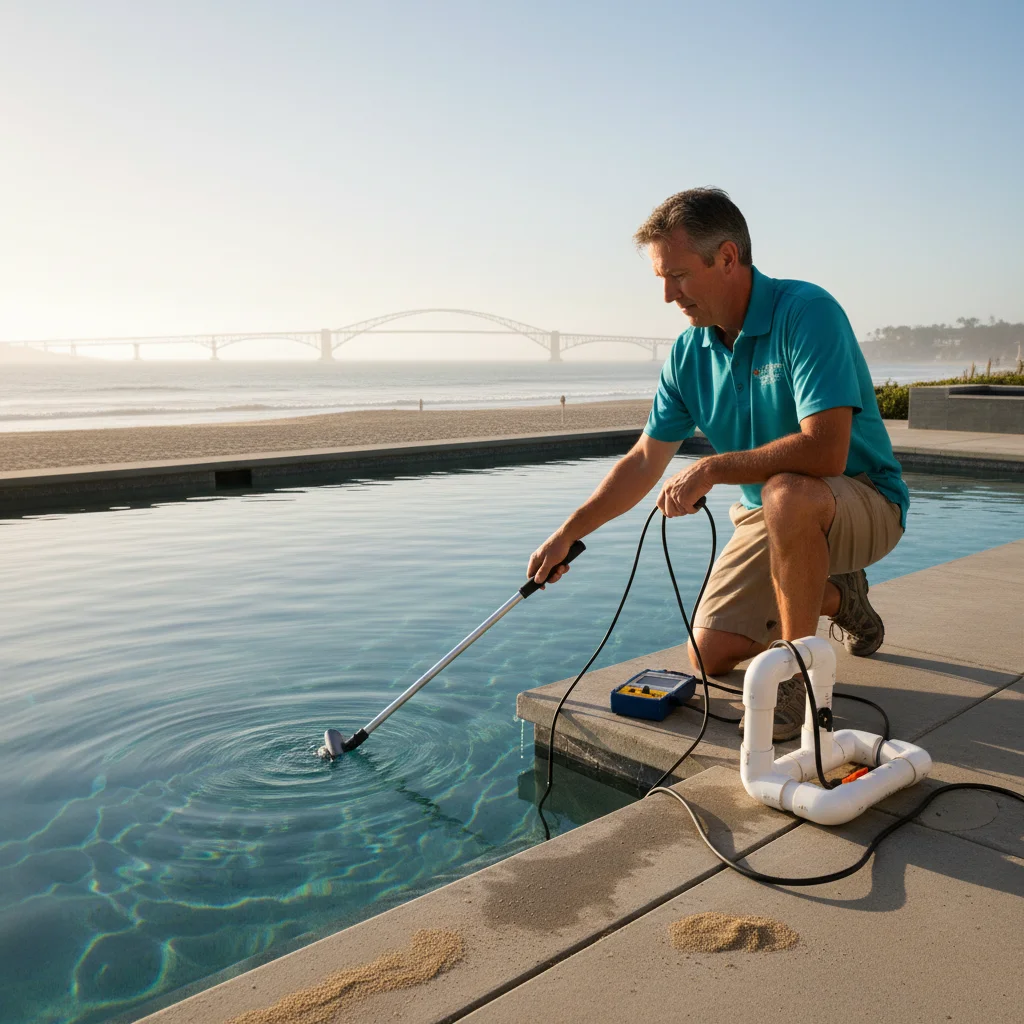
Life on the peninsula is beautiful, but it’s tough on swimming pools. The pervasive salt-laden air, characteristic of Coronado, is a silent corrosive agent. Metal components in your pool’s circulation system, like pump seals, heater elements, and even rebar within concrete structures, are under constant attack. This accelerated corrosion can lead to tiny, almost undetectable cracks and openings that evolve into persistent leaks. Fine beach sand, another ever-present element, also plays a role. It can be incredibly abrasive, wearing down skimmer baskets, pump impellers, and even the interior surfaces of pipes over time. This constant friction thins materials and compromises seals, creating new pathways for water to escape.
Furthermore, the ground beneath many Coronado homes can have higher salinity due to proximity to the ocean. This can impact underground plumbing and the pool’s shell over decades, especially if there are existing micro-fractures. While pools across San Diego County experience leaks, those in Coronado often see problems stemming directly from these unique environmental pressures. It means our approach to pool leak detection and repair must consider these specific factors, not just general wear and tear. We understand the local conditions intimately, which helps us diagnose issues faster and more accurately.
Signs your pool is losing water vs evaporating
It’s natural for a pool to lose some water to evaporation, especially in San Diego’s warm, dry climate. You don’t need to panic every time your water level drops a bit. However, there’s a significant difference between normal evaporation and a leak. Normal evaporation in our region typically accounts for about ¼ inch of water loss per day. Anything consistently more than that, particularly when the weather isn’t excessively hot or windy, warrants closer inspection.
One of the most reliable methods to distinguish between evaporation and a leak is the bucket test. Here’s how you do it: Fill a 5-gallon bucket with pool water and place it on a pool step. Ensure the water level inside the bucket matches the pool’s water level. Mark both levels. After 24 to 48 hours, compare the water levels. If the pool’s water level has dropped more than the water level in the bucket, you’re almost certainly dealing with a leak. Other telltale signs of a leak include consistently high water bills, despite no change in usage, or needing to add chemicals more often because the lost water dilutes your pool’s chemistry. You might also notice soggy spots in your yard near the pool, cracks in the deck, or visible damage to pool tiles. If you see any of these indicators, it’s time to call in the professionals.
How we find leaks without tearing up your deck
The thought of extensive damage to your beautiful Coronado pool deck or landscaping just to find a leak can be daunting. Fortunately, at Splash Pro Pools, we use advanced, non-invasive techniques to pinpoint leaks with precision. Our goal is always to find the source of the problem efficiently and with minimal disruption to your property. We begin with a thorough visual inspection, checking for obvious signs of distress around the pool, skimmers, and equipment pad. Then, we move to more sophisticated methods.
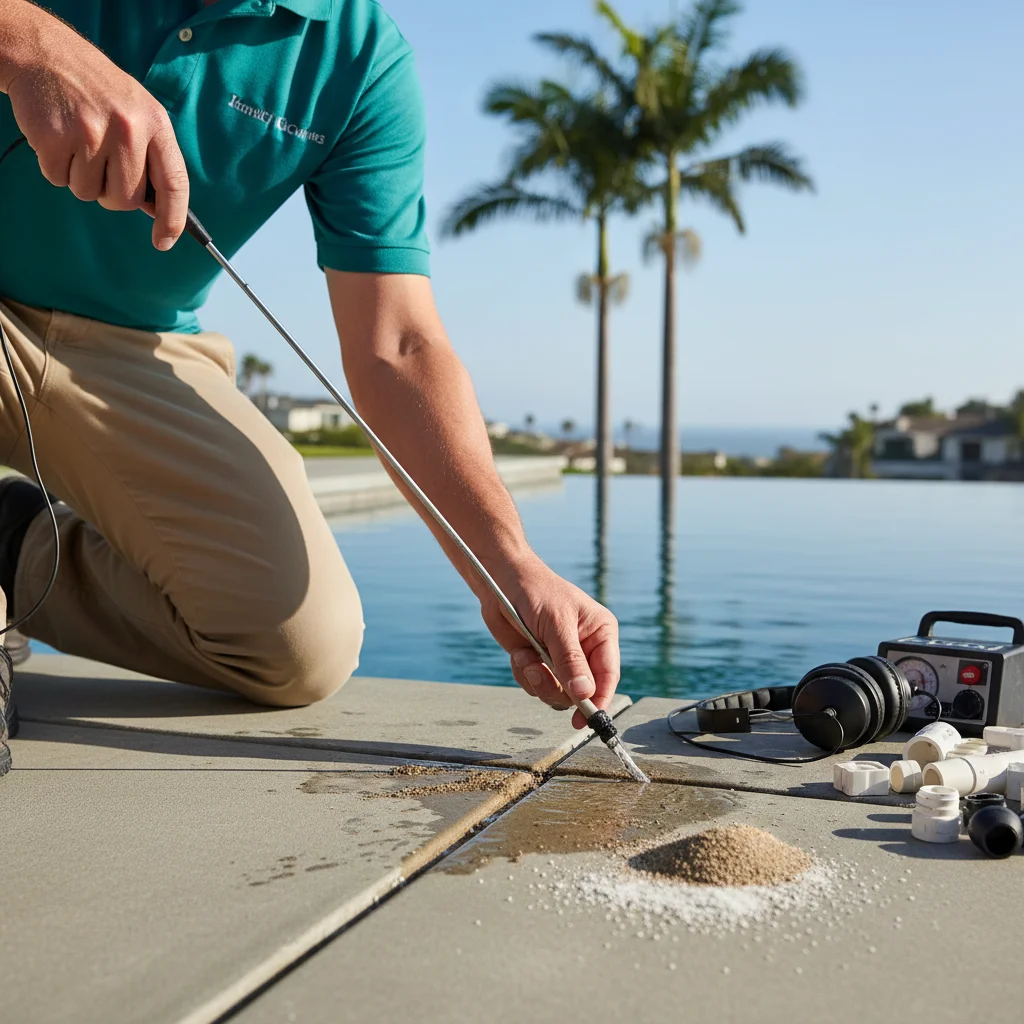
We often employ hydrostatic testing to isolate specific sections of your plumbing. This involves sealing off pipes and then observing pressure changes to determine if a line is compromised. Dye testing is another highly effective method for locating small cracks or fissures in the pool shell or around fixtures. We introduce a small amount of concentrated dye near suspicious areas; if a leak is present, the dye will be drawn into the crack, revealing its location. For underground leaks, we use specialized acoustic listening devices that can hear the subtle sounds of water escaping pipes beneath the surface. We can also use pressure testing on individual lines to confirm a leak. These combined techniques allow us to accurately identify even the most elusive leaks, ensuring that we only perform repairs precisely where needed. This targeted approach saves you time, money, and preserves your valuable property.
What repairs cost on a Coronado-area pool
Understanding the potential costs of pool leak repairs in Coronado involves considering several factors unique to our coastal environment. The actual expense will largely depend on the leak’s location, its severity, and the type of material involved in the repair. A simple fix, like replacing a worn gasket in a pump or a minor patch on a vinyl liner, might be relatively inexpensive. However, if the leak stems from a corroded underground PVC pipe, cracked concrete, or an issue within your pool’s primary equipment, the cost can be higher due to the specialized nature of the pool repair and materials.
Given Coronado’s proximity to the ocean, repairs often need salt-resistant materials, which can cost more than inland parts. Underground PVC, cracked concrete, or equipment leaks take specialized labor. Prompt emergency pool service usually costs less than waiting. The matched tech should price the location, the access, and the materials before they start. Call (858) 400-6757.
Why ignoring a slow leak gets expensive fast
Many Coronado homeowners might be tempted to put off addressing a small, slow pool leak, thinking it’s not a major issue. However, ignoring even a minor leak is a costly mistake that rapidly escalates. First and foremost, you’ll see a significant spike in your water bills. In San Diego County, where water is a precious resource and rates reflect that, constantly refilling your pool can add hundreds of dollars to your monthly expenses. The San Diego County Water Authority often reminds us of the value of water conservation, and a leaking pool directly undermines those efforts. This constant water loss isn’t just an environmental concern; it hits your wallet hard.
Beyond the immediate water waste, a persistent leak constantly dilutes your pool’s chemical balance. This means you’ll spend more money on chlorine, pH adjusters, and other chemicals trying to keep the water safe and clear. Moreover, the escaping water can cause significant damage to your property. Water can erode the soil beneath your pool deck, leading to cracks, uneven settling, and even structural instability in your pool’s shell. It can also damage your landscaping, create slippery hazards, and attract pests. Over time, continuous leaks can even lead to premature failure of expensive pool equipment like pumps and heaters, as they’re forced to work harder to circulate and heat constantly replenished cold water. Addressing a leak quickly is an investment that protects your property, saves you money, and preserves the longevity of your pool. For example, issues like calcium buildup exacerbated by constant refilling might eventually require specialized pool tile and calcium cleaning. Even if you maintain weekly pool cleaning and maintenance on a regular basis, a leak can undermine those efforts. We can also include leak checks during your regular pool cleaning in Coronado.
When to call us
If you suspect your Coronado pool has a leak, don’t wait for a small problem to become a major headache. Swift, professional detection and repair are crucial to protecting your investment and preventing more extensive damage. If you’re consistently adding more than an inch of water to your pool per week, or if you’ve noticed unusual wet spots around your pool deck or equipment, it’s time to bring in the experts. Splash Pro Pools has the experience and specialized equipment to accurately diagnose and fix leaks in Coronado’s unique environment.
Call us at (858) 400-6757 and we’ll connect you with a vetted local pool pro.
Frequently asked questions
Why do Coronado pools leak more often?
Coronado's coastal environment, with its pervasive salt air and fine sand, significantly contributes to pool leaks. Salt air accelerates corrosion on metal components like pumps and heaters, while sand can abrade liners and seals. These unique environmental factors create additional stress on pool infrastructure, leading to more frequent issues compared to inland areas.
How can I tell if my pool is leaking or just evaporating?
The easiest way to distinguish a leak from evaporation is the bucket test. Place a bucket of water on a step in your pool, weighted so the water level inside matches the pool's water level. After 24-48 hours, if the pool's water level has dropped more than the bucket's, you likely have a leak. Normal evaporation in San Diego County is usually about ¼ inch per day.
Will leak detection damage my pool deck or landscaping?
No, professional leak detection services like Splash Pro Pools use non-invasive methods. We employ advanced technology like hydrostatic testing, pressure testing, acoustic listening devices, and dye tests. These techniques allow us to pinpoint the exact location of a leak without having to tear up your deck or disrupt your landscaping.
How much does it cost to repair a pool leak in Coronado?
The cost of a pool leak repair varies widely depending on the leak's location, size, and severity, as well as the type of material involved (e.g., PVC pipe, concrete, vinyl liner). Minor fixes can be relatively inexpensive, while more complex structural or underground pipe repairs will cost more. Prompt detection and repair always minimize overall expenses by preventing further damage and water loss.
What happens if I ignore a small pool leak?
Ignoring even a small pool leak can lead to significant and costly problems. You'll face higher water bills, increased chemical usage to maintain balance, and potential damage to your pool's structure, decking, and surrounding landscaping. Over time, a small leak can erode soil around the pool, compromise its foundation, and even lead to premature failure of expensive equipment like pumps and heaters.
Need this done in San Diego County?
For repair and renovation work like this, we hand you to our trusted partner, Del Rancho Pools.