Replace the filter when a real cleaning still leaves cloudy water, low flow, or a cracked leaking tank. Cartridge units typically last 2 to 5 years, sand 5 to 8, DE 8 to 12. San Diego’s long season and dust can cut those numbers. Call (858) 400-6757 for a replacement quote.
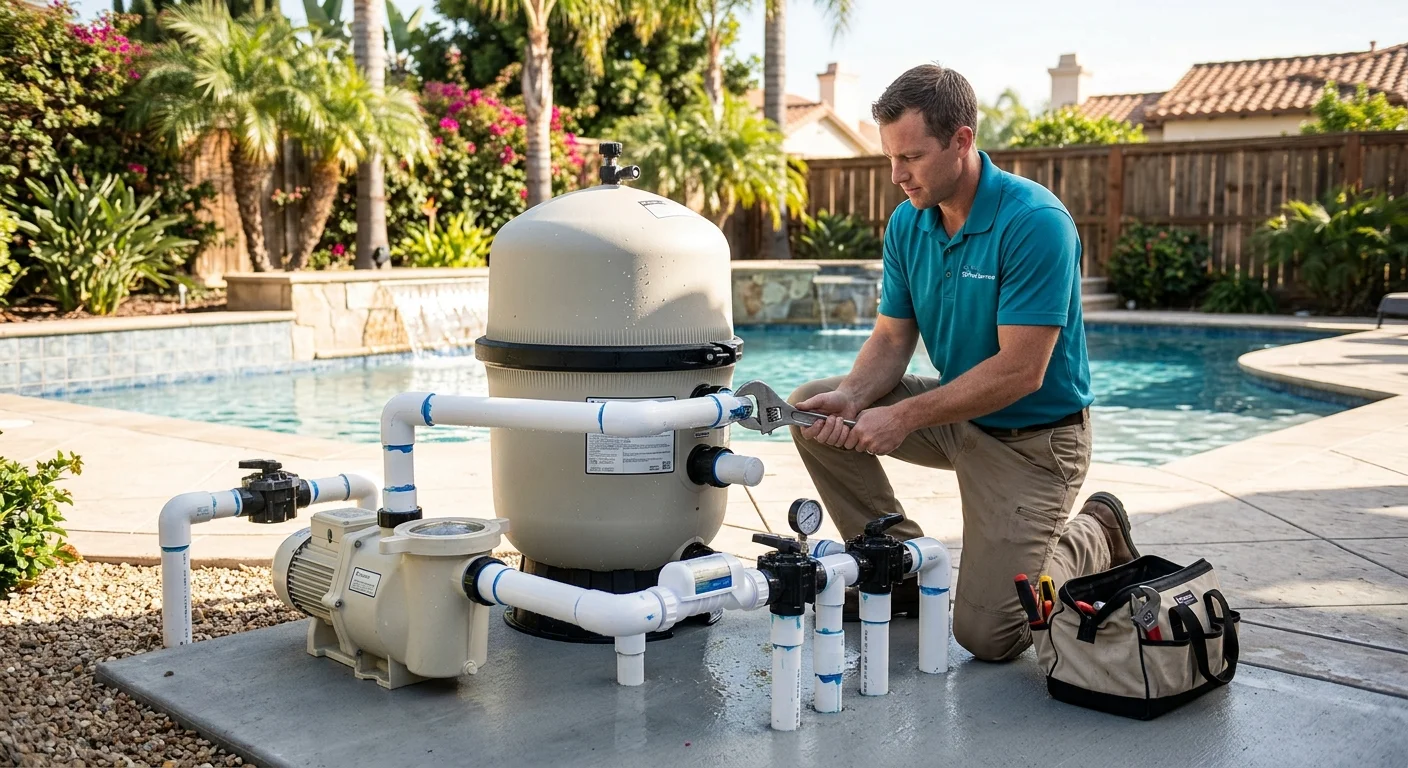
Cleaning vs. replacing: how to tell which one you need
It’s a common dilemma for San Diego pool owners: is my filter dirty, or is it truly worn out? A dirty filter is usually an easy fix with routine maintenance. You’ll notice higher pressure gauge readings, reduced water flow, and slightly hazy water. A good backwash for sand and DE filters, or a deep clean for cartridges, often solves these problems. Regular pool filter cleaning is crucial for extending your filter’s life.
However, a filter that needs replacement exhibits more severe and persistent symptoms. Even after a professional cleaning, the water might remain cloudy. You could see continued low pressure, or the filter housing itself might show signs of age like cracks or leaks. San Diego’s long, sunny pool season means your filter runs more hours annually than in cooler climates. This constant workload, coupled with occasional wind events bringing dust and debris, accelerates wear and tear. If your pool water isn’t clearing up despite proper chemical balance and a recently cleaned filter, it’s a strong indicator that the filter media or the entire unit is compromised beyond repair.
Cartridge, sand, and DE filters and how long each lasts
San Diego pools commonly use three main types of filters, each with its own lifespan and maintenance needs. Knowing the expected life of your filter type helps you anticipate when a replacement might be necessary. You can dive deeper into the specifics in our article comparing pool filter sand vs. cartridge vs. DE.
Cartridge filters
These filters use pleated fabric cartridges to trap debris. They’re popular in San Diego for their excellent filtration capabilities and ease of cleaning; you simply remove and rinse the cartridges. Typically, cartridge filters last 2 to 5 years. However, San Diego’s dust, pollen, and hard water can lead to mineral buildup and fabric degradation, potentially shortening this lifespan. If the fabric becomes torn, matted, or fails to spring back after cleaning, it’s time for new cartridges. Sometimes, the entire filter housing might need replacement if it’s old and has developed cracks.
Sand filters
Sand filters work by pushing pool water through a bed of specialized filter sand. They’re durable and relatively low-maintenance, requiring regular backwashing. The sand itself usually needs replacement every 5 to 8 years, though the filter tank can last much longer, often 10-20 years. Over time, the sand grains become smooth and lose their sharp edges, reducing their ability to trap fine particles. This phenomenon, known as “channeling,” allows water to bypass the filtration process. If your sand filter isn’t clearing the water even after backwashing, replacing the sand (or the entire unit if the tank is compromised) is the next step.
Diatomaceous Earth (DE) filters
DE filters offer the finest level of filtration among the three types, thanks to a permeable powder (diatomaceous earth) that coats internal grids. They require backwashing and replenishing DE powder periodically. The DE grids typically last 8 to 12 years. The grids, usually made of fabric-covered plastic, can tear or become clogged with oils and debris that won’t rinse off. When the grids are damaged, DE powder can return to the pool, and filtration efficiency drops dramatically. Replacing the grids can be done, but if the tank itself is old, cracked, or difficult to service, a full unit replacement is often more cost-effective.
Signs your filter is past saving: pressure, clarity, cracked tank
Recognizing the clear signals that your filter needs a full replacement, not just a service, saves you time and frustration. These aren’t just minor hiccups; they’re persistent problems that indicate systemic failure.
Consistently low water clarity
This is perhaps the most frustrating sign. You’ve cleaned your filter, balanced your chemicals, and run your pump for appropriate cycles, but your pool water still looks hazy, cloudy, or even green. In San Diego, clear water is essential for enjoyment and safety. If your filter can’t keep up with the demands of filtering out dust, pollen, and debris from our long pool season, it’s a major red flag. A compromised filter won’t effectively remove contaminants, leading to ongoing issues like algae blooms that require more intensive treatments like green pool recovery.
Abnormally low or fluctuating pressure
Your filter pressure gauge tells an important story. While high pressure usually means a dirty filter, abnormally low pressure (below manufacturer recommendations, even after cleaning) can signal a problem with the filter media itself. For sand filters, it might be channeling. For DE filters, torn grids could be letting water bypass. For cartridge filters, the fabric might be completely matted down. Fluctuating pressure, especially if accompanied by air bubbles returning to the pool, could point to structural issues in the filter tank or plumbing, leading to poor filtration.
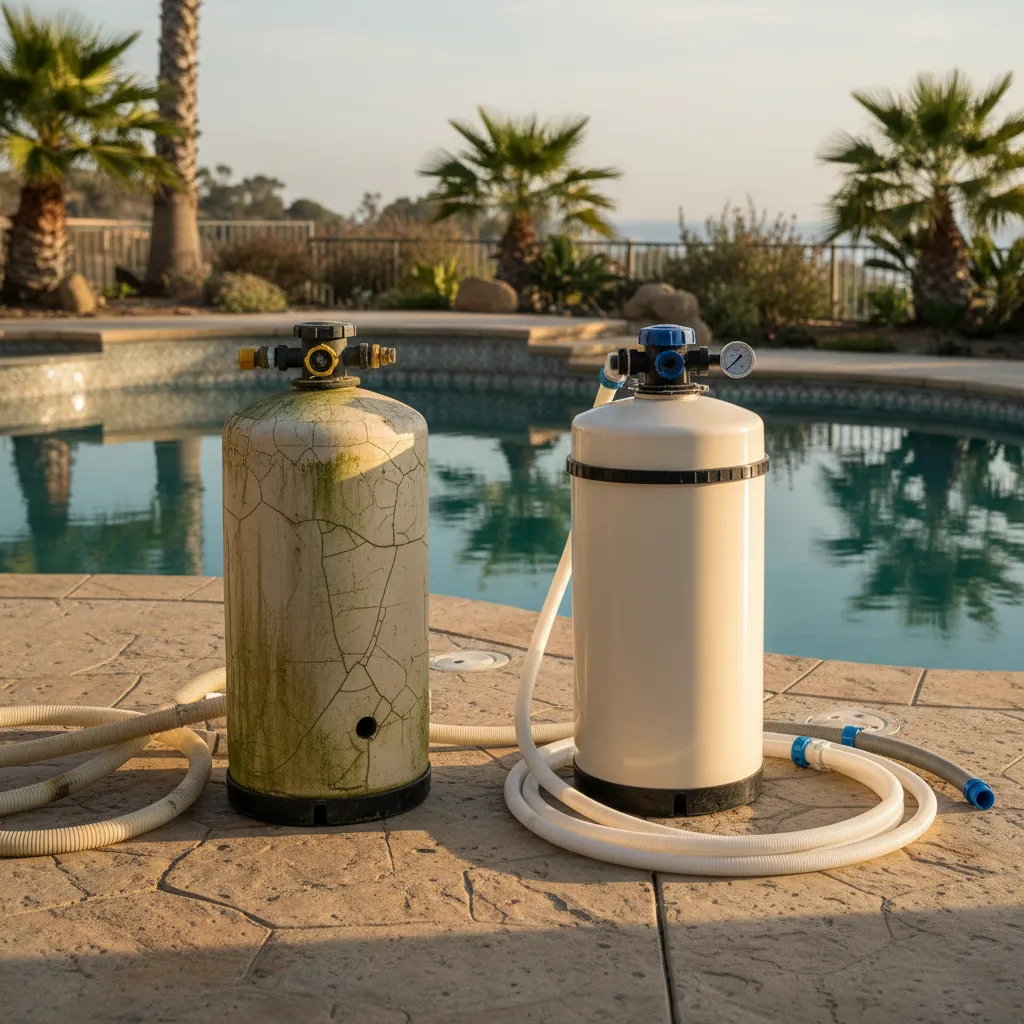
Visible cracks, leaks, or corrosion on the tank
Inspect your filter tank regularly. Look for hairline cracks, dripping water, or significant corrosion, especially around seams and connections. San Diego’s intense sun can degrade plastic components over time, making them brittle. Any visible damage to the tank itself, rather than just the internal media, often means a full replacement is necessary. A leaking filter isn’t just inefficient; it wastes water, can damage your equipment pad, and indicates a structural integrity issue that could lead to catastrophic failure. If your filter is making unusual noises or struggling to hold pressure, a crack could be forming even if it’s not yet visible. Ignoring these signs can lead to larger, more expensive problems down the line.
What a filter replacement costs in San Diego
The cost of a pool filter replacement in San Diego can vary significantly based on several factors. It’s not just the price of the new unit, but also the labor for installation, any necessary plumbing adjustments, and the proper disposal of the old equipment.
Factors influencing cost:
- Filter type and size: Cartridge filters are often the most affordable, followed by sand, and then DE filters, which typically cost the most due to their complex internal components. Within each type, larger filters designed for bigger pools will naturally have a higher price tag.
- Brand and model: Like any appliance, different brands offer various levels of quality and features, impacting the price. High-efficiency or specialty filters might cost more upfront but save money on energy in the long run.
- Installation complexity: A straightforward like-for-like replacement where plumbing lines match up perfectly will be less expensive than a job requiring significant re-plumbing or modifications to your existing equipment pad.
- Permits (rare but possible): While most filter replacements don’t require permits, any major changes to the electrical system or significant re-piping might. Your pool service professional can advise you on this.
- Disposal fees: Proper disposal of old filter media (especially DE powder) and the old tank can incur additional costs, which are usually rolled into the overall service fee.
Given these variables, a basic cartridge filter replacement might start in the hundreds of dollars, while a large, high-end DE filter installation could run well over a thousand. It’s always best to get a detailed quote from a qualified San Diego pool pro, like the ones matched through Splash Pro Pools. Pricing comes from the installing pro, so you can weigh the options before deciding on a new pool filter in San Diego.
Sizing the new filter to your pump and pool volume
Choosing the right size for your new pool filter is one of the most critical aspects of a successful replacement. An undersized filter will work inefficiently, require constant cleaning, and wear out prematurely, while an oversized one can be an unnecessary expense. The goal is to match the filter’s capacity to both your pool’s volume and the flow rate of your pool pump.
Understanding turnover rate
The primary principle is achieving an adequate “turnover rate.” This refers to how long it takes for your entire pool’s water to pass through the filter once. Most residential pools should aim for at least one full turnover every 8 to 10 hours. To calculate this, you need:
- Pool Volume: The total gallons of water in your pool. (Length x Width x Average Depth x 7.5 for rectangular pools; or π x Radius² x Average Depth x 7.5 for round pools).
- Pump Flow Rate: Measured in gallons per minute (GPM) or gallons per hour (GPH). This is usually listed on your pool pump’s specifications.
With these numbers, you can determine how many hours it takes to turn over your pool with your current pump. The new filter’s maximum GPM capacity must be equal to or greater than your pump’s flow rate.
Matching filter capacity to pump and pool
A good rule of thumb is to select a filter with a GPM rating that’s at least equal to, but ideally a bit higher than, your pump’s GPM. This gives you a buffer and allows the filter to work more efficiently, reducing pressure and extending the time between cleanings. For instance, if your pump delivers 60 GPM, you’d want a filter rated for at least 60 GPM, but perhaps 75 GPM would be even better.
San Diego’s climate means pools are in use for a significant portion of the year, subjecting filters to more debris and longer operating hours. Properly sizing your filter ensures that your pool stays clean and clear, even during heavy use or after a windy day. It also allows your weekly pool cleaning to be more effective, as the filter does most of the heavy lifting. Pool technicians are experts at assessing your specific pool system and recommending the perfect size and type for your new pool filter installation in San Diego, ensuring optimal performance and longevity.
Disposing of old DE and cartridges the right way
Proper disposal of old pool filter materials is important for environmental responsibility and adhering to local San Diego regulations. You can’t just toss everything in the trash.
Diatomaceous earth (DE) powder
Old DE powder, especially if it contains captured algae and chemicals, shouldn’t go directly into storm drains or gardens. In San Diego County, the general guideline is to allow DE powder to dry out completely. Once dry, you can usually dispose of it with your regular household trash, as long as it’s not in liquid form. Some municipalities prefer it to be double-bagged. Never backwash DE into a storm drain, as it can harm aquatic life and clog pipes. If you’re unsure, check with your local waste management services or ask your pool pro about proper disposal during your pool filter replacement in San Diego.
Cartridge filters
Used cartridge filters often contain a buildup of oils, dirt, and chemical residue. While some homeowners might attempt to clean and reuse them, once they’ve reached the end of their lifespan and are being replaced, they need proper disposal. Most residential waste services will accept old cartridges in your regular trash bin. However, it’s a good practice to rinse off as much loose debris as possible before bagging them. Some specialized recycling facilities might accept certain types of cartridge materials, but this isn’t common for typical pool filter cartridges. During a pool filter cartridge replacement in San Diego, old cartridges get disposed of responsibly.
When you work with Splash Pro Pools for your filter replacement, you won’t have to worry about these details. The installing pro takes care of dismantling the old unit and disposing of all materials correctly, saving you the hassle and ensuring compliance with local environmental standards. This is part of our comprehensive pool filter cleaning and replacement service.
When to call us
Don’t let a failing pool filter compromise your San Diego pool’s clarity and health. If you’re seeing persistent cloudiness, struggling with low pressure, or notice visible damage to your filter tank, it’s time for an expert assessment. The pro will provide an honest recommendation, letting you know if a professional cleaning can extend its life or if it’s truly time for a new unit. Call us at (858) 400-6757 and we’ll connect you with a vetted local pool pro.
Frequently asked questions
How often should I replace my pool filter in San Diego?
The lifespan depends on the filter type and usage. Cartridge filters last 2-5 years, sand filters 5-8 years, and DE filters 8-12 years. San Diego's long pool season and frequent dust can shorten these lifespans.
What are the signs that my pool filter needs replacement, not just cleaning?
Key signs include persistently cloudy water even after cleaning, low water pressure despite a clean filter, a filter tank that's visibly cracked or leaking, or an old filter that struggles to maintain water clarity.
Does Splash Pro Pools help with disposing of old filter materials?
Yes. When the pros in our network replace your pool filter, proper disposal of old cartridges and DE filter media follows San Diego County regulations.
What factors affect the cost of a pool filter replacement in San Diego?
Costs vary based on the type and size of the new filter, any necessary plumbing modifications, and the complexity of the installation. Larger, more advanced filters will naturally cost more.
Can I upgrade my pool filter type during a replacement?
Absolutely. Many San Diego homeowners choose to upgrade from a sand filter to a cartridge or DE filter, or from a single-cartridge to a larger capacity multi-cartridge system, for better filtration and efficiency.
Need professional help in San Diego County?
Splash Pro Pools connects San Diego homeowners with pool pros for the work in this post.