Worth knowing first: Splash Pro Pools is a cleaning and maintenance company, so equipment installation and upgrades goes to our repair partner, reachable on (858) 400-6757.
A variable-speed pump swap near Camp Pendleton typically runs $900 to $1,400 installed. A full pad, pump, filter, and heater is usually $3,500 to $6,500. Title 20 requires variable-speed on replacement pumps 1 HP and up. Salt air can cut equipment life to 5 to 7 years. Call (858) 400-6757.
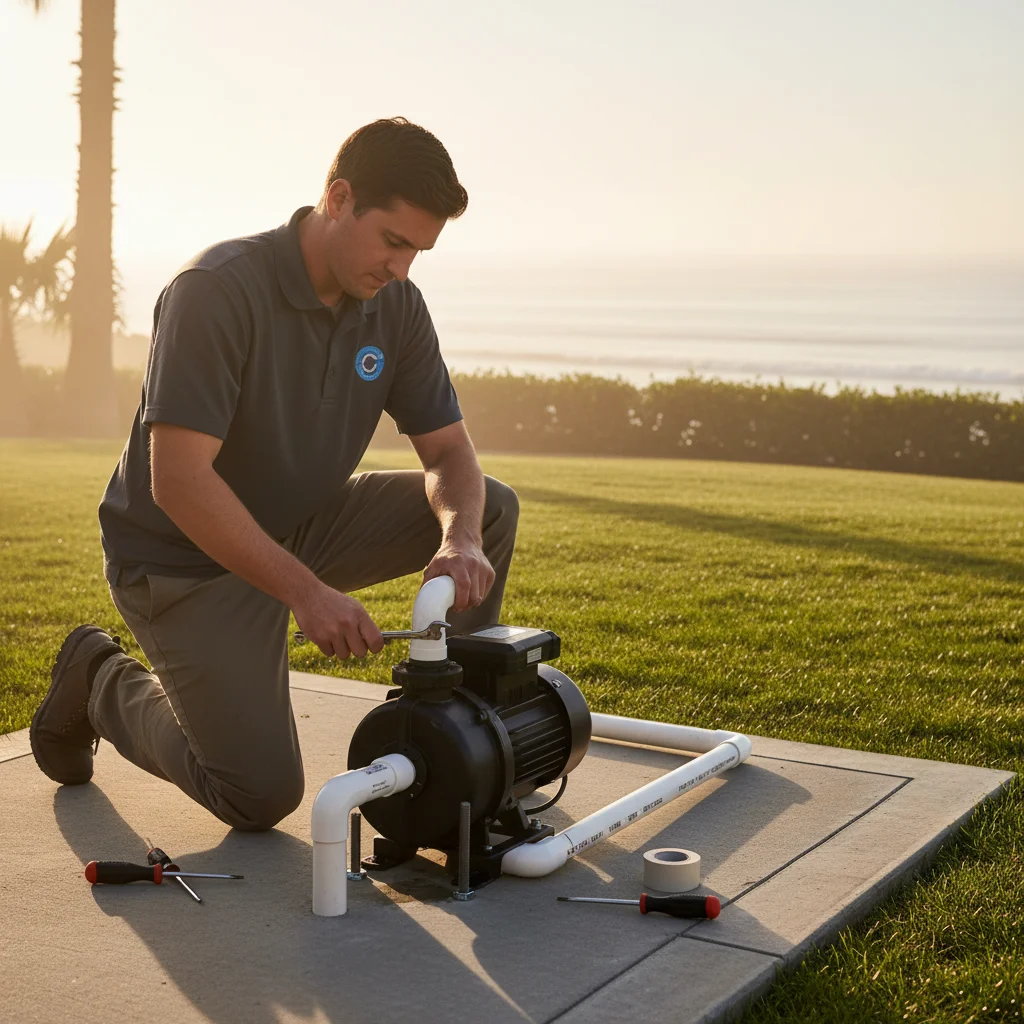
Why pool equipment fails faster near the coast
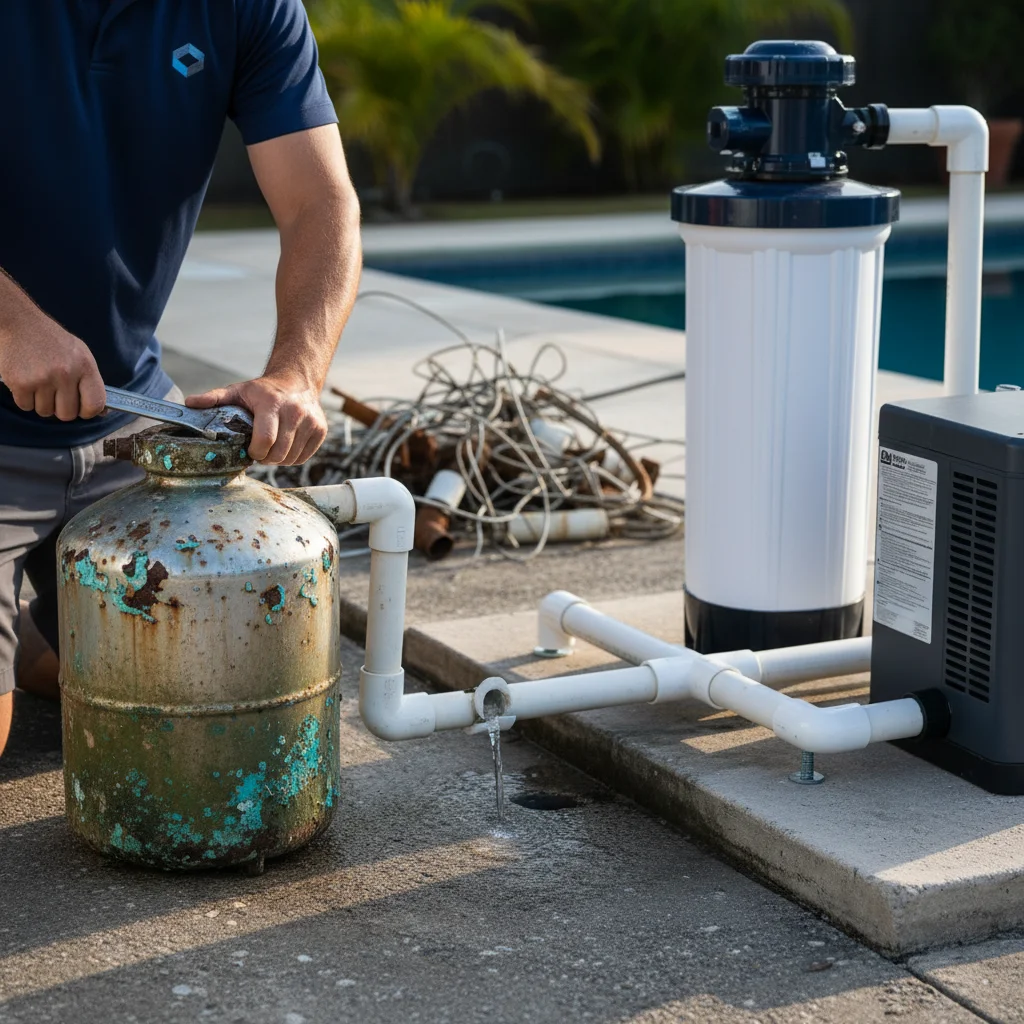
Distance from the ocean matters more than most homeowners realize. Within a mile of the shoreline, which covers a large swath of the neighborhoods just south and east of Camp Pendleton, airborne salt particles settle on every metal surface on your equipment pad. Motor housings oxidize. Steel pump volutes pit. Electrical terminals corrode and lose contact.
A single-speed pump that might run reliably for 10 or 12 years in El Cajon or Rancho Bernardo can look like a rust sculpture in five to seven years here. Pros have pulled equipment off Oceanside pads that was barely six years old and completely shot, not from hard use, but from relentless salt exposure.
The problem compounds in a few specific ways:
Salt air hits the motor first
The motor end-bell, the back cap of the pump motor, collects moisture and salt. Once corrosion works into the windings or the capacitor terminals, no amount of cleaning saves it. By the time the motor sounds rough, the internal damage is already done.
Plumbing fittings corrode at the union
PVC itself holds up fine. The unions, o-rings, and metal fittings that connect plumbing to the pump housing don’t. Corroded union nuts are one of the most common things pros deal with on coastal equipment installs; they freeze in place and often crack during removal.
Filter tanks aren’t immune
Fiberglass and composite filter tanks resist salt better than metal, but the multiport valve, pressure gauge, and any metal band clamps on older tanks all corrode. A tank that looks fine from a distance might have a pressure gauge that’s been reading wrong for years.
For more on what coastal water chemistry does to equipment, our pool equipment installation San Diego overview covers the county-wide picture.
What gets installed most often at Camp Pendleton South homes
The equipment replaced most often in this area breaks down pretty consistently across jobs.
Variable-speed pumps are the most common single install. The combination of coastal corrosion killing old single-speed motors and California’s Title 20 mandate (more on that below) means almost every pump replacement now involves a variable-speed unit. Hayward MaxFlo VS and Pentair IntelliFlo are both strong performers in coastal conditions, both have fully enclosed motor housings that slow salt intrusion.
Cartridge filters show up right behind pumps. Many homes near the base still have aging DE filters with corroded manifolds. These often get swapped for cartridge filters, which have fewer metal components and simpler maintenance, a real plus for military families who travel frequently or are managing the property remotely. If you’re weighing filter types, our pool filter cleaning guide breaks down the tradeoffs between DE, cartridge, and sand.
Pool heaters are a less frequent but higher-dollar install. Heat pump heaters last reasonably well in coastal air, but gas heater heat exchangers, particularly older cupro-nickel units, can corrode through faster than expected within a half mile of the ocean.
Automation and timers round out most installs. When a pump needs replacing, it’s a natural time to add a basic automation controller if one isn’t already in place. It makes remote management easier, which matters a lot for rental properties.
If you’re dealing with a pump that’s still running but making noise before it fully fails, our pool pump repair guide can help you figure out whether repair or replacement makes more sense.
Title 20 and the variable-speed pump rule
California’s Title 20 appliance efficiency regulations require that any replacement or new residential pool pump rated 1 HP or higher must be a variable-speed or variable-flow pump. This isn’t optional, and it applies to every installation in California, including Oceanside, San Clemente, and every zip code in the Camp Pendleton South corridor.
The good news: variable-speed pumps are genuinely better. They run at lower speeds for daily filtration, which the EPA’s WaterSense program estimates can reduce pump energy use by up to 70% compared to a single-speed motor running at full throttle. For a pool running eight hours a day in San Diego’s year-round climate, that’s a real number on a real electric bill.
The tradeoff is upfront cost. A quality variable-speed pump costs more than the single-speed unit it replaces. But utility savings typically recover that difference within two to three years, and the quieter operation at low speeds is a noticeable quality-of-life improvement.
Variable-speed pumps also get programmed at installation to comply with the California Energy Commission’s recommended run-time settings, which satisfies Title 20 documentation requirements. You’ll get a copy of the pump programming for your records, useful if you ever need to show an inspector or a future buyer that the equipment is compliant.
For a deeper dive on variable-speed options across San Diego, we wrote a detailed breakdown at variable-speed pool pump San Diego.
Typical install timeline and cost ranges
Most single-equipment swaps take one visit. Here’s what the typical numbers look like for Camp Pendleton South area homes.
Variable-speed pump replacement: $900-$1,400 installed. That includes the new pump, all unions and fittings, any necessary electrical work at the existing connection, and programming. If the electrical sub-panel needs a new circuit, add $200-$400 for the electrical portion.
Cartridge or DE filter replacement: $600-$1,200 installed, depending on size and type. Larger pools with higher flow requirements need bigger filter bodies, which pushes cost up.
Gas or heat pump heater installation: $1,800-$4,500 depending on BTU rating, fuel type, and whether gas line work is involved. Heat pump heaters run toward the top of that range; smaller gas heaters can land closer to the bottom.
Full equipment pad replacement (pump + filter + automation, sometimes heater): $3,500-$6,500. This is common when a homeowner is preparing to sell or when multiple components are corroded past saving.
These ranges are honest estimates, not lowball figures designed to get us in the door. The pro provides a written quote before any work starts. If corroded plumbing fittings or a deteriorated electrical connection turn up once things are opened up, you’ll know what it costs to fix before anything gets touched.
How we handle PCS timing and rental properties
The military community around Camp Pendleton has a rhythm that most pool companies don’t account for. PCS moves happen fast. Property managers are juggling multiple units. Tenants change, and equipment problems don’t wait for a convenient window.
We’ve structured our scheduling to accommodate this.
For military families doing a PCS move: If you’re trying to get equipment replaced before you hand the house to a property manager or put it on the market, call us as early in your timeline as possible. A standard install is usually a single-day job once the pro has the parts on hand. Call (858) 400-6757 and we’ll route it to a local pool pro.
For property managers: We work with several property management companies in the Oceanside and Vista area who manage homes near the base. We can coordinate directly with tenants for access, provide written documentation for the property file, and set up recurring service through our pool equipment service program so problems get caught before they become emergency replacements.
For out-of-state military owners: If you’re already at your next duty station and managing a rental remotely, the assigned pro can assess equipment condition, send photos and a written estimate by email, and complete the work with your authorization without requiring you to be present. Photos and written documentation get sent at every step so you know exactly what was done before you hand over a key.
One other thing worth knowing for rental properties: a documented equipment upgrade, particularly a Title 20-compliant variable-speed pump, can be a selling point with quality tenants and a line item on a rent increase justification. It’s not the reason to do the upgrade, but it’s a real benefit.
When to call us
Pool equipment installation involves electrical connections, pressurized plumbing, and California code compliance that genuinely requires a licensed professional. If your pump is making noise, losing prime, or simply past the point of reasonable repair, don’t wait for a full failure, coastal equipment rarely gives you much warning before it goes.
Call us at (858) 400-6757 and we’ll connect you with a vetted local pool pro.
Frequently asked questions
How much does pool equipment installation cost near Camp Pendleton?
A variable-speed pump swap typically runs $900-$1,400 installed in the Oceanside and Camp Pendleton South area. A full equipment pad replacement, pump, filter, and heater, usually lands between $3,500 and $6,500 depending on equipment brands and any electrical work required.
Does California require a variable-speed pump for pool equipment replacement?
Yes. California's Title 20 regulations require that any newly installed or replacement residential pool pump rated 1 HP or higher must be a variable-speed or variable-flow pump. This has been in effect statewide since 2021.
Why does pool equipment corrode faster near Camp Pendleton?
The coastal salt air, especially within a mile of the ocean, accelerates oxidation on steel components, motor housings, and electrical connections. Equipment that might last 10-12 years inland can show significant corrosion in 5-7 years in a coastal Oceanside or San Clemente zip code.
Can Splash Pro handle a pool equipment install on a tight PCS timeline?
Yes. Tell us the PCS date when you call. A standard pump or filter installation is usually a single-day job once the pro has the parts. Call and we'll route it to a local pool pro.
Do I need a permit to replace pool equipment in Oceanside?
A straight pump-for-pump or filter-for-filter replacement typically does not require a permit in Oceanside. Any work that involves new electrical circuits or significant plumbing rerouting may require a City of Oceanside permit. We'll let you know before the job starts.
Need this done in San Diego County?
For repair and renovation work like this, we hand you to our trusted partner, Del Rancho Pools.