Heads up before you read: Splash Pro Pools keeps pools clean; resurfacing and replastering is a different trade. Call (858) 400-6757 and we’ll match you with a local pro who handles it.
Re-mortaring a few loose coping stones is a few hundred dollars. Replacing several damaged stones runs $500 to $1,500. A full re-cope often starts at $5,000. Expansive soil and failed mortar are the usual causes here. Call (858) 400-6757.
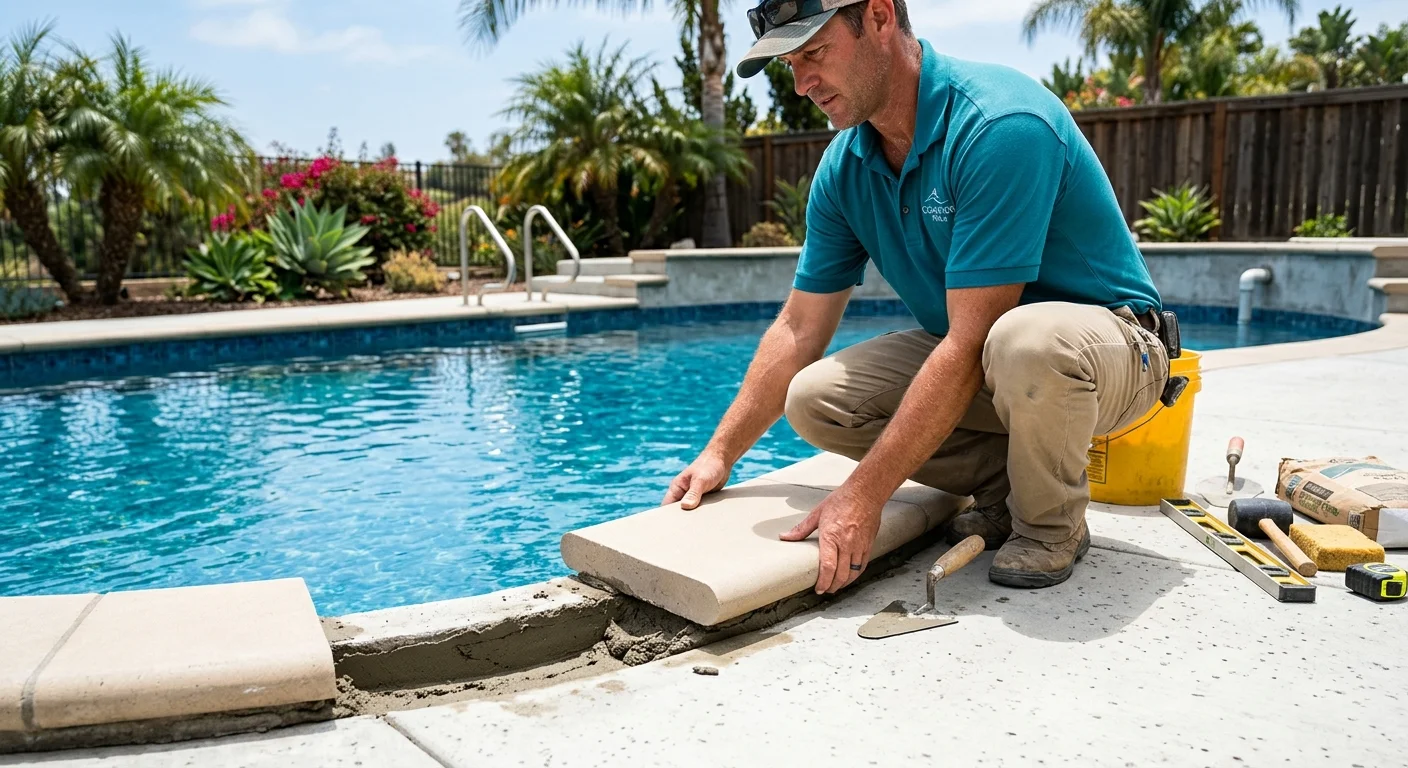
What coping is and why a bad one is more than cosmetic
Coping is the material installed at the top edge of your pool shell, bridging the gap between the pool and the surrounding deck. It’s often made of concrete, brick, natural stone, or precast concrete, and it typically overhangs the pool wall slightly. This overhang prevents water from splashing back into the space between the pool wall and the deck, which is vital for preventing erosion and protecting the pool’s structure.
Beyond its aesthetic appeal, a properly installed and maintained coping system serves several critical functions. First, it helps protect the bond beam, which is the structural ring around the top of your pool. The bond beam is where the pool’s walls meet its deck, and it’s a key component of the pool’s strength. Second, coping directs water away from the pool shell and into deck drains, preventing water from saturating the ground around the pool. This is especially important in San Diego, where our expansive soils can shift dramatically with changes in moisture content. Third, coping provides a safe, non-slip edge for swimmers to hold onto and exit the pool. When coping fails, these protective functions are compromised. Water can seep behind the pool shell, leading to bond beam damage, erosion, or even significant structural shifts. Loose coping stones also create trip hazards and can fall into the pool, potentially damaging the interior finish or injuring swimmers. It’s an issue that needs attention before it escalates.
Why San Diego coping fails: ground movement, old mortar, deck shift
San Diego’s environment presents some specific challenges that contribute to pool coping failure. Our region is known for its “expansive soils”, clays that absorb water and swell during our wet winters, then dry out and shrink during our long, dry summers. This constant push and pull creates significant ground movement, which puts tremendous stress on concrete decks and pool structures.
Over time, this ground movement can cause the concrete slab of your pool deck to shift, crack, or settle unevenly. Since the coping is intimately connected to both the pool shell and the deck, any movement in either component affects it. Old mortar is another common culprit. The mortar used to set coping stones and fill the joints is designed to last for many years, but it’s not indestructible. With decades of exposure to sun, water, and ground movement, mortar can become brittle, crack, and lose its adhesive properties. Once the mortar fails, the coping stones become loose, allowing water to penetrate and accelerate further damage.
Improper installation can also play a role. If coping wasn’t set correctly initially, or if the expansion joint between the coping and the deck was omitted or poorly constructed, problems can arise much sooner. Additionally, significant changes to the surrounding landscape, like new drainage patterns or nearby construction, can exacerbate ground movement and put extra strain on your pool’s perimeter. Catching these issues early is key to preventing a small repair from turning into a major renovation, potentially involving extensive pool resurfacing if water damage reaches the pool shell.
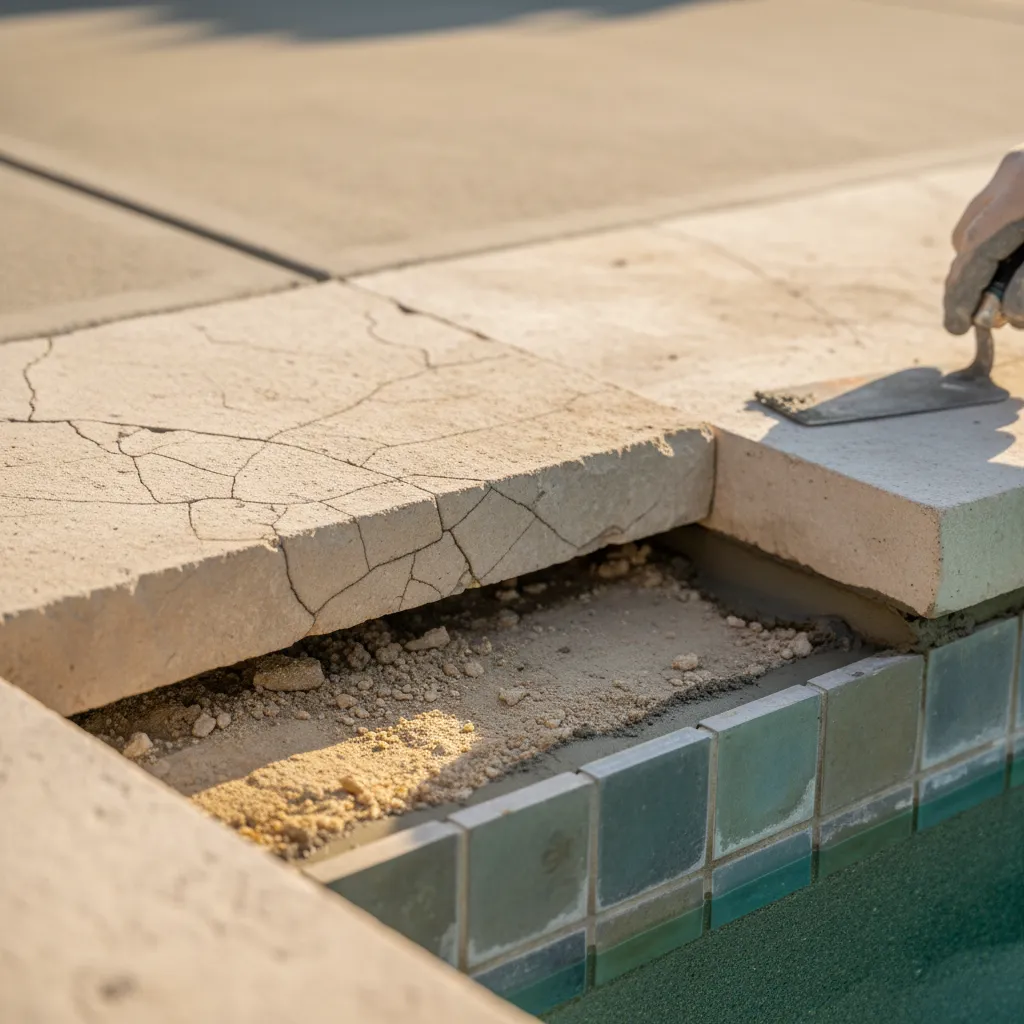
Re-mortaring vs. replacing coping stones vs. a full re-cope
When you notice issues with your pool coping, it’s important to understand the different levels of repair available. The right approach depends on the extent of the damage.
Re-mortaring loose coping stones
This is the least intensive repair option and is suitable when coping stones are still in good condition but have come loose due to failed mortar. Pool technicians will carefully remove the old, crumbling mortar, clean the area thoroughly, and then re-set the existing coping stones using fresh, strong mortar. This process effectively re-secures the stones, restores the integrity of the edge, and prevents water intrusion. Re-mortaring is a cost-effective solution for isolated loose stones and is often a quick fix if caught early.
Replacing individual coping stones
If some of your coping stones are cracked, chipped, or broken beyond repair, simply re-mortaring isn’t enough. In this scenario, we’ll carefully remove the damaged stones and replace them with new ones that match your existing coping as closely as possible in terms of material, color, and profile. This requires skilled masonry work to ensure a clean blend with the surrounding coping and proper adherence. It’s a targeted repair for specific areas of damage.
A full re-cope
A full re-cope involves removing all existing coping around the entire perimeter of your pool and installing brand-new coping. This is a more extensive project, often chosen when:
- A significant portion of the coping is damaged, loose, or failing.
- You’re undergoing a major pool renovation, like pool resurfacing, and want to update the look of your pool’s edge.
- The original coping was poorly installed or is an outdated material.
- You’re addressing a larger structural issue, like bond beam repair, where removing the coping is necessary.
A full re-cope offers the opportunity to completely change the aesthetic of your pool’s edge, choosing from various materials like travertine, flagstone, brick, or precast concrete. While more costly, it provides a fresh, durable, and beautiful new perimeter for your pool.
How coping ties into the tile band and expansion joint
Pool coping doesn’t exist in isolation; it’s an integral part of a system that includes the pool’s tile band and the expansion joint with the deck. Understanding how these elements work together is crucial for effective repair and long-term durability.
The tile band is the decorative strip of tiles just below the coping, lining the inside of the pool at the waterline. This tile band serves both aesthetic and practical purposes, providing a durable, easy-to-clean surface at the water’s edge. The coping sits directly on top of the bond beam, and the tile band is installed directly below it, meeting cleanly. When coping needs repair or replacement, it’s common to also inspect the tile band for damage or loose tiles, as issues with one can affect the other. Mortar failure in the coping can sometimes lead to water seeping down and loosening tiles below. Our experts are well-versed in pool tile and calcium cleaning, ensuring a thorough assessment of both areas.
The expansion joint is a flexible gap (often filled with a mastic sealant) located between the outer edge of the coping and the inner edge of your pool deck. This joint is arguably one of the most important, yet often overlooked, components of your pool’s perimeter. It’s designed to absorb the natural movement of the concrete deck, especially in San Diego where expansive soils cause decks to expand and contract. Without a proper expansion joint, the deck would push directly against the rigid coping and bond beam, leading to severe cracking and damage to both. When coping is repaired or replaced, special attention is paid to ensuring this expansion joint is properly re-established and sealed. A well-maintained expansion joint protects your coping, deck, and bond beam from the stresses of ground movement, extending the life of your pool’s edge for many years.
What coping repair costs in San Diego
The cost of pool coping repair in San Diego can vary significantly based on the scope of work, the type of coping material, and the extent of any underlying damage. It’s important to get a detailed estimate from a qualified professional like Splash Pro Pools to understand the specifics for your situation.
For minor repairs, such as re-mortaring a few loose stones, you might expect costs in the range of a few hundred dollars. This is often a straightforward process involving removing old mortar and setting the existing stones with new material. If you need to replace individual damaged coping stones, the cost will depend on the material (e.g., concrete, brick, natural stone like travertine or flagstone) and the number of stones. Custom-cut or unique materials will naturally be more expensive. This type of repair can range from $500 to $1,500 or more, including labor and materials.
A full re-cope is a much larger investment. This involves removing all existing coping and installing new material around the entire pool perimeter. The price for a full re-cope in San Diego often starts around $5,000 and can easily go up to $10,000 or even higher for larger pools, intricate designs, or premium materials. This cost typically includes the demolition of old coping, material costs for the new coping, mortar, installation labor, and often adjustments or replacement of the tile band and expansion joint. Factors like access to the pool, the complexity of the pool shape, and whether any bond beam repair is also needed will influence the final price. Remember, these are general estimates, and a professional assessment is crucial for an accurate quote.
When coping problems point to a bigger deck or bond-beam issue
Sometimes, loose or cracked coping isn’t just a simple surface problem; it can be the first visible sign of more significant structural issues with your pool’s deck or bond beam. Ignoring these deeper problems can lead to escalating damage and much more costly repairs down the line.
If you observe widespread coping failure, where multiple stones are consistently lifting, cracking, or detaching around a significant portion of the pool, it often indicates a problem with the surrounding pool deck. This could be due to soil settlement, poor compaction during original construction, or the expansive soils we mentioned earlier causing the deck slab to heave or sink. When the deck shifts, it puts immense stress on the coping, pulling it away from the pool shell. In these cases, simply re-mortaring the coping won’t solve the root cause, and the problem will likely recur. A comprehensive assessment of your entire pool deck might be necessary to determine if further pool deck resurfacing in San Diego or repair is needed.
Even more concerning is when coping problems signal an issue with the bond beam. The bond beam is the reinforced concrete ring at the very top of your pool wall. It’s the structural backbone that supports the coping and forms the top edge of the pool shell. Cracks in the bond beam, often caused by ground movement, hydrostatic pressure, or excessive deck stress, can lead to serious structural instability. If the bond beam is cracked or damaged, the coping won’t have a stable foundation, leading to pervasive looseness or displacement. Repairing a damaged bond beam is a specialized structural repair that typically requires removing the coping and tile band to access the beam. This is why it’s crucial to have a professional evaluate any significant coping issues. They can diagnose whether the problem is superficial or points to a deeper structural concern, ensuring the right solution is applied to protect your pool’s long-term health. Regular weekly pool cleaning can help us spot these issues early during our routine checks.
When to call us
Don’t let loose, cracked, or lifting coping sit. Re-mortar the stones that still hold, or replace the ones that don’t. Splash matches a resurfacing pro. Call (858) 400-6757.
Call us at (858) 400-6757 and we’ll connect you with a vetted local pool pro.
Frequently asked questions
How much does pool coping repair cost in San Diego?
The cost for pool coping repair in San Diego varies widely. Simple re-mortaring of a few loose stones might be a few hundred dollars. Replacing several damaged stones can range from $500 to $1,500. A full re-cope, which involves replacing all coping stones, often starts at $5,000 and can go higher depending on material and pool size.
What causes pool coping to crack or lift in San Diego?
San Diego's unique soil conditions, particularly expansive soils, are a major factor. These soils swell when wet and shrink when dry, leading to ground movement that stresses pool decks and coping. Old, brittle mortar also fails over time, and improper initial installation or significant deck shifts can cause coping to crack, lift, or become loose.
Can I repair loose pool coping myself?
Minor repairs, like re-setting a single loose stone with fresh mortar, can sometimes be a DIY project. However, if multiple stones are loose, cracked, or if you suspect a larger underlying issue with your pool deck or bond beam, it's best to call a professional. Incorrect repairs can worsen the problem or lead to future damage.
How long does pool coping repair take?
The time required for pool coping repair depends on the scope of work. Re-mortaring a few stones might take a single day. Replacing a section of coping could take 1-3 days. A full re-cope is a more involved process, typically taking several days to a week or more, as it often ties into tile work and requires curing time for new mortar.
What's the difference between re-mortaring and replacing pool coping?
Re-mortaring involves removing old, failed mortar and replacing it with fresh mortar to secure existing coping stones that are otherwise in good condition but have come loose. Replacing coping stones means removing damaged or broken stones and installing new ones. A full re-cope entails removing all existing coping and installing entirely new coping around the pool's perimeter.
Need this done in San Diego County?
For repair and renovation work like this, we hand you to our trusted partner, Del Rancho Pools.