That white or grey crust on a Spring Valley waterline is calcium scale from hard inland water plus heat and evaporation. It is not dirt. Many pools here need professional calcium removal every 1 to 3 years if chemistry drifts. DIY acid and scrapers can chew tile. Call (858) 400-6757.
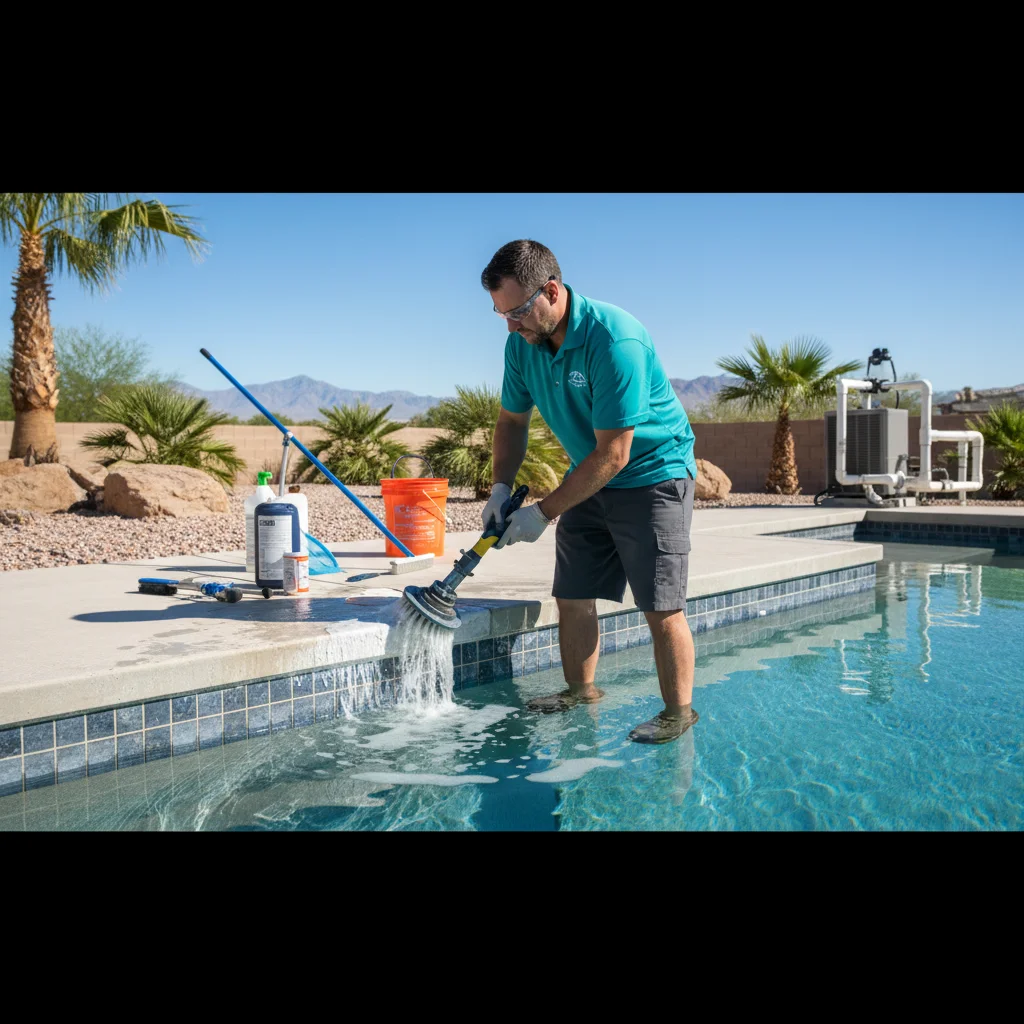
Why Spring Valley pools scale faster than coastal pools
The primary culprit behind rapid calcium buildup in Spring Valley pools is our naturally hard water. Hard water contains elevated levels of dissolved minerals, primarily calcium and magnesium. Unlike coastal areas that might benefit from slightly softer municipal water or cooler ocean breezes, Spring Valley often draws from inland water sources, which tend to have higher mineral content. The San Diego County Water Authority provides detailed water quality reports that confirm these higher mineral levels in many inland communities.
Beyond the inherent water hardness, Spring Valley’s climate plays a significant role. We experience higher average temperatures and more intense sunshine compared to communities closer to the coast. This leads to increased evaporation from your pool’s surface. As water evaporates, the calcium and other minerals don’t disappear; they become more concentrated in the remaining water. The hotter the water and the more it evaporates, the faster these minerals reach saturation points and precipitate out as visible scale on your pool tile, coping, and even inside your plumbing and on equipment.
Factors like poor water chemistry management also accelerate the problem. If your pool’s pH or total alkalinity levels are consistently too high, it creates an ideal environment for calcium to deposit. A warm pool with unbalanced chemistry and hard water is a perfect recipe for rapid calcium scaling. This unique combination of environmental and chemical factors means that Spring Valley pools often require more proactive care, including specialized pool tile and calcium cleaning services, to maintain their pristine appearance. You can learn more about managing hard water in our comprehensive guide on hard water in San Diego pools.
How to tell calcium scale from other tile stains
Identifying calcium scale might seem straightforward, but it can sometimes be confused with other types of pool tile stains or deposits. Knowing the difference helps you understand the right course of action for cleaning.
Calcium scale typically appears as a white, grey, or off-white crusty buildup. It often forms a distinct ridge along the waterline where water splashes and evaporates, concentrating minerals. There are two main types of calcium scale:
- Calcium Carbonate: This is the most common form, appearing as a white, flaky, or chalky deposit. It’s relatively softer and can sometimes be scraped off with a fingernail or a specialized tool, though this risks damaging your tile.
- Calcium Silicate: This type is much harder, greyish-white, and has a glassy, often dull appearance. It forms slowly but bonds very strongly to surfaces, making it incredibly difficult to remove without specialized equipment.
Other common pool tile stains you might encounter include:
- Algae Stains: These can be green, black, or mustard-colored. Algae usually grows on the tile, grout, or pool surface itself, often feeling slimy. Unlike calcium, it’s organic and typically removed with algaecides and scrubbing, not mechanical removal.
- Mineral Stains (non-calcium): If you have iron in your water, you might see reddish-brown rust-like stains. Copper can leave blue-green or black stains. These are often flat, discolored areas on the tile rather than a raised, crusty deposit. They usually respond to chelation or stain removers rather than descaling.
- Dirt/Grime Lines: A simple dirt or oil line can form at the waterline from swimmers, lotions, and environmental debris. This usually wipes away with a simple scrub brush and pool-safe degreaser.
When you feel a rough, hard, and elevated deposit at your waterline, especially if it’s resistant to normal brushing, you’re almost certainly dealing with calcium scale. If you’re unsure, it’s always best to consult with a professional who can accurately diagnose the stain and recommend the appropriate treatment to protect your pool surfaces. Addressing the root cause, which is often hard water and imbalanced chemistry, is essential to prevent recurrence.
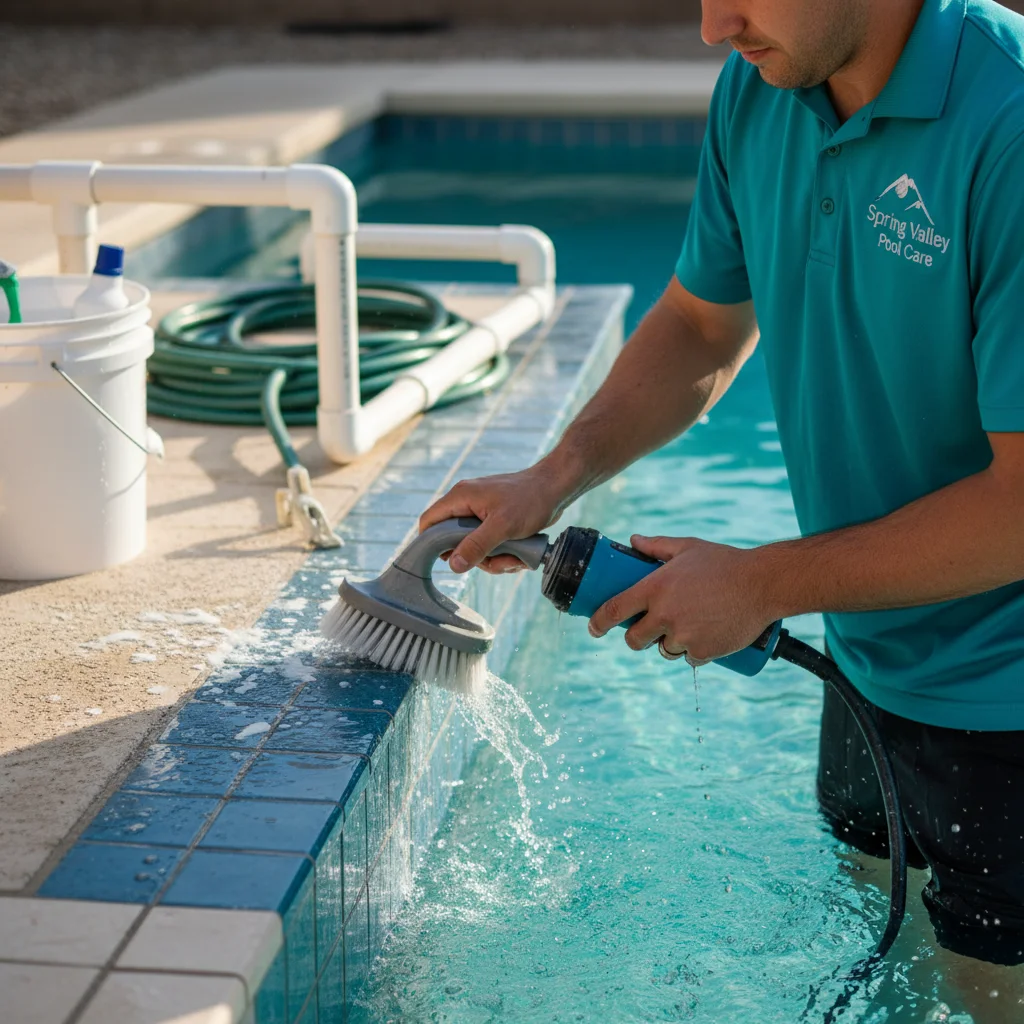
What we use to remove calcium safely
Matched tile techs in Spring Valley use media blasting for pool tile cleaning in Spring Valley, not a harsh acid or a scraper that etches grout. Splash does not run the blaster. Call (858) 400-6757.
We use specialized equipment designed specifically for pool tile. This system uses compressed air to gently propel a fine, inert blasting medium at the scaled surfaces. The media is typically made from magnesium sulfate, glass beads, or a similar gentle material that is hard enough to break apart calcium deposits but soft enough not to harm your tile, stone, or even pebble finishes. The process effectively pulverizes the calcium scale, separating it from your pool surfaces without resorting to harsh chemicals.
The benefits of our media blasting technique include:
- Safety for Your Surfaces: It works on almost any pool surface, including ceramic tile, natural stone, glass tile, pebble tech, and even plaster, without causing damage.
- Chemical-Free: No strong acids or toxic chemicals are introduced into your pool water, making it safer for your swimmers, pets, and the environment.
- Efficiency: The process is highly efficient, allowing us to quickly and thoroughly clean even heavily scaled pools, restoring their original beauty.
- Eco-Friendly: The blasting media is inert and can often be safely vacuumed up and disposed of without environmental concern.
- Water Remains in Pool: In most cases, we can perform the cleaning without draining your pool, saving water and time.
After the calcium is safely removed, we meticulously vacuum up all the spent blasting media and calcium debris, ensuring your pool is left clean and ready to enjoy. Pool technicians are trained and experienced in calcium removal across San Diego County. We pride ourselves on restoring your pool’s aesthetic appeal while protecting its structural integrity.
What it costs and how often you’ll need it redone
The cost of professional pool calcium removal in Spring Valley varies based on several factors. These typically include the severity of the calcium buildup, the type of tile or surface needing treatment, the length of the perimeter affected, and the overall accessibility of your pool. A small pool with minor scaling along a short tile line will naturally cost less than a large pool with extensive, thick scale covering the entire perimeter and potentially other features like water features or spillways.
On average, for a standard residential pool in Spring Valley, you can expect pricing to range from a few hundred dollars for minor touch-ups to over a thousand for more intensive, full-perimeter cleaning. We always provide a detailed, on-site estimate before starting any work so you know exactly what to expect. This ensures transparency and helps you budget for this essential pool maintenance. Calcium removal is one piece of full pool service in Spring Valley, where we also handle weekly cleaning, equipment work, and Spring Valley pool repair on the same visit.
As for how often you’ll need this service, Spring Valley’s conditions mean it’s typically more frequent than in other areas. For most pools in our service area, professional calcium removal is recommended every 1 to 3 years. This timeframe can be influenced by:
- Your water chemistry habits: Pools with consistently balanced pH and calcium hardness levels will develop scale slower.
- Usage and evaporation rates: Pools that are used frequently and experience high evaporation will concentrate minerals faster.
- The type of scale: Calcium silicate, being tougher, might require professional intervention less frequently but is harder to remove when it does form.
- Preventative measures: Regular brushing, the use of scale inhibitors, and partial water changes can extend the time between professional cleanings.
Think of it as similar to getting your vehicle detailed; it’s an occasional, more intensive cleaning that restores your pool to its best condition. Between these deep cleanings, consistent weekly pool cleaning and maintenance is crucial to slow down the next buildup. We can help you establish a regular maintenance schedule that fits your needs and helps protect your investment. This proactive approach helps mitigate the long-term impact of calcium, preventing costly pool repair due to clogged pipes or damaged equipment down the line.
How to slow scale buildup between cleanings
While professional calcium removal is the most effective way to eliminate existing scale, there’s a lot you can do to slow its return in your Spring Valley pool. Proactive maintenance and understanding your water chemistry are your best defenses against persistent buildup.
Consistent water chemistry management
This is the single most important step. Regularly test your pool water for:
- pH: Keep it between 7.4 and 7.6. High pH encourages calcium to precipitate out of the water.
- Total Alkalinity (TA): Maintain TA between 80-120 ppm. High TA can contribute to high pH and calcium scaling.
- Calcium Hardness (CH): Aim for 200-400 ppm. While our water is naturally hard, keeping CH within this ideal range helps prevent the water from seeking calcium from your pool surfaces, or depositing excess. However, in hard water areas like Spring Valley, you’ll often be on the higher end of this range or slightly above, which means careful management of pH and TA becomes even more critical.
Use a scale preventative
Many pool chemical lines offer scale inhibitors or chelating agents. These products work by binding to calcium and other minerals, keeping them dissolved in the water and preventing them from plating onto your surfaces. They don’t remove existing scale, but they are effective at slowing new formation.
Regular brushing and cleaning
Make it a habit to brush your tile line weekly during your routine pool cleaning. This helps dislodge any newly forming calcium deposits before they can harden and bond firmly to the tile. Pay extra attention to corners and areas with strong sun exposure. For areas above the waterline, a clean cloth or sponge with a specialized tile cleaner can also help wipe away initial mineral residue.
Partial water changes
Over time, as water evaporates and you add fresh water, the overall mineral concentration in your pool increases. Periodically draining and refilling a portion of your pool (e.g., 25-30% every few years) can help dilute these accumulated minerals, including calcium. This is often more practical than a full drain and refill, especially if you’re mindful of water conservation efforts in San Diego County. Consider checking resources like the San Diego County Water Authority (https://www.sdcwa.org/) for water-saving tips.
Maintain your filtration system
Calcium can also build up in your pool’s filter, reducing its efficiency and requiring more frequent pool filter cleaning. Keeping your filter clean and your circulation system running effectively ensures that your water chemistry remains more stable and less prone to scaling. Also, if calcium affects your pool equipment, it can lead to costly replacements.
By combining professional calcium removal with consistent, proactive maintenance, you can keep your Spring Valley pool looking its best and protect your investment for years to come. If you’re ready to get on a regular schedule, our pool service in Spring Valley covers weekly cleaning, equipment checks, and calcium management all in one visit.
When to call us
While you can manage some aspects of pool chemistry and light brushing, stubborn calcium scale requires professional intervention. If you’ve tried scrubbing with no success, or if the scale is thick, widespread, or starting to affect your pool’s appearance and functionality, it’s time to call in the experts. Our specialized equipment and experience ensure safe, effective removal without damaging your valuable pool surfaces.
Call us at (858) 400-6757 and we’ll connect you with a vetted local pool pro.
Frequently asked questions
What causes calcium scale in Spring Valley pools?
Spring Valley's naturally hard water, combined with high temperatures and rapid evaporation, concentrates dissolved calcium in your pool water. This leads to calcium carbonate and calcium silicate deposits forming on pool surfaces, especially the tile line.
How often should I get pool calcium removed in Spring Valley?
The frequency depends on your water chemistry management, pool usage, and local water hardness. For many Spring Valley pools, professional calcium removal is needed every 1-3 years. Regular monitoring and chemistry adjustments can extend this period.
Can I remove pool calcium myself?
DIY methods using acids or harsh tools can damage your pool tile and plaster if not done correctly. Professional services use specialized equipment and techniques that safely remove scale without harming your pool surfaces. It's best to call a pro for effective and safe removal.
Is calcium scale harmful to my pool?
Beyond being unsightly, severe calcium scale can become abrasive, providing a rough surface for algae to cling to and making cleaning harder. It can also clog filters and pipes over time, impacting your pool's circulation and equipment efficiency. Addressing it promptly protects your pool's longevity.
What's the best way to prevent calcium buildup?
Consistent water chemistry maintenance, particularly balancing pH, alkalinity, and calcium hardness, is key. Using a scale preventative chemical, brushing your tile line regularly, and replacing some water periodically can significantly slow buildup in Spring Valley's hard water conditions.
Need professional help in San Diego County?
Splash Pro Pools connects San Diego homeowners with pool pros for the work in this post.